WeChat コードをスキャンしてご連絡ください
WeChat コードをスキャンしてご連絡ください
お気軽にメールをお送りください。できるだけ早くご返信させていただきます.
心と魂で未来を創る


鉄道の車輪 carry the entire weight of a train while continuously transferring traction forces, 制動負荷, そしてトラックからの衝撃. Whether installed on a 貨車, 地下鉄の車両, heavy duty industrial mining, or high-speed train, they operate under demanding conditions every day.
Although a railway wheel may look like a simple steel component, its design and manufacturing process are far more complex than many people realize. 材料の選択, forging quality, 熱処理, wheel profile geometry, and maintenance practices all play a role in determining how the wheel performs throughout its service life.
鉄道事業者向け, rolling stock manufacturers, maintenance teams, and procurement engineers, wheel dimensions alone tell only part of the story. Understanding how wheels are manufactured, 検査された, maintained, and affected by operating conditions is equally important.
This guide provides a practical overview of the complete railway wheel lifecycle and serves as a central resource for exploring more detailed technical topics related to wheel design, metallurgy, 製造業, 標準, メンテナンス, and failure analysis.
Long before a railway wheel reaches the track, it passes through a series of carefully controlled manufacturing steps. Each stage contributes directly to the wheel’s strength, 耐久性, そして長期的な信頼性.
Most modern railway wheels are produced from forged steel. The process begins with steelmaking and billet preparation, followed by hot forging to form the wheel shape. Heat treatment is then used to achieve the required balance of hardness, 靭性, そして耐摩耗性.
熱処理後, precision machining creates the final dimensions and wheel profile. 出荷前, every wheel undergoes multiple inspections to verify dimensional accuracy, internal soundness, and compliance with applicable standards.
Even small variations in material quality, forging conditions, or heat treatment parameters can influence wheel wear, 疲労耐性, and overall service life.
1. Explore the complete production journey in Railway Wheel Manufacturing Process: 当社の生産ラインのウォークスルー
2. Learn why deformation control matters で 鉄道車輪の圧延プロセスが重要な理由
3. Understand forging reliability で ホイールの構造: 鉄道用鍛造車輪製造における信頼性をどのように築き上げるか
4. Discover how surface preparation improves quality で ショットブラストが鉄道車輪に不可欠な理由
5. Follow the full production workflow で 優れた鉄道車輪はどのように作られるのか: 勤勉なプロセスの旅
6. Learn how our Gantry Robots System work で ガントリーロボットが鉄道車輪の生産をどのように改善するか
1. Understand wheel strengthening methods で 鉄道車輪の熱処理: 正規化, 焼き入れと焼き戻しの説明
2. Learn the differences between major heat-treatment routes で 鉄道車輪の熱処理工程: アニーリング, 焼き入れと焼き戻し
3. Discover how heat treatment affects wheel performance で 熱処理によって鉄道車輪の品質がどのように向上するか
4. Explore the role of thermal processing で 鉄道車輪がどのようにして高品質になるのか: 熱処理で完璧を鍛造
1. Learn how forged wheels reach final dimensions で 鉄道車輪の加工工程: 鍛造からCNC精密旋削まで
2. Understand why machining equipment selection for different railway vehicle で 鉄道車輪の加工: 異なる生産ラインが重要な理由
3. Discover how precision affects operating performance で 鉄道車輪の精度が列車の最大速度を直接制限する理由
1. See how automation improves consistency で ガントリーロボットが鉄道車輪の生産をどのように改善するか
2. Learn how online measurement systems improve accuracy で 高温 3D レーザー測定により鉄道車輪の正確性が保証される仕組み
The performance of a railway wheel begins with its material. Steel composition, 微細構造, hardness distribution, and heat treatment all influence wear resistance, 疲労性能, impact toughness, と耐用年数.
Although railway wheels may appear similar externally, their internal metallurgical structure can vary significantly depending on operating conditions and application requirements.
1. Learn which steel grades are commonly used で 鉄道の車輪に使用される鋼材とは?
2. Understand why pearlitic microstructures are preferred で フェライト-パーライト構造: 鉄道の車輪においてなぜ重要なのか
3. Discover the risks of abnormal microstructures で 鉄道の車輪において非パーライト構造が危険な理由
4. Explore the balance between hardness and durability で 硬い鉄道車輪が常に優れているとは限らない理由
5. Learn the consequences of excessive hardness で What Happens If Railway Wheels Are Too Hard?
6. Understand material-performance relationships で 鉄道車輪の材質選択が摩耗に与える影響, ひび割れ, および耐用年数
7. Explore global material selection practices で さまざまな国や用途に合わせて鉄道車輪の材料がどのように選択されるか
8. Learn how standards influence material requirements で 鉄道車輪の材質と国際規格: 購入者が本当に知っておくべきこと
Railway wheel quality must be verified throughout the manufacturing process. Modern quality systems combine dimensional inspection, 機械的試験, metallurgical analysis, and non-destructive examination to ensure compliance with demanding railway requirements.
Explore Inspection and Quality Assurance Topics
1. Compare two major NDT methods で UT vs MT: 鉄道部品検査の違いは何ですか?
2. Learn how products are verified before shipment で NDT による納入前の鉄道車輪と鋳鋼部品の検証方法
3. Understand the role of non-destructive testing で NDT と非破壊品質検査が鉄道車輪をどのように保証するか
4. See how visual inspections support safety で すべての鉄道車輪の品質と安全性を視覚的に検査する方法
5. Explore property verification methods で 国際規格の鉄道車輪の機械的特性をどのように管理するか
6. Learn more about manufacturing quality systems で 電車の車輪の品質管理を確実に行うには?
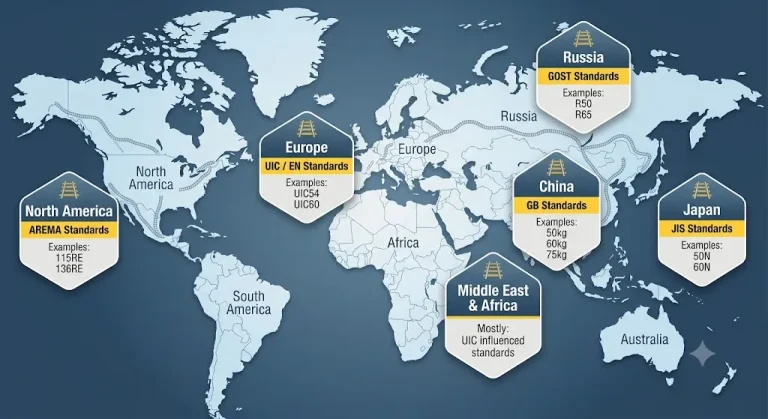
Because wheel failure can have serious safety consequences, railway operators and rolling stock manufacturers rely on strict technical standards.
1. Explore global specifications で 鉄道車輪規格の完全ガイド: で 13262, AAR M-107, TB/T 2817 その他
2. Compare major international systems で UIC, で, AAR, 彼, IRS & ゴスト: 鉄道車輪の規格は似ているようで似ていない理由
A railway wheel looks simple, but its geometry is the result of decades of engineering development.
Explore Wheel Design Topics
1. Learn why wheel flanges are essential で なぜ鉄道の車輪にはフランジがあるのか?
2. Explore wheel geometry fundamentals で 鉄道車輪の設計の説明: 列車が安全かつスムーズに運行される仕組み
3. Discover the engineering behind wheel strength で 鉄道の車輪はなぜ非常に強いのか: 5 明かされる秘密
4. Understand simulation-driven design and Structural Engineering and Safety Analysis で 鉄道車輪の安全に機械的FEAが不可欠な理由
5. Learn how wheel rotation contributes to stability で なぜ車輪を回転させると列車が安全かつスムーズに走行できるのか
6. Explore relationship in railway wheels design and train speed で 鉄道機関車の速度を実際に制限するものは何ですか?
7.0Understand wheelset loading in The Structure and Force Analysis of Locomotive Wheel Sets
Even under normal operating conditions, railway wheels gradually wear over time. Contact stress, braking heat, wheel slip, and environmental conditions all contribute to wheel degradation.
1. Wheel Flats
2. Rolling Contact Fatigue (RCF)
3. Shelling and Spalling
4. Thermal Cracks
5. Wheel Flange Wear
6. Surface Defects
7. Uneven Wear Patterns
Railway wheel failures rarely result from a single factor. 材料の選択, 微細構造, 硬度, ブレーキ条件, ホイールとレールの接触応力, and operating environments can all influence wheel wear, crack formation, and overall service life. Understanding these mechanisms helps engineers identify root causes and improve wheel reliability.
1. Learn why increasing wheel hardness does not always improve durability in 硬い鉄道車輪が常に優れているとは限らない理由
2 .Explore the risks of excessive hardness and reduced toughness で What Happens If Railway Wheels Are Too Hard?
3. Understand how abnormal microstructures can increase crack susceptibility で 鉄道の車輪において非パーライト構造が危険な理由
4. Discover how steel selection affects wear resistance, 疲労性能, と耐用年数 で 鉄道車輪の材質選択が摩耗に与える影響, ひび割れ, および耐用年数
5. Learn how braking forces influence wheel condition で 安全なブレーキのために鉄道ブレーキシューと鉄道車輪がどのように連携するか
6. Explore the relationship between braking systems, heat generation, and wheel damage で 鉄道ブレーキシューが列車を止める仕組みと鉄道車輪が重要な理由
Railway wheel service life depends not only on manufacturing quality but also on regular inspection, condition monitoring, and timely maintenance. Detecting defects at an early stage helps prevent unexpected failures, reduce lifecycle costs, and improve fleet reliability.
Modern railway operators use a combination of visual inspection, 寸法測定, および非破壊検査 (NDT) techniques to evaluate wheel condition throughout its service life.
Learn how visual inspections help identify surface defects and manufacturing anomalies で すべての鉄道車輪の品質と安全性を視覚的に検査する方法
Compare two widely used NDT methods で UT vs MT: 鉄道部品検査の違いは何ですか?
Discover how non-destructive testing helps verify wheel integrity で NDT と非破壊品質検査が鉄道車輪をどのように保証するか
Explore how railway wheels and cast steel components are verified before shipment で NDT による納入前の鉄道車輪と鋳鋼部品の検証方法
While all railway wheels perform the same basic function, operating conditions can vary significantly across different railway systems. Factors such as axle load, 動作速度, braking frequency, environmental conditions, and maintenance practices all influence wheel design and material selection.
Understanding application-specific requirements helps engineers and buyers select the most appropriate wheel solution for long-term reliability and performance.
Explore different railway wheels application で 機関車用車輪, 貨車および旅客車両
Learn how wheel requirements differ in urban transit systems で ライトレールおよび交通システム用の鍛造メトロホイール
Discover the challenges of heavy-haul environments で 産業および鉱山用途向けの頑丈な鉄道車輪
Understand how mining wheelsets differ from conventional railway applications で マイニングホイールセットは特別ですか?
Explore the engineering architecture of metro vehicles で Analysis of the Technical Architecture and Core Configuration of the Subway Vehicle System
Compare the structural and operational differences between crane wheels and railway wheels で Crane Wheels vs Railway Wheels: How They Differ in Design and Real Applications
Learn how single-flange and double-flange wheel designs are selected for different industrial rail systems で ダブルフランジホイール vs. シングルフランジホイール: 産業用鉄道システムに最適なものを選択する方法
A railway wheel never operates alone. その性能は車軸と密接に関係しています, ホイールセットアセンブリ, サスペンションシステム, 台車構造, and track infrastructure.
Many wheel-related problems are actually system-level issues. Wheel wear, 振動, impact loading, and fatigue performance are often influenced by wheel-rail interaction, suspension characteristics, トラックジオメトリ, and vehicle dynamics.
Looking beyond the wheel itself provides a deeper understanding of railway vehicle performance and long-term operational reliability.
Learn the fundamentals of wheelset construction in 電車の車輪セットについてどれくらい知っていますか?
Explore the design and manufacturing considerations of wheel hubs で 鉄道ホイールハブ: 鍛造および鋳造プロセスの技術分析と応用適応
Understand load distribution and stress transfer within wheelsets で The Structure and Force Analysis of Locomotive Wheel Sets
Railway wheel technology continues to evolve as railway operators demand higher speeds, longer service life, lower maintenance costs, and improved operational safety.
同時に, manufacturers are increasingly adopting automation, digital inspection systems, advanced measurement technologies, and data-driven quality control methods to improve production consistency and traceability.
These developments are shaping the next generation of railway wheel manufacturing and lifecycle management.
Explore how global railway systems are driving technological change in インテリジェント鉄道コンポーネントの未来: ナビゲートする 2026 高速鉄道の世界的なシフト
When sourcing railway wheels, price is only one factor to consider. Manufacturing capability, quality control systems, technical expertise, standards compliance, and delivery reliability often have a much greater impact on long-term project success.
A qualified supplier should demonstrate expertise across the entire production process, including material selection, 鍛造, ローリング, 熱処理, 機械加工, 検査, and standards compliance. Complete traceability, documented quality procedures, and export experience are also important considerations for international railway projects.
Choosing the right supplier is not simply about purchasing a component. It is about ensuring long-term product reliability, technical support, and consistent quality throughout the wheel lifecycle.