Digitalize o código WeChat para entrar em contato conosco
Digitalize o código WeChat para entrar em contato conosco
Sinta-se à vontade para nos enviar um e-mail e responderemos o mais breve possível.
Criando o futuro com coração e alma


Rodas ferroviárias carry the entire weight of a train while continuously transferring traction forces, cargas de frenagem, e impactos da pista. Whether installed on a vagão de carga, veículo de metrô, heavy duty industrial mining, or high-speed train, they operate under demanding conditions every day.
Although a railway wheel may look like a simple steel component, its design and manufacturing process are far more complex than many people realize. Seleção de materiais, forging quality, tratamento térmico, wheel profile geometry, and maintenance practices all play a role in determining how the wheel performs throughout its service life.
Para operadores ferroviários, rolling stock manufacturers, maintenance teams, and procurement engineers, wheel dimensions alone tell only part of the story. Understanding how wheels are manufactured, inspecionado, maintained, and affected by operating conditions is equally important.
This guide provides a practical overview of the complete railway wheel lifecycle and serves as a central resource for exploring more detailed technical topics related to wheel design, metallurgy, fabricação, padrões, manutenção, and failure analysis.
Long before a railway wheel reaches the track, it passes through a series of carefully controlled manufacturing steps. Each stage contributes directly to the wheel’s strength, durabilidade, e confiabilidade a longo prazo.
Most modern railway wheels are produced from forged steel. The process begins with steelmaking and billet preparation, followed by hot forging to form the wheel shape. Heat treatment is then used to achieve the required balance of hardness, resistência, e resistência ao desgaste.
Após tratamento térmico, precision machining creates the final dimensions and wheel profile. Before shipment, every wheel undergoes multiple inspections to verify dimensional accuracy, internal soundness, and compliance with applicable standards.
Even small variations in material quality, forging conditions, or heat treatment parameters can influence wheel wear, resistência à fadiga, and overall service life.
1. Explore the complete production journey in Railway Wheel Manufacturing Process: Um passeio pela nossa linha de produção
2. Learn why deformation control matters em Por que o processo de laminação de rodas ferroviárias é importante
3. Understand forging reliability em A anatomia de uma roda: Como construímos confiabilidade na fabricação de rodas ferroviárias forjadas
4. Discover how surface preparation improves quality em Why Shot Blasting Is Essential for Railway Wheels
5. Follow the full production workflow em Como excelentes rodas ferroviárias são fabricadas: Jornada de Processo Diligente
6. Learn how our Gantry Robots System work em Como os robôs de pórtico melhoram a produção de rodas ferroviárias
1. Understand wheel strengthening methods em Tratamento térmico de rodas ferroviárias: Normalizando, Têmpera e Revenimento Explicados
2. Learn the differences between major heat-treatment routes em Processo de tratamento térmico de rodas ferroviárias: Recozimento, Têmpera e Revenimento
3. Discover how heat treatment affects wheel performance em Como o tratamento térmico melhora a qualidade das rodas ferroviárias
4. Explore the role of thermal processing em Como as rodas ferroviárias são de boa qualidade: Tratamento térmico forja a perfeição
1. Learn how forged wheels reach final dimensions em Processo de usinagem de rodas ferroviárias: Do forjamento ao torneamento de precisão CNC
2. Understand why machining equipment selection for different railway vehicle em Usinagem de rodas ferroviárias: Por que diferentes linhas de produção são importantes
3. Discover how precision affects operating performance em Por que a precisão das rodas ferroviárias limita diretamente a velocidade máxima do trem
1. See how automation improves consistency em Como os robôs de pórtico melhoram a produção de rodas ferroviárias
2. Learn how online measurement systems improve accuracy em Como a medição a laser 3D garante rodas ferroviárias precisas
The performance of a railway wheel begins with its material. Steel composition, microestrutura, hardness distribution, and heat treatment all influence wear resistance, fatigue performance, impact toughness, e vida útil.
Although railway wheels may appear similar externally, their internal metallurgical structure can vary significantly depending on operating conditions and application requirements.
1. Learn which steel grades are commonly used em Que aço é usado para rodas ferroviárias?
2. Understand why pearlitic microstructures are preferred em Ferrite–Pearlite Structure: Why It Matters in Railway Wheels
3. Discover the risks of abnormal microstructures em Por que estruturas não perlíticas são perigosas em rodas ferroviárias
4. Explore the balance between hardness and durability em Por que as rodas ferroviárias mais duras nem sempre são melhores
5. Learn the consequences of excessive hardness em What Happens If Railway Wheels Are Too Hard?
6. Understand material-performance relationships em Como a seleção de materiais para rodas ferroviárias afeta o desgaste, Rachadura, e vida útil
7. Explore global material selection practices em Como os materiais das rodas ferroviárias são escolhidos para diferentes países e aplicações
8. Learn how standards influence material requirements em Materiais para rodas ferroviárias e padrões internacionais: O que os compradores realmente deveriam saber
Railway wheel quality must be verified throughout the manufacturing process. Modern quality systems combine dimensional inspection, testes mecânicos, metallurgical analysis, and non-destructive examination to ensure compliance with demanding railway requirements.
Explore Inspection and Quality Assurance Topics
1. Compare two major NDT methods em UT x MT: Qual é a diferença na inspeção de componentes ferroviários?
2. Learn how products are verified before shipment em Como as rodas ferroviárias e os componentes de aço fundido são verificados antes da entrega por NDT
3. Understand the role of non-destructive testing em Como END e inspeção de qualidade não destrutiva garantem rodas ferroviárias
4. See how visual inspections support safety em Como inspecionamos visualmente cada roda ferroviária quanto à qualidade e segurança
5. Explore property verification methods em How We Control Railway Wheel Mechanical Properties of International Standards
6. Learn more about manufacturing quality systems em How to Ensure the Quality Control of Train Wheels?
Because wheel failure can have serious safety consequences, railway operators and rolling stock manufacturers rely on strict technical standards.
1. Explore global specifications em The Complete Guide to Railway Wheel Standards: EM 13262, AAR M-107, TB/T 2817 and More
2. Compare major international systems em UIC, EM, RAA, JIS, Receita Federal & GOST: Why Railway Wheels Standards Look Similar but Are Not
A railway wheel looks simple, but its geometry is the result of decades of engineering development.
Explore Wheel Design Topics
1. Learn why wheel flanges are essential em Por que as rodas ferroviárias têm flanges?
2. Explore wheel geometry fundamentals em Projeto de rodas ferroviárias explicado: Como os trens permanecem seguros e tranquilos
3. Discover the engineering behind wheel strength em Por que as rodas ferroviárias são tão fortes: 5 Segredos revelados
4. Understand simulation-driven design and Structural Engineering and Safety Analysis em Por que a FEA mecânica é essencial para a segurança das rodas ferroviárias
5. Learn how wheel rotation contributes to stability em Por que as rodas ferroviárias giratórias podem manter os trens funcionando com segurança e suavidade
6. Explore relationship in railway wheels design and train speed em What Really Limits the Speed of a Railway Locomotive?
7.0Understand wheelset loading in The Structure and Force Analysis of Locomotive Wheel Sets
Even under normal operating conditions, railway wheels gradually wear over time. Contact stress, calor de frenagem, wheel slip, and environmental conditions all contribute to wheel degradation.
1. Wheel Flats
2. Rolling Contact Fatigue (FCR)
3. Shelling and Spalling
4. Rachaduras Térmicas
5. Wheel Flange Wear
6. Surface Defects
7. Uneven Wear Patterns
Railway wheel failures rarely result from a single factor. Seleção de materiais, microestrutura, dureza, braking conditions, tensões de contato roda-trilho, and operating environments can all influence wheel wear, crack formation, and overall service life. Understanding these mechanisms helps engineers identify root causes and improve wheel reliability.
1. Learn why increasing wheel hardness does not always improve durability in Por que as rodas ferroviárias mais duras nem sempre são melhores
2 .Explore the risks of excessive hardness and reduced toughness em What Happens If Railway Wheels Are Too Hard?
3. Understand how abnormal microstructures can increase crack susceptibility em Por que estruturas não perlíticas são perigosas em rodas ferroviárias
4. Discover how steel selection affects wear resistance, fatigue performance, e vida útil em Como a seleção de materiais para rodas ferroviárias afeta o desgaste, Rachadura, e vida útil
5. Learn how braking forces influence wheel condition em Como as sapatas de freio e as rodas ferroviárias funcionam juntas para uma frenagem segura
6. Explore the relationship between braking systems, heat generation, and wheel damage em How Railway Brake Shoes Stop a Train and Why Railway Wheels Matter
Railway wheel service life depends not only on manufacturing quality but also on regular inspection, condition monitoring, and timely maintenance. Detecting defects at an early stage helps prevent unexpected failures, reduce lifecycle costs, and improve fleet reliability.
Modern railway operators use a combination of visual inspection, medição dimensional, e testes não destrutivos (END) techniques to evaluate wheel condition throughout its service life.
Learn how visual inspections help identify surface defects and manufacturing anomalies em Como inspecionamos visualmente cada roda ferroviária quanto à qualidade e segurança
Compare two widely used NDT methods em UT x MT: Qual é a diferença na inspeção de componentes ferroviários?
Discover how non-destructive testing helps verify wheel integrity em Como END e inspeção de qualidade não destrutiva garantem rodas ferroviárias
Explore how railway wheels and cast steel components are verified before shipment em Como as rodas ferroviárias e os componentes de aço fundido são verificados antes da entrega por NDT
While all railway wheels perform the same basic function, operating conditions can vary significantly across different railway systems. Factors such as axle load, velocidade de operação, braking frequency, environmental conditions, and maintenance practices all influence wheel design and material selection.
Understanding application-specific requirements helps engineers and buyers select the most appropriate wheel solution for long-term reliability and performance.
Explore different railway wheels application em Rodas ferroviárias para locomotivas, Vagões de carga e material circulante de passageiros
Learn how wheel requirements differ in urban transit systems em Rodas metropolitanas forjadas para sistemas ferroviários leves e de trânsito
Discover the challenges of heavy-haul environments em Rodas ferroviárias para serviços pesados para aplicações industriais e de mineração
Understand how mining wheelsets differ from conventional railway applications em Is The Mining Wheelset Special?
Explore the engineering architecture of metro vehicles em Analysis of the Technical Architecture and Core Configuration of the Subway Vehicle System
Compare the structural and operational differences between crane wheels and railway wheels em Rodas de guindaste versus rodas ferroviárias: How They Differ in Design and Real Applications
Learn how single-flange and double-flange wheel designs are selected for different industrial rail systems em Rodas de Flange Dupla vs.. Rodas de Flange Simples: Como escolher o caminho certo para sistemas ferroviários industriais
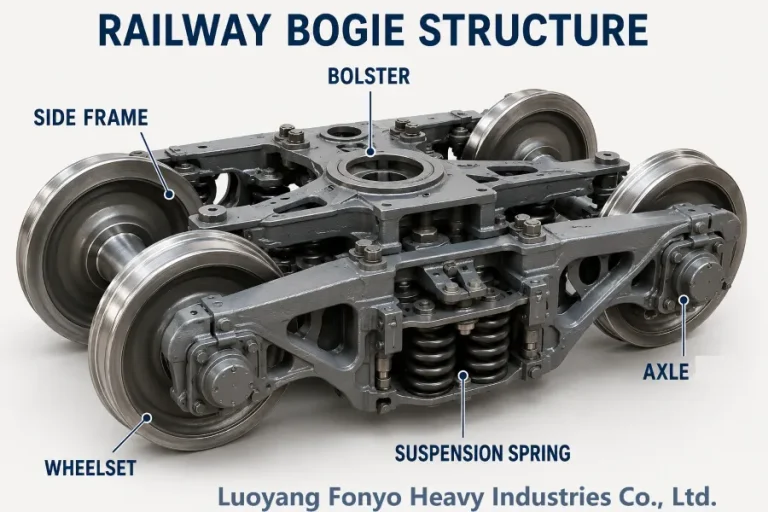
A railway wheel never operates alone. Seu desempenho está intimamente ligado ao eixo, montagem do rodado, sistema de suspensão, estrutura do carrinho, and track infrastructure.
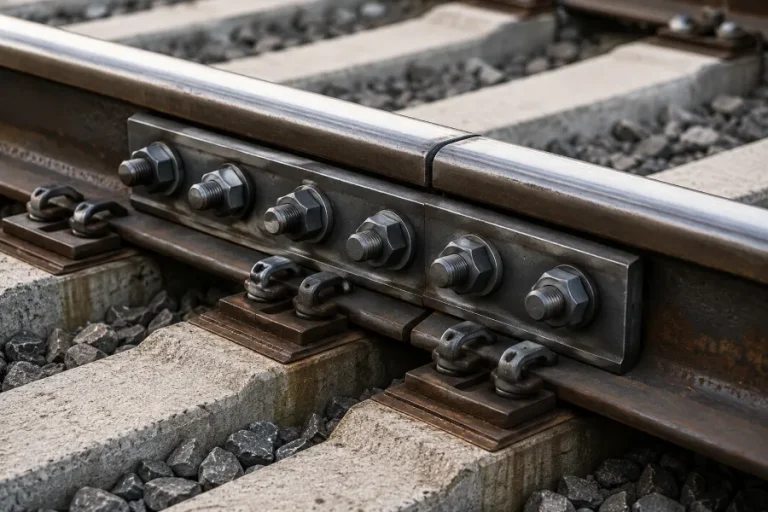
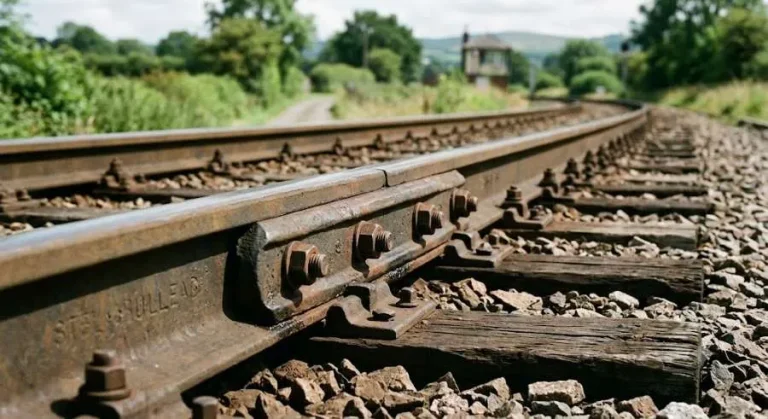
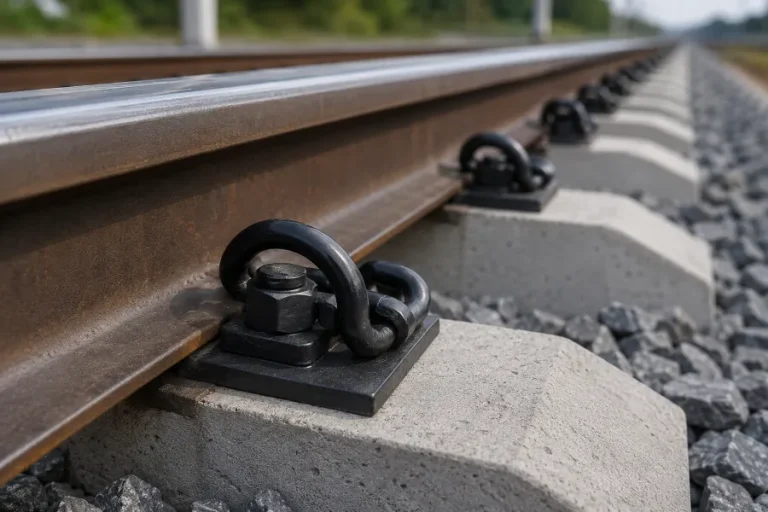
Many wheel-related problems are actually system-level issues. Wheel wear, vibração, carregamento de impacto, and fatigue performance are often influenced by wheel-rail interaction, suspension characteristics, geometria da pista, and vehicle dynamics.
Looking beyond the wheel itself provides a deeper understanding of railway vehicle performance and long-term operational reliability.
Learn the fundamentals of wheelset construction in Quanto você conhece o conjunto de rodas de trem?
Explore the design and manufacturing considerations of wheel hubs em Cubos de rodas ferroviárias: Technical Analysis and Application Adaptation of Forging and Casting Processes
Understand load distribution and stress transfer within wheelsets em The Structure and Force Analysis of Locomotive Wheel Sets
Railway wheel technology continues to evolve as railway operators demand higher speeds, vida útil mais longa, lower maintenance costs, and improved operational safety.
Ao mesmo tempo, manufacturers are increasingly adopting automation, digital inspection systems, advanced measurement technologies, and data-driven quality control methods to improve production consistency and traceability.
These developments are shaping the next generation of railway wheel manufacturing and lifecycle management.
Explore how global railway systems are driving technological change in The Future of Intelligent Railway Components: Navigating the 2026 Global Shift in High-Speed Rail
When sourcing railway wheels, price is only one factor to consider. Manufacturing capability, quality control systems, technical expertise, standards compliance, and delivery reliability often have a much greater impact on long-term project success.
A qualified supplier should demonstrate expertise across the entire production process, including material selection, forjamento, rolling, tratamento térmico, usinagem, inspeção, and standards compliance. Complete traceability, documented quality procedures, and export experience are also important considerations for international railway projects.
Choosing the right supplier is not simply about purchasing a component. It is about ensuring long-term product reliability, technical support, and consistent quality throughout the wheel lifecycle.