Digitalize o código WeChat para entrar em contato conosco
Digitalize o código WeChat para entrar em contato conosco
Sinta-se à vontade para nos enviar um e-mail e responderemos o mais breve possível.
Criando o futuro com coração e alma


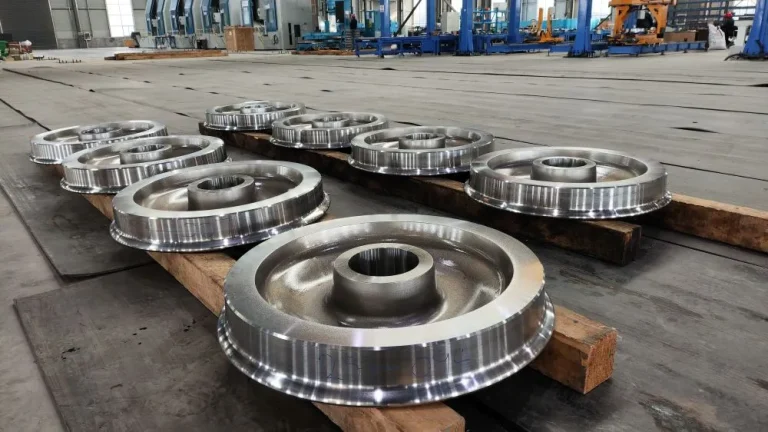
Produzindo rodas ferroviárias is a tough job. Cada roda é muito pesada – geralmente de 200 a 900 kg – e feita de aço sólido. Depois de forjar, as rodas estão em brasa, às vezes acima de 1000°C, and must be machined precisely so trains run smoothly at high speeds.
Handling these heavy, quente, and expensive wheels manually is slow and risky. That’s why factories use gantry robots, also called 桁架机械手, to automate the process.
Gantry robots make production safer, faster, and more precise. They allow factories to produce more rodas ferroviárias while keeping workers out of harm’s way.
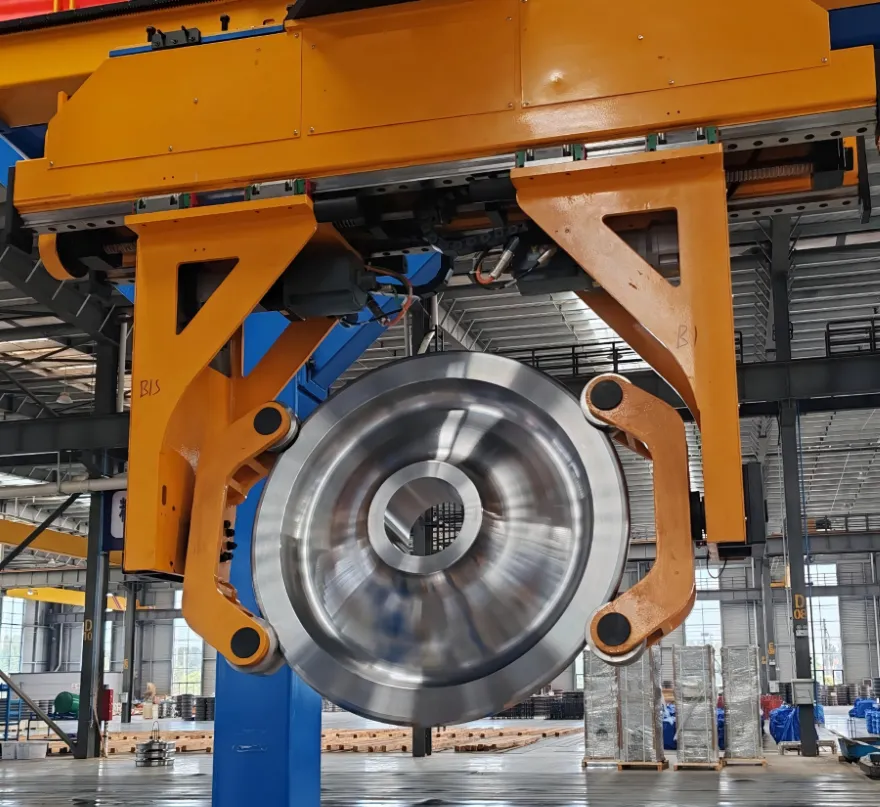
Unlike car wheels, railway wheels are massive. They support the full weight of a train and must withstand high speeds and heavy loads.
Because of their size and heat, moving these wheels requires special equipment. Simple forklifts or standard robot arms are usually not strong enough.
A gantry robot is an industrial robot shaped like a bridge. Imagine a strong metal frame spanning over a factory floor. It has:
It moves in three directions:
Gantry robots are built to handle heavy loads safely while keeping the factory floor clear. They are precise, able to place each wheel with millimeter-level accuracy.
You might wonder why not just use forklifts or standard robot arms. The answer is simple:
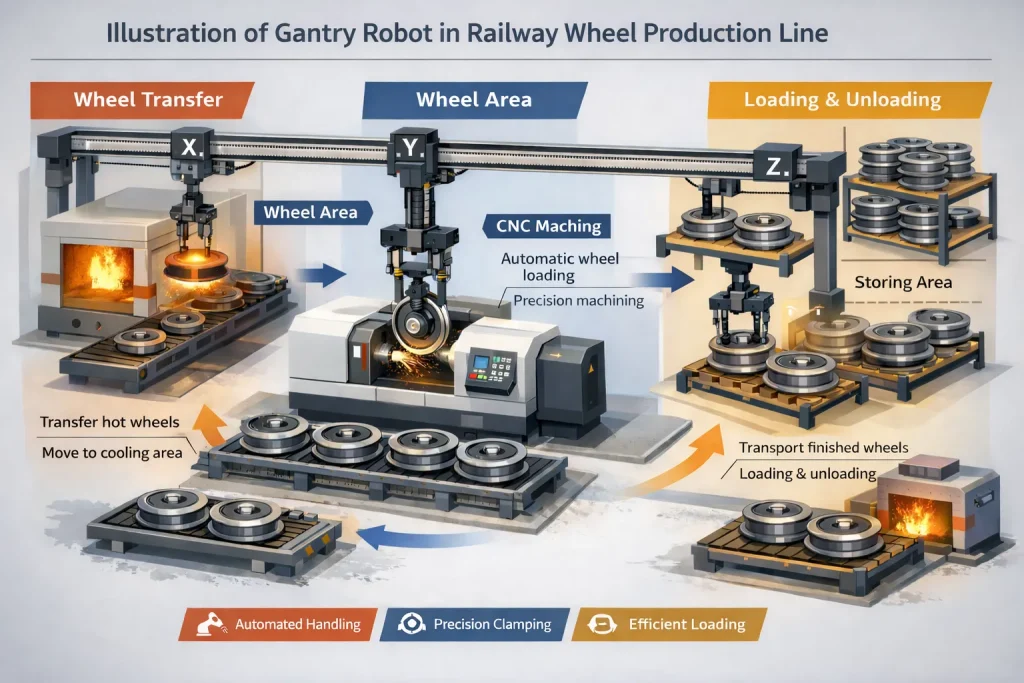
Here’s how gantry robots operate in a typical railway wheel factory:
Depois de lançar, wheels are extremely hot. The robot lifts each wheel and moves it to a cooling rack, keeping workers safe.
Once cooled, wheels need usinagem de precisão on CNC lathes or grinders.
After machining, finished wheels are moved to storage or shipping.
Walking into a modern factory, you’ll notice:
Exemplo:
Before a factory installed a gantry robot, two workers used a crane to move each wheel. Levou 10 minutes per wheel setup. Agora, the robot does it in under 2 minutos. Daily output increased significantly, and workers only monitor from a control room.
New gantry robots include cameras and sensors. They can:
Automation not only improves efficiency but also creates a smart, traceable production line for all railway wheels.
Gantry robots are the perfect solution for railway wheels production. They are:
By automating wheel transfer, usinagem, and storage, factories produce more wheels faster, mais seguro, and with higher quality.
Em moderno rodas ferroviárias produção, gantry robots have clearly transformed the way factories operate—making handling safer, faster, and more precise. Como fabricante profissional, Luoyang Fonyo Indústrias Pesadas Co., Ltda., design and supply automated solutions that integrate seamlessly into production lines, helping factories achieve these benefits efficiently. Por favor visite nosso site www.railwaypart.com para obter mais informações sobre nós. If you have any product requirements related to railway wheels or automated handling systems, feel free to Contate-nos for further technical discussion.
P: Can gantry robots handle heavy railway wheels?
UM: Sim, they are designed for high loads and precise positioning.
P: How do gantry robots improve production efficiency?
UM: They automate wheel transfer, loading CNC machines, and storage, saving time and labor.
P: Are gantry robots safe for workers?
UM: Sim, they prevent direct contact with hot or heavy wheels, reducing accidents.
P: Can gantry robots work with CNC machines?
UM: Absolutamente. They load and unload railway wheels for precise machining automatically.