Digitalize o código WeChat para entrar em contato conosco
Digitalize o código WeChat para entrar em contato conosco
Sinta-se à vontade para nos enviar um e-mail e responderemos o mais breve possível.
Criando o futuro com coração e alma


Rodas ferroviárias pode parecer simples, mas eles trabalham sob condições extremas todos os dias.
Eles carregam cargas pesadas, rolar em alta velocidade, e suportar fortes forças de frenagem.
Se algo der errado, o resultado pode ser sério.
É por isso que a Análise Mecânica de Elementos Finitos (FEA) desempenha um papel tão importante no projeto e fabricação de rodas ferroviárias.
Este artigo explica o que a FEA realmente faz, e por que isso importa, de forma clara e prática.
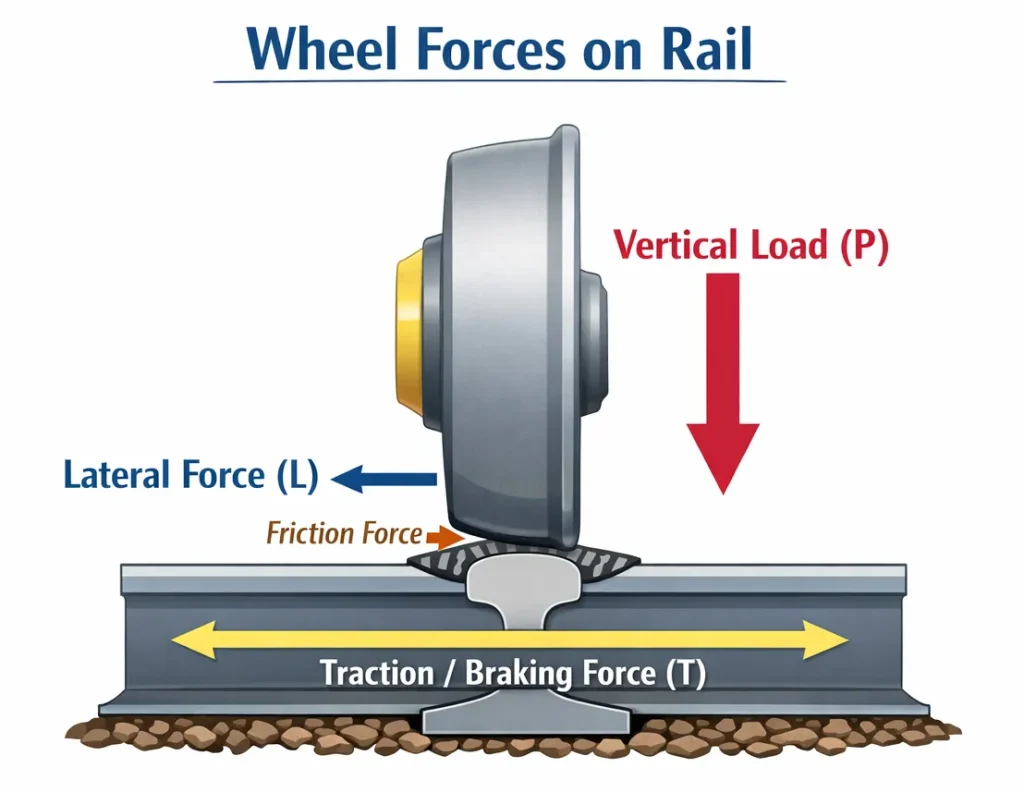
Uma roda ferroviária nunca está em repouso.
Durante o serviço, deve lidar:
Todas essas forças agem repetidamente, ao longo de milhões de ciclos.
Mesmo uma pequena fraqueza no design pode lentamente se transformar em uma rachadura.
FEA Mecânica é um método de simulação baseado em computador.
It answers one basic question:
“What happens inside the wheel when forces are applied?”
Using FEA, engineers can:
Instead of guessing, FEA shows where problems may appear before the wheel is produced.

A typical Mechanical FEA for rodas ferroviárias focuses on three main points.
1. Stress
Stress shows how much force the material is carrying.
High stress areas are more likely to crack over time.
2. Deformação
This shows how much the wheel bends or moves under load.
Even small deformations matter for long-term performance.
3. Safety Margin
FEA compares calculated stress with allowable limits defined by standards.
This helps confirm whether the design is safe.
FEA often shows that stress is not evenly distributed.
Some areas need special attention:
These zones may look normal from the outside, but FEA reveals what is happening inside the wheel.
Traditional inspection checks the wheel after it is made.
FEA works before production, when changes are still easy and low-cost.
With FEA, manufacturers can:
It turns experience and standards into measurable results.

Mechanical FEA is not just a calculation exercise.
It helps ensure that:
When combined with accurate manufacturing and precise measurement, FEA helps turn a design into a wheel that performs safely in the real world.
A well-prepared FEA report builds confidence in the design.
But simulation alone is not enough.
To achieve reliable results, the real wheel must closely match the simulated model.
That is why modern wheel manufacturing also relies on precise forming and advanced measurement methods.
When design, analysis, and manufacturing work together, safety is no longer just assumed—it is verified.
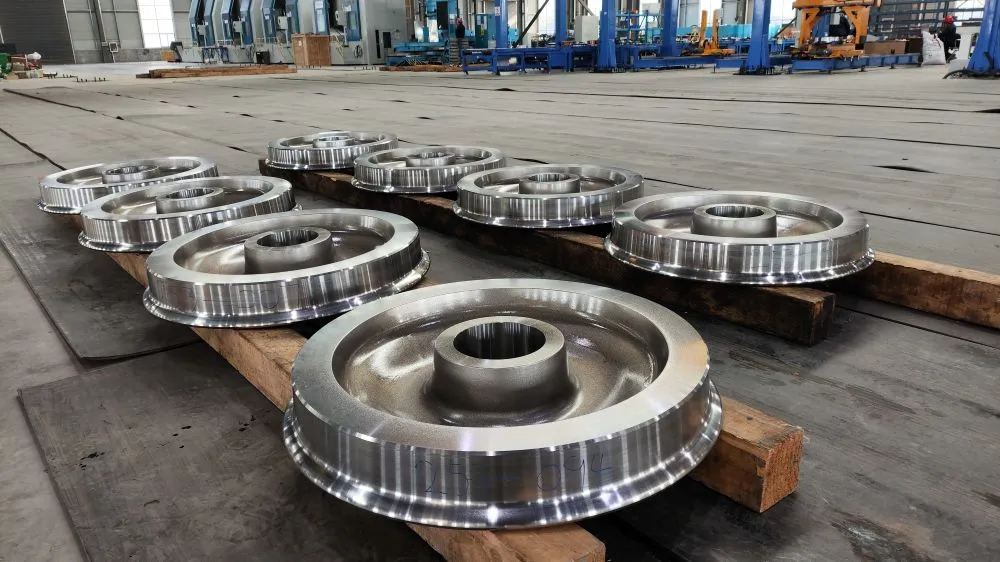
Mechanical FEA plays a key role in ensuring roda ferroviária segurança, but simulation alone is not enough.
Reliable results depend on accurate design, controlled manufacturing, and a deep understanding of real service conditions.
Luoyang Fonyo Indústrias Pesadas Co., Ltda. combines practical FEA experience with railway wheel manufacturing expertise, helping ensure that simulation results truly reflect real-world performance.
If you would like to learn more about our railway wheels and related solutions, por favor visite
www.railwaypart.com