Digitalize o código WeChat para entrar em contato conosco
Digitalize o código WeChat para entrar em contato conosco
Sinta-se à vontade para nos enviar um e-mail e responderemos o mais breve possível.
Criando o futuro com coração e alma


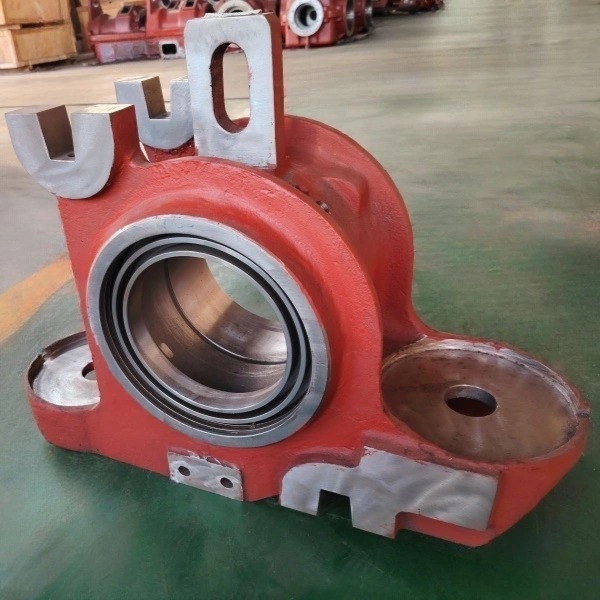
In many heavy-duty industries, engineers face a common challenge: how to make components that stay tough and reliable in extremely cold environments. Whether it’s a railway wheel rolling through winter snow at −20°C, or a wind turbine generator housing braving −40°C at the top of a windy plateau, materials need to perform flawlessly. That’s where ferro dúctil de baixa temperatura (LTDI) peças fundidas come into play.
Materials like EN-GJS-400-18-LT are designed to retain impact toughness at very low temperatures, complying with standards such as EN 1563 and ISO 1083. No papel, meeting these specifications sounds straightforward: ensure proper chemical composition, maintain nodularity, aim for a ferritic matrix, and hit the impact values. Na realidade, producing stable low temperature ductile iron castings is a fine balancing act, full of hidden challenges.
One of the first lessons engineers learn is that chemical composition matters more than it seems. Silicon is a good example. It helps strengthen the iron and encourages ferrite formation—which is great for ductility—but if silicon creeps just a little too high, the casting suddenly loses toughness at low temperatures.
Na prática, most foundries aim for silicon content around 2.2–2.5%. This seems like a tight window, and it is. Even small variations can push the casting over the edge, resulting in poor impact test results. When you’re talking about wind turbine housings that weigh hundreds of kilograms or railway components that endure constant cyclic loading, this is a big deal.
The next hurdle is nodularization. In ductile iron, graphite needs to form as spheroidal nodules, not flakes or irregular shapes. This process isn’t just about adding magnesium—it’s about timing, temperatura, and recovery.
If nodularization is unstable, graphite can partially degenerate. For standard ductile iron, this might still pass inspection. But in low temperature grades, any deviation shows up immediately in impact testing. Experienced engineers usually aim for nodularity above 80–90%, and achieving that consistently means controlling:
Even minor changes in these parameters can cause microstructure variations, which then affect low-temperature toughness.

Low temperature ductile iron grades prefer a ferritic matrix, because ferrite provides ductility and toughness. Pearlite, which increases strength, reduces toughness. It’s a trade-off every engineer has to manage carefully.
Pearlite can sneak in when:
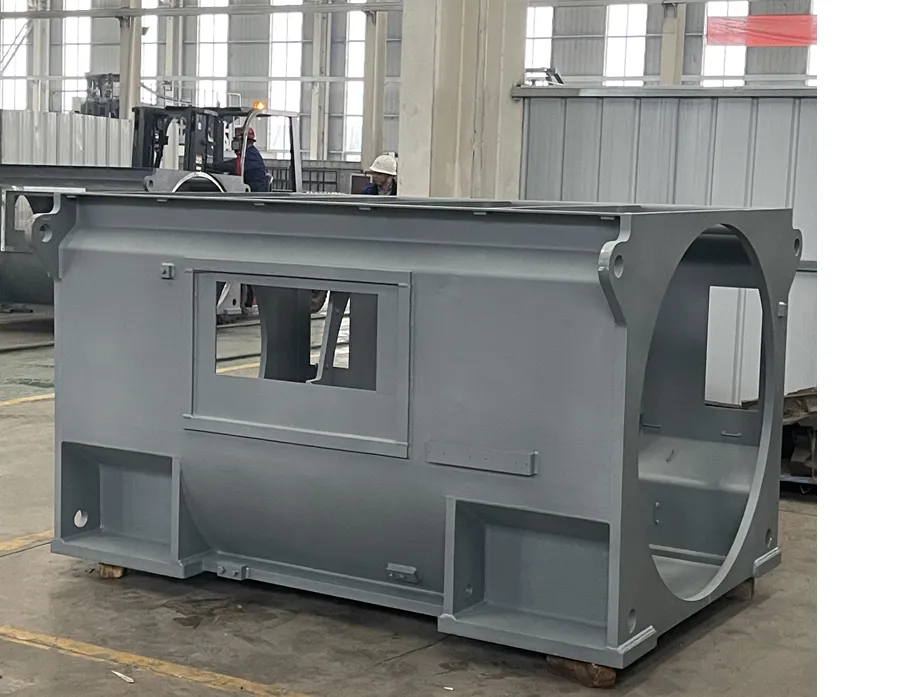
Even a moderate pearlite fraction can reduce impact performance at −20°C or −40°C. That’s why foundries producing carcaças de geradores de turbinas eólicas often monitor both chemical composition and cooling conditions very closely.
For small parts, controlling microstructure is already tricky. For large castings—like a wind turbine generator frame or a railway bogie component—the challenge multiplies. Thick sections cool slower than thin ones, leading to:
This means a single casting can have spots that behave differently under impact. To manage this, engineers must pay attention to casting design, gating system, and cooling strategy, ensuring the final product performs reliably throughout.
Nothing is more frustrating than seeing a casting that looks perfect fail the impact test. The microstructure seems fine, yet the low-temperature impact value falls short.
Why does this happen? Impact performance depends on many subtle factors:
Even samples taken from different areas of the same casting may yield different results. Producing stable low temperature ductile iron castings is about maintaining control over the entire process, from melting to solidification.
The final challenge sometimes shows up after the casting leaves the foundry. Large components—like carcaças de geradores de turbinas eólicas ou rodas ferroviárias—undergo heavy machining. Durante a usinagem, internal stress may be released, causing the part to deform.
Engineers mitigate this with:
These steps help maintain dimensional stability, which is crucial for assembly and long-term performance.
Looking at all these challenges together, it’s clear that producing low temperature ductile iron castings isn’t just about hitting specs. It’s about consistent control across the entire workflow:
Small deviations in any of these steps can significantly affect low-temperature toughness, especially in demanding applications like componentes ferroviários e carcaças de geradores de turbinas eólicas.
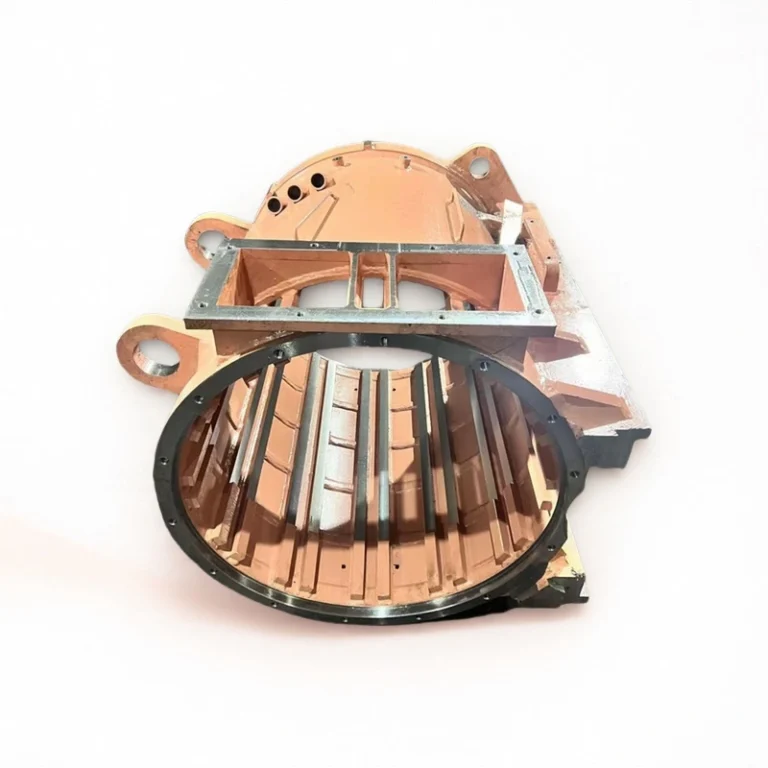
In wind power, generator housings cast from low temperature ductile iron must survive extreme environments for decades. Any brittleness at −40°C can cause cracks, leading to downtime or catastrophic failure. That’s why LTDI grades are a standard choice.
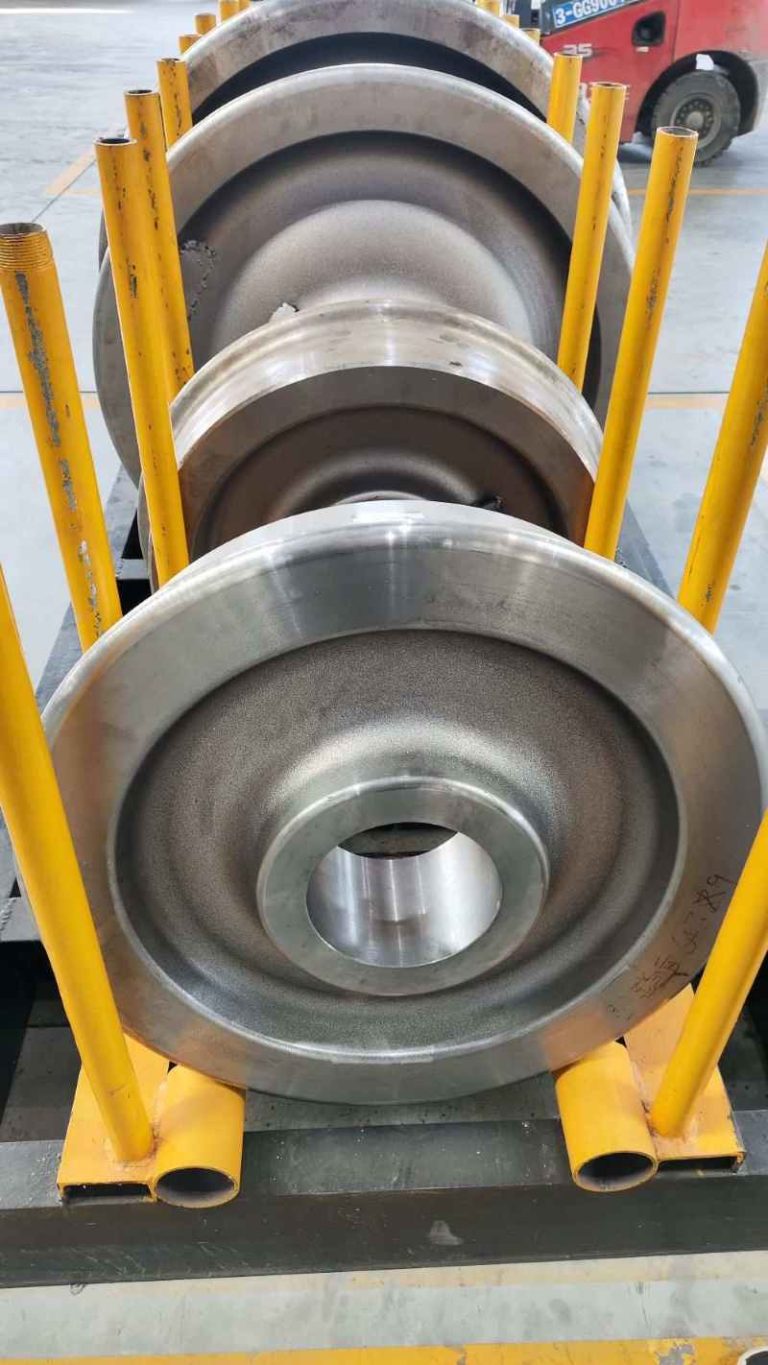
In railways, wheels and structural castings must perform reliably in winter conditions. While the volume of railway castings may be smaller than wind turbine components, the consequences of failure are equally critical. A brittle wheel or frame is a safety risk, which is why LTDI’s toughness at low temperatures is so valuable.
Engineers in successful foundries often share these insights:
Experience and meticulous process control make low temperature ductile iron one of the most reliable materials for challenging applications.
Producing ferro dúctil de baixa temperatura castings is a complex balancing act. Engineers need to manage chemistry, nodularity, resfriamento, microestrutura, and residual stress simultaneously. Any lapse in control can lead to disappointing results in low-temperature toughness, whether in wind turbine generator housings or railway components.
With proper process management and experience, low temperature ductile iron remains a material of choice for heavy-duty, high-reliability applications. For industries that demand consistent performance in cold environments, LTDI provides a proven solution.
Na nossa empresa Luoyang Fonyo Indústrias Pesadas Co., Ltda. we specialize in custom castings for wind turbine generator housings and railway components, offering tailored solutions for demanding projects. If you are interested in railway wheels, fundições estruturais, or wind turbine generator housings, feel free to contact us for inquiries or custom production.
If you want to know more about our products, please visit our website at www.railwaypart.com