Digitalize o código WeChat para entrar em contato conosco
Digitalize o código WeChat para entrar em contato conosco
Sinta-se à vontade para nos enviar um e-mail e responderemos o mais breve possível.
Criando o futuro com coração e alma

Turbinas eólicas formadoras de rede, also known as voltage source turbinas eólicas in the wind power industry, are a new type of wind turbine that operates with voltage source characteristics and can actively provide support to the power grid.
1.1 The core feature of grid-forming turbinas eólicas lies in simulating the rotor motion equation of synchronous generators, presenting voltage source control and self-synchronization grid characteristics externally, and being able to control the output voltage (amplitude and phase), actively support the stability of grid frequency and voltage, and provide inertia and damping support to the system, allowing for island operation.
1.2 They are suitable for weak grid environments with a high proportion of new energy access. Grid-forming wind turbines can transform wind turbines from “passively following the grid” para “actively building the grid”, providing key technical support for the stable operation of new power systems.
2.1 Grid-forming wind turbines mainly rely on grid-forming technology to achieve grid connection. Grid-forming technology is a control strategy that provides stable support to the power system by autonomously establishing voltage and frequency references.
For grid-forming turbinas eólicas, em termos simples, the converter connected to the grid imitates the operation mode of synchronous generators, and through control algorithms, simulates the inertia, damping, and voltage source characteristics of synchronous generators.
2.2 The wind turbine can be regarded as a local controlled “voltage source/main power source”.
During grid connection, it does not rely on a phase-locked loop to track the grid phase, but instead uses control algorithm strategies (such as virtual synchronous machine control, etc.) to complete grid connection through a power synchronization loop that simulates the electrical transient of synchronous generators.
2.3 In the traditional power generation field, synchronous generators have huge rotational inertia and strong current overload capacity, which can effectively deal with disturbances in frequency (active power) and voltage (reactive power) in the power system.
Traditional synchronous generator control technology is already very mature. The grid-forming technology for wind power is to apply some theories of synchronous generators to wind turbine units and “pacote” them into the operation mode of synchronous generators.
3.1 The converter of grid-forming turbinas eólicas has the characteristics of strong transient overcurrent capacity support, strong inertia and damping capacity, high reactive current support (up to more than 3 times the rated current), and fast dynamic response speed (up to within 20ms). The dynamic support indicators are higher than those of grid-following wind turbines.
3.2 After grid-forming turbinas eólicas are connected to the grid, they can effectively solve the problems of transient overvoltage disconnection, reduced system inertia, and wide-frequency oscillation caused by the high proportion of new energy grid connection, enhance the stability of the units themselves, and improve the operating environment of large-scale grid-following new energy generation units in adjacent wind farms, thereby overall improving the transmission capacity of wind power new energy.
4.1 With the development of the power generation industry and policy guidance, by the end of December 2024, the cumulative installed capacity of power generation in China was approximately 3.35 billion kilowatts.
Entre eles, the installed capacity of new energy power generation, como energia eólica, reached 1.45 billion kilowatts, accounting for 42.8% of the national power generation installed capacity, exceeding the installed capacity of thermal power for the first time. The power system presents the “dual high” characteristics of a high proportion of renewable energy and a high proportion of power electronic equipment.
4.2 As an important part of new energy power generation, with the continuous increase in the penetration rate of new energy in the system, concentrated areas of new energy power generation are prone to problems such as reduced short-circuit ratio, wide-frequency oscillation, insufficient frequency regulation capacity, reduced system inertia, and transient overvoltage disconnection.
4.3 Em contraste, grid-forming control technology can take on the responsibility of constructing system voltage and frequency, transforming from “passive adaptation” para “active support and autonomous operation”, and overall ensuring grid-friendly connection and grid safety.
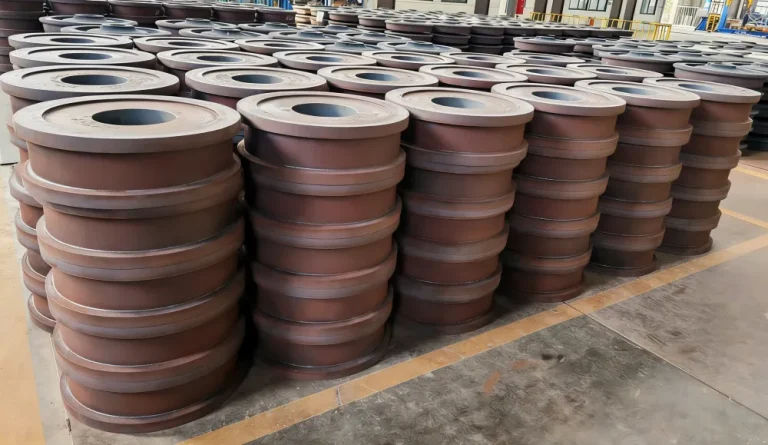
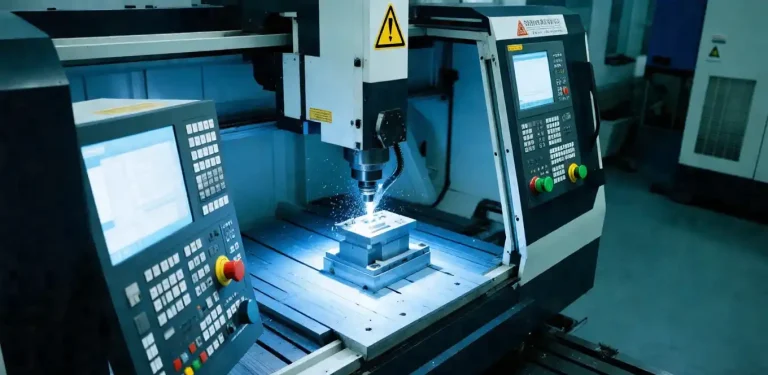
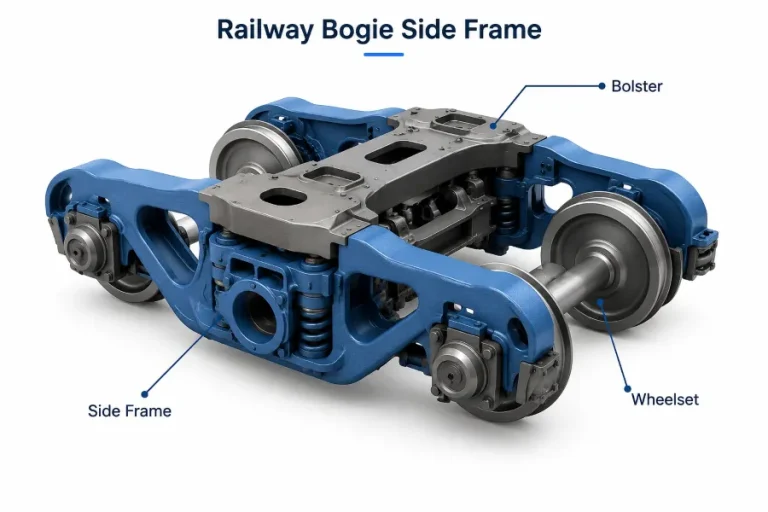
Luoyang Fonyo Indústrias Pesadas Co., Ltda,fundada em 1998, é fabricante de peças fundidas ferroviárias. Nossa fábrica cobre uma área de 72.600㎡, com mais de 300 funcionários, 32 técnicos, incluindo 5 engenheiros seniores, 11 engenheiros assistentes, e 16 técnicos.Nossa capacidade de produção é 30,000 toneladas por ano. Atualmente, produzimos principalmente fundição, usinagem, e montagem para locomotiva, vagão, trens de alta velocidade, equipamento de mineração,energia eólica,etc..
Somos o fornecedor de peças ferroviárias para CRRC(incluindo mais de 20 empresas filiais e subsidiárias da CRRC),Máquinas de Engenharia Gemac,Grupo Sany, Indústrias Pesadas Cíticas,etc.. Nossos produtos foram exportados para a Rússia, os Estados Unidos, Alemanha, Argentina, Japão, França, África do Sul,Itália e outros países em todo o mundo.