Отсканируйте код WeChat, чтобы связаться с нами.
Отсканируйте код WeChat, чтобы связаться с нами.
Не стесняйтесь, отправьте нам электронное письмо, и мы ответим вам как можно скорее.
Создаем будущее сердцем и душой


Железнодорожные колеса carry the entire weight of a train while continuously transferring traction forces, braking loads, and impacts from the track. Whether installed on a грузовой вагон, транспортное средство метро, heavy duty industrial mining, or high-speed train, they operate under demanding conditions every day.
Although a railway wheel may look like a simple steel component, its design and manufacturing process are far more complex than many people realize. Выбор материала, forging quality, термическая обработка, wheel profile geometry, and maintenance practices all play a role in determining how the wheel performs throughout its service life.
Для железнодорожных операторов, производители подвижного состава, бригады технического обслуживания, and procurement engineers, wheel dimensions alone tell only part of the story. Understanding how wheels are manufactured, проверено, maintained, and affected by operating conditions is equally important.
This guide provides a practical overview of the complete railway wheel lifecycle and serves as a central resource for exploring more detailed technical topics related to wheel design, metallurgy, производство, стандарты, обслуживание, and failure analysis.
Long before a railway wheel reaches the track, it passes through a series of carefully controlled manufacturing steps. Each stage contributes directly to the wheel’s strength, долговечность, and long-term reliability.
Most modern railway wheels are produced from forged steel. The process begins with steelmaking and billet preparation, followed by hot forging to form the wheel shape. Heat treatment is then used to achieve the required balance of hardness, прочность, и износостойкость.
After heat treatment, precision machining creates the final dimensions and wheel profile. Before shipment, every wheel undergoes multiple inspections to verify dimensional accuracy, internal soundness, and compliance with applicable standards.
Even small variations in material quality, forging conditions, or heat treatment parameters can influence wheel wear, сопротивление усталости, and overall service life.
1. Explore the complete production journey in Railway Wheel Manufacturing Process: Прогулка по нашей производственной линии
2. Learn why deformation control matters в Почему важен процесс прокатки железнодорожных колес
3. Understand forging reliability в Анатомия колеса: Как мы обеспечиваем надежность при производстве кованых железнодорожных колес
4. Discover how surface preparation improves quality в Почему дробеструйная очистка необходима для железнодорожных колес
5. Follow the full production workflow в Как создаются превосходные железнодорожные колеса: Добросовестное путешествие по процессу
6. Learn how our Gantry Robots System work в Как портальные роботы улучшают производство железнодорожных колес
1. Understand wheel strengthening methods в Термическая обработка железнодорожных колес: Нормализация, Объяснение закалки и отпуска
2. Learn the differences between major heat-treatment routes в Процесс термообработки железнодорожных колес: Отжиг, Закалка и отпуск
3. Discover how heat treatment affects wheel performance в Как термообработка улучшает качество железнодорожных колес
4. Explore the role of thermal processing в Как железнодорожные колеса должны быть качественными: Термическая обработка создает совершенство
1. Learn how forged wheels reach final dimensions в Процесс обработки железнодорожных колес: От ковки до прецизионной токарной обработки с ЧПУ
2. Understand why machining equipment selection for different railway vehicle в Обработка железнодорожных колес: Почему важны разные производственные линии
3. Discover how precision affects operating performance в Почему точность железнодорожных колес напрямую ограничивает максимальную скорость поезда
1. See how automation improves consistency в Как портальные роботы улучшают производство железнодорожных колес
2. Learn how online measurement systems improve accuracy в Как 3D-лазерное измерение гарантирует точность железнодорожных колес
The performance of a railway wheel begins with its material. Steel composition, microstructure, hardness distribution, and heat treatment all influence wear resistance, fatigue performance, impact toughness, и срок службы.
Although railway wheels may appear similar externally, their internal metallurgical structure can vary significantly depending on operating conditions and application requirements.
1. Learn which steel grades are commonly used в Какая сталь используется для железнодорожных колес?
2. Understand why pearlitic microstructures are preferred в Ферритно-перлитная структура: Почему это важно для железнодорожных колес
3. Discover the risks of abnormal microstructures в Чем опасны неперлитные структуры в железнодорожных колесах
4. Explore the balance between hardness and durability в Почему более твердые железнодорожные колеса не всегда лучше
5. Learn the consequences of excessive hardness в What Happens If Railway Wheels Are Too Hard?
6. Understand material-performance relationships в Как выбор материала железнодорожных колес влияет на износ, Крекинг, и срок службы
7. Explore global material selection practices в Как выбираются материалы железнодорожных колес для разных стран и областей применения
8. Learn how standards influence material requirements в Материалы железнодорожных колес и международные стандарты: Что на самом деле следует знать покупателям
Railway wheel quality must be verified throughout the manufacturing process. Modern quality systems combine dimensional inspection, механические испытания, metallurgical analysis, and non-destructive examination to ensure compliance with demanding railway requirements.
Explore Inspection and Quality Assurance Topics
1. Compare two major NDT methods в ЮТ против МТ: В чем разница в проверке железнодорожных компонентов?
2. Learn how products are verified before shipment в Как железнодорожные колеса и детали из литой стали проверяются перед доставкой компанией NDT
3. Understand the role of non-destructive testing в Как неразрушающий контроль и неразрушающий контроль качества гарантируют железнодорожные колеса
4. See how visual inspections support safety в Как мы визуально проверяем каждое железнодорожное колесо на качество и безопасность
5. Explore property verification methods в Как мы контролируем механические свойства железнодорожных колес по международным стандартам
6. Learn more about manufacturing quality systems в Как обеспечить контроль качества железнодорожных колес?
Because wheel failure can have serious safety consequences, railway operators and rolling stock manufacturers rely on strict technical standards.
1. Explore global specifications в Полное руководство по стандартам на железнодорожные колеса: В 13262, ААР М-107, ТБ/Т 2817 и многое другое
2. Compare major international systems в МСЖД, В, ААР, ОН, Налоговое управление США & ГОСТ: Почему стандарты железнодорожных колес выглядят похожими, но не являются таковыми
A railway wheel looks simple, but its geometry is the result of decades of engineering development.
Explore Wheel Design Topics
1. Learn why wheel flanges are essential в Почему у железнодорожных колес есть фланцы?
2. Explore wheel geometry fundamentals в Объяснение конструкции железнодорожных колес: Как поезда остаются безопасными и плавными
3. Discover the engineering behind wheel strength в Почему железнодорожные колеса такие прочные: 5 Секреты раскрыты
4. Understand simulation-driven design and Structural Engineering and Safety Analysis в Почему механическая FEA важна для безопасности железнодорожных колес
5. Learn how wheel rotation contributes to stability в Почему вращающиеся железнодорожные колеса могут обеспечить безопасную и плавную работу поездов
6. Explore relationship in railway wheels design and train speed в Что на самом деле ограничивает скорость железнодорожного локомотива?
7.0Understand wheelset loading in The Structure and Force Analysis of Locomotive Wheel Sets
Even under normal operating conditions, railway wheels gradually wear over time. Contact stress, тепло торможения, wheel slip, and environmental conditions all contribute to wheel degradation.
1. Колеса на плоской подошве
2. Rolling Contact Fatigue (РШФ)
3. Шелушение и скалывание
4. Термические трещины
5. Wheel Flange Wear
6. Surface Defects
7. Uneven Wear Patterns
Railway wheel failures rarely result from a single factor. Выбор материала, microstructure, твердость, braking conditions, контактные напряжения колеса с рельсом, and operating environments can all influence wheel wear, crack formation, and overall service life. Understanding these mechanisms helps engineers identify root causes and improve wheel reliability.
1. Learn why increasing wheel hardness does not always improve durability in Почему более твердые железнодорожные колеса не всегда лучше
2 .Explore the risks of excessive hardness and reduced toughness в What Happens If Railway Wheels Are Too Hard?
3. Understand how abnormal microstructures can increase crack susceptibility в Чем опасны неперлитные структуры в железнодорожных колесах
4. Discover how steel selection affects wear resistance, fatigue performance, и срок службы в Как выбор материала железнодорожных колес влияет на износ, Крекинг, и срок службы
5. Learn how braking forces influence wheel condition в Как железнодорожные тормозные колодки и железнодорожные колеса вместе обеспечивают безопасное торможение
6. Explore the relationship between braking systems, heat generation, and wheel damage в Как железнодорожные тормозные колодки останавливают поезд и почему железнодорожные колеса так важны
Railway wheel service life depends not only on manufacturing quality but also on regular inspection, condition monitoring, and timely maintenance. Detecting defects at an early stage helps prevent unexpected failures, reduce lifecycle costs, and improve fleet reliability.
Modern railway operators use a combination of visual inspection, измерение размеров, и неразрушающий контроль (неразрушающий контроль) techniques to evaluate wheel condition throughout its service life.
Learn how visual inspections help identify surface defects and manufacturing anomalies в Как мы визуально проверяем каждое железнодорожное колесо на качество и безопасность
Compare two widely used NDT methods в ЮТ против МТ: В чем разница в проверке железнодорожных компонентов?
Discover how non-destructive testing helps verify wheel integrity в Как неразрушающий контроль и неразрушающий контроль качества гарантируют железнодорожные колеса
Explore how railway wheels and cast steel components are verified before shipment в Как железнодорожные колеса и детали из литой стали проверяются перед доставкой компанией NDT
While all railway wheels perform the same basic function, operating conditions can vary significantly across different railway systems. Factors such as axle load, рабочая скорость, braking frequency, условия окружающей среды, and maintenance practices all influence wheel design and material selection.
Understanding application-specific requirements helps engineers and buyers select the most appropriate wheel solution for long-term reliability and performance.
Explore different railway wheels application в Железнодорожные колеса для локомотивов, Грузовые вагоны и пассажирский подвижной состав
Learn how wheel requirements differ in urban transit systems в Кованые колеса метро для легкорельсового транспорта и транспортных систем
Discover the challenges of heavy-haul environments в Тяжелые железнодорожные колеса для промышленного и горнодобывающего применения
Understand how mining wheelsets differ from conventional railway applications в Является ли комплект горных колес особенным??
Explore the engineering architecture of metro vehicles в Analysis of the Technical Architecture and Core Configuration of the Subway Vehicle System
Compare the structural and operational differences between crane wheels and railway wheels в Crane Wheels vs Railway Wheels: How They Differ in Design and Real Applications
Learn how single-flange and double-flange wheel designs are selected for different industrial rail systems в Колеса с двойным фланцем против. Однофланцевые колеса: Как выбрать правильный вариант для промышленных железнодорожных систем
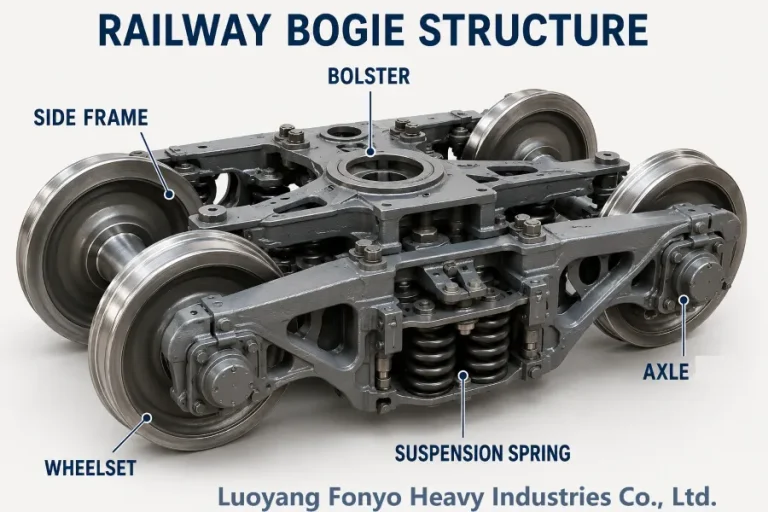
A railway wheel never operates alone. Его производительность тесно связана с осью., сборка колесной пары, система подвески, конструкция тележки, and track infrastructure.
Many wheel-related problems are actually system-level issues. Wheel wear, вибрация, impact loading, and fatigue performance are often influenced by wheel-rail interaction, suspension characteristics, track geometry, and vehicle dynamics.
Looking beyond the wheel itself provides a deeper understanding of railway vehicle performance and long-term operational reliability.
Learn the fundamentals of wheelset construction in Насколько вы знаете колесную пару поезда?
Explore the design and manufacturing considerations of wheel hubs в Ступицы железнодорожных колес: Технический анализ и адаптация применения процессов ковки и литья
Understand load distribution and stress transfer within wheelsets в The Structure and Force Analysis of Locomotive Wheel Sets
Railway wheel technology continues to evolve as railway operators demand higher speeds, более длительный срок службы, lower maintenance costs, and improved operational safety.
В то же время, manufacturers are increasingly adopting automation, digital inspection systems, advanced measurement technologies, and data-driven quality control methods to improve production consistency and traceability.
These developments are shaping the next generation of railway wheel manufacturing and lifecycle management.
Explore how global railway systems are driving technological change in Будущее интеллектуальных железнодорожных компонентов: Навигация по 2026 Глобальный сдвиг в сфере высокоскоростных железных дорог
When sourcing railway wheels, price is only one factor to consider. Manufacturing capability, quality control systems, technical expertise, standards compliance, and delivery reliability often have a much greater impact on long-term project success.
A qualified supplier should demonstrate expertise across the entire production process, including material selection, ковка, rolling, термическая обработка, механическая обработка, инспекция, and standards compliance. Complete traceability, documented quality procedures, and export experience are also important considerations for international railway projects.
Choosing the right supplier is not simply about purchasing a component. It is about ensuring long-term product reliability, technical support, and consistent quality throughout the wheel lifecycle.