Отсканируйте код WeChat, чтобы связаться с нами.
Отсканируйте код WeChat, чтобы связаться с нами.
Не стесняйтесь, отправьте нам электронное письмо, и мы ответим вам как можно скорее.
Создаем будущее сердцем и душой


В железнодорожном производстве, твердость часто связана с долговечностью. Более твердые железнодорожные колеса обычно обеспечивают лучшую износостойкость и более длительный срок службы при больших нагрузках.. Из-за этого, многие полагают, что увеличение жесткости колес всегда полезно.
Но опытные инженеры-железнодорожники знают, что реальность гораздо сложнее..
В реальном железнодорожном сообщении, некоторые из наиболее серьезных поломок колес не вызваны чрезмерным износом. Они вызваны растрескиванием, обстрел, раскалывание, и контактная усталость при качении. Во многих случаях, эти неисправности становятся более серьезными, когда твердость колеса выходит за пределы сбалансированного диапазона..
Вот почему современное производство железнодорожных колес – это не просто достижение максимальной твердости.. Настоящая задача — сбалансировать твердость, прочность, износостойкость, и усталостные характеристики одновременно.
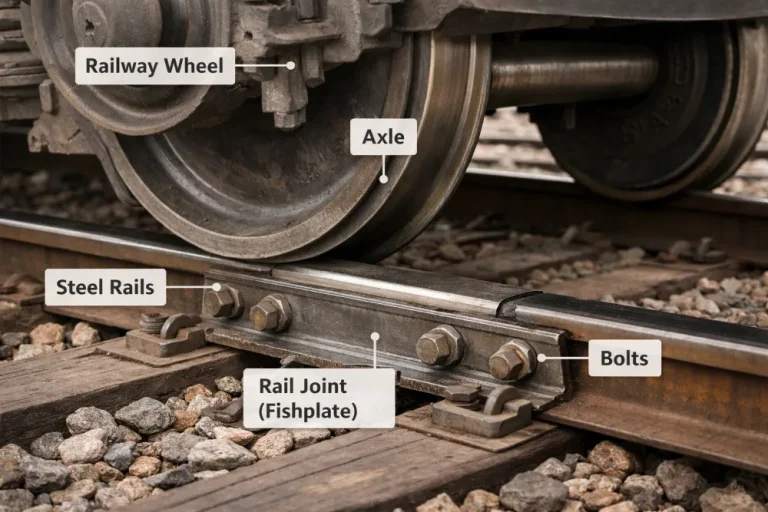
Железнодорожные колеса работают в крайне тяжелых условиях. Во время службы, the wheel tread continuously experiences:
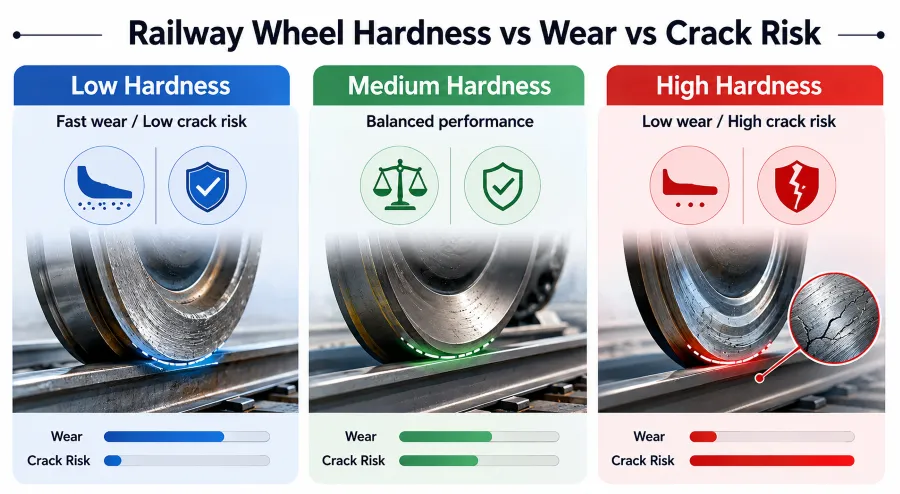
When wheel material is too soft, the tread surface deforms more easily under load. This accelerates material removal and increases wheel wear.
As hardness increases, the wheel surface becomes more resistant to plastic deformation and abrasion. В большинстве случаев, this improves wear resistance and reduces tread wear rates.
This is one reason why heavy-haul railway wheels are often designed with higher hardness levels than standard passenger train wheels.
Однако, wear resistance is only one part of railway wheel performance.
Many wheel failures begin at the wheel tread surface.
Under repeated rolling contact stress, на поверхности колеса могут постепенно образовываться микроскопические трещины. Если материал колеса становится слишком твердым, снижается его способность поглощать напряжения за счет пластической деформации..
Как результат:
Это особенно важно на тяжеловесных железных дорогах., приложения с высокой осевой нагрузкой, и маршруты с частыми торможениями или крутыми поворотами.
В этих условиях, железнодорожные колеса постоянно подвергаются контактной усталости (РШФ). Колесо с очень высокой твердостью может эффективно противостоять износу., но он также может стать более чувствительным к усталостному растрескиванию.
Как только трещины начинают распространяться под поверхностью протектора, такие проблемы, как шелушение и растрескивание, могут быстро развиться..
One of the most important concepts in railway wheel engineering is the balance between wear and fatigue.
A wheel with low hardness may wear faster, but mild wear can sometimes remove small surface cracks before they grow deeper.
A wheel with excessive hardness behaves differently.
Because the tread wears more slowly, surface cracks may remain active for a longer period. Через некоторое время, these cracks can continue propagating into the wheel rim, increasing the risk of serious fatigue damage.
This phenomenon is often referred to as the “wear-fatigue trade-off” in railway engineering.
Другими словами:
This is why railway wheel design is never based on hardness alone.
Два железнодорожных колеса могут иметь одинаковые значения твердости, но совершенно разные эксплуатационные характеристики..
Причина в том микроструктура.
Современное производство железнодорожных колес в значительной степени ориентировано на контроль:
Например, мелкая перлитная микроструктура может значительно улучшить как износостойкость, так и усталостные характеристики по сравнению с крупным перлитом..
Вот почему современное производство железнодорожных колес требует гораздо большего, чем просто повышение твердости при термообработке..
Внутреннее строение обода колеса в конечном итоге определяет поведение колеса в реальных условиях эксплуатации железной дороги..
Железнодорожные колеса должны не только противостоять износу. They must also resist fracture.
Toughness allows the wheel material to absorb impact energy and slow crack propagation. Without sufficient toughness, cracks can spread rapidly under cyclic loading.
This is particularly critical in freight railways where wheels experience:
По этой причине, railway wheel manufacturers carefully balance:
instead of maximizing a single property.
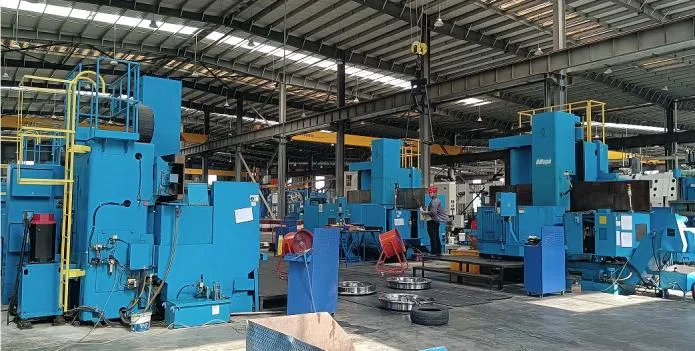
Modern railway wheel production involves a combination of:
The goal is to create a wheel that performs reliably under long-term cyclic loading while maintaining stable wear behavior.
In high-quality railway wheel manufacturing, engineers focus not only on achieving target hardness values, but also on ensuring:
These factors are essential for improving railway wheel service life and operational safety.
В железнодорожном машиностроении, wheel performance is always a balance.
A wheel that is too soft may wear too quickly. A wheel that is too hard may become vulnerable to cracking and fatigue failure.
This is why modern railway wheel development increasingly emphasizes microstructure control and fatigue optimization rather than simply increasing hardness.
В конечном счете, the best railway wheel is not the hardest wheel.
It is the wheel that achieves the best balance between wear resistance, прочность, сопротивление усталости, и долговременная эксплуатационная надежность.
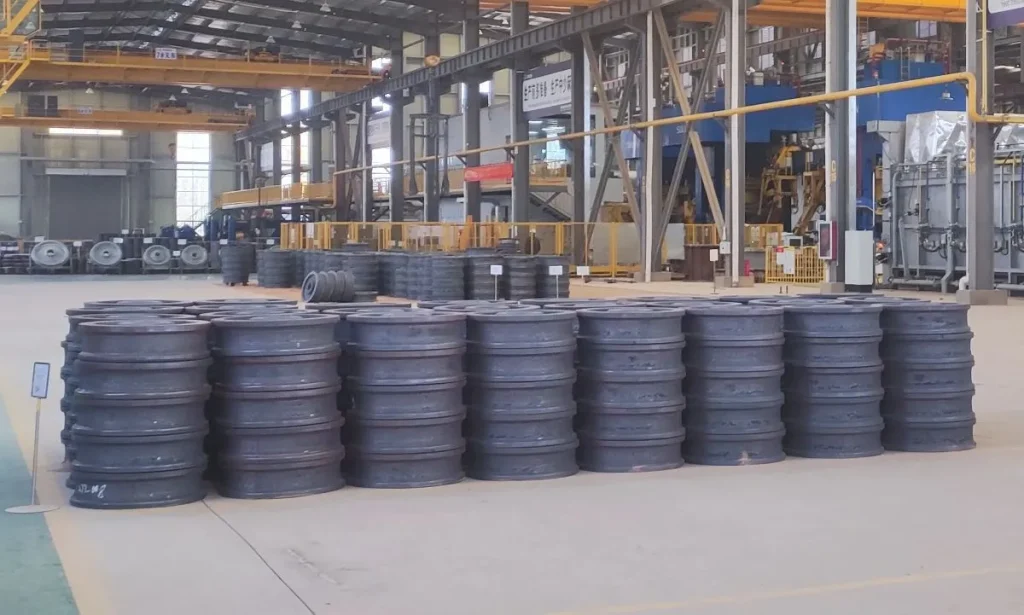
As a professional manufacturer of railway wheels and railway components, we specialize in the production of high-performance forged and cast railway parts for freight railways, локомотивы, and heavy-duty rail systems.
В Лоянская компания Fonyo Heavy Industries Co., ООО, we provide integrated manufacturing solutions including railway wheel forging, термическая обработка, механическая обработка, and full inspection processes to ensure stable mechanical performance and long service life under severe railway operating conditions.
In railway wheel engineering, we fully understand that wheel performance is not determined by hardness alone. The real performance of a railway wheel depends on the combined control of hardness, прочность, износостойкость, and rolling contact fatigue resistance.
That is why our production of railway wheels and railway components focuses on precise контроль микроструктуры, including pearlite refinement, controlled cooling, and optimized rim heat treatment processes. These factors are critical to improving both wear resistance and crack resistance in railway wheel applications.
Through strict quality control systems, including hardness testing, ultrasonic inspection, and microstructure analysis, we ensure that every railway wheel and forged railway component meets the required performance standards for long-term railway operation.
As a reliable manufacturer of railway wheels and casting and forging railway components, Лоян Компания Fonyo Heavy Industries Co., ООО. is committed to delivering railway products that perform consistently in real-world railway environments, especially in heavy-load and high-stress railway applications.