Digitalize o código WeChat para entrar em contato conosco
Digitalize o código WeChat para entrar em contato conosco
Sinta-se à vontade para nos enviar um e-mail e responderemos o mais breve possível.
Criando o futuro com coração e alma


Quando as pessoas ouvem o termo pela primeira vez “prato de peixe“, uma das perguntas mais comuns é: Por que um componente ferroviário tem o nome de um peixe?
O nome pode parecer incomum porque uma placa de peixe ferroviária não tem nenhuma conexão óbvia com um peixe. É simplesmente um componente de aço instalado nas juntas dos trilhos, usado para conectar e reforçar duas seções de trilho.
No entanto, o nome tem uma história de engenharia muito mais profunda. A palavra “peixe” neste contexto não se refere ao animal. Em vez de, vem de um termo de engenharia mais antigo que descreve uma peça de reforço usada para fortalecer uma junta.
Entender por que é chamado de placa de peixe também ajuda a explicar o importante papel que esse componente desempenha nos sistemas de trilhos ferroviários.
Para engenheiros ferroviários, empreiteiros, e compradores, um prato de peixe não é apenas uma simples barra de aço. É um componente ferroviário fabricado com precisão que afeta diretamente o alinhamento ferroviário, estabilidade articular, e desempenho de pista a longo prazo.
Neste artigo, vamos explicar a origem do nome prato de peixe, como funcionam as placas de peixe ferroviárias, os diferentes tipos disponíveis, e quais fatores devem ser considerados ao selecionar a placa de pesca certa para um projeto ferroviário.
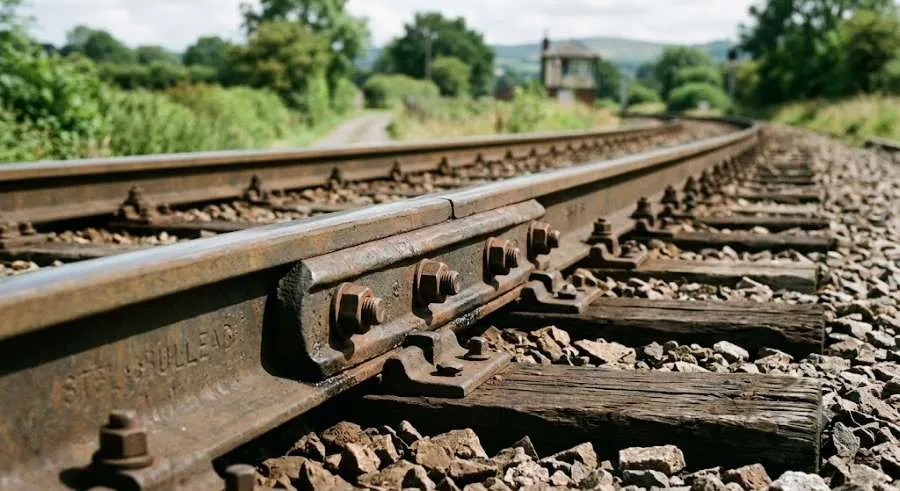
UM prato de peixe ferroviário, também conhecido como barra comum do trilho em algumas regiões, é um componente de fixação de aço usado para unir duas extremidades do trilho.
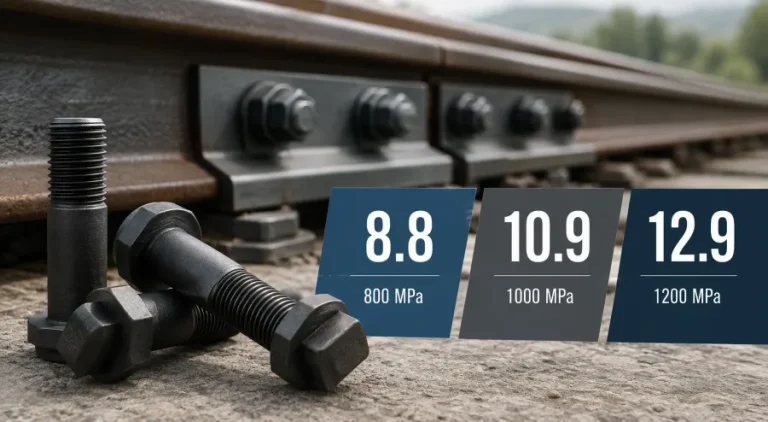
Durante a instalação, duas placas de peixe são colocadas em ambos os lados da alma do trilho e fixadas usando parafusos de peixe, nozes, e arruelas. Junto, esses componentes criam uma junta mecânica do trilho que mantém as duas seções do trilho alinhadas e estáveis.
Uma montagem conjunta ferroviária típica inclui:
As principais funções de um prato de peixe incluem:
Uma placa de peixe ajuda a manter as duas extremidades do trilho conectadas na posição correta vertical e horizontalmente, ensuring smooth train operation.
When a train passes over a rail joint, significant impact forces are generated. Fish plates help transfer these forces between adjacent rail sections.
Without proper reinforcement, rail joints can experience excessive movement, which may lead to uneven wear, vibração, and track deterioration.
Unlike welded rail connections, bolted rail joints using fish plates can be installed, inspecionado, and replaced more easily, making them valuable in many railway applications.
Embora o trilho continuamente soldado (CWR) has become common on modern mainline railways, fish plates remain widely used in freight railways, ferrovias industriais, ferrovias de mineração, sistemas ferroviários de guindaste, and maintenance projects.
The origin of the term comes from historical engineering terminology rather than the appearance of the component.
In older engineering practices, the word “peixe” was used to describe a reinforcing piece fitted alongside a joint to improve its strength and rigidity.
The concept was similar to strengthening a connection by adding additional supporting material on both sides. When railway engineers developed methods for joining rail sections, they adopted this idea and used steel plates to reinforce the rail joint.
Because these plates strengthened the connection between two rails, they became known as pratos de peixe.
Em termos simples:
A fish plate is called a fish plate because it acts as a reinforcing member at a joint, not because it looks like a fish.
This explanation is the most widely accepted origin of the term within railway engineering.
The use of the word “peixe” in engineering is older than modern railway systems.
Historicamente, engenheiros usaram o termo para descrever um pedaço de material adicionado para fortalecer ou apoiar outro componente. Uma placa de reforço instalada sobre uma junta era às vezes chamada de “peixe” porque sustentava a ligação da mesma forma que uma peça de reforço em forma de peixe poderia fortalecer uma estrutura.
Quando as primeiras ferrovias se expandiram durante o século 19, os engenheiros precisavam de uma solução prática para conectar seções ferroviárias individuais. Naquela hora, os trilhos foram fabricados em comprimentos limitados, e longos trilhos contínuos não eram práticos.
O desenvolvimento do prato de peixe proporcionou uma solução simples mas eficaz:
As railway technology developed, the name remained in use and became a standard term throughout the industry.
Hoje, more than a century later, railway engineers around the world still use the term prato de peixeé.
This is probably the first question many people ask after hearing the name.
A resposta curta é: not really.
A standard railway fishplate is a relatively simple steel profile designed to match the shape of the rail web. Its design is determined mainly by engineering requirements, incluindo:
Some historical fishplate designs may have had tapered shapes that loosely resembled the outline of a fish. This may have contributed to the popularity of the name.
No entanto, the engineering explanation is much stronger: the term comes from the idea of reinforcement, not from visual similarity.
Para profissionais ferroviários, the important question is not what the component looks like, but whether it provides a reliable connection between two rails under repeated loading conditions.
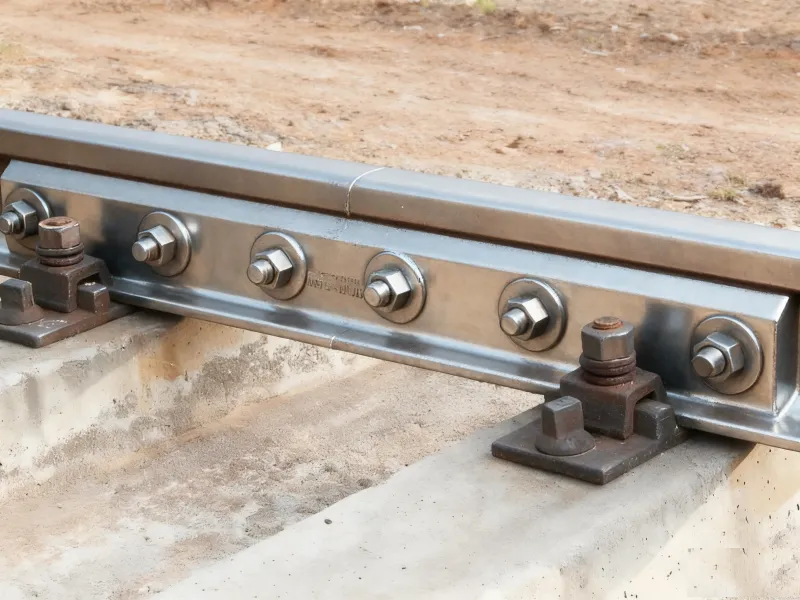
When purchasing railway components internationally, customers often see two different terms:
Are they different products?
Na maioria dos casos, they refer to the same railway component.
The term prato de peixe is widely used in Europe, Ásia, África, and many countries influenced by British railway terminology.
The term barra conjunta is more commonly used in North America, especially in railway standards and specifications related to American Railway Engineering and Maintenance-of-Way Association.
Although the names are different, the function is the same:
A steel component installed on both sides of a rail joint to connect two rail sections and maintain track stability.
When sourcing fish plates internationally, engineers should focus less on the terminology and more on technical specifications, incluindo:
A fish plate manufactured for one rail profile may not be suitable for another, even if the overall appearance looks similar.
A fishplate may look like a simple steel component, but its role in a railway track system is critical.
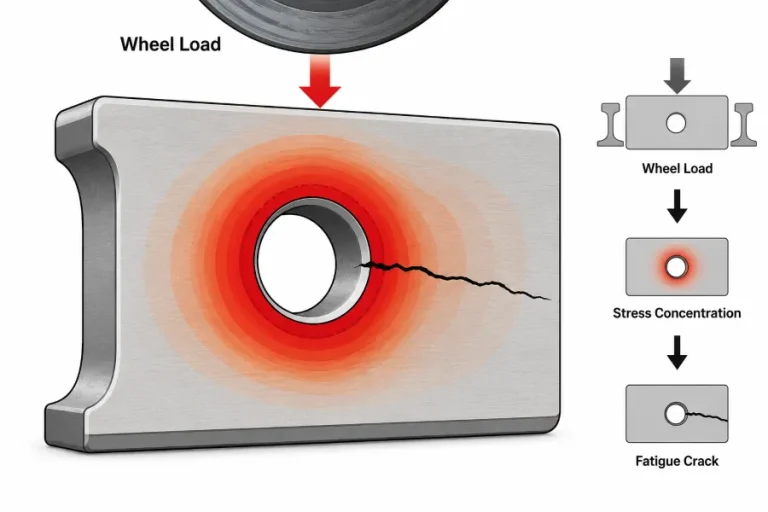
A rail joint is one of the areas where a track structure experiences concentrated stress. When a train passes over the joint, the wheel load creates vertical impact forces, while braking, aceleração, and lateral movement generate additional stresses.
The purpose of a fish plate is to reinforce this connection and help the two rail sections behave as closely as possible like one continuous rail.
A typical fish plate connection works through several key elements:
Fishplates are installed on both sides of the rail web. The contact between the fish plate and the rail provides additional support around the joint area, increasing the overall stiffness of the connection.
Fish bolts pass through the rail and fish plates, clamping the assembly together.
The correct bolt size, hole position, and tightening force are important because insufficient clamping can lead to:
A properly designed fishplate helps maintain:
This is especially important in areas where trains operate under heavy axle loads or frequent traffic conditions.
Do ponto de vista da fabricação, dimensional accuracy is essential. The bolt hole position, machining tolerance, and contact surface must match the rail profile precisely to ensure proper installation.
Railway fishplates are not one universal product. Different railway systems require different designs depending on rail profiles, condições de operação, e padrões.
The most common types include the following.
Standard fishplates are designed to connect two identical rail sections.
They are commonly used in conventional railway tracks where the same rail profile is installed throughout the line.
Exemplos incluem:
The design must match the exact rail profile to ensure correct contact and load transfer.
A compromise fish plate is used when two different rail profiles need to be connected.
Por exemplo, a railway may need to transition from one rail size to another due to:
Because different rail profiles have different heights and web shapes, standard fish plates cannot be used. A specially designed compromise fish plate provides a smooth and secure transition.
Insulated fishplates are designed for railway signaling systems.
In many railway networks, the rails are also used as part of electrical track circuits. To detect train positions, adjacent rail sections must sometimes be electrically separated.
Insulated fish plates include insulating components that prevent electrical continuity between rail sections while maintaining mechanical strength.
They are commonly used in:
Crane rail fishplates are designed for industrial rail applications, especially where rails are installed for overhead cranes or heavy material handling equipment.
Compared with standard railway tracks, crane rail systems often experience:
Portanto, crane rail fish plates require suitable design and material selection to provide long-term durability.
As aplicações típicas incluem:
Heavy-duty fish plates are developed for demanding railway environments where high axle loads and intensive traffic are expected.
They are commonly used in:
These applications require higher strength materials and strict quality control because the rail joint experiences repeated dynamic loading.
Because fishplates are exposed to repeated impact forces, vibração, and environmental conditions, material selection plays an important role in their performance.
Most railway fish plates are manufactured from high-strength carbon steel or alloy steel.
Common material requirements include:
Depending on customer requirements and railway standards, fish plates may be manufactured according to:
Para aplicações ferroviárias exigentes, a seleção de materiais por si só não é suficiente.
O tratamento térmico é frequentemente necessário para melhorar as propriedades mecânicas do prato de peixe.
Um processo de tratamento térmico adequadamente controlado pode melhorar:
A placa de peixe deve suportar cargas repetidas de trens que passam sem deformação permanente.
As juntas ferroviárias passam por milhões de ciclos de carregamento durante o serviço. Um bom desempenho à fadiga ajuda a prevenir fissuras e falhas prematuras.
A área de contato ao redor da junta do trilho está exposta a vibrações e impactos. As propriedades aprimoradas do material contribuem para uma vida útil mais longa.
Por esta razão, professional railway component manufacturers pay close attention to both material quality and production processes.

With the widespread adoption of continuously welded rail (CWR), some people believe that fish plates are becoming outdated.
No entanto, this is not the case.
Although CWR has reduced the number of traditional rail joints on many main railway lines, fish plates remain an important component in many railway applications.
They are still widely used in:
During rail replacement or repair work, temporary and permanent rail connections often require fish plates.
Railway switches and crossings involve complex rail arrangements where bolted connections may still be required.
Factories, portos, minas, and warehouses often use rail systems where flexibility and maintenance convenience are important.
Industrial crane rails frequently rely on bolted joints because of their operating environment and maintenance requirements.
Many railway networks around the world continue to use traditional rail joint systems due to infrastructure conditions and operational requirements.
Continuously welded rail provides many advantages, incluindo:
No entanto, welded rail is not always the best solution for every situation.
Fish plates still provide several practical advantages:
Bolted rail joints can be installed without specialized welding equipment.
Damaged rail sections can be removed and replaced more efficiently.
Certain railway applications require removable or adjustable connections.
Ferrovias industriais, crane rails, and temporary tracks often require solutions where fish plates remain the most practical choice.
Do ponto de vista da engenharia, fish plates and welded rail systems are not competitors. They are solutions designed for different railway requirements.
When discussing modern railway construction, one common question is whether fish plates are still necessary when welded rail technology is widely available.
The answer depends on the railway application.
Both fishplate joints and welded rail joints have their own advantages, e os engenheiros selecionam a solução mais adequada com base nas condições operacionais, requisitos de manutenção, e especificações do projeto.
| Recurso | Prato de Peixe | Junta de trilho soldada |
| Método de conexão | Conexão mecânica aparafusada | Conexão soldada permanente |
| Instalação | Relativamente simples | Requer equipamento de soldagem e operadores qualificados |
| Manutenção | Inspeção e substituição mais fáceis | Mais difícil de reparar |
| Flexibilidade | Permite uma substituição mais fácil do trilho | Cria uma estrutura ferroviária contínua |
| Aplicações comuns | Ferrovias industriais, manutenção, comparecimentos, crane rails | Ferrovias de alta velocidade, ferrovias principais |
Para ferrovias de passageiros de alta velocidade, trilho continuamente soldado é geralmente preferido porque fornece condições de funcionamento mais suaves.
No entanto, para muitas aplicações ferroviárias industriais e convencionais, pratos de peixe continuam a ser uma solução confiável e prática.
Um engenheiro ferroviário profissional não escolhe simplesmente a tecnologia mais recente. A escolha correta depende do ambiente operacional real.
Selecting a fish plate requires more than choosing a component that looks similar.
A railway fishplate must match the rail profile, fastening system, and operating requirements of the track.
The following factors should be considered before production or purchase.
The first and most important factor is the rail profile.
Different rails have different:
Por exemplo, a fish plate designed for UIC60 rail cannot simply be installed on a UIC54 rail.
Common rail profiles include:
The fishplate must be designed according to the exact rail section.
Different countries and railway systems may follow different technical standards.
Common standards include:
Before manufacturing, os clientes devem confirmar:
Isso garante que a placa de pesca atenda às expectativas do projeto ferroviário.
O material deve corresponder às condições de operação.
Para aplicações de carga pesada, engenheiros geralmente se concentram em:
Um prato de peixe usado em uma ferrovia de mineração, por exemplo, pode exigir desempenho superior ao usado em uma pista industrial leve.
A disposição dos furos dos parafusos é outro fator crítico.
Parâmetros importantes incluem:
Dimensões incorretas do furo podem impedir a instalação adequada e reduzir o desempenho da junta.
O ambiente de trabalho também influencia a seleção do prato de peixe.
Fatores incluem:
A fishplate used in a heavy-haul railway requires a different design approach compared with one used in a light industrial railway.
Although bar joint is much smaller than a rail or sleeper, it plays a critical role in railway safety and reliability.
A rail joint is one of the areas where the track structure experiences concentrated stress. Poor-quality fish plates may result in:
Por esta razão, professional railway component manufacturers focus on every stage of production.
Important quality control steps include:
Steel materials should be checked to ensure they meet the required chemical composition and mechanical properties.
Accurate dimensions are essential for proper fitting with the rail profile.
Bolt holes must maintain strict tolerances to ensure correct assembly.
Where required, heat treatment must provide stable mechanical performance.
Finished fish plates should be inspected according to project requirements before shipment.
From our manufacturing experience, one of the most common mistakes in railway component purchasing is selecting a fish plate based only on appearance or price.
A reliable fishplate must be matched with the rail system it is designed for.
No Luoyang Fonyo Indústrias Pesadas Co., Ltda., we manufacture railway fish plates and other railway track components for customers in railway, industrial, mineração, and material handling applications.
Our railway fish plates are produced according to international standards and customer-specific requirements, incluindo:
We focus on providing reliable railway components through:
In addition to railway fish plates, our product range includes:
By supplying compatible railway components from one source, we help customers simplify procurement and ensure better system compatibility.
Whether you need standard railway fish plates or customized solutions based on drawings and technical specifications, Luoyang Fonyo Indústrias Pesadas Co., Ltda. can provide professional support for your railway project.
The name comes from an old engineering term. “Fish” referred to a reinforcing member used to strengthen a joint. A railway fish plate reinforces the connection between two rail sections, which is why it received this name.
Sim. In most railway applications, fishplate and joint bar refer to the same component. “Fish plate” is commonly used in many international markets, enquanto “barra conjunta” is frequently used in North American railway terminology.
A fish plate connects two rail sections, maintains alignment, transfers wheel loads, and reinforces the rail joint to improve track stability.
Sim. Although continuously welded rail is common on many high-speed railways, fish plates are still widely used in industrial railways, maintenance work, crane rails, comparecimentos, and conventional railway systems.
Most fishplates are manufactured from high-strength carbon steel or alloy steel. Material selection depends on the railway standard and operating conditions.
Não. Fishplates are designed according to specific rail profiles. Different rails require matching fish plate dimensions and bolt arrangements.
Manufacturers usually need:
The service life depends on factors such as axle load, traffic frequency, qualidade de instalação, manutenção, and operating environment.