Отсканируйте код WeChat, чтобы связаться с нами.
Отсканируйте код WeChat, чтобы связаться с нами.
Не стесняйтесь, отправьте нам электронное письмо, и мы ответим вам как можно скорее.
Создаем будущее сердцем и душой


Когда люди впервые слышат этот термин “рыбная тарелка“, один из самых частых вопросов: Почему деталь железной дороги названа в честь рыбы?
Название может показаться необычным, поскольку железнодорожная рыбная тарелка не имеет явной связи с рыбой.. Это просто стальной компонент, установленный на стыках рельсов., используется для соединения и усиления двух секций рельса.
Однако, имя имеет гораздо более глубокую инженерную историю. Слово “рыба” в данном контексте не относится к животному. Вместо, оно происходит от старого инженерного термина, описывающего арматурную деталь, используемую для усиления соединения..
Понимание того, почему его называют накладной пластиной, также помогает объяснить важную роль, которую этот компонент играет в системах железнодорожных путей..
Для инженеров железнодорожного транспорта, подрядчики, и покупатели, рыбная тарелка — это не просто стальной стержень. Это прецизионный железнодорожный компонент, который напрямую влияет на выравнивание рельсов., стабильность суставов, и долгосрочная производительность трека.
В этой статье, мы объясним происхождение названия рыбная тарелка, как работают железнодорожные рыбные пластины, доступны различные типы, и какие факторы следует учитывать при выборе подходящей накладной пластины для проекта железной дороги.
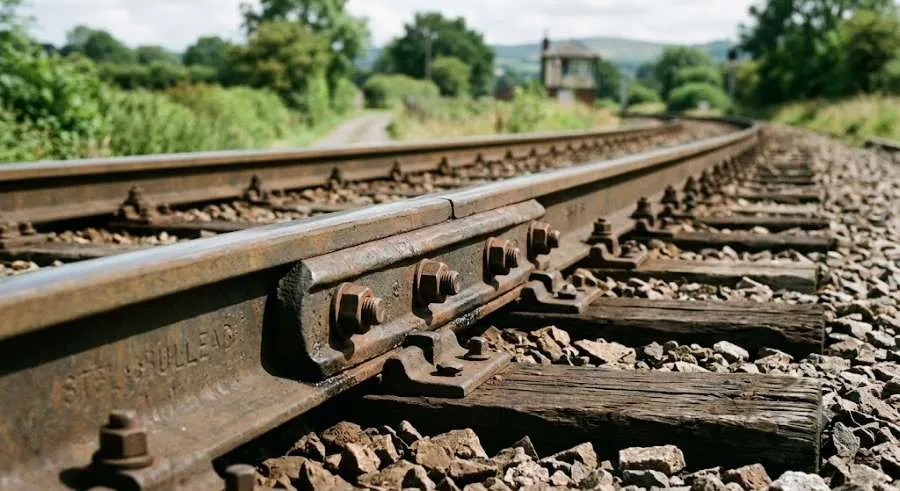
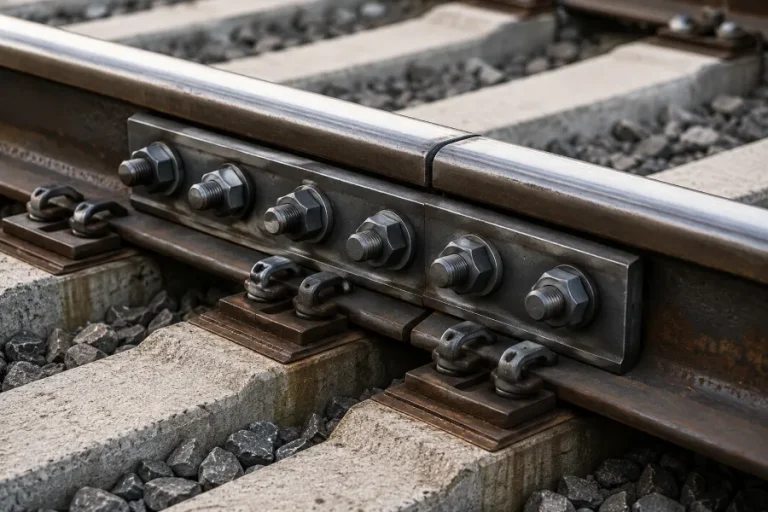
А железнодорожная рыбная тарелка, также известный как рельсовый стык в некоторых регионах, представляет собой стальной крепежный элемент, используемый для соединения двух концов рельса вместе..
Во время установки, две накладные пластины размещаются с обеих сторон полотна рельса и закрепляются с помощью рыбные болты, орехи, и шайбы. Вместе, эти компоненты создают механическое соединение рельсов, которое удерживает две секции рельса выровненными и стабильными..
Типичный узел железнодорожного соединения включает в себя:
К основным функциям рыбной тарелки относятся:
A fish plate helps keep the two connected rail ends in the correct position vertically and horizontally, ensuring smooth train operation.
When a train passes over a rail joint, significant impact forces are generated. Fish plates help transfer these forces between adjacent rail sections.
Without proper reinforcement, rail joints can experience excessive movement, which may lead to uneven wear, вибрация, and track deterioration.
Unlike welded rail connections, bolted rail joints using fish plates can be installed, проверено, and replaced more easily, making them valuable in many railway applications.
Although continuously welded rail (КВР) has become common on modern mainline railways, fish plates remain widely used in freight railways, промышленные железные дороги, горнодобывающие железные дороги, крановые рельсовые системы, and maintenance projects.
The origin of the term comes from historical engineering terminology rather than the appearance of the component.
In older engineering practices, the word “рыба” was used to describe a reinforcing piece fitted alongside a joint to improve its strength and rigidity.
The concept was similar to strengthening a connection by adding additional supporting material on both sides. When railway engineers developed methods for joining rail sections, they adopted this idea and used steel plates to reinforce the rail joint.
Because these plates strengthened the connection between two rails, they became known as рыбные тарелки.
Проще говоря:
A fish plate is called a fish plate because it acts as a reinforcing member at a joint, not because it looks like a fish.
This explanation is the most widely accepted origin of the term within railway engineering.
The use of the word “рыба” in engineering is older than modern railway systems.
Historically, engineers used the term to describe a piece of material added to strengthen or support another component. A reinforcing plate fitted over a joint was sometimes called a “рыба” because it supported the connection in the same way that a fish-shaped reinforcement piece could strengthen a structure.
When early railways expanded during the 19th century, engineers needed a practical solution for connecting individual rail sections. В это время, rails were manufactured in limited lengths, and long continuous rails were not practical.
The development of the fish plate provided a simple but effective solution:
По мере развития железнодорожной техники, это название осталось в использовании и стало стандартным термином во всей отрасли..
Сегодня, более века спустя, железнодорожные инженеры во всем мире до сих пор используют этот термин рыбная тарелкас.
Наверное, это первый вопрос, который задают многие, услышав это имя..
Короткий ответ:: не совсем.
Стандартная железнодорожная накладка представляет собой относительно простой стальной профиль, повторяющий форму стенки рельса.. Его конструкция определяется главным образом инженерными требованиями., включая:
Некоторые исторические конструкции рыбных пластин могли иметь конусообразную форму, отдаленно напоминавшую очертания рыбы.. Возможно, это способствовало популярности имени..
Однако, инженерное объяснение гораздо сильнее: этот термин происходит от идеи подкрепления, не из-за визуального сходства.
Для профессионалов железнодорожного транспорта, важный вопрос не в том, как выглядит компонент, но обеспечивает ли оно надежное соединение двух рельсов в условиях многократного нагружения.
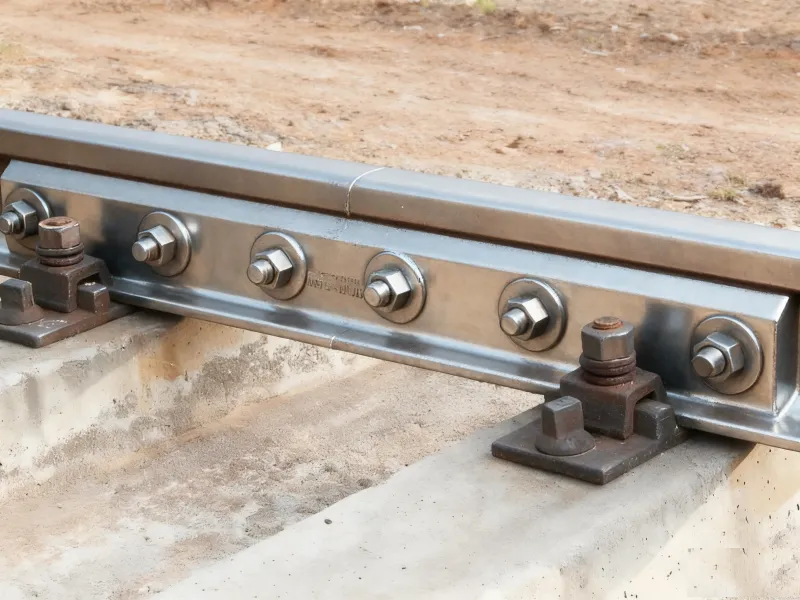
При покупке железнодорожных компонентов за рубежом, клиенты часто видят два разных термина:
Это разные продукты??
В большинстве случаев, они относятся к одному и тому же железнодорожному компоненту.
Термин рыбная тарелка широко используется в Европе, Азия, Африка, и многие страны под влиянием британской железнодорожной терминологии.
Термин сустав бар чаще используется в Северной Америке, особенно в железнодорожных стандартах и спецификациях, связанных с Американской ассоциацией железнодорожного машиностроения и обслуживания путей..
хотя названия разные, функция та же самая:
Стальной компонент, установленный с обеих сторон стыка рельсов для соединения двух секций рельса и поддержания устойчивости пути..
При покупке рыбных тарелок на международном уровне, инженерам следует уделять меньше внимания терминологии и больше — техническим характеристикам., включая:
Накладка, изготовленная для одного профиля рельса, может не подойти для другого., даже если внешний вид похож.
Накладка может выглядеть как простая стальная деталь., but its role in a railway track system is critical.
A rail joint is one of the areas where a track structure experiences concentrated stress. When a train passes over the joint, the wheel load creates vertical impact forces, while braking, ускорение, and lateral movement generate additional stresses.
The purpose of a fish plate is to reinforce this connection and help the two rail sections behave as closely as possible like one continuous rail.
A typical fish plate connection works through several key elements:
Fishplates are installed on both sides of the rail web. The contact between the fish plate and the rail provides additional support around the joint area, increasing the overall stiffness of the connection.
Рыболовные болты проходят через направляющие и накладки., сжимаем сборку вместе.
Правильный размер болта, положение отверстия, и сила затяжки важны, поскольку недостаточный зажим может привести к:
Правильно спроектированная накладка помогает поддерживать:
Это особенно важно в районах, где поезда работают с большими нагрузками на ось или в условиях частого движения..
С точки зрения производства, точность размеров важна. Положение отверстия для болта, допуск на обработку, и контактная поверхность должна точно соответствовать профилю рельса, чтобы обеспечить правильную установку..
Железнодорожные накладки – не универсальный продукт. Различные железнодорожные системы требуют разных конструкций в зависимости от профилей рельсов., условия эксплуатации, и стандарты.
The most common types include the following.
Standard fishplates are designed to connect two identical rail sections.
They are commonly used in conventional railway tracks where the same rail profile is installed throughout the line.
Примеры включают в себя:
The design must match the exact rail profile to ensure correct contact and load transfer.
A compromise fish plate is used when two different rail profiles need to be connected.
Например, a railway may need to transition from one rail size to another due to:
Because different rail profiles have different heights and web shapes, standard fish plates cannot be used. A specially designed compromise fish plate provides a smooth and secure transition.
Insulated fishplates are designed for railway signaling systems.
In many railway networks, the rails are also used as part of electrical track circuits. To detect train positions, adjacent rail sections must sometimes be electrically separated.
Insulated fish plates include insulating components that prevent electrical continuity between rail sections while maintaining mechanical strength.
They are commonly used in:
Crane rail fishplates are designed for industrial rail applications, especially where rails are installed for overhead cranes or heavy material handling equipment.
Compared with standard railway tracks, crane rail systems often experience:
Поэтому, crane rail fish plates require suitable design and material selection to provide long-term durability.
Типичные области применения включают в себя:
Heavy-duty fish plates are developed for demanding railway environments where high axle loads and intensive traffic are expected.
They are commonly used in:
These applications require higher strength materials and strict quality control because the rail joint experiences repeated dynamic loading.
Because fishplates are exposed to repeated impact forces, вибрация, and environmental conditions, material selection plays an important role in their performance.
Most railway fish plates are manufactured from high-strength carbon steel or alloy steel.
Common material requirements include:
Depending on customer requirements and railway standards, fish plates may be manufactured according to:
For demanding railway applications, material selection alone is not enough.
Heat treatment is often required to improve the mechanical properties of the fish plate.
A properly controlled heat treatment process can improve:
The fish plate must withstand repeated loading from passing trains without permanent deformation.
Rail joints experience millions of loading cycles during service. Good fatigue performance helps prevent cracking and premature failure.
The contact area around the rail joint is exposed to vibration and impact. Improved material properties contribute to longer service life.
По этой причине, professional railway component manufacturers pay close attention to both material quality and production processes.

With the widespread adoption of continuously welded rail (КВР), some people believe that fish plates are becoming outdated.
Однако, this is not the case.
Although CWR has reduced the number of traditional rail joints on many main railway lines, fish plates remain an important component in many railway applications.
They are still widely used in:
During rail replacement or repair work, temporary and permanent rail connections often require fish plates.
Railway switches and crossings involve complex rail arrangements where bolted connections may still be required.
Factories, порты, мины, and warehouses often use rail systems where flexibility and maintenance convenience are important.
Industrial crane rails frequently rely on bolted joints because of their operating environment and maintenance requirements.
Many railway networks around the world continue to use traditional rail joint systems due to infrastructure conditions and operational requirements.
Continuously welded rail provides many advantages, включая:
Однако, welded rail is not always the best solution for every situation.
Fish plates still provide several practical advantages:
Bolted rail joints can be installed without specialized welding equipment.
Damaged rail sections can be removed and replaced more efficiently.
Certain railway applications require removable or adjustable connections.
Промышленные железные дороги, крановые рельсы, and temporary tracks often require solutions where fish plates remain the most practical choice.
С инженерной точки зрения, fish plates and welded rail systems are not competitors. They are solutions designed for different railway requirements.
When discussing modern railway construction, one common question is whether fish plates are still necessary when welded rail technology is widely available.
The answer depends on the railway application.
Both fishplate joints and welded rail joints have their own advantages, and engineers select the most suitable solution based on operating conditions, требования к техническому обслуживанию, и спецификации проекта.
| Особенность | Fish Plate Joint | Welded Rail Joint |
| Connection method | Bolted mechanical connection | Permanent welded connection |
| Установка | Relatively simple | Requires welding equipment and skilled operators |
| Обслуживание | Easier inspection and replacement | More difficult to repair |
| Flexibility | Allows easier rail replacement | Creates a continuous rail structure |
| Common applications | Промышленные железные дороги, обслуживание, явка, крановые рельсы | Высокоскоростные железные дороги, магистральные железные дороги |
For high-speed passenger railways, continuously welded rail is usually preferred because it provides smoother running conditions.
Однако, for many industrial and conventional railway applications, fish plates remain a reliable and practical solution.
A professional railway engineer does not simply choose the newest technology. The correct choice depends on the actual operating environment.
Selecting a fish plate requires more than choosing a component that looks similar.
A railway fishplate must match the rail profile, система крепления, and operating requirements of the track.
The following factors should be considered before production or purchase.
The first and most important factor is the rail profile.
Different rails have different:
Например, a fish plate designed for UIC60 rail cannot simply be installed on a UIC54 rail.
Common rail profiles include:
The fishplate must be designed according to the exact rail section.
Different countries and railway systems may follow different technical standards.
Common standards include:
Before manufacturing, customers should confirm:
This ensures that the fishplate meets the expectations of the railway project.
The material must match the operating conditions.
For heavy-load applications, инженеры обычно сосредотачиваются на:
A fish plate used in a mining railway, например, may require higher performance than one used in a light industrial track.
The bolt hole arrangement is another critical factor.
Important parameters include:
Incorrect hole dimensions can prevent proper installation and reduce joint performance.
The working environment also influences fish plate selection.
Factors include:
A fishplate used in a heavy-haul railway requires a different design approach compared with one used in a light industrial railway.
Although bar joint is much smaller than a rail or sleeper, it plays a critical role in railway safety and reliability.
A rail joint is one of the areas where the track structure experiences concentrated stress. Poor-quality fish plates may result in:
По этой причине, professional railway component manufacturers focus on every stage of production.
Important quality control steps include:
Steel materials should be checked to ensure they meet the required chemical composition and mechanical properties.
Accurate dimensions are essential for proper fitting with the rail profile.
Bolt holes must maintain strict tolerances to ensure correct assembly.
Where required, heat treatment must provide stable mechanical performance.
Finished fish plates should be inspected according to project requirements before shipment.
From our manufacturing experience, one of the most common mistakes in railway component purchasing is selecting a fish plate based only on appearance or price.
A reliable fishplate must be matched with the rail system it is designed for.
В Лоянская компания Fonyo Heavy Industries Co., ООО., we manufacture railway fish plates and other railway track components for customers in railway, промышленный, добыча полезных ископаемых, and material handling applications.
Our railway fish plates are produced according to international standards and customer-specific requirements, включая:
We focus on providing reliable railway components through:
In addition to railway fish plates, our product range includes:
By supplying compatible railway components from one source, we help customers simplify procurement and ensure better system compatibility.
Whether you need standard railway fish plates or customized solutions based on drawings and technical specifications, Лоянская компания Fonyo Heavy Industries Co., ООО. can provide professional support for your railway project.
The name comes from an old engineering term. “Fish” referred to a reinforcing member used to strengthen a joint. A railway fish plate reinforces the connection between two rail sections, which is why it received this name.
Да. В большинстве железнодорожных приложений, fishplate and joint bar refer to the same component. “Рыбная тарелка” is commonly used in many international markets, while “сустав бар” is frequently used in North American railway terminology.
A fish plate connects two rail sections, maintains alignment, transfers wheel loads, and reinforces the rail joint to improve track stability.
Да. Although continuously welded rail is common on many high-speed railways, fish plates are still widely used in industrial railways, maintenance work, крановые рельсы, явка, and conventional railway systems.
Most fishplates are manufactured from high-strength carbon steel or alloy steel. Material selection depends on the railway standard and operating conditions.
Нет. Fishplates are designed according to specific rail profiles. Different rails require matching fish plate dimensions and bolt arrangements.
Manufacturers usually need:
The service life depends on factors such as axle load, traffic frequency, качество установки, обслуживание, and operating environment.