Scansiona il codice WeChat per contattarci
Scansiona il codice WeChat per contattarci
Sentiti libero di inviarci un'e-mail e ti risponderemo il prima possibile.
Creare il futuro con cuore e anima


Quando le persone sentono per la prima volta il termine “piatto di pesce“, una delle domande più comuni è: Perché un componente ferroviario prende il nome da un pesce?
Il nome può sembrare insolito perché la stecca a ganascia ferroviaria non ha alcun collegamento evidente con un pesce. È semplicemente un componente in acciaio installato sui giunti ferroviari, utilizzato per collegare e rinforzare due sezioni di rotaia.
Tuttavia, il nome ha una storia ingegneristica molto più profonda. La parola “pescare” in questo contesto non si riferisce all'animale. Invece, deriva da un termine ingegneristico più antico che descrive un pezzo di rinforzo utilizzato per rafforzare un giunto.
Capire perché viene chiamato stecca a ganascia aiuta anche a spiegare l'importante ruolo svolto da questo componente nei sistemi di binari ferroviari.
Per ingegneri ferroviari, appaltatori, e acquirenti, un piatto da pesce non è solo una semplice barra d'acciaio. Si tratta di un componente ferroviario prodotto con precisione che influisce direttamente sull'allineamento della rotaia, stabilità articolare, e prestazioni in pista a lungo termine.
In questo articolo, spiegheremo l'origine del nome piatto di pesce, come funzionano le stecche ferroviarie, le diverse tipologie disponibili, e quali fattori dovrebbero essere considerati quando si seleziona la stecca a ganascia giusta per un progetto ferroviario.
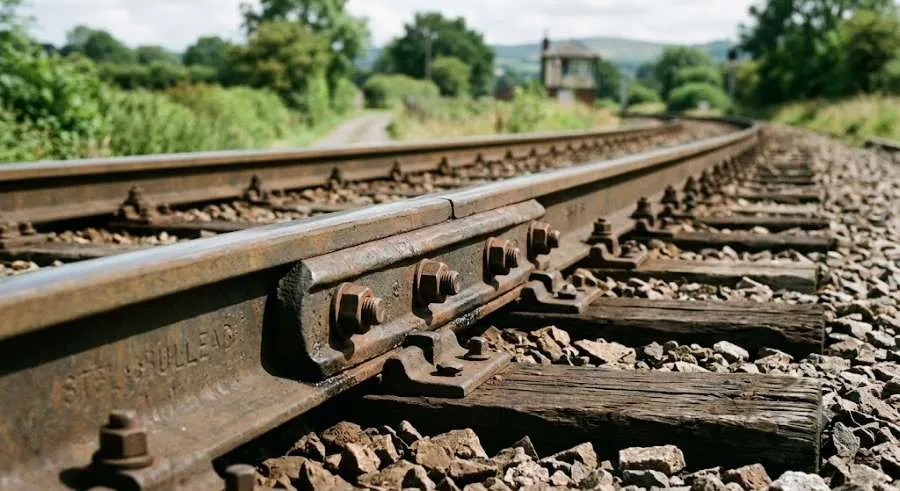
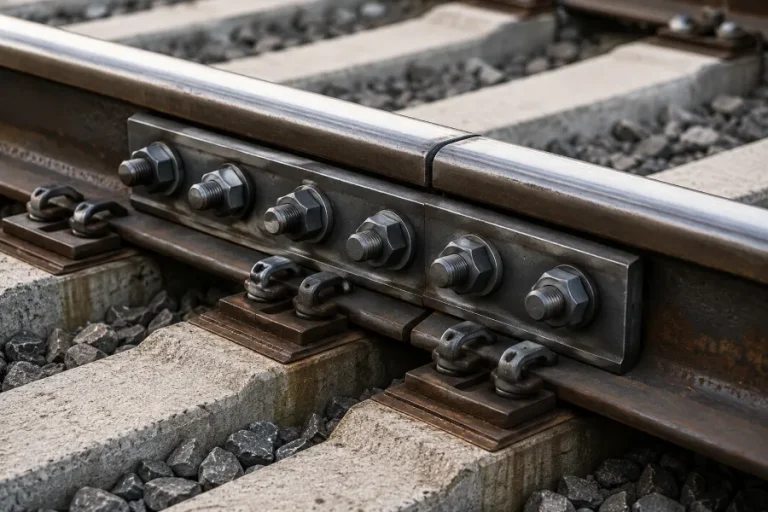
UN stecca a ganascia ferroviaria, noto anche come a barra di giunzione della rotaia in alcune regioni, è un componente di fissaggio in acciaio utilizzato per unire insieme due estremità del binario.
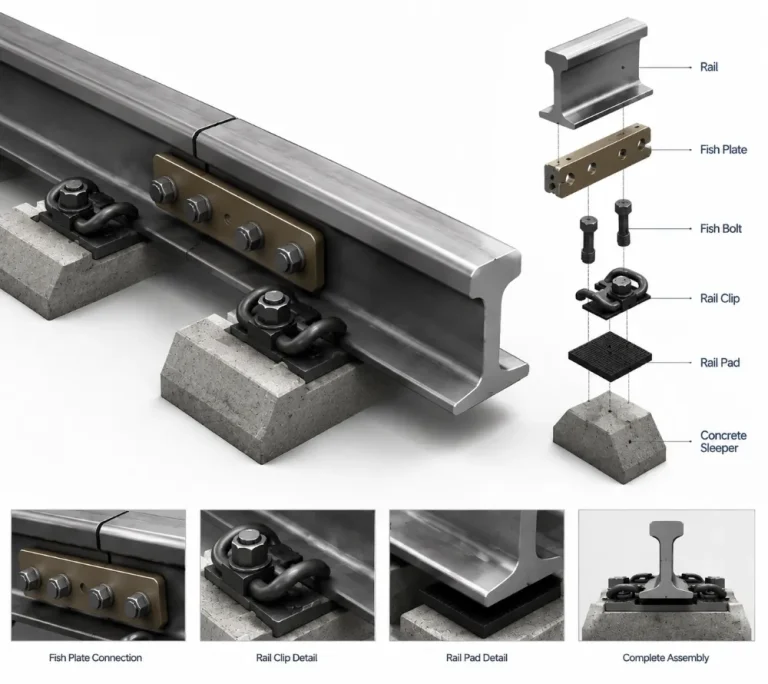
Durante l'installazione, due ganasce sono posizionate su entrambi i lati del nastro della rotaia e fissate utilizzando bulloni di pesce, noci, e rondelle. Insieme, questi componenti creano un giunto meccanico del binario che mantiene allineate e stabili le due sezioni del binario.
Un tipico assemblaggio di giunti ferroviari include:
Le principali funzioni di un piatto da pesce includono:
Una stecca aiuta a mantenere le due estremità del binario collegate nella posizione corretta verticalmente e orizzontalmente, garantire il regolare funzionamento dei treni.
Quando un treno passa sopra un giunto ferroviario, vengono generate forze di impatto significative. Le stecche a ganascia aiutano a trasferire queste forze tra sezioni ferroviarie adiacenti.
Senza adeguati rinforzi, i giunti ferroviari possono subire movimenti eccessivi, che potrebbe portare ad un'usura irregolare, vibrazione, e tenere traccia del deterioramento.
A differenza dei collegamenti ferroviari saldati, È possibile installare giunti ferroviari bullonati mediante ganasce, ispezionato, e sostituito più facilmente, rendendoli preziosi in molte applicazioni ferroviarie.
Sebbene binario saldato in continuo (CWR) è diventato comune sulle moderne ferrovie principali, le ganasce rimangono ampiamente utilizzate nelle ferrovie merci, ferrovie industriali, ferrovie minerarie, sistemi di binari per gru, e progetti di manutenzione.
L'origine del termine deriva dalla terminologia storica dell'ingegneria piuttosto che dall'aspetto del componente.
Nelle pratiche di ingegneria più vecchie, la parola “pescare” era usato per descrivere un pezzo di rinforzo montato lungo un giunto per migliorarne la resistenza e la rigidità.
Il concetto era simile al rafforzamento di una connessione aggiungendo ulteriore materiale di supporto su entrambi i lati. Quando gli ingegneri ferroviari svilupparono metodi per unire le sezioni ferroviarie, hanno adottato questa idea e hanno utilizzato piastre di acciaio per rinforzare il giunto della rotaia.
Perché queste piastre hanno rafforzato il collegamento tra due rotaie, divennero noti come piatti di pesce.
In termini semplici:
Una stecca a ganascia è chiamata stecca a ganascia perché funge da elemento di rinforzo in corrispondenza di un giunto, non perché assomigli ad un pesce.
Questa spiegazione è l'origine più ampiamente accettata del termine nell'ambito dell'ingegneria ferroviaria.
L'uso della parola “pescare” in ingegneria è più antico dei moderni sistemi ferroviari.
Storicamente, gli ingegneri usavano il termine per descrivere un pezzo di materiale aggiunto per rafforzare o supportare un altro componente. Una piastra di rinforzo montata su un giunto veniva talvolta chiamata a “pescare” perché sosteneva la connessione nello stesso modo in cui un pezzo di rinforzo a forma di pesce potrebbe rafforzare una struttura.
Quando le prime ferrovie si espansero nel corso del 19° secolo, gli ingegneri avevano bisogno di una soluzione pratica per collegare le singole sezioni ferroviarie. A quel tempo, i binari sono stati prodotti in lunghezze limitate, e i binari lunghi e continui non erano pratici.
Lo sviluppo della stecca a ganascia ha fornito una soluzione semplice ma efficace:
As railway technology developed, the name remained in use and became a standard term throughout the industry.
Oggi, more than a century later, railway engineers around the world still use the term piatto di pesceS.
This is probably the first question many people ask after hearing the name.
La risposta breve è: not really.
A standard railway fishplate is a relatively simple steel profile designed to match the shape of the rail web. Its design is determined mainly by engineering requirements, compreso:
Some historical fishplate designs may have had tapered shapes that loosely resembled the outline of a fish. This may have contributed to the popularity of the name.
Tuttavia, the engineering explanation is much stronger: the term comes from the idea of reinforcement, not from visual similarity.
For railway professionals, the important question is not what the component looks like, but whether it provides a reliable connection between two rails under repeated loading conditions.
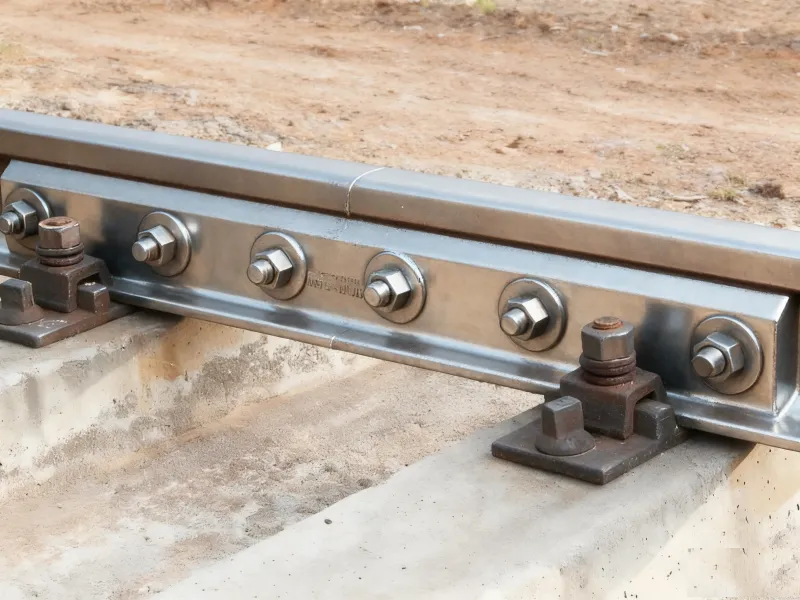
When purchasing railway components internationally, customers often see two different terms:
Are they different products?
Nella maggior parte dei casi, they refer to the same railway component.
Il termine piatto di pesce is widely used in Europe, Asia, Africa, and many countries influenced by British railway terminology.
Il termine barra articolare is more commonly used in North America, especially in railway standards and specifications related to American Railway Engineering and Maintenance-of-Way Association.
Although the names are different, the function is the same:
Un componente in acciaio installato su entrambi i lati di un giunto ferroviario per collegare due sezioni ferroviarie e mantenere la stabilità del binario.
Quando si acquistano piatti di pesce a livello internazionale, gli ingegneri dovrebbero concentrarsi meno sulla terminologia e più sulle specifiche tecniche, compreso:
Una ganascia prodotta per un profilo di rotaia potrebbe non essere adatta per un altro, anche se l'aspetto generale sembra simile.
Una stecca può sembrare un semplice componente in acciaio, ma il suo ruolo in un sistema ferroviario è fondamentale.
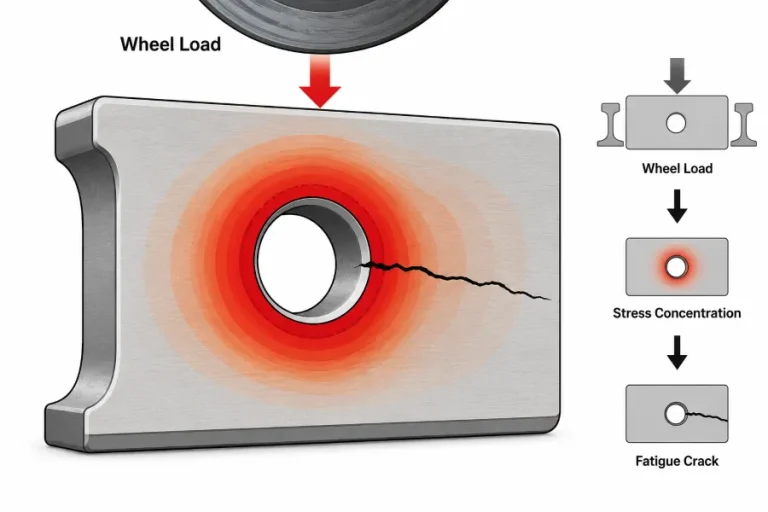
Un giunto ferroviario è una delle aree in cui la struttura del binario è sottoposta a sollecitazioni concentrate. Quando un treno passa sopra lo snodo, il carico sulle ruote crea forze di impatto verticali, durante la frenata, accelerazione, e il movimento laterale generano ulteriori stress.
The purpose of a fish plate is to reinforce this connection and help the two rail sections behave as closely as possible like one continuous rail.
A typical fish plate connection works through several key elements:
Fishplates are installed on both sides of the rail web. The contact between the fish plate and the rail provides additional support around the joint area, increasing the overall stiffness of the connection.
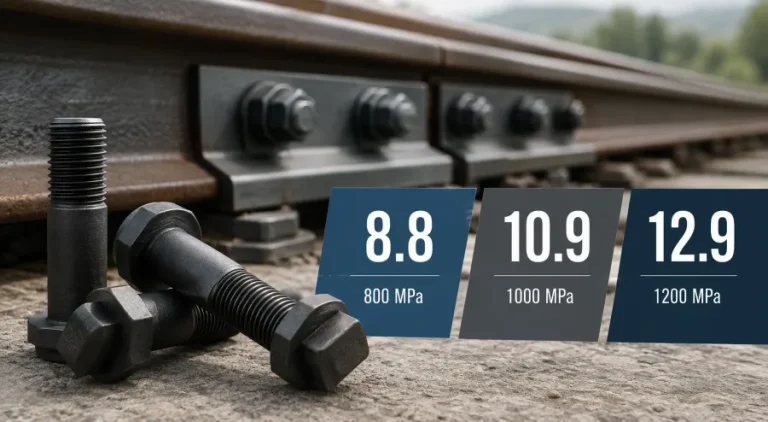
Fish bolts pass through the rail and fish plates, clamping the assembly together.
The correct bolt size, hole position, and tightening force are important because insufficient clamping can lead to:
A properly designed fishplate helps maintain:
This is especially important in areas where trains operate under heavy axle loads or frequent traffic conditions.
Dal punto di vista produttivo, dimensional accuracy is essential. The bolt hole position, machining tolerance, and contact surface must match the rail profile precisely to ensure proper installation.
Railway fishplates are not one universal product. Different railway systems require different designs depending on rail profiles, condizioni operative, e standard.
The most common types include the following.
Standard fishplates are designed to connect two identical rail sections.
They are commonly used in conventional railway tracks where the same rail profile is installed throughout the line.
Examples include:
The design must match the exact rail profile to ensure correct contact and load transfer.
A compromise fish plate is used when two different rail profiles need to be connected.
Per esempio, a railway may need to transition from one rail size to another due to:
Because different rail profiles have different heights and web shapes, standard fish plates cannot be used. A specially designed compromise fish plate provides a smooth and secure transition.
Insulated fishplates are designed for railway signaling systems.
In many railway networks, the rails are also used as part of electrical track circuits. To detect train positions, adjacent rail sections must sometimes be electrically separated.
Insulated fish plates include insulating components that prevent electrical continuity between rail sections while maintaining mechanical strength.
They are commonly used in:
Crane rail fishplates are designed for industrial rail applications, especially where rails are installed for overhead cranes or heavy material handling equipment.
Compared with standard railway tracks, crane rail systems often experience:
Perciò, crane rail fish plates require suitable design and material selection to provide long-term durability.
Le applicazioni tipiche includono:
Heavy-duty fish plates are developed for demanding railway environments where high axle loads and intensive traffic are expected.
They are commonly used in:
These applications require higher strength materials and strict quality control because the rail joint experiences repeated dynamic loading.
Because fishplates are exposed to repeated impact forces, vibrazione, and environmental conditions, material selection plays an important role in their performance.
Most railway fish plates are manufactured from high-strength carbon steel or alloy steel.
Common material requirements include:
Depending on customer requirements and railway standards, fish plates may be manufactured according to:
For demanding railway applications, material selection alone is not enough.
Heat treatment is often required to improve the mechanical properties of the fish plate.
A properly controlled heat treatment process can improve:
The fish plate must withstand repeated loading from passing trains without permanent deformation.
Rail joints experience millions of loading cycles during service. Good fatigue performance helps prevent cracking and premature failure.
The contact area around the rail joint is exposed to vibration and impact. Improved material properties contribute to longer service life.
Per questo motivo, professional railway component manufacturers pay close attention to both material quality and production processes.

With the widespread adoption of continuously welded rail (CWR), some people believe that fish plates are becoming outdated.
Tuttavia, this is not the case.
Although CWR has reduced the number of traditional rail joints on many main railway lines, fish plates remain an important component in many railway applications.
They are still widely used in:
During rail replacement or repair work, temporary and permanent rail connections often require fish plates.
Railway switches and crossings involve complex rail arrangements where bolted connections may still be required.
Factories, porti, miniere, and warehouses often use rail systems where flexibility and maintenance convenience are important.
Industrial crane rails frequently rely on bolted joints because of their operating environment and maintenance requirements.
Many railway networks around the world continue to use traditional rail joint systems due to infrastructure conditions and operational requirements.
Continuously welded rail provides many advantages, compreso:
Tuttavia, welded rail is not always the best solution for every situation.
Fish plates still provide several practical advantages:
Bolted rail joints can be installed without specialized welding equipment.
Damaged rail sections can be removed and replaced more efficiently.
Certain railway applications require removable or adjustable connections.
Ferrovie industriali, rotaie della gru, and temporary tracks often require solutions where fish plates remain the most practical choice.
Dal punto di vista ingegneristico, fish plates and welded rail systems are not competitors. They are solutions designed for different railway requirements.
When discussing modern railway construction, one common question is whether fish plates are still necessary when welded rail technology is widely available.
The answer depends on the railway application.
Both fishplate joints and welded rail joints have their own advantages, and engineers select the most suitable solution based on operating conditions, requisiti di manutenzione, e specifiche del progetto.
| Caratteristica | Fish Plate Joint | Welded Rail Joint |
| Connection method | Bolted mechanical connection | Permanent welded connection |
| Installazione | Relatively simple | Requires welding equipment and skilled operators |
| Manutenzione | Easier inspection and replacement | More difficult to repair |
| Flexibility | Allows easier rail replacement | Creates a continuous rail structure |
| Common applications | Ferrovie industriali, manutenzione, affluenza, rotaie della gru | Ferrovie ad alta velocità, ferrovie principali |
For high-speed passenger railways, continuously welded rail is usually preferred because it provides smoother running conditions.
Tuttavia, for many industrial and conventional railway applications, fish plates remain a reliable and practical solution.
A professional railway engineer does not simply choose the newest technology. The correct choice depends on the actual operating environment.
Selecting a fish plate requires more than choosing a component that looks similar.
A railway fishplate must match the rail profile, sistema di fissaggio, and operating requirements of the track.
The following factors should be considered before production or purchase.
The first and most important factor is the rail profile.
Different rails have different:
Per esempio, a fish plate designed for UIC60 rail cannot simply be installed on a UIC54 rail.
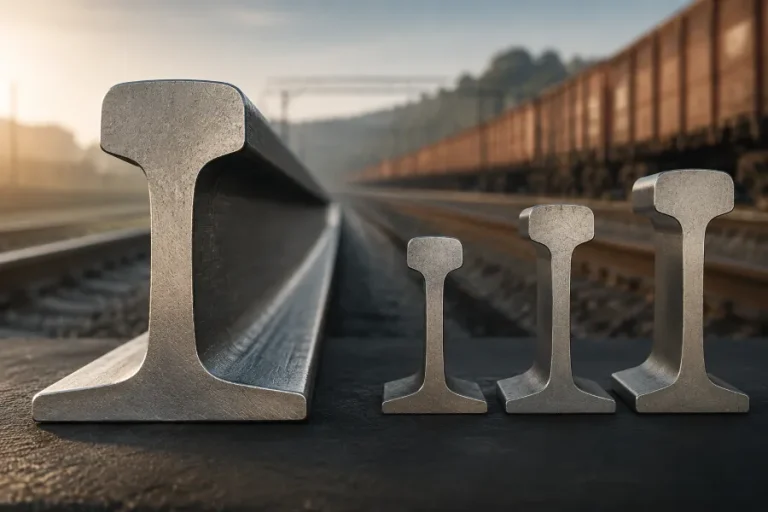
Common rail profiles include:
The fishplate must be designed according to the exact rail section.
Different countries and railway systems may follow different technical standards.
Common standards include:
Before manufacturing, customers should confirm:
This ensures that the fishplate meets the expectations of the railway project.
The material must match the operating conditions.
For heavy-load applications, gli ingegneri di solito si concentrano su:
A fish plate used in a mining railway, Per esempio, may require higher performance than one used in a light industrial track.
The bolt hole arrangement is another critical factor.
Important parameters include:
Incorrect hole dimensions can prevent proper installation and reduce joint performance.
The working environment also influences fish plate selection.
Factors include:
A fishplate used in a heavy-haul railway requires a different design approach compared with one used in a light industrial railway.
Although bar joint is much smaller than a rail or sleeper, it plays a critical role in railway safety and reliability.
A rail joint is one of the areas where the track structure experiences concentrated stress. Poor-quality fish plates may result in:
Per questo motivo, professional railway component manufacturers focus on every stage of production.
Important quality control steps include:
Steel materials should be checked to ensure they meet the required chemical composition and mechanical properties.
Accurate dimensions are essential for proper fitting with the rail profile.
Bolt holes must maintain strict tolerances to ensure correct assembly.
Where required, heat treatment must provide stable mechanical performance.
Finished fish plates should be inspected according to project requirements before shipment.
From our manufacturing experience, one of the most common mistakes in railway component purchasing is selecting a fish plate based only on appearance or price.
A reliable fishplate must be matched with the rail system it is designed for.
A Luoyang Fonyo Heavy Industries Co., Ltd., we manufacture railway fish plates and other railway track components for customers in railway, industriale, minerario, and material handling applications.
Our railway fish plates are produced according to international standards and customer-specific requirements, compreso:
We focus on providing reliable railway components through:
In addition to railway fish plates, our product range includes:
By supplying compatible railway components from one source, we help customers simplify procurement and ensure better system compatibility.
Whether you need standard railway fish plates or customized solutions based on drawings and technical specifications, Luoyang Fonyo Heavy Industries Co., Ltd. can provide professional support for your railway project.
The name comes from an old engineering term. “Pescare” referred to a reinforcing member used to strengthen a joint. A railway fish plate reinforces the connection between two rail sections, which is why it received this name.
SÌ. Nella maggior parte delle applicazioni ferroviarie, fishplate and joint bar refer to the same component. “Piatto di pesce” is commonly used in many international markets, Mentre “barra articolare” is frequently used in North American railway terminology.
A fish plate connects two rail sections, maintains alignment, transfers wheel loads, and reinforces the rail joint to improve track stability.
SÌ. Although continuously welded rail is common on many high-speed railways, fish plates are still widely used in industrial railways, maintenance work, rotaie della gru, affluenza, and conventional railway systems.
Most fishplates are manufactured from high-strength carbon steel or alloy steel. Material selection depends on the railway standard and operating conditions.
NO. Fishplates are designed according to specific rail profiles. Different rails require matching fish plate dimensions and bolt arrangements.
Manufacturers usually need:
The service life depends on factors such as axle load, traffic frequency, qualità dell'installazione, manutenzione, e ambiente operativo.