Scansiona il codice WeChat per contattarci
Scansiona il codice WeChat per contattarci
Sentiti libero di inviarci un'e-mail e ti risponderemo il prima possibile.
Creare il futuro con cuore e anima


When you buy bulloni di pesce ferroviari or other high-strength fasteners, vedrai spesso segni come 8.8, 10.9, O 12.9 sul disegno, preventivo, o certificato di ispezione. A prima vista, la scelta sembra semplice: a higher number means a stronger bolt. In pratica, railway fastener selection is not quite that straightforward. These numbers are ISO property classes of railway bolt grade used to describe the mechanical properties of carbon steel and alloy steel bolts, viti, and studs. ISO 898-1:2013 defines the requirements for these property classes. The railway application, Tuttavia, may also be governed by UIC, IN, ASTM, AREMA, national standards, or a project-specific specification.
That distinction matters. A bolt can have the required strength on a material certificate and still be unsuitable for a particular rail joint if the dimensions, rivestimento, preload, thread system, or applicable railway standard are wrong.
So how should you compare 8.8, 10.9 E 12.9 railway bolts?
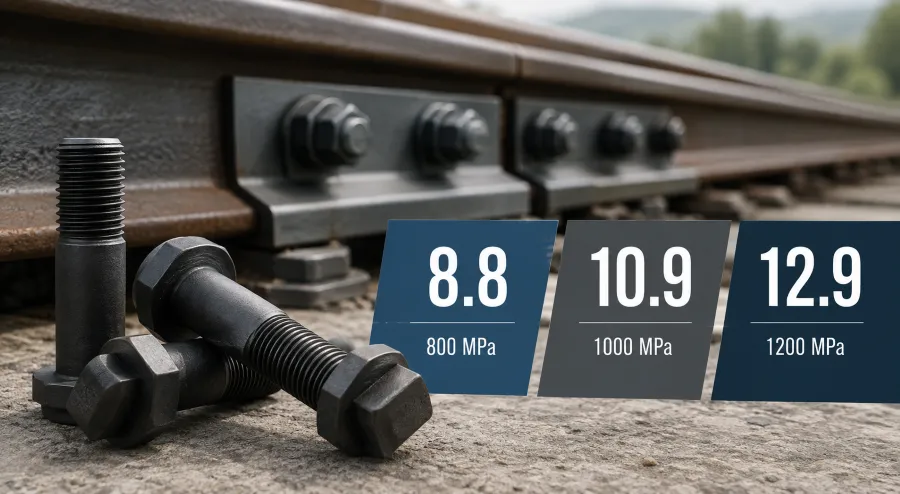
The two numbers in a property class are not a product model number.
Per esempio, in the ISO property-class system:
This gives a useful first comparison:
| Property Class | Nominal Tensile Strength | Nominal Yield Strength* |
| 8.8 | 800 MPa | 640 MPa |
| 10.9 | 1,000 MPa | 900 MPa |
| 12.9 | 1,200 MPa | 1,080 MPa |
*The table is a simplified explanation of the property-class designation. Actual specified mechanical properties depend on the applicable standard, diameter range, and test requirements.
The important point is that 8.8, 10.9 E 12.9 describe mechanical strength classes. They do not, by themselves, tell you whether a bolt is suitable for a fish plate, sistema di fissaggio della rotaia, bridge structure, or another railway connection.
That decision comes later.
Railway Bolt Grade 8.8 is widely used for general-purpose high-strength bolting. It offers a useful balance between strength, ductility, availability and manufacturing cost.
Per applicazioni ferroviarie, UN 8.8 bolt may be considered for conventional fastening systems, componenti del binario, structural connections and other applications where the project specification calls for this property class.
The advantage of 8.8 is not simply its 800 Resistenza alla trazione MPa.
It is also relatively forgiving compared with higher-strength classes. Railway bolts are installed in environments that are not always ideal. Threads may become dirty. Components may have small dimensional variations. Maintenance work may take place outdoors, at night, or under tight possession windows.
That does not mean installation quality is unimportant. It means that the overall engineering balance of the fastener can be attractive for applications that do not require a higher strength class.
For a fish bolt, Tuttavia, the property class should never be selected only from the bolt diameter or from what another railway uses. Il profilo ferroviario, fish plate design, required preload, joint arrangement and applicable standard all need to be considered.
Moving from 8.8 A 10.9 gives a substantial increase in tensile and yield strength.
That can be useful where a connection needs higher preload or where the available bolt size is limited by the joint design.
Nelle applicazioni ferroviarie, higher-strength fasteners may be considered for heavily loaded joints, demanding structural connections and applications where the project specification requires a higher property class.
But there is an important point that is sometimes missed:
The joint still depends on the quality of the threads, the contact surfaces, the nut and washer, the bolt preload, the alignment of the components and the design of the connection.
Imagine two bolts installed in the same joint. One is railway bolt Grade 10.9 but is installed with poor preload control. The other is railway bolt Grade 8.8 and is correctly installed according to the project specification.
The higher-strength bolt does not automatically win.
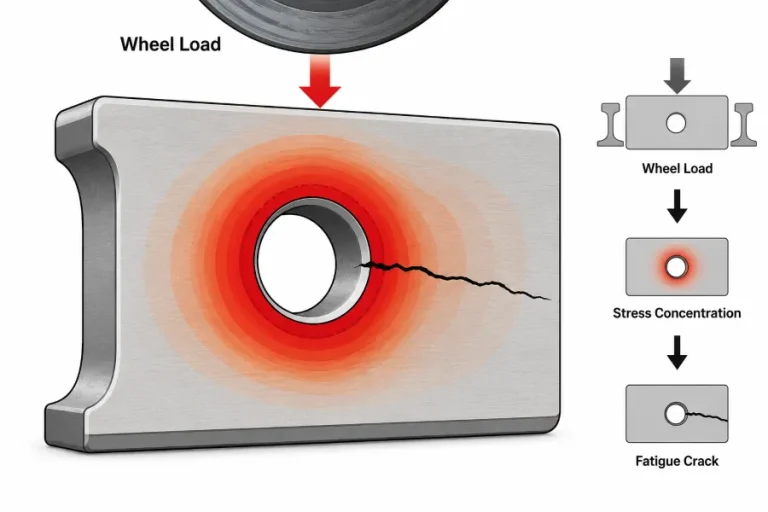
This is particularly important for railway track joints because repeated wheel loads create cyclic loading. The goal is not simply to prevent the bolt from breaking. The joint also needs to maintain the required clamping force during service.
Railway Bolt Grade 12.9 is a higher-strength property class than 10.9, but that does not make it the universal choice for railway fasteners.
Higher-strength fasteners generally require more careful control of material condition, trattamento termico, surface treatment and installation.
They also have less room for plastic deformation than lower-strength classes. In a connection with poor alignment, fili danneggiati, incorrect preload or other stress concentrations, simply choosing a higher strength class does not solve the underlying problem.
This is why I would be cautious about specifications that say:
“Use Railway Bolt Grade 12.9 because it is safer.”
That is not really an engineering specification.
A better question is:
What load does the joint need to carry, what preload is required, and which property class does the applicable standard or engineering calculation specify?
Grado 12.9 can make sense in special applications where the design requires it. But it should be selected because the connection requires that level of performance—not simply because 12.9 is the highest number on the shelf.
When discussing railway bolt grades, it is tempting to focus on tensile strength and ignore installation.
That is a mistake.
Bolt torque is used as a practical method of achieving the required preload, but torque is not a universal number for a particular railway bolt grade.
The relationship between torque and preload is affected by factors such as:
Per questo motivo, a generic statement such as “an M24 Grade 8.8 bolt should always be tightened to X Nm” can be misleading.
The correct torque or installation method should come from the relevant railway specification, fastener supplier’s technical data, or the joint design.
This is also why a calibrated torque tool matters. If installation teams use different tools, lubricants or tightening procedures without accounting for friction changes, the same torque reading may not produce the same preload.
For railway fish bolts, maintaining preload is often more important than simply choosing the strongest available bolt.
If you are dealing with recurring joint loosening, it is worth investigating the installation process before automatically changing from 8.8 A 10.9 O 12.9.
You may find that the problem is actually related to preload, joint movement, component wear, thread condition or installation procedure.
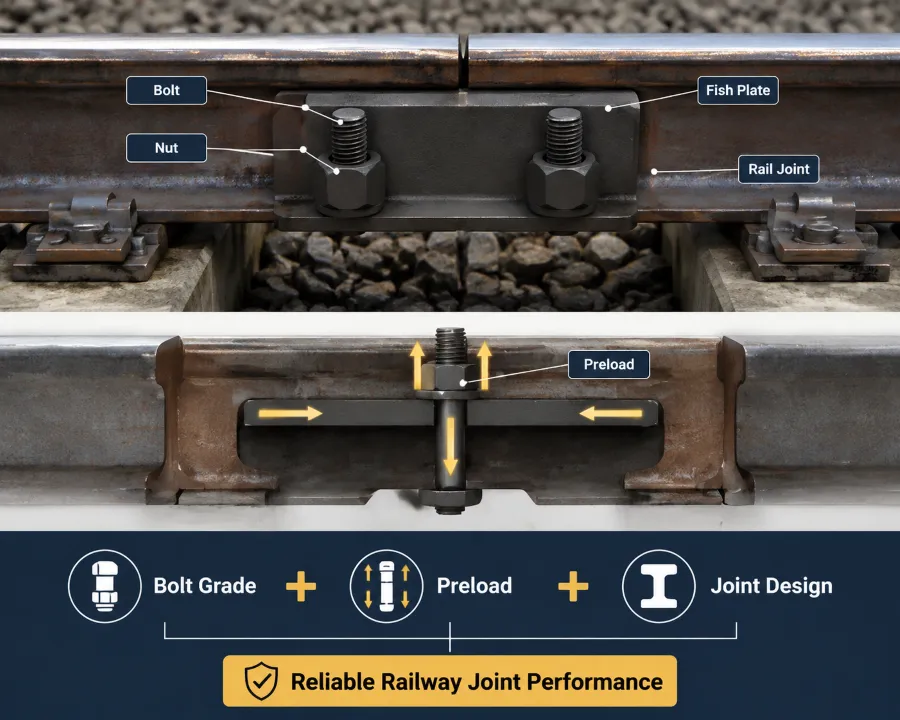
Surface treatment becomes increasingly important as fastener strength increases.
High-strength steel fasteners can be susceptible to hydrogen embrittlement under certain processing and service conditions. Hydrogen can be introduced during some cleaning, pickling, plating or coating processes. If the steel, processing route and stress condition are unfavorable, delayed brittle failure can occur.
This is one reason why coating should not be treated as a cosmetic choice.
For Railway Bolt Grade 10.9 and especially railway bolt Grade 12.9 elementi di fissaggio, the coating system should be selected together with the fastener material and the applicable standard. The supplier should be able to explain the surface-treatment process and the controls used to manage hydrogen-embrittlement risk where applicable.
The correct solution may vary depending on the coating system and project requirements.
For railway applications exposed to rain, umidità, coastal air, tunnels or de-icing environments, corrosion protection also needs to be considered. A bolt that has excellent mechanical properties but loses its section through corrosion is not a reliable fastener.
SÌ.
A high-strength bolt should not be evaluated by itself.
The nut, rondella, threads and mating components form a joint. If one component has inadequate strength or the wrong geometry, upgrading the bolt alone may provide little benefit.
Per esempio, using a railway bolt Grade 10.9 bolt with an unsuitable nut does not create a Grade 10.9 connessione.
The same principle applies to washers and anti-loosening arrangements. A spring washer, locking nut or other device should not be selected simply because it was used on another railway project.
The connection should be designed around the actual vibration, load and maintenance conditions.
This is where railway fasteners differ from a simple hardware-store comparison.
A drawing may specify a bolt property class such as 8.8 O 10.9, but it may also specify:
In altre parole, 8.8 is not a complete bolt specification.
The same applies to 10.9 E 12.9.
North American projects may use ASTM specifications for structural fasteners, while other railway systems may reference EN, UIC, national or project-specific requirements. ASTM F3125/F3125M, Per esempio, consolidates several previous structural-bolt specifications including A325 and A490. It should not be treated as a simple one-to-one conversion table with ISO 898 property classes.
If your drawing says ASTM, follow the ASTM requirement. If it specifies ISO 898-1 property class 10.9, follow that requirement. If the railway project specifies a particular UIC, EN or national standard, that standard takes priority.
Do not select a substitute just because the tensile strength appears similar.
There is no single railway bolt grade that is correct for every railway application.
A practical selection process looks more like this:
| Domanda | Perché è importante |
| What is the joint carrying? | Determines the required load capacity |
| What preload is required? | Influences bolt size and property class |
| Which railway standard applies? | Defines the technical requirements |
| What are the environmental conditions? | Affects corrosion and coating selection |
| How will the bolt be installed? | Influences achievable preload |
| What nut and washer are required? | The complete joint must work together |
| What inspection is required? | Confirms production and installation quality |
Per esempio, a conventional track connection may use Grade 8.8 if that is what the applicable design and standard require.
A more heavily loaded connection may require Grade 10.9.
A special application may require Grade 12.9.
The important part is the engineering process behind the decision.
| Property Class | Strength Level | Typical Consideration |
| 8.8 | General high-strength class | Good balance of strength, ductility and availability |
| 10.9 | Higher-strength class | Useful where higher preload or strength is required |
| 12.9 | Very high-strength class | Special applications requiring careful engineering and process control |
This is a starting point, not a universal railway specification.
The final selection should always be checked against the actual joint design and applicable standard.
When buying railway fish bolts or other railway fasteners, I would not stop at asking:
“What railway bolt grade is it?"
Ask for the complete specification.
A reliable supplier should be able to provide information such as:
For larger railway projects, traceability is particularly important. The bolts delivered to the site should be linked back to the relevant production batch and inspection records.
That makes it much easier to investigate a problem if a joint later shows abnormal loosening, corrosion or damage.
The numbers 8.8, 10.9 E 12.9 are useful because they give engineers a common way to describe bolt mechanical properties.
But a railway bolt is more than a strength number.
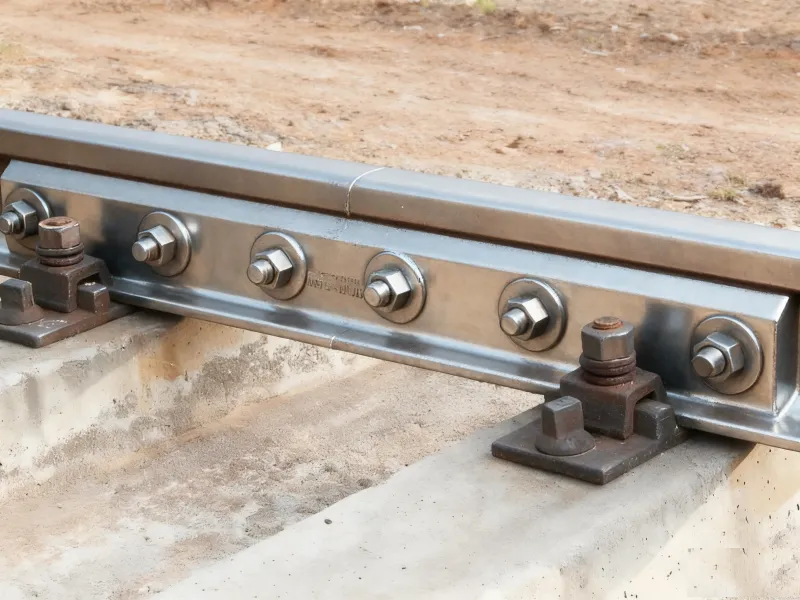
A reliable rail joint depends on the complete system: bullone, noce, rondella, threads, mating components, preload, rivestimento, installation and maintenance.
That is why I would not recommend choosing 12.9 simply because it is stronger than 10.9, or choosing 10.9 simply because another railway uses it.
Start with the joint.
Then check the applicable standard.
Then determine the required property class.
Finalmente, make sure the manufacturing and installation processes can consistently achieve the required performance.
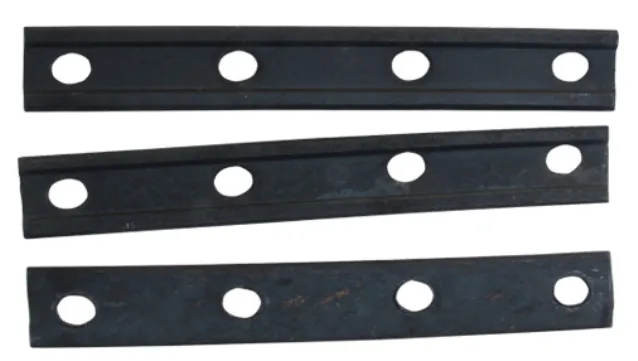
A Luoyang Fonyo Heavy Industries Co., Ltd., we manufacture railway fasteners including bullone di pesce, piatto di pesce, clip elastiche per binari E cuscinetti ferroviari, secondo i disegni del cliente, applicable standards and project requirements. For railway fasteners, we can review the required material grade, dimensioni, trattamento termico, coating and inspection requirements before production.
Se hai un disegno, specification or existing bolt sample, send us the details. Our engineering team can help check the required railway bolt grade, applicable standard and production requirements before quotation.
They are ISO property classes used to describe the mechanical properties of carbon steel and alloy steel fasteners. In termini semplici, 8.8 corresponds to a nominal 800 Resistenza alla trazione MPa, 10.9 A 1,000 MPa, E 12.9 A 1,200 MPa.
The complete requirements depend on the applicable edition of the standard and the bolt diameter range.
There is no single “best” grade.
Grado 8.8 may be suitable where the design calls for a general high-strength fastener. Grado 10.9 may be selected where greater strength or preload is required. Grado 12.9 is generally reserved for applications where the engineering specification requires its higher strength level.
The applicable railway standard and joint design should determine the final choice.
NO.
A higher property class provides greater strength, but it does not automatically improve the performance of the complete joint. Installazione, preload, rivestimento, corrosione, thread condition and component compatibility are also important.
Non automaticamente.
Changing the property class can affect preload, tightening requirements, trattamento superficiale, nut selection and joint behavior. Any substitution should be approved against the applicable engineering specification.
They belong to different specification systems and should not be treated as direct equivalents.
ASTM A325 and A490 were incorporated into the ASTM F3125/F3125M structural bolt specification system. The relevant ASTM specification should be followed when a project calls for ASTM fasteners.
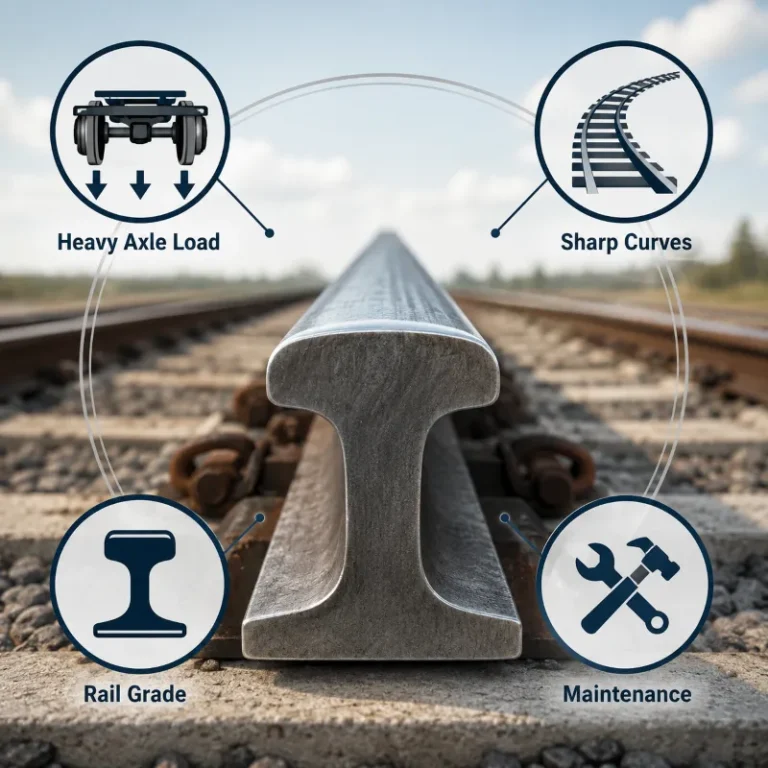
Start with the rail and fish plate system, applicable railway standard, bolt dimensions, required joint preload and service conditions.
Do not choose the grade based only on axle load or bolt diameter. The complete joint needs to be considered.
Loosening can result from insufficient or inconsistent preload, joint movement, vibrazione, worn components, incorrect tightening procedures, thread or contact-surface conditions, and other factors.
Changing to a higher-strength bolt may not solve the problem if the underlying joint condition has not been addressed.