Scannen Sie den WeChat-Code, um mit uns Kontakt aufzunehmen
Scannen Sie den WeChat-Code, um mit uns Kontakt aufzunehmen
Schicken Sie uns gerne eine E-Mail und wir werden Ihnen so schnell wie möglich antworten.
Mit Herz und Seele die Zukunft gestalten


Wenn die Leute den Begriff zum ersten Mal hören “Fischplatte“, Eine der häufigsten Fragen ist: Warum ist ein Eisenbahnbauteil nach einem Fisch benannt??
The name can seem unusual because a railway fish plate has no obvious connection with a fish. It is simply a steel component installed at rail joints, used to connect and reinforce two sections of rail.
Jedoch, the name has a much deeper engineering history. The word “fish” in this context does not refer to the animal. Stattdessen, it comes from an older engineering term describing a reinforcing piece used to strengthen a joint.
Understanding why it is called a fish plate also helps explain the important role this component plays in railway track systems.
For railway engineers, Auftragnehmer, and purchasers, a fish plate is not just a simple steel bar. It is a precision-manufactured railway component that directly affects rail alignment, joint stability, and long-term track performance.
In diesem Artikel, we will explain the origin of the name Fischplatte, how railway fish plates work, the different types available, and what factors should be considered when selecting the right fish plate for a railway project.
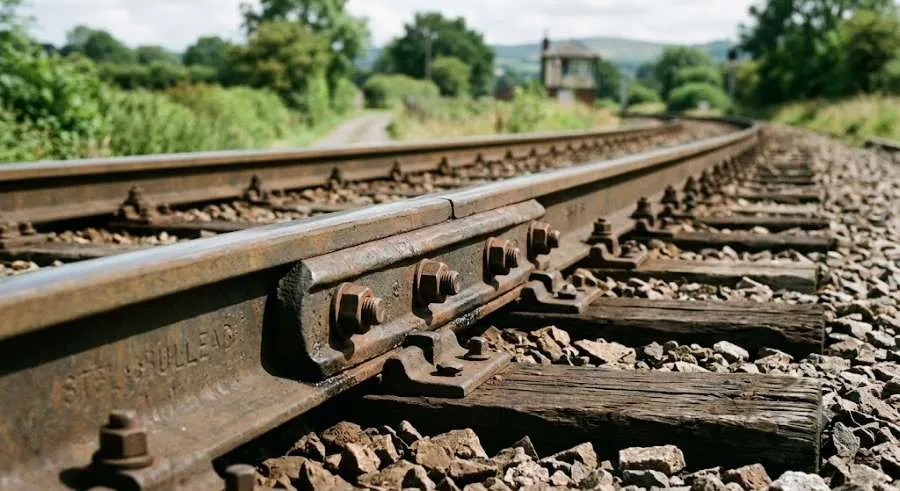
A railway fish plate, also known as a Schienenverbindungsstange in some regions, is a steel fastening component used to join two rail ends together.
Während der Installation, two fish plates are placed on both sides of the rail web and secured using Fischbolzen, Nüsse, and washers. Zusammen, these components create a mechanical rail joint that keeps the two rail sections aligned and stable.
A typical railway joint assembly includes:
The main functions of a fish plate include:
A fish plate helps keep the two connected rail ends in the correct position vertically and horizontally, ensuring smooth train operation.
When a train passes over a rail joint, significant impact forces are generated. Fish plates help transfer these forces between adjacent rail sections.
Without proper reinforcement, rail joints can experience excessive movement, which may lead to uneven wear, Vibration, and track deterioration.
Unlike welded rail connections, bolted rail joints using fish plates can be installed, inspiziert, and replaced more easily, making them valuable in many railway applications.
Obwohl durchgehend verschweißte Schiene (CWR) has become common on modern mainline railways, fish plates remain widely used in freight railways, Industriebahnen, Bergbaubahnen, Kranschienensysteme, and maintenance projects.
The origin of the term comes from historical engineering terminology rather than the appearance of the component.
In older engineering practices, the word “fish” was used to describe a reinforcing piece fitted alongside a joint to improve its strength and rigidity.
The concept was similar to strengthening a connection by adding additional supporting material on both sides. When railway engineers developed methods for joining rail sections, they adopted this idea and used steel plates to reinforce the rail joint.
Because these plates strengthened the connection between two rails, they became known as Fischteller.
In einfachen Worten:
A fish plate is called a fish plate because it acts as a reinforcing member at a joint, not because it looks like a fish.
This explanation is the most widely accepted origin of the term within railway engineering.
The use of the word “fish” in engineering is older than modern railway systems.
Historically, engineers used the term to describe a piece of material added to strengthen or support another component. A reinforcing plate fitted over a joint was sometimes called a “fish” because it supported the connection in the same way that a fish-shaped reinforcement piece could strengthen a structure.
When early railways expanded during the 19th century, engineers needed a practical solution for connecting individual rail sections. Damals, rails were manufactured in limited lengths, and long continuous rails were not practical.
The development of the fish plate provided a simple but effective solution:
As railway technology developed, the name remained in use and became a standard term throughout the industry.
Heute, more than a century later, railway engineers around the world still use the term FischplatteS.
This is probably the first question many people ask after hearing the name.
Die kurze Antwort lautet: not really.
A standard railway fishplate is a relatively simple steel profile designed to match the shape of the rail web. Its design is determined mainly by engineering requirements, einschließlich:
Some historical fishplate designs may have had tapered shapes that loosely resembled the outline of a fish. This may have contributed to the popularity of the name.
Jedoch, the engineering explanation is much stronger: the term comes from the idea of reinforcement, not from visual similarity.
For railway professionals, the important question is not what the component looks like, but whether it provides a reliable connection between two rails under repeated loading conditions.
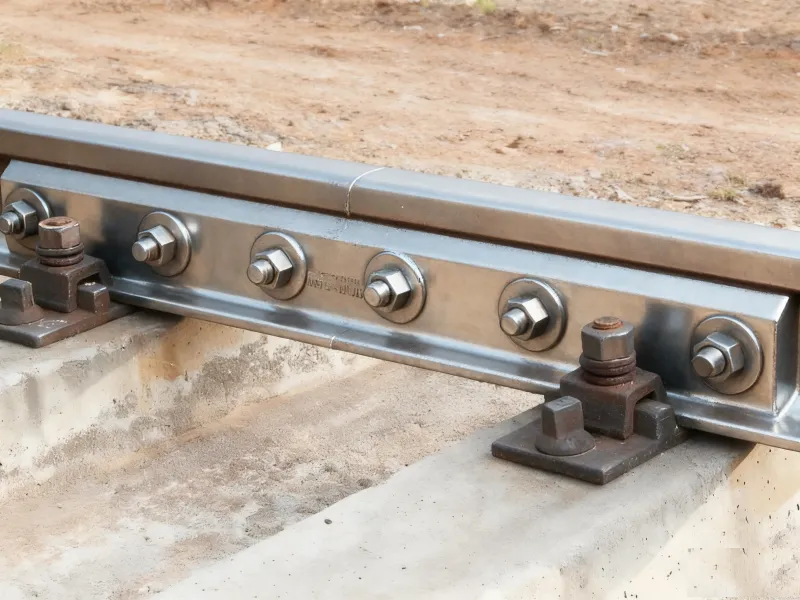
When purchasing railway components internationally, customers often see two different terms:
Are they different products?
In den meisten Fällen, they refer to the same railway component.
Der Begriff Fischplatte is widely used in Europe, Asien, Afrika, and many countries influenced by British railway terminology.
Der Begriff Gelenkstange is more commonly used in North America, especially in railway standards and specifications related to American Railway Engineering and Maintenance-of-Way Association.
Although the names are different, the function is the same:
A steel component installed on both sides of a rail joint to connect two rail sections and maintain track stability.
When sourcing fish plates internationally, engineers should focus less on the terminology and more on technical specifications, einschließlich:
A fish plate manufactured for one rail profile may not be suitable for another, even if the overall appearance looks similar.
A fishplate may look like a simple steel component, but its role in a railway track system is critical.
A rail joint is one of the areas where a track structure experiences concentrated stress. When a train passes over the joint, the wheel load creates vertical impact forces, while braking, Beschleunigung, and lateral movement generate additional stresses.
The purpose of a fish plate is to reinforce this connection and help the two rail sections behave as closely as possible like one continuous rail.
A typical fish plate connection works through several key elements:
Fishplates are installed on both sides of the rail web. The contact between the fish plate and the rail provides additional support around the joint area, increasing the overall stiffness of the connection.
Fish bolts pass through the rail and fish plates, clamping the assembly together.
The correct bolt size, hole position, and tightening force are important because insufficient clamping can lead to:
A properly designed fishplate helps maintain:
This is especially important in areas where trains operate under heavy axle loads or frequent traffic conditions.
Aus fertigungstechnischer Sicht, dimensional accuracy is essential. The bolt hole position, machining tolerance, and contact surface must match the rail profile precisely to ensure proper installation.
Railway fishplates are not one universal product. Different railway systems require different designs depending on rail profiles, Betriebsbedingungen, und Standards.
The most common types include the following.
Standard fishplates are designed to connect two identical rail sections.
They are commonly used in conventional railway tracks where the same rail profile is installed throughout the line.
Examples include:
The design must match the exact rail profile to ensure correct contact and load transfer.
A compromise fish plate is used when two different rail profiles need to be connected.
Zum Beispiel, a railway may need to transition from one rail size to another due to:
Because different rail profiles have different heights and web shapes, standard fish plates cannot be used. A specially designed compromise fish plate provides a smooth and secure transition.
Insulated fishplates are designed for railway signaling systems.
In many railway networks, the rails are also used as part of electrical track circuits. To detect train positions, adjacent rail sections must sometimes be electrically separated.
Insulated fish plates include insulating components that prevent electrical continuity between rail sections while maintaining mechanical strength.
They are commonly used in:
Crane rail fishplates are designed for industrial rail applications, especially where rails are installed for overhead cranes or heavy material handling equipment.
Compared with standard railway tracks, crane rail systems often experience:
daher, crane rail fish plates require suitable design and material selection to provide long-term durability.
Zu den typischen Anwendungen gehören::
Heavy-duty fish plates are developed for demanding railway environments where high axle loads and intensive traffic are expected.
They are commonly used in:
These applications require higher strength materials and strict quality control because the rail joint experiences repeated dynamic loading.
Because fishplates are exposed to repeated impact forces, Vibration, and environmental conditions, material selection plays an important role in their performance.
Most railway fish plates are manufactured from high-strength carbon steel or alloy steel.
Common material requirements include:
Depending on customer requirements and railway standards, fish plates may be manufactured according to:
For demanding railway applications, material selection alone is not enough.
Heat treatment is often required to improve the mechanical properties of the fish plate.
A properly controlled heat treatment process can improve:
The fish plate must withstand repeated loading from passing trains without permanent deformation.
Rail joints experience millions of loading cycles during service. Good fatigue performance helps prevent cracking and premature failure.
The contact area around the rail joint is exposed to vibration and impact. Improved material properties contribute to longer service life.
Aus diesem Grund, professional railway component manufacturers pay close attention to both material quality and production processes.

With the widespread adoption of continuously welded rail (CWR), some people believe that fish plates are becoming outdated.
Jedoch, this is not the case.
Although CWR has reduced the number of traditional rail joints on many main railway lines, fish plates remain an important component in many railway applications.
They are still widely used in:
During rail replacement or repair work, temporary and permanent rail connections often require fish plates.
Railway switches and crossings involve complex rail arrangements where bolted connections may still be required.
Factories, Häfen, Minen, and warehouses often use rail systems where flexibility and maintenance convenience are important.
Industrial crane rails frequently rely on bolted joints because of their operating environment and maintenance requirements.
Many railway networks around the world continue to use traditional rail joint systems due to infrastructure conditions and operational requirements.
Continuously welded rail provides many advantages, einschließlich:
Jedoch, welded rail is not always the best solution for every situation.
Fish plates still provide several practical advantages:
Bolted rail joints can be installed without specialized welding equipment.
Damaged rail sections can be removed and replaced more efficiently.
Certain railway applications require removable or adjustable connections.
Industriebahnen, Kranschienen, and temporary tracks often require solutions where fish plates remain the most practical choice.
Aus ingenieurwissenschaftlicher Sicht, fish plates and welded rail systems are not competitors. They are solutions designed for different railway requirements.
When discussing modern railway construction, one common question is whether fish plates are still necessary when welded rail technology is widely available.
The answer depends on the railway application.
Both fishplate joints and welded rail joints have their own advantages, and engineers select the most suitable solution based on operating conditions, Wartungsanforderungen, und Projektspezifikationen.
| Besonderheit | Fish Plate Joint | Welded Rail Joint |
| Connection method | Bolted mechanical connection | Permanent welded connection |
| Installation | Relativ einfach | Requires welding equipment and skilled operators |
| Wartung | Easier inspection and replacement | More difficult to repair |
| Flexibility | Allows easier rail replacement | Creates a continuous rail structure |
| Common applications | Industriebahnen, Wartung, Wahlbeteiligungen, Kranschienen | Hochgeschwindigkeitsbahnen, Hauptbahnen |
For high-speed passenger railways, continuously welded rail is usually preferred because it provides smoother running conditions.
Jedoch, for many industrial and conventional railway applications, fish plates remain a reliable and practical solution.
A professional railway engineer does not simply choose the newest technology. The correct choice depends on the actual operating environment.
Selecting a fish plate requires more than choosing a component that looks similar.
A railway fishplate must match the rail profile, Befestigungssystem, and operating requirements of the track.
The following factors should be considered before production or purchase.
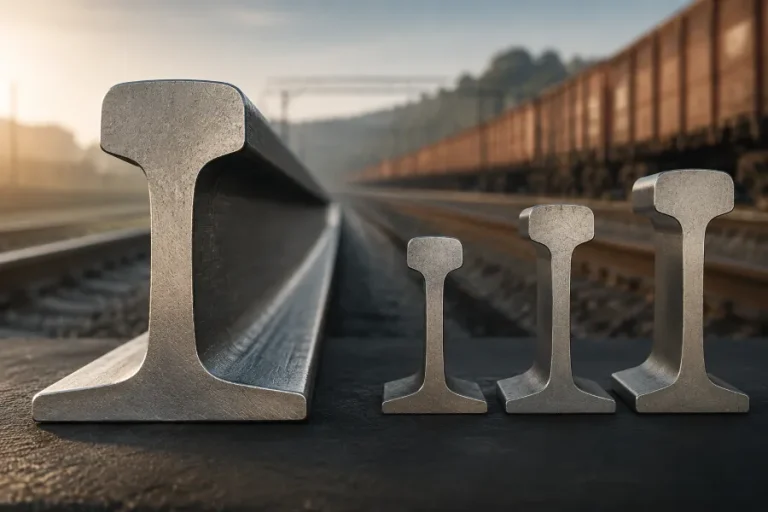
The first and most important factor is the rail profile.
Different rails have different:
Zum Beispiel, a fish plate designed for UIC60 rail cannot simply be installed on a UIC54 rail.
Common rail profiles include:
The fishplate must be designed according to the exact rail section.
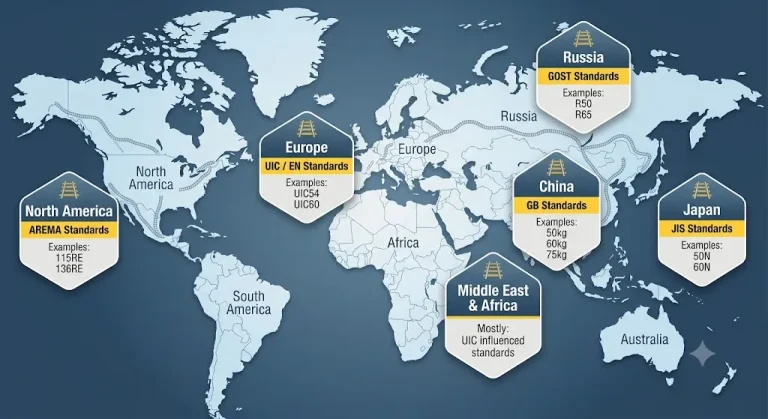
Different countries and railway systems may follow different technical standards.
Common standards include:
Before manufacturing, customers should confirm:
This ensures that the fishplate meets the expectations of the railway project.
The material must match the operating conditions.
For heavy-load applications, engineers usually focus on:
A fish plate used in a mining railway, Zum Beispiel, may require higher performance than one used in a light industrial track.
The bolt hole arrangement is another critical factor.
Important parameters include:
Incorrect hole dimensions can prevent proper installation and reduce joint performance.
The working environment also influences fish plate selection.
Factors include:
A fishplate used in a heavy-haul railway requires a different design approach compared with one used in a light industrial railway.
Although bar joint is much smaller than a rail or sleeper, it plays a critical role in railway safety and reliability.
A rail joint is one of the areas where the track structure experiences concentrated stress. Poor-quality fish plates may result in:
Aus diesem Grund, professional railway component manufacturers focus on every stage of production.
Important quality control steps include:
Steel materials should be checked to ensure they meet the required chemical composition and mechanical properties.
Accurate dimensions are essential for proper fitting with the rail profile.
Bolt holes must maintain strict tolerances to ensure correct assembly.
Where required, heat treatment must provide stable mechanical performance.
Finished fish plates should be inspected according to project requirements before shipment.
From our manufacturing experience, one of the most common mistakes in railway component purchasing is selecting a fish plate based only on appearance or price.
A reliable fishplate must be matched with the rail system it is designed for.
Bei Luoyang Fonyo Heavy Industries Co., Ltd., we manufacture railway fish plates and other railway track components for customers in railway, industriell, Bergbau, and material handling applications.
Our railway fish plates are produced according to international standards and customer-specific requirements, einschließlich:
We focus on providing reliable railway components through:
In addition to railway fish plates, our product range includes:
By supplying compatible railway components from one source, we help customers simplify procurement and ensure better system compatibility.
Whether you need standard railway fish plates or customized solutions based on drawings and technical specifications, Luoyang Fonyo Heavy Industries Co., Ltd. can provide professional support for your railway project.
The name comes from an old engineering term. “Fish” referred to a reinforcing member used to strengthen a joint. A railway fish plate reinforces the connection between two rail sections, which is why it received this name.
Ja. In den meisten Bahnanwendungen, fishplate and joint bar refer to the same component. “Fischplatte” is commonly used in many international markets, während “Gelenkstange” is frequently used in North American railway terminology.
A fish plate connects two rail sections, maintains alignment, transfers wheel loads, and reinforces the rail joint to improve track stability.
Ja. Although continuously welded rail is common on many high-speed railways, fish plates are still widely used in industrial railways, Wartungsarbeiten, Kranschienen, Wahlbeteiligungen, and conventional railway systems.
Most fishplates are manufactured from high-strength carbon steel or alloy steel. Material selection depends on the railway standard and operating conditions.
NEIN. Fishplates are designed according to specific rail profiles. Different rails require matching fish plate dimensions and bolt arrangements.
Manufacturers usually need:
The service life depends on factors such as axle load, traffic frequency, Installationsqualität, Wartung, und Betriebsumgebung.