Отсканируйте код WeChat, чтобы связаться с нами.
Отсканируйте код WeChat, чтобы связаться с нами.
Не стесняйтесь, отправьте нам электронное письмо, и мы ответим вам как можно скорее.
Создаем будущее сердцем и душой


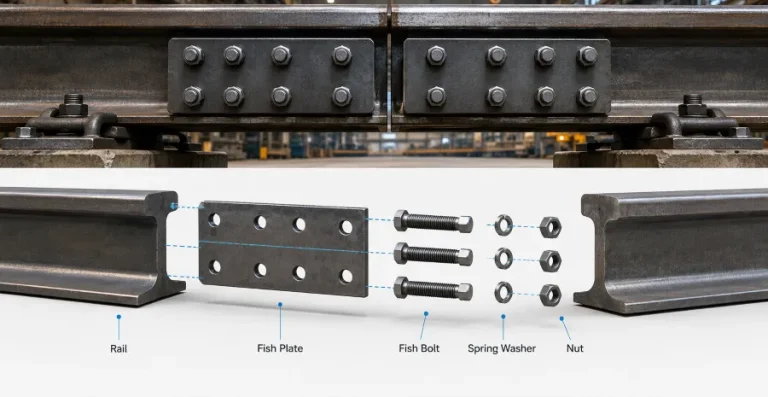
Если вы когда-либо заменяли стойку железнодорожные рыбные пластины, вы наверняка заметили что-то интересное. Трещина почти всегда начинается возле отверстия для болта, а не в середине пластины.. Все потому, что рыбные пластины редко выходят из строя от одной большой нагрузки.. Они выходят из строя после миллионов проходов колес, мелкие движения в суставе, и годы накопленной усталости.
В этой статье, объясним, почему трескаются железнодорожные рыбные пластины, где обычно начинаются трещины, что ускоряет усталость рыбной пластины, и что бригады технического обслуживания могут сделать для продления срока службы.
Хотя сочлененные пути представляют собой лишь небольшую часть всей железнодорожной сети., рельсовые стыки исторически требовали гораздо большего обслуживания, чем непрерывносварные рельсы. (КВР) поскольку они испытывают более высокие ударные нагрузки и концентрацию напряжений на каждом проходе колеса.. А рыбная пластина — компонент, скрепляющий этот сустав, — обычно является местом, где начинаются проблемы..
We’ve inspected cracked fish plates on freight lines, системы метро, and industrial crane tracks across different operating environments. The failure patterns share common characteristics, but the causes behind fish plate cracking are not always obvious at first glance.
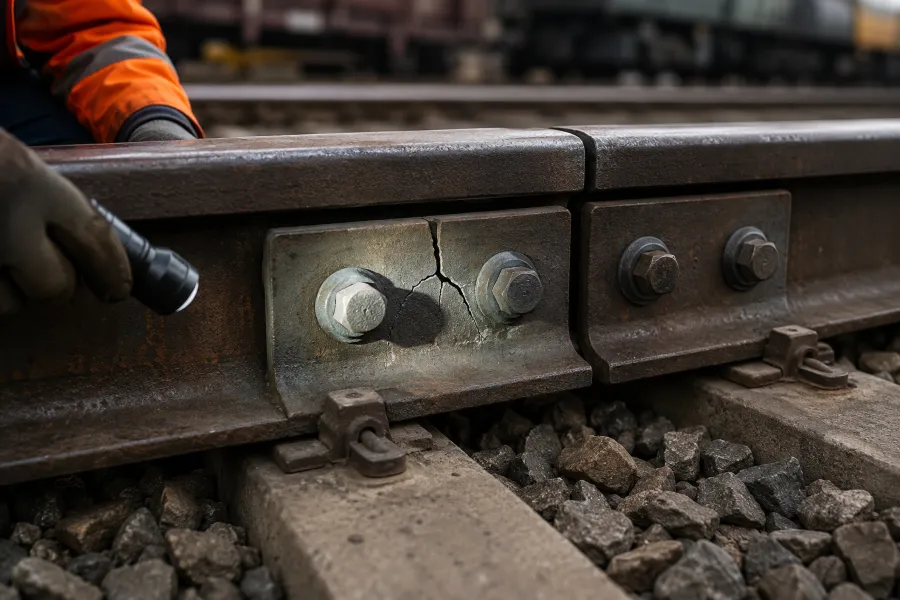
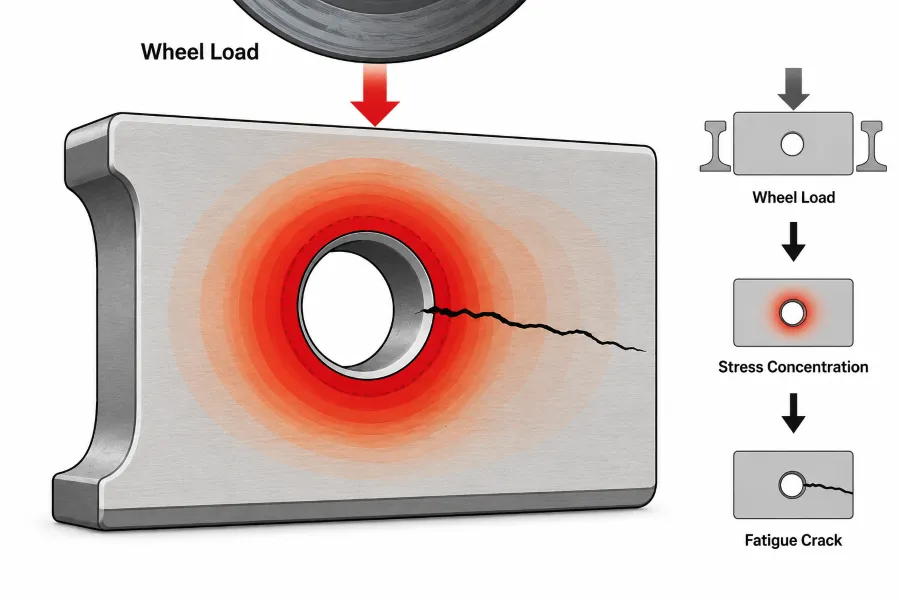
Bolt holes are stress concentrators by design. Every time a wheel passes over the joint, the fish plate flexes slightly, and the highest stress occurs at the hole edges. Over thousands—sometimes millions—of load cycles, a fatigue crack initiates at the hole and propagates outward. Slowly at first. Then faster.
The problem gets worse when the bolt holes are machined poorly. We’ve encountered plates where the hole diameter was oversize or the perpendicularity was off by a few degrees. Visually, they look acceptable. But the effective wall thickness around the hole is reduced, and the fatigue life drops significantly.
Some manufacturers punch holes instead of drilling to reduce production cost. Improperly punched holes may introduce residual stress or microscopic defects around the hole edge that become initiation points for fatigue cracking. If your supplier cannot confirm the hole machining method, that’s a question worth asking before placing an order.
Here’s something that surprises a lot of maintenance teams. A fish plate can develop cracks even when none of the bolts have actually broken.
When bolt preload drops significantly—and we’ve measured plenty of joints operating well below expected torque levels—the fish plate starts micro-sliding against the rail web. It’s not visible to the naked eye. But it’s happening. This fretting wears both surfaces, reduces the effective contact area, and transfers more load onto fewer bolts.
The plate is now carrying forces it was never designed to handle alone.
This is why fish bolts matter so much to fish plate longevity. Ослабленный болт означает не просто ослабленное соединение — это означает, что усталостная долговечность самой пластины расходуется гораздо быстрее, чем предполагалось.. Пружинные шайбы, плановые проверки крутящего момента, проверка после установки — это не формальности по техническому обслуживанию. Именно они удерживают тарелку от преждевременного растрескивания..
На тяжеловесных грузовых линиях в соответствии с рекомендациями AREMA или UIC., проверка момента затяжки болтов обычно требуется через регулярные промежутки времени. Когда эти интервалы растягиваются или полностью пропускаются, файлы анализа отказов пластин начинают становиться толще..
С точки зрения производства, this is where most avoidable failures originate.
Fish plates made from unverified steel or improperly heat-treated material can look identical to quality plates on the surface. Same dimensions. Тот же вес. Same coating appearance. But the internal microstructure tells a different story.
Coarse grain or mixed grain structure—what results when heat treatment is rushed, skipped, or performed without proper temperature control—reduces toughness and makes the plate susceptible to brittle fracture. The difference between a properly normalized plate and one that received incomplete heat treatment can be the difference between detecting a crack during routine inspection and experiencing sudden fracture without warning.
Material test certificates are not optional paperwork. If you’re procuring plates that will sit under a rail carrying 25-ton axle loads or more, you need documented evidence of chemical composition, механические свойства, and heat treatment procedure. Suppliers who cannot provide these documents are supplying risk, not just steel.
Oddly enough, winter is when most fish plate failures get reported. Not because cold weather directly causes cracking—it creates the conditions that accelerate existing damage.
Steel becomes more brittle at low temperatures. The ductile-to-brittle transition temperature varies by steel grade, but for typical fish plate materials, toughness drops noticeably below freezing. Rails contract in cold weather, which increases tensile stress across the joint. Thermal contraction pulls the rail ends apart, putting the fish plate under tensile loading it wasn’t primarily designed for. If there’s already a micro-crack at a bolt hole, cold weather gives it exactly the conditions it needs to propagate.
In regions with significant seasonal temperature swings—Central Asia, Northern China, the North American Midwest, Northern Europe—this pattern is well-documented in maintenance records. The solution isn’t to switch fish plate specifications seasonally. It’s to ensure proper expansion gaps during installation, maintain bolt torque through winter, and increase inspection frequency during cold months.
Corrosion compounds the problem. De-icing salts and moisture collect around bolt holes and between the plate and rail web. Combined with cyclic stress, this creates an ideal environment for stress corrosion cracking—a failure mode that progresses faster than pure mechanical fatigue alone.
During an inspection on an industrial railway serving a steel plant, our engineering team examined a joint that maintenance crews had reported as “loose.” The joint had been re-tightened three times over two months, yet the bolts kept losing torque.
When the fish plate was removed and examined, a hairline crack was visible running from the center bolt hole toward the upper edge. The crack had been completely invisible during previous visual inspections because it originated on the contact surface facing the rail web—the side nobody sees unless the plate is removed.
The crack had initiated at the bolt hole edge, propagated slowly under cyclic loading for several months, then accelerated once the effective contact area between plate and rail dropped below what was needed to distribute the load evenly. The bolts were loosening because the plate was deforming under load—not because the bolts themselves were failing.
The joint was replaced immediately with a new fish plate and bolt set, and the rail profile and gap were verified before returning the track to service. Что делает этот случай заслуживающим внимания, так это то, что присутствовали все условия для разрушения пластины.: отверстия под болты как концентраторы напряжений, уменьшенная предварительная нагрузка, обеспечивающая микроскольжение, и накопленная усталость достигла критической длины трещины — и все это при визуальном осмотре сверху, в котором не было обнаружено ничего плохого..
Вот почему такие стандарты, как EN 13260 и ТБ/Т 2345 указывать не только допуски на размеры рыбных пластин, но и требования к прочности материала, диапазон твердости, и критерии приемки неразрушающего контроля.
При оценке поставщиков рыбных тарелок, обычно мы обращаем внимание не только на соответствие чертежей. Сертификаты материалов, записи о термообработке, документация по методу обработки отверстий под болты, и отчеты сторонних инспекций часто говорят вам гораздо больше о долгосрочной надежности рыбной тарелки, чем сама цена за единицу продукции..
Three areas deserve particular attention:
Material traceability. Request mill test reports showing chemical composition (углерод, марганец, кремний, phosphorus, sulfur limits per applicable standard), механические свойства (предел текучести, предел прочности, удлинение, уменьшение площади), and impact test results at relevant temperatures. For fish plates intended for cold-region service, low-temperature impact values are especially important—they’re what separate a plate that cracks in winter from one that doesn’t.
Heat treatment verification. Ask whether the plates were normalized, quenched and tempered, or left as-rolled. Normalized or Q&T plates have significantly better fatigue performance than as-rolled material. The supplier should provide heat treatment records or at minimum hardness survey data confirming consistent treatment across the batch.
Applicable standards compliance. Depending on your region and application, рыбные тарелки, возможно, должны соответствовать EN 13260 (Европейский), АРЕМА (Североамериканский), МСЖД 864-1, ГБ/Т 227, или ТБ/Т 2345 (китайский) характеристики. Проверка третьей стороной независимой лабораторией, а не заводская самопроверка, повышает значимость доверия.. ИСО 9001 говорит вам, что у поставщика есть система управления качеством. Но соответствие EN/AREMA/UIC/TB/T говорит о том, что сам продукт соответствует признанным техническим требованиям железнодорожного транспорта..
Тарелка, которая стоит 15% меньше, но выходит из строя через три года эксплуатации — это не экономия. Это ответственность. Заменить треснувшую рыбную пластину в процессе эксплуатации – значит отследить время владения, мобилизация экипажа, и перебои в обслуживании — затраты, которые быстро затмевают первоначальную разницу в цене материалов..
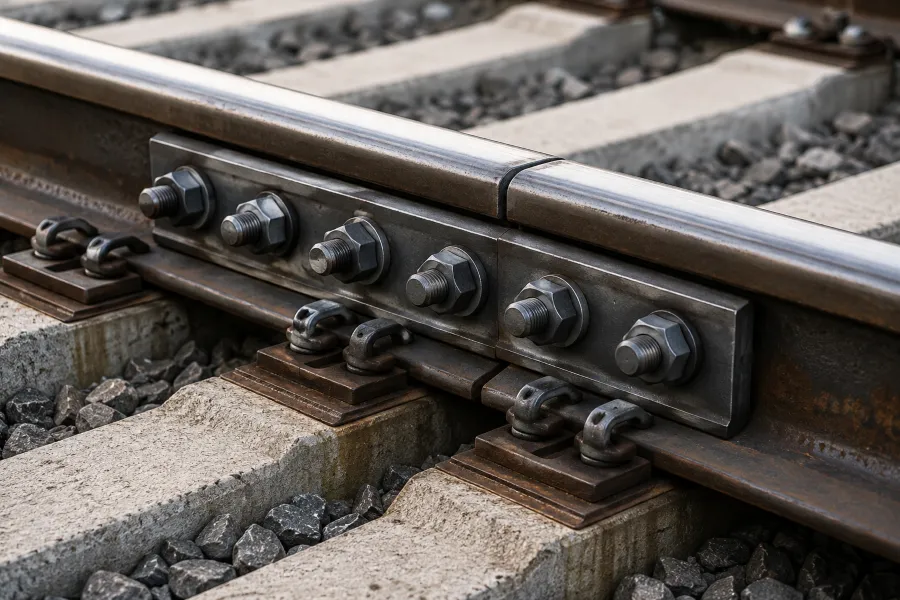
Рыбная пластина может выглядеть как один из самых простых компонентов железнодорожного пути., но именно от него часто зависит, останется ли рельсовое соединение стабильным после многих лет интенсивной эксплуатации.. Понимание видов разрушения накладных пластин — усталостное растрескивание из отверстий под болты, потеря преднатяга, вызывающая микроскольжение, дефекты материала, снижающие прочность, и хрупкость при низких температурах — имеет важное значение как для групп технического обслуживания, определяющих процедуры проверки, так и для групп закупок, оценивающих поставщиков..
Независимо от того, проектируете ли вы новую шарнирную секцию пути или заменяете вышедшие из строя накладки во время технического обслуживания., выбор правильной марки материала, обеспечение надлежащего момента затяжки при установке, а внедрение регулярной проверки болтовых отверстий значительно сократит количество случаев выхода из строя накладных пластин., внеплановый совместный ремонт, и связанные с этим перебои в обслуживании.
ВФОНИО, мы производим железную дорогу рыбные тарелки, рыбные болты, эластичные рельсовые зажимы, железнодорожные колодки, и другие элементы рельсового крепления для грузовых железных дорог, системы метро, промышленные пути, и крановые рельсы по всему миру. Our engineering team can recommend the appropriate fish plate specification based on your rail profile, нагрузка на ось, операционная среда, and applicable standard (В, АРЕМА, МСЖД, ГБ/Т, или ТБ/Т).
Нет. Once a fish plate has developed a fatigue crack, it must be replaced. Welding a cracked fish plate is not an accepted railway practice—the weld creates a hard, brittle zone that will crack again under thermal cycling and dynamic loading. The standard procedure is to remove the joint from service immediately and replace both fish plates (and preferably the bolts) with new, profile-matched components.
With correct material specification, правильная установка, and maintained bolt torque, fish plates typically serve 15 к 30 years depending on operating conditions. Heavy haul lines with high axle loads (30+ тонны), extreme temperature variation, or aggressive corrosion environments may experience shorter service life. The determining factors are material quality (especially heat treatment), bolt preload maintenance consistency, and regular inspection focused on bolt-hole edges.
Cold weather reduces steel toughness through the ductile-to-brittle transition effect and causes rail contraction, which increases tensile stress across the joint. If a fatigue crack has already initiated at a bolt hole, the additional thermal stress provides the driving force for accelerated propagation. Proper expansion gap design, winter torque verification programs, and increased inspection frequency during cold months are the established mitigation measures.
Наиболее надежными ранними индикаторами являются болты, которые постоянно ослабляются, несмотря на повторную затяжку., видимые пятна ржавчины вокруг отверстий под болты (что указывает на истирание между поверхностями), любые изменения цвета или повреждения поверхности вблизи краев отверстий.. Усталостные трещины часто возникают на скрытой стороне, обращенной к стенке рельса., поэтому односторонний визуальный осмотр может их полностью пропустить. Для критических соединений на высокоскоростных или тяжеловесных линиях, периодический ультразвуковой контроль (ЮТ) или магнитопорошковое тестирование (МТ) рекомендуется вокруг мест болтовых отверстий.
Не совсем — усталость присуща любому болтовому соединению рельсов, подвергающемуся миллионам циклических колесных нагрузок.. Но скорость возникновения и распространения трещин можно значительно снизить за счет правильного выбора материала с достаточной вязкостью., proper bolt torque maintained with appropriate fastening hardware, regular inspection protocols, and ensuring full surface contact between the fish plate and rail web. Many railways have extended fish plate service life significantly by focusing on these factors rather than accepting premature replacement as normal.