Отсканируйте код WeChat, чтобы связаться с нами.
Отсканируйте код WeChat, чтобы связаться с нами.
Не стесняйтесь, отправьте нам электронное письмо, и мы ответим вам как можно скорее.
Создаем будущее сердцем и душой


Когда люди покупают рельсы, первые вопросы обычно касаются профиля, вес и длина. Какой раздел необходим? Сколько килограммов на метр? Какой класс прямолинейности предусмотрен в проекте? Марки рельсовой стали часто появляются позже.
Это понятно. Коды, такие как R260, Р350НТ, U71Mn и U75V не имеют большого значения, пока вам не придется выбирать один для реальной линии.. В этот момент, сорт становится важным, поскольку он влияет на износ рельса, как он ведет себя при многократной нагрузке на колесо, как его можно сварить и, в конечном счете, как часто трасса требует обслуживания.
Для практических инженерных целей, рельсовую сталь можно разделить на четыре большие категории.: углеродисто-марганцевые марки, такие как R260, У71Мн и 900А; микролегированные марки, такие как У75В; термообработанные и закаленные марки, такие как R350HT и AREMA HH; а также сплавы или бейнитные сплавы для более требовательных гусениц..
Это рабочая классификация, а не официальная таксономия.. Точная оценка, химические и механические требования всегда следует сверять с применимыми В 13674-1 и ГБ/Т 2585-2021 требования.
В этом руководстве рассматриваются марки железных дорог, которые обычно встречаются в тендерах и железнодорожных проектах., с особым вниманием к R260, Р350НТ, У71Мн и У75В. Что еще более важно, это объясняет, что на самом деле имеет значение при выборе между ними.
Рельс не выдерживает нагрузку один раз, а затем возвращается в исходное состояние.. Один и тот же участок рельса снова и снова подвергается колесным нагрузкам на протяжении всего срока службы..
Именно этот повторяющийся контакт отличает рельсовую сталь от обычной конструкционной стали..
Конструкционная сталь, используемая для балок, пластины и другие строительные компоненты обычно разрабатываются с учетом прочности, пластичность и свариваемость при предполагаемых условиях нагрузки. Железнодорожному транспорту предстоит решить еще одну проблему: небольшая площадь контакта между колесом и рельсом подвергается повторяющимся силам качения и скольжения.
Вот почему рельсовая сталь содержит значительно больше углерода, чем обычная конструкционная сталь.. Обычный магистральный рельс может содержать примерно 0.62 к 0.80% углерод, в то время как обычные конструкционные стали часто находятся в 0.12 к 0.25% диапазон.
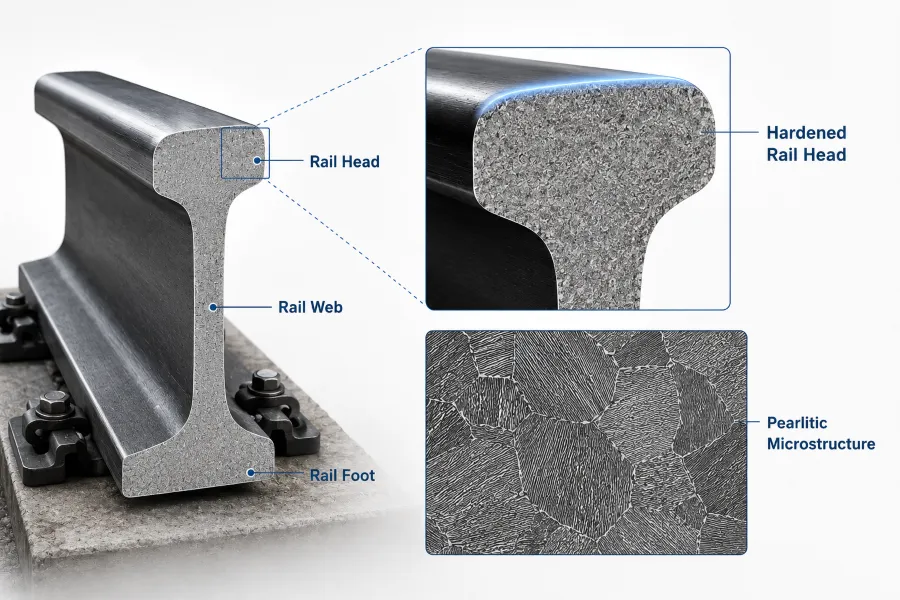
При правильном процессе прокатки и охлаждения, рельсовая сталь с более высоким содержанием углерода имеет преимущественно перлитную микроструктуру. Прекрасное расположение феррита и цементита обеспечивает полезный баланс между твердостью., износостойкость и прочность.
Цифры дают быстрое представление о разнице:
Последний пункт – самый важный на трассе.. Рельс должен противостоять износу, пластическая деформация и контактная усталость при качении в течение очень большого количества циклов нагрузки.. Таким образом, марка стали является частью конструкции пути., не просто обозначение материала.
В то же время необходимо учитывать колесо.. Материал и профиль колеса влияют на пятно контакта и напряжения, передаваемые на рельс.. Другими словами, класс рельсов не может быть полностью оценен сам по себе. Узнайте, почему материал и профиль колеса имеют значение для другой половины контактной пары колесо-рельс..
Не существует единой системы классификации, которая бы одинаково охватывала все железнодорожные стандарты.. Для практической инженерной работы, однако, четыре группы полезны: углеродно-марганцевый рельс, микролегированный рельс, термообработанный рельс, и сплав или бейнитный рельс.
Важным различием между этими группами является не просто химический состав.. Маршрут производства и получаемая в результате микроструктура могут изменить поведение одной и той же базовой стали на ходу..
Углеродисто-марганцевые марки по-прежнему широко используются, поскольку они обеспечивают практический баланс прочности., износостойкость, свариваемость и стоимость.
R260 по EN 13674-1 привычный европейский сорт, примерно с 880 Минимальная прочность на разрыв МПа и диапазон твердости около 260–300 HB.. Обычно его рассматривают для обычных приложений с магистральным и смешанным трафиком..
U71Mn под GB/T 2585 — еще один широко распространенный сорт углеродно-марганцевого сплава.. Диапазон содержания марганца выше, чем у R260., и это обычно связано с 50 кг/м и 60 рельс кг/м в китайских спецификациях.
900А — устаревшее обозначение класса, которое все еще может встречаться в железнодорожных тендерах и технической документации.. Он имеет характеристики прочности и твердости, во многом схожие с обычными марками, такими как R260., хотя точные требования зависят от применимой спецификации.
АРЕМА Сорт 260 это еще один традиционный вариант, используемый в спецификациях Северной Америки., с минимальной прочностью на разрыв вокруг 980 МПа и твердость вокруг 300 полупансион.
Важным моментом является то, что эти марки не являются автоматически рельсами «низкой производительности».. Если на линии умеренный трафик, подходящие нагрузки на ось и отсутствие серьезных проблем с износом, может быть мало инженерного обоснования для оплаты за термообработанный сорт высшего качества.
Микролегирование предполагает немного другой подход..
Небольшие добавки таких элементов, как ванадий, могут улучшить микроструктуру и повысить прочность, не полагаясь полностью на более высокое содержание углерода или отдельную обработку закалкой..
Ю75В хороший пример. Под ГБ/Т 2585, он содержит ванадий в диапазоне микролегирования и имеет примерно 980 Минимальная прочность на разрыв, МПа, твердость около 280–320 HB.. Он используется там, где требуется большая прочность и сопротивление усталости, чем может обеспечить обычный углерод-марганцевый марганец..
Другой пример — 900ACrV., вариант хром-ванадия доступен у некоторых европейских производителей.. Его точный химический состав и свойства зависят от спецификации производителя., но он находится в диапазоне более высоких характеристик между обычными карбоновыми рельсами и полностью термообработанными марками..
Для этих рельсов, причина модернизации должна исходить из условий эксплуатации. Более высокий трафик, сложные кривые или существующая проблема износа могут оправдать дополнительную производительность. Марку не следует выбирать просто потому, что в ее спецификации указано более высокое значение прочности..
Конкретные назначения маршрутов — это проектные решения, принимаемые железнодорожными операторами и владельцами инфраструктуры.. Поэтому класс не должен быть связан с конкретным высокоскоростным или магистральным маршрутом, если это применение не подтверждено соответствующей технической документацией..
Термически обработанный рельс меняет дискуссию, поскольку производственный процесс становится таким же важным, как и химия..
После прокатки, контролируемое ускоренное охлаждение позволяет улучшить перлитную структуру и повысить твердость головки рельса.. The result is a harder running surface while maintaining the required properties through the rest of the rail section.
R350HT under EN 13674-1 is a familiar example. It has roughly 1175 MPa minimum tensile strength and a hardness range around 350–390 HB.
This makes it attractive for sections where rail wear is a persistent problem, particularly high-wear curves and heavy-haul applications.
R350LHT is another heat-treated grade with a small chromium addition. AREMA HH represents the high-hardness approach used in North American specifications, with hardness typically around 388 HB or above depending on the specific product.
There is an important practical point here: a harder rail is not automatically the better rail for every location.
If a conventional grade is already giving acceptable wear life on tangent track, upgrading the whole line to a premium grade may add cost without solving a real problem. Heat-treated rail makes the most sense when the operating conditions justify it.
When conventional pearlitic rail is no longer enough, manufacturers can use alloying and different cooling strategies to push the performance further.
Хром, молибден, никель, boron and other alloying elements can be used depending on the grade and manufacturing route. Some of these steels are designed to develop bainitic microstructures, which can provide a useful combination of strength, hardness and fracture toughness.
Examples include BH Rail, R370CrHT and U78CrV, although their exact requirements depend on the relevant standard and manufacturer specification.
These grades are normally considered for demanding conditions such as small-radius curves, very high axle loads, severe wear or documented rolling contact fatigue.
They also come with a trade-off. The material cost is higher, welding becomes more specialized, and the benefit needs to be demonstrated by the actual track conditions.
For a rail buyer, that means the question should not simply be “What is the hardest grade available?»
A better question is:
What degradation mechanism are we trying to control?
The following comparison gives a practical starting point for four grades commonly encountered in railway specifications.
The values below are typical published values. Always confirm the current standard revision and the mill certificate for the actual delivery.
| Оценка | Стандартный | Углерод (%) | Марганец (%) | Key Alloying | Предел прочности (МПа, min) | Твердость (полупансион) | Manufacturing Route |
|---|---|---|---|---|---|---|---|
| R260 | В 13674-1 | 0.62–0,80 | 0.70–1.20 | None | 880 | 260–300 | As rolled |
| Р350НТ | В 13674-1 | 0.72–0,80 | 0.70–1.20 | Cr ≤ 0.15 | 1175 | 350–390 | Heat treated |
| U71Mn | ГБ/Т 2585 | 0.65–0.77 | 1.10–1.40 | None | 880 | 260–300 | As rolled |
| У75В | ГБ/Т 2585 | 0.67–0.77 | 0.70–1.00 | V 0.04–0.12 | 980 | 280–320 | Microalloyed / as rolled |
One point about the names is worth clearing up. In grades such as R260 and R350HT, the number is closely associated with the specified hardness class. It does not mean that every section of rail will have exactly that hardness. R260, например, is specified within a hardness range of roughly 260–300 HB, while R350HT is around 350–390 HB.
The table also cannot tell you which grade is correct for a particular railway. That decision comes from the operating conditions.
For a closer comparison, see our separate guides on R260 vs R350HT and U71Mn vs U75V.
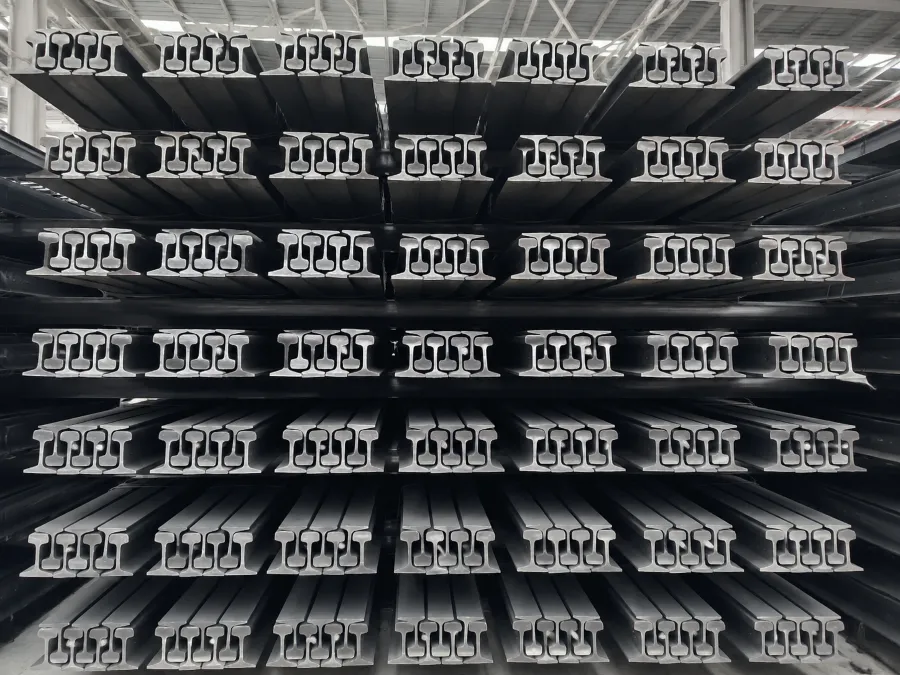
This is where rail steel selection becomes an engineering problem rather than a catalogue comparison.
I would not start by asking which grade has the highest tensile strength. I would start by asking what is actually damaging the rail.
Is the rail wearing at the gauge corner? Is rolling contact fatigue appearing on the head? Is plastic flow becoming a problem under high axle loads? Is the rail being ground frequently? Is lubrication effective on the curves?
Those questions tell you much more than a single hardness number.
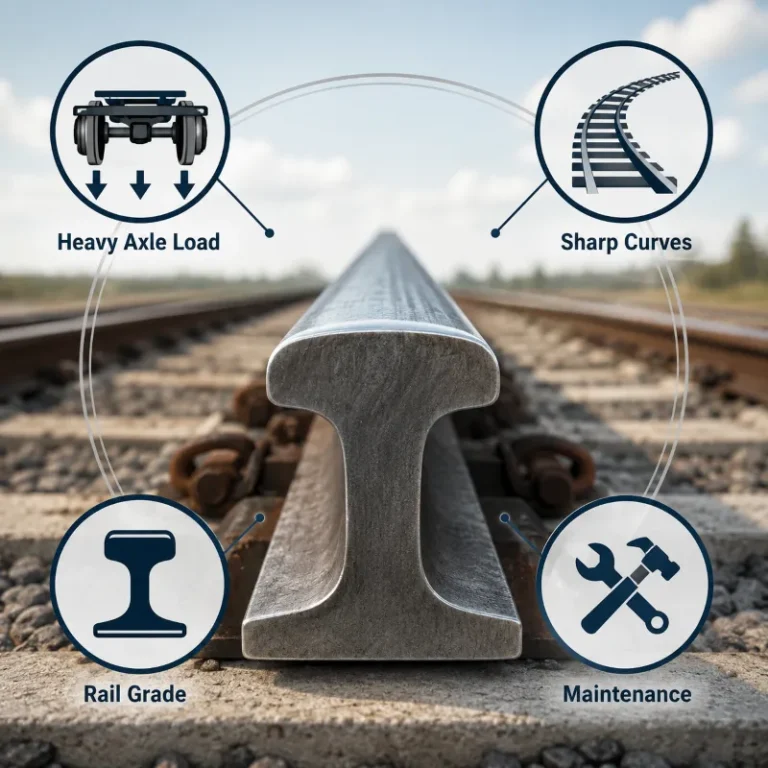
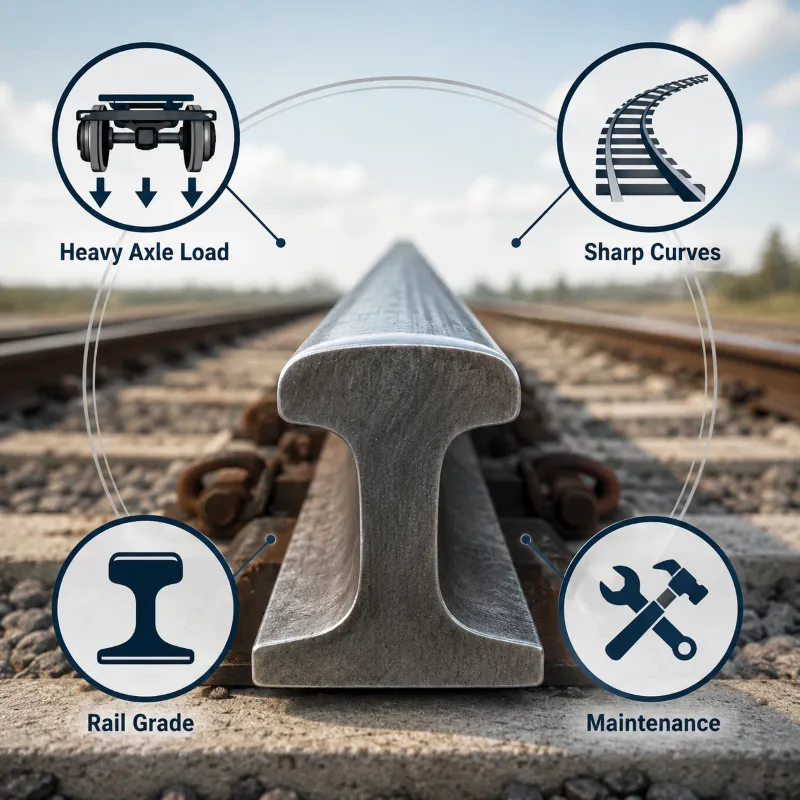
The main factors to review are:
Higher axle loads increase the forces acting at the wheel-rail contact and can accelerate wear and plastic deformation.
As a rough starting point:
These are not design limits. Two railways with the same axle load can need different rail grades because their curve radii, annual tonnage, wheel condition and maintenance practices are different.
Curve radius is one of the factors that can turn an otherwise acceptable rail grade into a maintenance problem.
On tangent track, wheel-rail contact is relatively stable. On a tight curve, the gauge corner sees greater lateral loading and the contact conditions become more severe. Wear and rolling contact fatigue can then develop much faster.
As a general guide, standard carbon-manganese grades often perform well on large-radius tangent and gentle curves. As the radius decreases and the wear problem becomes more pronounced, microalloyed or heat-treated grades may be considered. Very tight curves with heavy traffic can justify specialist alloy or bainitic grades.
There is no useful universal rule saying that a particular radius must use a particular steel grade. Traffic tonnage, wheel profile, смазка, grinding and actual wear measurements all matter.
That is why I would treat curve radius as a reason to investigate an upgrade, not as an automatic grade-selection formula.
This is one of the easiest mistakes to make when comparing rail specifications.
A higher hardness number looks attractive on paper. But the wheel and rail work as a pair. The difference in hardness, the wheel profile, contact stress and maintenance regime all influence what happens at the contact patch.
There is also the question of cost.
If a standard rail is already delivering acceptable wear life on a lightly loaded tangent section, replacing it with a premium heat-treated grade may not produce a useful return. On a heavy-haul curve where rail wear is driving frequent grinding or replacement, the calculation can be completely different.
По этой причине, wear data is more useful than a generic claim about percentage life improvement. If possible, compare wear rates under operating conditions close to the actual line—for example, millimetres of wear per 100 МГТ.
A rail specification is only as good as the product delivered against it.
When reviewing a rail supplier, I would not look at tensile strength alone. The first question is whether the material, test results and physical rail can all be traced back to the same production heat.
The MTC should identify the applicable standard, номер плавки, chemical composition and mechanical properties. Where EN 10204 Тип 3.1 или 3.2 certification is required by the project, the certificate should match that requirement.
The important point is traceability. The heat number on the certificate should be consistent with the marking and documentation for the delivered rail.
For critical rail products, UT provides information about internal soundness.
The report should be traceable to the applicable acceptance criteria rather than simply saying “UT passed.” The actual standard and testing requirements should be clear.
Рельсовый профиль, straightness, surface condition and end tolerances should be checked against the specified rail section.
A rail can have the correct steel grade and still fail to meet the dimensional requirements of the project.
For heat-treated rail, hardness should not be treated as a single number taken from the surface.
A hardness traverse from the rail head toward the depth of the section can show whether the hardening profile is consistent with the specified grade.
This is one of the areas where the manufacturing process matters just as much as the final certificate value.
If the rails will be welded on site, confirm that the selected grade has a qualified welding procedure for the method being used, such as aluminothermic or flash-butt welding.
Do not assume that a welding procedure qualified for one rail grade can automatically be transferred to another grade.
Окончательно, check that the grade and rail profile are actually produced to the standard specified in the tender.
A supplier offering an “equivalent” grade may be technically reasonable in some projects, but equivalence should be established by the project specification or engineering authority—not assumed from a similar hardness or tensile-strength value.
There are some simple things worth checking before placing an order.
A price far below the market level for a specified grade should prompt questions about material, process and certification.
The rail should also have clear identification markings that allow the manufacturer, grade and production information to be traced.
Another thing I would look at is the MTC itself. If certificates from many different heats show exactly the same chemical and mechanical values with no normal production variation, it is worth asking for clarification.
These checks do not replace formal inspection, but they can reveal problems early.
Да. It is possible to use harder rail in high-wear curves and a conventional grade on tangent sections.
The important issue is not simply whether two grades can physically be connected. The welding procedure, transition requirements and maintenance strategy also have to be considered.
Where different grades are used on the same route, confirm the requirements against the applicable railway standard and qualified welding procedure. The maintenance team should also understand that different grades may wear at different rates.
A rail grade is only one part of the wheel-rail system.
The wheel matters because its material and profile determine the contact conditions at the rail head. A worn wheel profile can change the contact patch and increase local stress even if the rail grade itself is suitable.
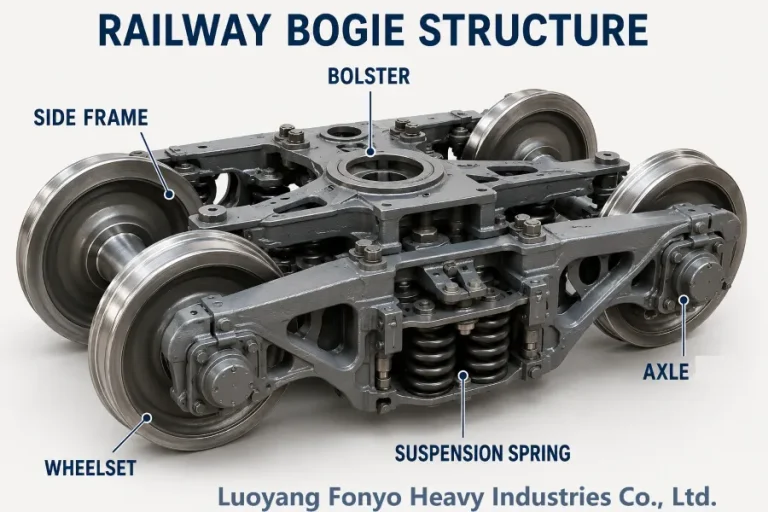
This is why железнодорожные колеса should be considered together with the rail specification and operating conditions.
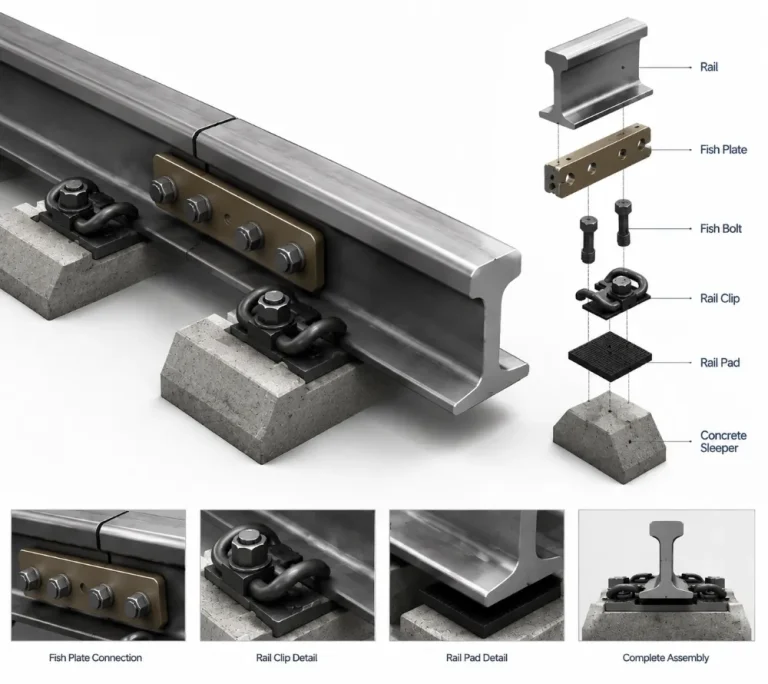
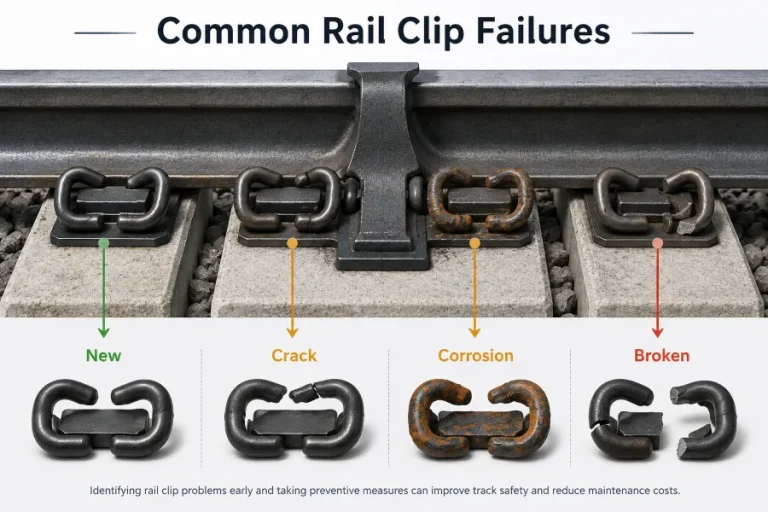
The fastening system matters as well. Elastic rail clips provide rail restraint, while железнодорожные колодки influence the stiffness of the rail-seat area and the way loads are transferred into the sleeper.
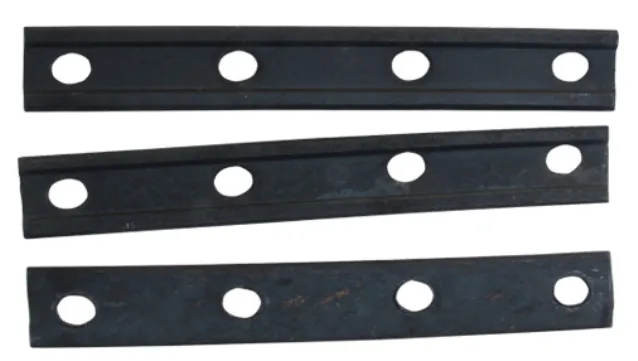
At rail joints, рыбные тарелки provide a mechanical connection where continuous welded rail is not used or where a joint is otherwise required.
The practical lesson is simple: upgrading the rail alone does not automatically solve a track problem.
A premium rail running with a poorly matched wheel profile, unsuitable fastening stiffness or inadequate maintenance will not necessarily deliver the service life expected from its material specification.
There is no single “best” rail steel grade.
R260 and U71Mn remain practical choices for many conventional applications. U75V provides a higher-strength microalloyed option, while R350HT and other heat-treated grades become more attractive when wear and heavy loading justify the additional cost. Alloy and bainitic grades are further options for particularly demanding conditions.
The right choice depends on what is happening on the track.
Axle load matters, but so do annual tonnage, радиус кривой, wheel condition, contact stress, смазка, grinding and maintenance access. That is why a rail grade should be selected from actual operating conditions rather than from the hardness column of a material table alone.
When purchasing rail, ask for traceable heat-level test certificates, UT results and dimensional inspection data. For heat-treated grades, look beyond the surface hardness and check the hardness profile. And if the rail will be welded, make sure the welding procedure is qualified for the grade you are buying.
If you are sourcing rail together with железнодорожные колеса, rail steel pads, elastic rail clips or other track components, the same engineering approach should be applied across the complete wheel-rail system.
Лоянская компания Fonyo Heavy Industries Co., ООО. supplies железнодорожные колеса and track components with material certification, inspection documentation and OEM support. If you have a rail profile, annual tonnage, axle load or application requirement, you can contact our инженерная команда to discuss the appropriate specification.
Technical note: Grade designations, chemical limits and mechanical requirements can vary by standard revision and product specification. Always verify the latest applicable standard and project specification before procurement.
U71Mn is a conventional carbon-manganese rail grade, while U75V uses vanadium microalloying. U71Mn is commonly specified with around 0.65–0.77% carbon and 1.10–1.40% manganese, while U75V contains roughly 0.67–0.77% carbon and 0.04–0.12% vanadium.
U75V has a higher typical minimum tensile strength and hardness range. Whether that difference is useful depends on the operating conditions. It is not simply a matter of choosing the grade with the higher number.
Sometimes they are, and sometimes they are not.
On a heavily loaded curve with significant rail wear, the additional hardness of a grade such as R350HT can make a meaningful difference to maintenance requirements. On a lightly loaded or relatively low-wear section, the additional cost may not provide the same benefit.
The best way to make the decision is to compare actual wear and maintenance data from the line.
Да. It is common in some applications to use harder rail in curves and conventional grades on tangent sections.
The grades should not simply be mixed without checking welding compatibility, transition requirements and the applicable railway standard. Maintenance planning should also account for different wear rates.
At a minimum, check the required material certificate, химический состав, механические свойства, heat number and traceability. В зависимости от проекта, you may also need UT reports, dimensional inspection records and hardness data.
For heat-treated rail, a hardness-depth profile is particularly useful. If the rail will be welded on site, confirm that a qualified welding procedure is available for the selected grade.
Because the loading conditions are fundamentally different.
Structural steel is not designed for repeated wheel-rail rolling contact. Rail steel has a higher carbon content and a controlled microstructure designed to provide the hardness, wear resistance and fatigue performance required for railway service.
Using a material simply because its tensile strength looks acceptable on a datasheet ignores the contact conditions that actually govern rail performance.
Нет.
Hardness is important, but rail life also depends on wheel hardness and profile, нагрузка на ось, traffic tonnage, радиус кривой, contact stress, смазка, grinding and other maintenance conditions.
A harder rail can be the right solution for a high-wear location, but it should not be treated as a universal upgrade for every section of track.