סרוק את קוד WeChat כדי ליצור איתנו קשר
סרוק את קוד WeChat כדי ליצור איתנו קשר
אתם מוזמנים לשלוח לנו מייל ואנו נענה לכם בהקדם האפשרי.
יצירת העתיד בלב ובנשמה


כשאנשים קונים רכבת, השאלות הראשונות הן בדרך כלל על פרופיל, משקל ואורך. איזה סעיף נדרש? כמה קילוגרם למטר? לאיזה שיעור ישרות מחייב הפרויקט? ציוני פלדת המסילה מגיעים לעתים קרובות מאוחר יותר.
זה מובן. קודים כגון R260, R350HT, U71Mn ו-U75V לא אומרות הרבה עד שאתה צריך לבחור אחד עבור קו בפועל. בשלב הזה, הציון הופך להיות חשוב כי זה משפיע על איך המעקה נשחק, איך הוא מתנהג תחת טעינת גלגלים חוזרת, איך זה יכול להיות מרותך ו, בסופו של דבר, באיזו תדירות המסלול זקוק לתחזוקה.
למטרות הנדסיות, ניתן לקבץ פלדת מסילה לארבע קטגוריות רחבות: דרגות פחמן-מנגן כגון R260, U71Mn ו-900A; ציונים בעלי סגסוגת מיקרו כגון U75V; ציונים מטופלים בחום והקשחת ראש כגון R350HT ו-AREMA HH; וציונים סגסוגת או ביינטית למסלול תובעני יותר.
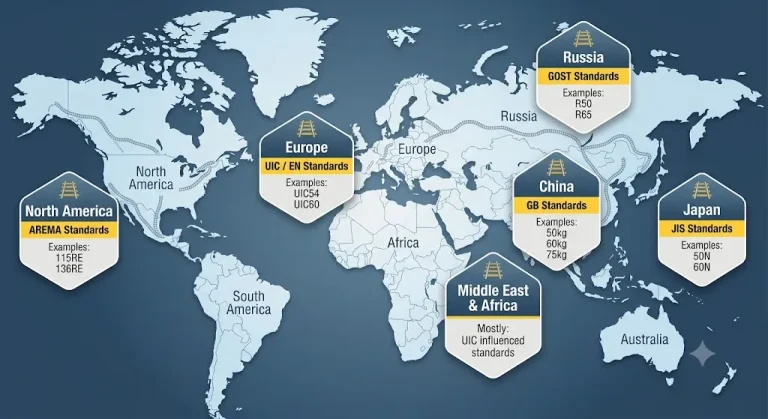
זהו סיווג עובדים ולא טקסונומיה רשמית. הציון המדויק, יש לבדוק תמיד דרישות כימיה ומכניות מול התנאים הרלוונטיים IN 13674-1 ו GB/T 2585-2021 דרישות.
מדריך זה בוחן את דרגות הרכבת הנפוצות במכרזים ובפרויקטי רכבת, עם תשומת לב מיוחדת ל-R260, R350HT, U71Mn ו-U75V. יותר חשוב, זה מסביר מה באמת חשוב כשבוחרים ביניהם.
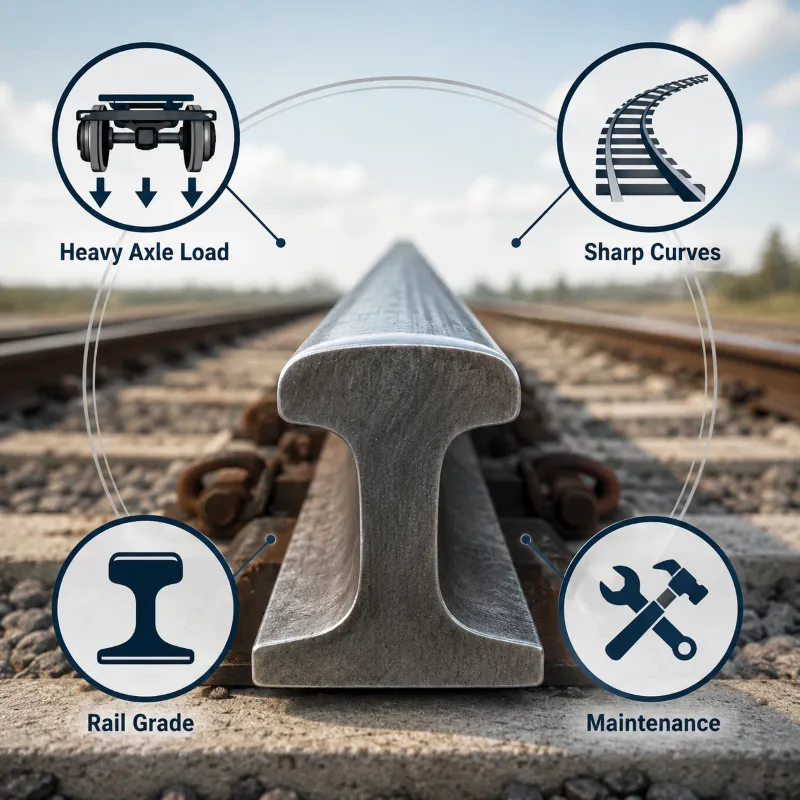
מסילה לא נושאת מטען פעם אחת ואז חוזרת למצבה המקורי. אותו קטע מסילה רואה עומסי גלגלים שוב ושוב לאורך חיי השירות שלו.
המגע החוזר הזה הוא מה שמייחד את פלדת המסילה מפלדה מבנית רגילה.
פלדה מבנית המשמשת לקורות, צלחות ורכיבי בנייה אחרים מתוכננים בדרך כלל סביב חוזק, משיכות וריתוך בתנאי הטעינה המיועדים לה. לרכבת יש עוד בעיה לפתור: אזור המגע הקטן בין הגלגל למסילה נתון לכוחות גלגול והחלקה חוזרים ונשנים.
זו הסיבה שפלדת מסילה מכילה הרבה יותר פחמן מפלדה מבנית טיפוסית. מסילת קו מרכזית קונבנציונלית עשויה להכיל בערך 0.62 אֶל 0.80% פַּחמָן, בעוד פלדות מבניות נפוצות נמצאות לעתים קרובות ב 0.12 אֶל 0.25% לָנוּעַ.
עם תהליך גלגול וקירור נכון, פלדת המסילה בעלת הפחמן הגבוה יותר מפתחת מבנה מיקרו פרליטי בעיקרו. הסידור העדין של פריט וצמנטיט מספק איזון שימושי בין קשיות, עמידות בפני שחיקה וקשיחות.
המספרים נותנים מושג מהיר על ההבדל:
הנקודה האחרונה היא הנקודה החשובה ביותר במסלול. מסילה חייבת לעמוד בפני שחיקה, דפורמציה פלסטית ועייפות מגע מתגלגל על פני מספר גדול מאוד של מחזורי עומס. דרגת הפלדה היא אפוא חלק מתכנון המסלול, לא רק ייעוד חומרי.
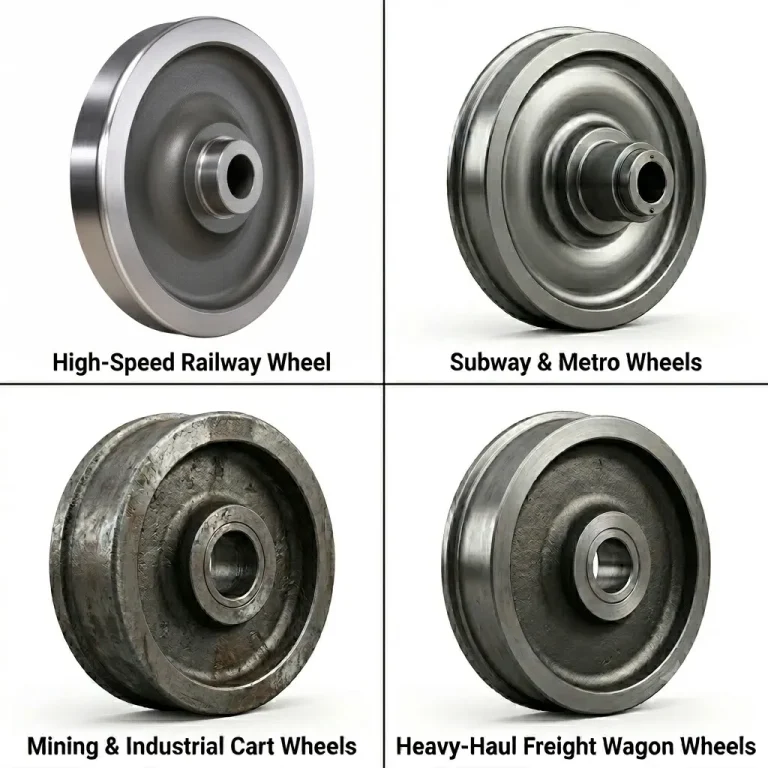
יש להתייחס לגלגל בו זמנית. חומר הגלגל ופרופיל הגלגל משפיעים על תיקון המגע והלחצים המועברים למסילה. במילים אחרות, לא ניתן להעריך דרגת מסילה לחלוטין בפני עצמה. ראה מדוע חומר הגלגל והפרופיל חשובים עבור החצי השני של זוג המגע בין גלגל-מסילה.
אין מערכת סיווג אחת המכסה כל תקן רכבת בדיוק באותו אופן. לעבודת הנדסאי, אוּלָם, ארבע קבוצות שימושיות: מסילת פחמן-מנגן, מסילה בעלת סגסוגת מיקרו, מסילה מטופלת בחום, וסגסוגת או מסילה ביינטית.
ההבדל החשוב בין הקבוצות הללו אינו רק ההרכב הכימי. נתיב הייצור והמיקרו-מבנה הנובע מכך יכולים לשנות את האופן שבו אותה כימיה בסיסית של פלדה מתפקדת על המסלול.
ציוני פחמן-מנגן נשארים בשימוש נרחב מכיוון שהם מספקים איזון מעשי של כוח, התנגדות ללבוש, יכולת ריתוך ועלות.
R260 תחת EN 13674-1 הוא כיתה אירופאית מוכרת, עם בערך 880 חוזק מתיחה מינימלי MPa וטווח קשיות של כ-260–300 HB. זה נחשב בדרך כלל עבור יישומים קונבנציונליים מרכזיים ותנועה מעורבת.
U71Mn מתחת ל-GB/T 2585 הוא עוד דרגת פחמן-מנגן שנתקלה בה רבות. טווח המנגן שלו גבוה מזה של R260, וזה מקושר בדרך כלל עם 50 ק"ג/מ"ר ו 60 מסילה ק"ג/מ"ר במפרט סיני.
900א' הוא ייעוד כיתה ישן יותר שעדיין יכול להופיע במכרזי רכבת ובמסמכים טכניים. יש לו מאפייני חוזק וקשיות דומים לדרגות קונבנציונליות כגון R260, למרות שהדרישות המדויקות תלויות במפרט הרלוונטי.
כיתה AREMA 260 is another conventional option used in North American specifications, with minimum tensile strength around 980 MPa and hardness around 300 חֲצִי פֶּנסיוֹן.
The important point is that these grades are not automatically “low performance” rails. If the line has moderate traffic, suitable axle loads and no severe wear problem, there may be little engineering justification for paying for a premium heat-treated grade.
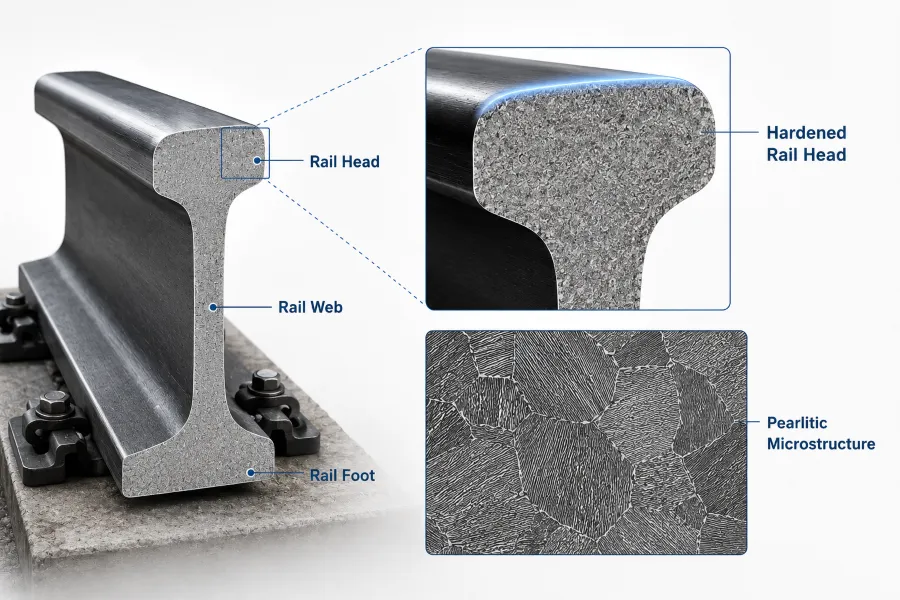
Microalloying takes a slightly different approach.
Small additions of elements such as vanadium can refine the microstructure and improve strength without relying entirely on higher carbon content or a separate head-hardening treatment.
U75V is a good example. Under GB/T 2585, הוא מכיל ונדיום בטווח המיקרוניזג ויש לו בערך 980 חוזק מתיחה מינימלי MPa עם קשיות סביב 280-320 HB. הוא משמש כאשר נדרשים חוזק והתנגדות עייפות גדולים יותר ממה שדרגת פחמן-מנגן קונבנציונלית יכולה לספק.
דוגמה נוספת היא 900ACrV, גרסת כרום-ונדיום זמינה מכמה יצרנים אירופאים. הכימיה והמאפיינים המדויקים שלו תלויים במפרט של היצרן, אבל הוא נמצא בטווח הביצועים הגבוהים יותר בין מסילת פחמן קונבנציונלית לדרגות מטופלות בחום מלא.
למסילות האלה, הסיבה לשדרוג צריכה לבוא מתנאי ההפעלה. תנועה גבוהה יותר, עקומות תובעניות או בעיית בלאי קיימת עשויים להצדיק את הביצועים הנוספים. אין לבחור את הציון רק בגלל שגיליון המפרט שלו מכיל מספר חוזק גבוה יותר.
הקצאות נתיב ספציפיות הן החלטות פרויקט המתקבלות על ידי מפעילי רכבת ובעלי תשתיות. לפיכך אין לשייך ציון לנתיב מהיר או קו מרכזי מסוים, אלא אם כן הבקשה אושרה על ידי התיעוד ההנדסי הרלוונטי..
מסילה מטופלת בחום משנה את הדיון כי תהליך הייצור הופך חשוב לא פחות מהכימיה.
לאחר גלגול, קירור מואץ מבוקר יכול לעדן את המבנה הפנילי ולהגדיל את הקשיות בראש המסילה. התוצאה היא משטח ריצה קשה יותר תוך שמירה על המאפיינים הנדרשים דרך שאר חלקי המסילה.
R350HT תחת EN 13674-1 היא דוגמה מוכרת. יש לזה בערך 1175 MPa minimum tensile strength and a hardness range around 350–390 HB.
This makes it attractive for sections where rail wear is a persistent problem, particularly high-wear curves and heavy-haul applications.
R350LHT is another heat-treated grade with a small chromium addition. AREMA HH represents the high-hardness approach used in North American specifications, with hardness typically around 388 HB or above depending on the specific product.
There is an important practical point here: a harder rail is not automatically the better rail for every location.
If a conventional grade is already giving acceptable wear life on tangent track, upgrading the whole line to a premium grade may add cost without solving a real problem. Heat-treated rail makes the most sense when the operating conditions justify it.
When conventional pearlitic rail is no longer enough, manufacturers can use alloying and different cooling strategies to push the performance further.
כְּרוֹם, מוליבדן, נִיקֵל, boron and other alloying elements can be used depending on the grade and manufacturing route. Some of these steels are designed to develop bainitic microstructures, which can provide a useful combination of strength, hardness and fracture toughness.
Examples include BH Rail, R370CrHT and U78CrV, although their exact requirements depend on the relevant standard and manufacturer specification.
These grades are normally considered for demanding conditions such as small-radius curves, very high axle loads, severe wear or documented rolling contact fatigue.
They also come with a trade-off. The material cost is higher, welding becomes more specialized, ואת התועלת צריך להוכיח על ידי תנאי המסלול בפועל.
לרוכש רכבת, זה אומר שהשאלה לא צריכה להיות פשוט "מהו הציון הכי קשה שיש?”
שאלה טובה יותר היא:
באיזה מנגנון השפלה אנחנו מנסים לשלוט?
ההשוואה הבאה נותנת נקודת התחלה מעשית לארבע דרגות שבהן נתקלים בדרך כלל במפרטי רכבת.
הערכים שלהלן הם ערכים אופייניים שפורסמו. אשר תמיד את הגרסה הסטנדרטית הנוכחית ואת תעודת הטחנה עבור המסירה בפועל.
| צִיוּן | תֶקֶן | פַּחמָן (%) | מַנגָן (%) | סגסוגת מפתח | חוזק מתיחה (MPa, דקה) | קַשִׁיוּת (חֲצִי פֶּנסיוֹן) | מסלול ייצור |
|---|---|---|---|---|---|---|---|
| R260 | IN 13674-1 | 0.62-0.80 | 0.70–1.20 | אַף לֹא אֶחָד | 880 | 260-300 | כפי שהתגלגל |
| R350HT | IN 13674-1 | 0.72-0.80 | 0.70–1.20 | Cr ≤ 0.15 | 1175 | 350-390 | מטופל בחום |
| U71Mn | GB/T 2585 | 0.65–0.77 | 1.10–1.40 | אַף לֹא אֶחָד | 880 | 260-300 | כפי שהתגלגל |
| U75V | GB/T 2585 | 0.67–0.77 | 0.70–1.00 | V 0.04–0.12 | 980 | 280-320 | מיקרו סגסוגת / כפי שהתגלגל |
נקודה אחת לגבי השמות ראויה לבירור. בדרגות כמו R260 ו-R350HT, the number is closely associated with the specified hardness class. It does not mean that every section of rail will have exactly that hardness. R260, לְדוּגמָה, is specified within a hardness range of roughly 260–300 HB, while R350HT is around 350–390 HB.
The table also cannot tell you which grade is correct for a particular railway. That decision comes from the operating conditions.
For a closer comparison, see our separate guides on R260 vs R350HT and U71Mn vs U75V.
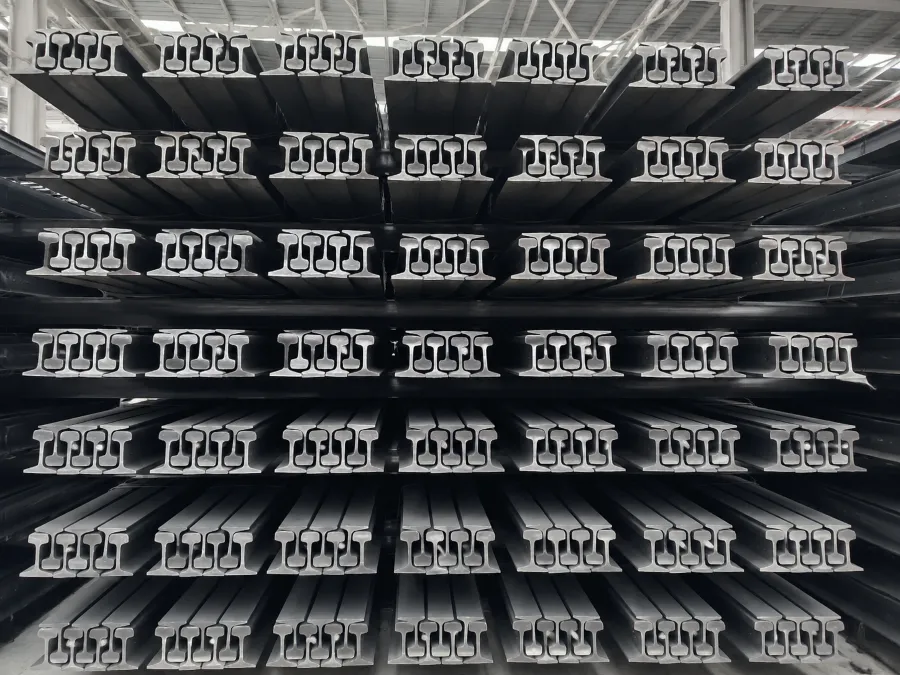
This is where rail steel selection becomes an engineering problem rather than a catalogue comparison.
I would not start by asking which grade has the highest tensile strength. I would start by asking what is actually damaging the rail.
Is the rail wearing at the gauge corner? Is rolling contact fatigue appearing on the head? Is plastic flow becoming a problem under high axle loads? Is the rail being ground frequently? Is lubrication effective on the curves?
Those questions tell you much more than a single hardness number.
The main factors to review are:
Higher axle loads increase the forces acting at the wheel-rail contact and can accelerate wear and plastic deformation.
As a rough starting point:
These are not design limits. Two railways with the same axle load can need different rail grades because their curve radii, annual tonnage, wheel condition and maintenance practices are different.
Curve radius is one of the factors that can turn an otherwise acceptable rail grade into a maintenance problem.
On tangent track, wheel-rail contact is relatively stable. On a tight curve, the gauge corner sees greater lateral loading and the contact conditions become more severe. Wear and rolling contact fatigue can then develop much faster.
As a general guide, standard carbon-manganese grades often perform well on large-radius tangent and gentle curves. As the radius decreases and the wear problem becomes more pronounced, microalloyed or heat-treated grades may be considered. Very tight curves with heavy traffic can justify specialist alloy or bainitic grades.
There is no useful universal rule saying that a particular radius must use a particular steel grade. Traffic tonnage, wheel profile, סִיכָה, grinding and actual wear measurements all matter.
That is why I would treat curve radius as a reason to investigate an upgrade, not as an automatic grade-selection formula.
This is one of the easiest mistakes to make when comparing rail specifications.
A higher hardness number looks attractive on paper. But the wheel and rail work as a pair. The difference in hardness, the wheel profile, contact stress and maintenance regime all influence what happens at the contact patch.
There is also the question of cost.
If a standard rail is already delivering acceptable wear life on a lightly loaded tangent section, replacing it with a premium heat-treated grade may not produce a useful return. On a heavy-haul curve where rail wear is driving frequent grinding or replacement, the calculation can be completely different.
For that reason, wear data is more useful than a generic claim about percentage life improvement. If possible, compare wear rates under operating conditions close to the actual line—for example, millimetres of wear per 100 MGT.
A rail specification is only as good as the product delivered against it.
When reviewing a rail supplier, I would not look at tensile strength alone. The first question is whether the material, test results and physical rail can all be traced back to the same production heat.
The MTC should identify the applicable standard, heat number, chemical composition and mechanical properties. Where EN 10204 סוּג 3.1 אוֹ 3.2 certification is required by the project, the certificate should match that requirement.
The important point is traceability. The heat number on the certificate should be consistent with the marking and documentation for the delivered rail.
For critical rail products, UT provides information about internal soundness.
The report should be traceable to the applicable acceptance criteria rather than simply saying “UT passed.” The actual standard and testing requirements should be clear.
פרופיל רכבת, straightness, surface condition and end tolerances should be checked against the specified rail section.
A rail can have the correct steel grade and still fail to meet the dimensional requirements of the project.
For heat-treated rail, hardness should not be treated as a single number taken from the surface.
A hardness traverse from the rail head toward the depth of the section can show whether the hardening profile is consistent with the specified grade.
This is one of the areas where the manufacturing process matters just as much as the final certificate value.
If the rails will be welded on site, confirm that the selected grade has a qualified welding procedure for the method being used, such as aluminothermic or flash-butt welding.
Do not assume that a welding procedure qualified for one rail grade can automatically be transferred to another grade.
לְבָסוֹף, check that the grade and rail profile are actually produced to the standard specified in the tender.
A supplier offering an “equivalent” grade may be technically reasonable in some projects, but equivalence should be established by the project specification or engineering authority—not assumed from a similar hardness or tensile-strength value.
There are some simple things worth checking before placing an order.
A price far below the market level for a specified grade should prompt questions about material, process and certification.
The rail should also have clear identification markings that allow the manufacturer, grade and production information to be traced.
Another thing I would look at is the MTC itself. If certificates from many different heats show exactly the same chemical and mechanical values with no normal production variation, it is worth asking for clarification.
These checks do not replace formal inspection, but they can reveal problems early.
כֵּן. It is possible to use harder rail in high-wear curves and a conventional grade on tangent sections.
The important issue is not simply whether two grades can physically be connected. The welding procedure, transition requirements and maintenance strategy also have to be considered.
Where different grades are used on the same route, confirm the requirements against the applicable railway standard and qualified welding procedure. The maintenance team should also understand that different grades may wear at different rates.
A rail grade is only one part of the wheel-rail system.
The wheel matters because its material and profile determine the contact conditions at the rail head. A worn wheel profile can change the contact patch and increase local stress even if the rail grade itself is suitable.
This is why גלגלי רכבת should be considered together with the rail specification and operating conditions.
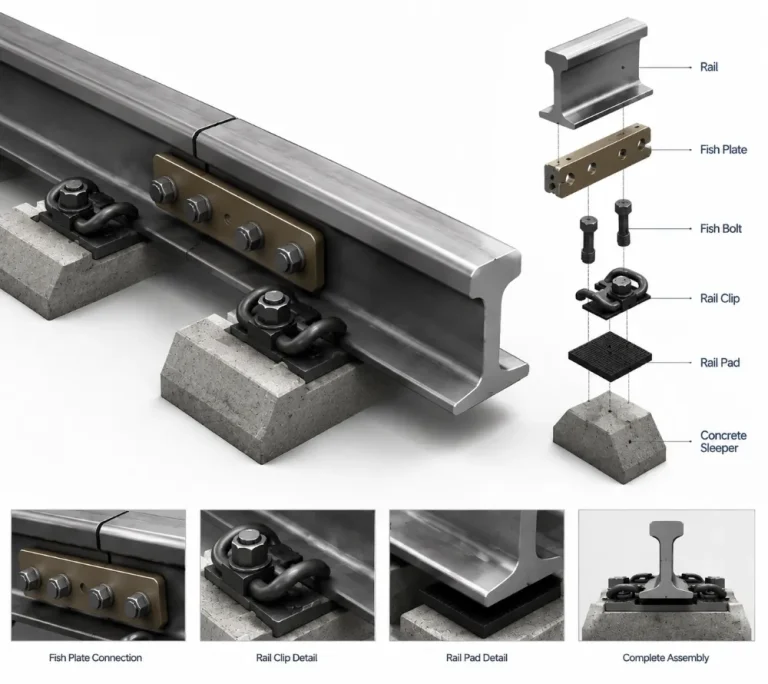
The fastening system matters as well. תפסי מסילה אלסטיים provide rail restraint, בְּעוֹד רפידות מסילה influence the stiffness of the rail-seat area and the way loads are transferred into the sleeper.
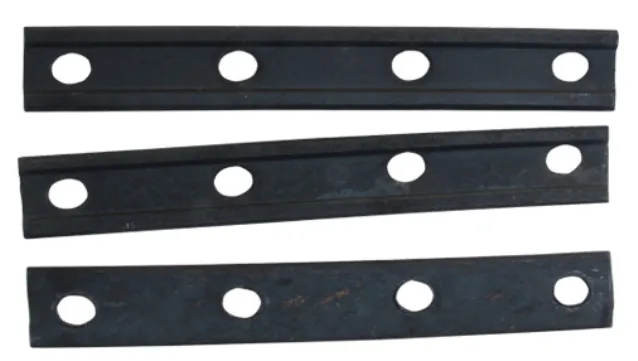
At rail joints, צלחות דגים provide a mechanical connection where continuous welded rail is not used or where a joint is otherwise required.
The practical lesson is simple: upgrading the rail alone does not automatically solve a track problem.
A premium rail running with a poorly matched wheel profile, unsuitable fastening stiffness or inadequate maintenance will not necessarily deliver the service life expected from its material specification.
There is no single “best” rail steel grade.
R260 and U71Mn remain practical choices for many conventional applications. U75V provides a higher-strength microalloyed option, while R350HT and other heat-treated grades become more attractive when wear and heavy loading justify the additional cost. Alloy and bainitic grades are further options for particularly demanding conditions.
The right choice depends on what is happening on the track.
Axle load matters, but so do annual tonnage, רדיוס עקומה, wheel condition, contact stress, סִיכָה, grinding and maintenance access. That is why a rail grade should be selected from actual operating conditions rather than from the hardness column of a material table alone.
When purchasing rail, ask for traceable heat-level test certificates, UT results and dimensional inspection data. For heat-treated grades, look beyond the surface hardness and check the hardness profile. And if the rail will be welded, make sure the welding procedure is qualified for the grade you are buying.
If you are sourcing rail together with גלגלי רכבת, rail steel pads, elastic rail clips or other track components, the same engineering approach should be applied across the complete wheel-rail system.
Luoyang Fonyo Heavy Industries Co., בע"מ. supplies גלגלי רכבת and track components with material certification, inspection documentation and OEM support. If you have a rail profile, annual tonnage, axle load or application requirement, you can contact our צוות הנדסה to discuss the appropriate specification.
Technical note: Grade designations, chemical limits and mechanical requirements can vary by standard revision and product specification. Always verify the latest applicable standard and project specification before procurement.
U71Mn is a conventional carbon-manganese rail grade, while U75V uses vanadium microalloying. U71Mn is commonly specified with around 0.65–0.77% carbon and 1.10–1.40% manganese, while U75V contains roughly 0.67–0.77% carbon and 0.04–0.12% vanadium.
U75V has a higher typical minimum tensile strength and hardness range. Whether that difference is useful depends on the operating conditions. It is not simply a matter of choosing the grade with the higher number.
Sometimes they are, and sometimes they are not.
On a heavily loaded curve with significant rail wear, the additional hardness of a grade such as R350HT can make a meaningful difference to maintenance requirements. On a lightly loaded or relatively low-wear section, the additional cost may not provide the same benefit.
The best way to make the decision is to compare actual wear and maintenance data from the line.
כֵּן. It is common in some applications to use harder rail in curves and conventional grades on tangent sections.
The grades should not simply be mixed without checking welding compatibility, transition requirements and the applicable railway standard. Maintenance planning should also account for different wear rates.
At a minimum, check the required material certificate, הרכב כימי, תכונות מכניות, heat number and traceability. Depending on the project, you may also need UT reports, dimensional inspection records and hardness data.
For heat-treated rail, a hardness-depth profile is particularly useful. If the rail will be welded on site, confirm that a qualified welding procedure is available for the selected grade.
Because the loading conditions are fundamentally different.
Structural steel is not designed for repeated wheel-rail rolling contact. Rail steel has a higher carbon content and a controlled microstructure designed to provide the hardness, wear resistance and fatigue performance required for railway service.
Using a material simply because its tensile strength looks acceptable on a datasheet ignores the contact conditions that actually govern rail performance.
לֹא.
Hardness is important, but rail life also depends on wheel hardness and profile, עומס סרן, traffic tonnage, רדיוס עקומה, contact stress, סִיכָה, grinding and other maintenance conditions.
A harder rail can be the right solution for a high-wear location, but it should not be treated as a universal upgrade for every section of track.