סרוק את קוד WeChat כדי ליצור איתנו קשר
סרוק את קוד WeChat כדי ליצור איתנו קשר
אתם מוזמנים לשלוח לנו מייל ואנו נענה לכם בהקדם האפשרי.
יצירת העתיד בלב ובנשמה


כאשר מהנדסים מתחילים פרויקט רכבת, אחת השאלות הראשונות שעליהם לענות היא: איזה תקן מסילה צריך לבחור? במבט ראשון, מסילות רכבת עשויות להיראות די דומות. They are all long steel sections designed to support and guide trains. אוּלָם, the actual design of a rail involves many technical details, כולל פרופיל מסילה, weight per meter, מידות, steel grade, תכונות מכניות, and manufacturing requirements. א מסילת רכבת used for a high-speed passenger railway is not always suitable for a heavy-haul freight line. כְּמוֹ כֵן, a rail profile commonly used in Europe may not directly match the requirements of a railway system in North America or Asia. This is why different countries and railway organizations have developed their own rail standards over time. Understanding these standards helps railway owners, קבלנים, and procurement teams select the right rail and ensure compatibility with other track components such as rail fastening systems, ישנים, רפידות מסילה, and rail joints.
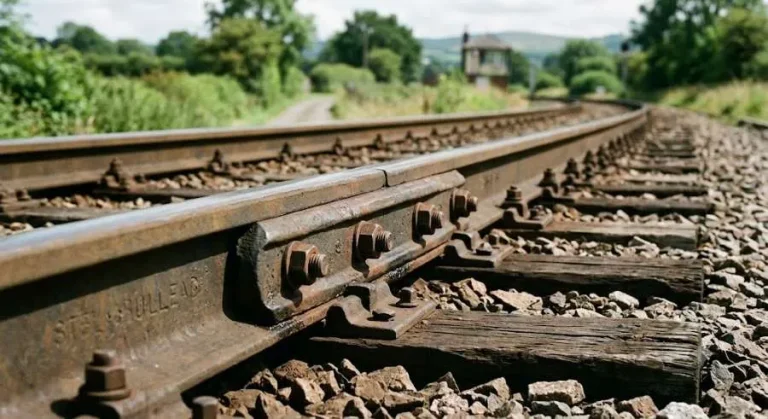
A railway rail standard defines the technical requirements for manufacturing and using rails in railway systems.
Many people think a rail standard only refers to the rail size, such as a 60kg rail or a 136RE rail. במציאות, it covers much more than the weight.
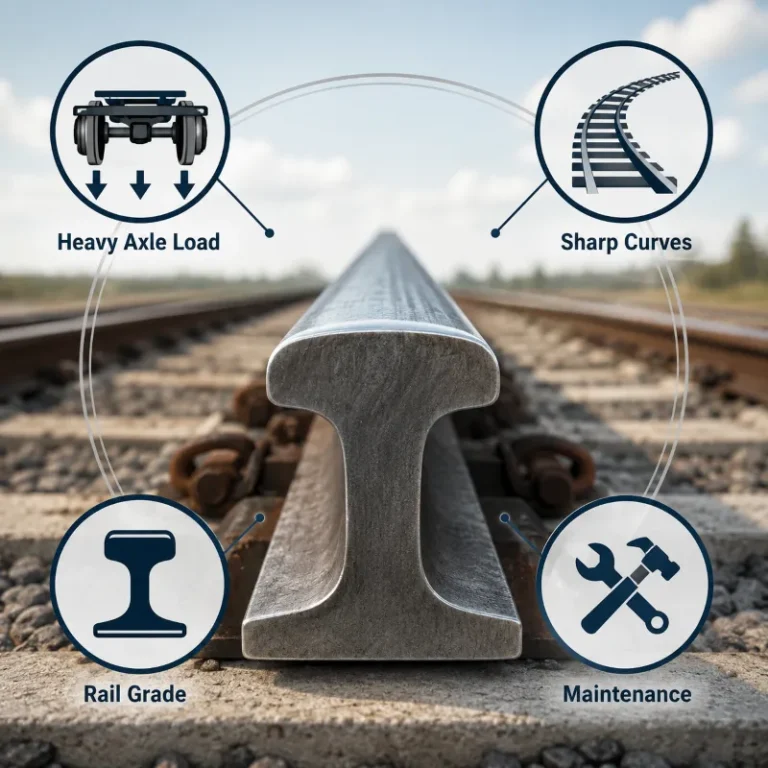
The standard usually specifies the rail profile, including the shape of the rail head, אינטרנט, ורגל, as well as dimensional tolerances. It also defines the steel grade, הרכב כימי, mechanical performance, שיטות בדיקה, ודרישות איכות.
לְדוּגמָה, two rails may both weigh around 60 ק"ג למטר, but their profiles and dimensions may be different. This means they may require different rail clips, רפידות מסילה, צלחות דגים, ורכיבי הידוק אחרים.
מנקודת מבט הנדסית, a rail should always be considered as part of a complete track system rather than an independent steel product.
The existence of different rail standards is mainly the result of railway development history.
Early railway systems were built independently in different regions, and each country developed its own engineering practices based on local conditions, industrial capabilities, and transportation requirements.
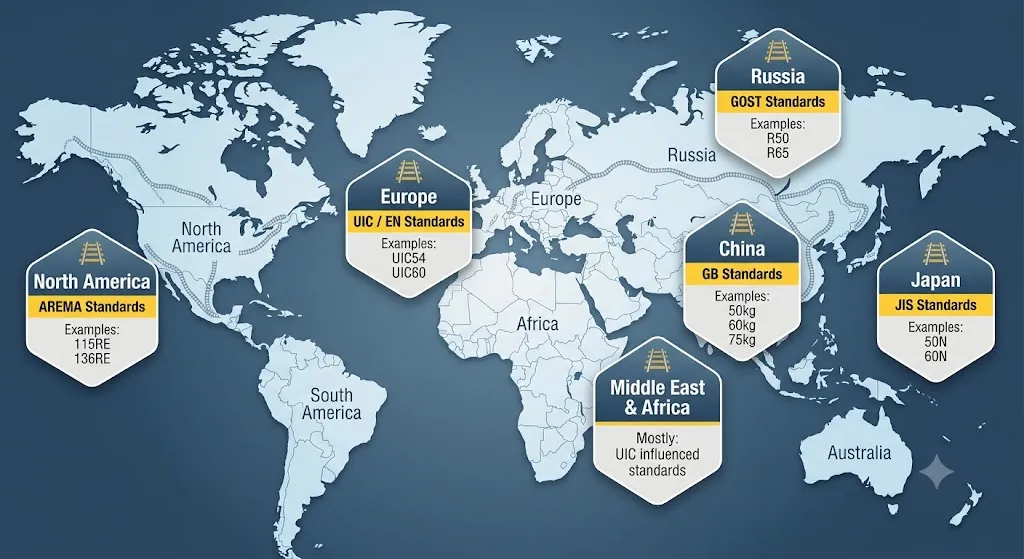
European railway systems gradually developed standards around international compatibility, which led to the widespread use of UIC and EN standards. North America developed its own heavy-haul freight railway systems, where AREMA standards became widely adopted. סִין, יַפָּן, רוּסִיָה, and other countries also developed national standards based on their own railway networks.
Although railway technology is becoming increasingly international, these differences still exist today. Engineers working on international railway projects need to understand not only the rail profile itself but also the background behind each standard.
UIC rail standards are among the most recognized railway standards internationally.
Developed by the International Union of Railways, UIC standards are widely used in Europe and many railway projects in Asia, אַפְרִיקָה, והמזרח התיכון.
Common UIC rail profiles include UIC54 and UIC60. ביניהם, UIC60 is one of the most widely used heavy railway rails and is commonly applied in high-speed passenger lines, mainline railways, and heavy-duty transportation systems.
UIC rails are typically flat-bottom rails designed for modern fastening systems. Their standardized profiles make them suitable for international railway projects where compatibility and long service life are important considerations.
בצפון אמריקה, railway projects often follow AREMA standards.
The American Railway Engineering and Maintenance-of-Way Association develops technical standards widely used by freight railways in the United States and other regions influenced by North American railway practices.
Common AREMA rail profiles include 115RE, 132מִחָדָשׁ, and 136RE.
Compared with many passenger railway systems, North American freight railways typically operate with higher axle loads and long-distance transportation requirements. לָכֵן, AREMA rails are designed for high durability, heavy loading conditions, וחיי שירות ארוכים.
The 136RE rail, לְדוּגמָה, is widely used in heavy-haul freight applications where track strength and wear resistance are critical.
Many railway professionals sometimes confuse EN standards with rail profiles.
לְמַעֲשֶׂה, IN (תקן אירופאי) mainly defines manufacturing and technical requirements rather than simply naming a rail shape.
לְדוּגמָה, IN 13674 specifies requirements for railway rails, including dimensions, סובלנות, and mechanical properties.
A rail profile such as UIC60 can be manufactured according to EN standards. לָכֵן, UIC60 and EN13674 are not competing standards; they describe different aspects of railway rail production.
Understanding this difference is important during international purchasing because specifications often include both the rail profile and the manufacturing standard.
China has developed its own railway rail standards, widely used throughout its extensive railway network.
Common Chinese rail profiles include 60kg/m, 75ק"ג/מ"ר, 50ק"ג/מ"ר, and 43kg/m rails.
The 60kg/m rail is the most widely used standard rail for modern Chinese mainline railways and high-speed railway systems. It provides a balance between strength, יַצִיבוּת, and operational efficiency.
China’s railway development has resulted in large-scale applications of standardized rail systems, including matching fastening systems, ישנים, and track components.
Japan mainly uses JIS railway standards, including profiles such as 50N and 60N rails.
Japanese railway engineering places strong emphasis on precision manufacturing, אֲמִינוּת, and high-speed operation. JIS rail profiles are commonly found in Japanese railway systems and projects influenced by Japanese technology.
Other regions also maintain their own standards, such as BS standards in the United Kingdom and GOST standards in Russia. These standards reflect the unique operational requirements and railway history of each region.
Although UIC60 and 60kg rail have similar weights, they are not necessarily interchangeable. Rail selection depends not only on weight but also on profile geometry, fastening compatibility, manufacturing standards, and existing track infrastructure.
לְדוּגמָה, a UIC60 rail and a Chinese 60kg rail may have similar applications, but their dimensions and matching fastening components can be different. Before replacement or procurement, engineers should always verify the complete track system compatibility.
| סוג מסילה | מערכת סטנדרטית | Main Region | מִשׁקָל (Approx.) | יישום טיפוסי | תכונות מפתח |
| UIC60 | UIC / EN תקנים | אֵירוֹפָּה, מזרח תיכון, אַסְיָה, אַפְרִיקָה | 60 ק"ג/מ"ר | רכבת מהירה, mainline railway, heavy passenger and freight lines | One of the most widely used international rail profiles with excellent strength and compatibility |
| 136מִחָדָשׁ | תקני AREMA | North America and heavy-haul railway markets | 67.5 ק"ג/מ"ר (136 lb/yd) | Heavy freight railway, mining railway, high axle load applications | Designed for high loading capacity, עֲמִידוּת, וחיי שירות ארוכים |
| 60kg Rail | תקני GB (סִין) | China and international projects using Chinese standards | 60 ק"ג/מ"ר | רכבת מהירה, passenger railway, mainline freight railway | Widely used in modern Chinese railway networks with mature supporting systems |
| 60N Rail | JIS Standards | Japan and related railway projects | Approx. 60 ק"ג/מ"ר | High-speed passenger railway and urban railway systems | High precision manufacturing and reliability for demanding operating conditions |
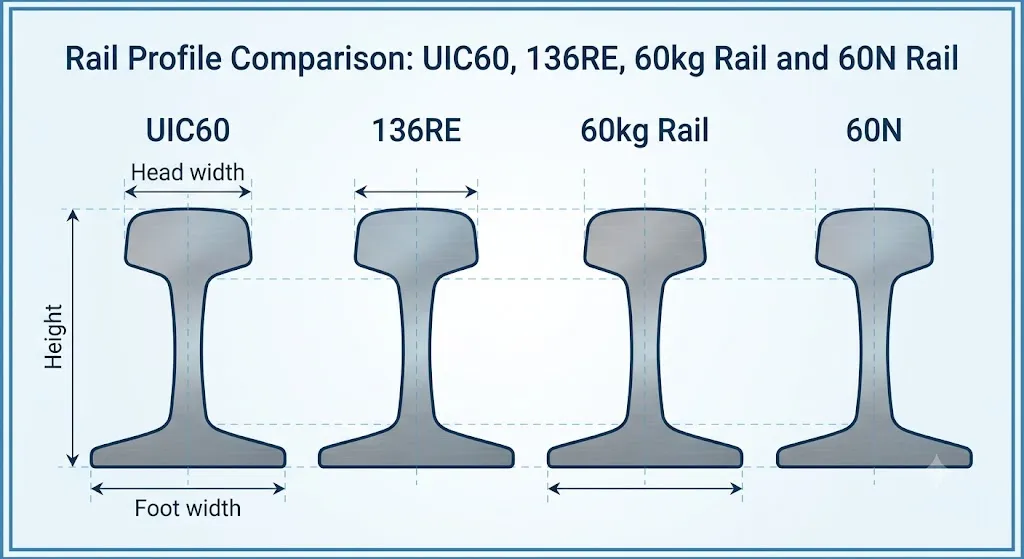
בחירת תקן מסילה היא לא רק בחירת המסילה עצמה.
פרופיל המסילה משפיע ישירות על העיצוב של רכיבי מסילה אחרים.
לְדוּגמָה, מסילה UIC60 דורשת תפסי מסילה תואמים, רפידות מסילה, צלחות דגים, ואדומים המיועדים לאותו פרופיל. מערכת הידוק המיועדת למקטע מסילה אחד עשויה שלא להתאים כראוי לסוג מסילה אחר.
הדבר חשוב במיוחד בעת החלפת מסילות במערכות רכבת קיימות. גם אם לשתי מסילות משקל דומה, הבדלים ברוחב רגלי המסילה, גוֹבַה, או גיאומטריית פרופיל יכולה ליצור בעיות תאימות.
לפרויקטי רכבת בינלאומיים, engineers usually consider the complete track structure rather than individual components separately.
אין יחיד “טוֹב בִּיוֹתֵר” rail standard for every railway project.
The correct choice depends on several factors, including the existing railway system, מהירות הרכבת, עומס סרן, סביבת הפעלה, דרישות תחזוקה, and availability of replacement components.
For a new railway project, engineers usually start by defining the operational requirements and then selecting a suitable rail profile and standard.
For an existing railway system, maintaining compatibility with current infrastructure is usually the priority. Using a different rail standard may require changes to fastening systems, ישנים, and maintenance equipment.
Railway rail standards represent decades of engineering experience and regional railway development. Standards such as UIC, ארמה, IN, GB, הוּא, and others are not simply different names for rails; they reflect different approaches to railway operation and design.
For engineers and procurement teams, understanding these standards helps avoid compatibility issues and ensures better performance throughout the railway lifecycle.
בְּ Luoyang Fonyo Heavy Industries, אנו מספקים מרכיבי מסילת הרכבת לְרַבּוֹת מסילות, rail plates, rail fish plate bolts, תפסי מסילה, רפידות מסילה, אדני רכבת, וכו. We also produce גלגלי רכבת, והרכבת bogie frame and bolster related products for international railway projects. Our engineering team can assist customers in selecting compatible components according to different rail standards and project requirements.