قم بمسح رمز WeChat للاتصال بنا
قم بمسح رمز WeChat للاتصال بنا
لا تتردد في مراسلتنا عبر البريد الإلكتروني وسوف نقوم بالرد عليك في أقرب وقت ممكن.
صنع المستقبل بالقلب والروح


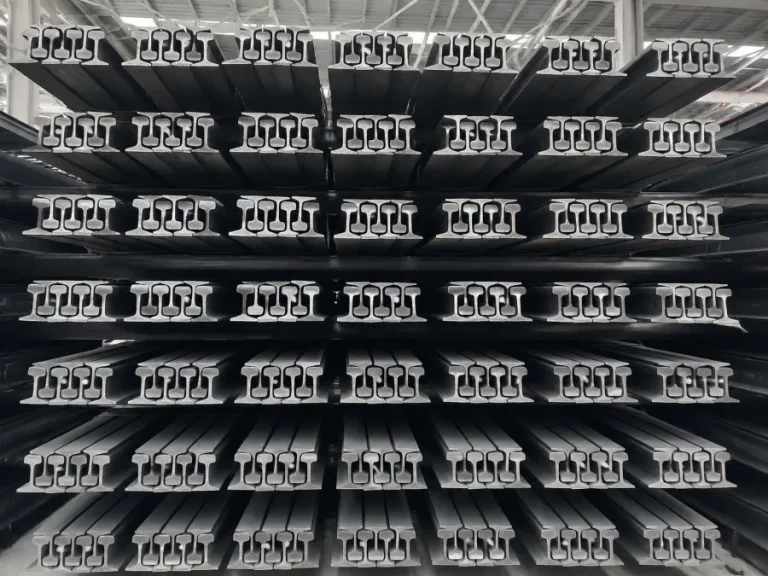
عندما يبدأ المهندسون مشروع السكك الحديدية, أحد الأسئلة الأولى التي يحتاجون للإجابة عليها هو: ما هو معيار السكك الحديدية الذي ينبغي اختياره؟? للوهلة الأولى, قد تبدو قضبان السكك الحديدية متشابهة تمامًا. They are all long steel sections designed to support and guide trains. لكن, the actual design of a rail involves many technical details, including rail profile, weight per meter, أبعاد, درجة الصلب, الخصائص الميكانيكية, and manufacturing requirements. أ السكك الحديدية السكك الحديدية used for a high-speed passenger railway is not always suitable for a heavy-haul freight line. على نفس المنوال, a rail profile commonly used in Europe may not directly match the requirements of a railway system in North America or Asia. This is why different countries and railway organizations have developed their own rail standards over time. Understanding these standards helps railway owners, المقاولون, and procurement teams select the right rail and ensure compatibility with other track components such as rail fastening systems, النائمون, منصات السكك الحديدية, ومفاصل السكك الحديدية.

A railway rail standard defines the technical requirements for manufacturing and using rails in railway systems.
Many people think a rail standard only refers to the rail size, such as a 60kg rail or a 136RE rail. في الواقع, it covers much more than the weight.
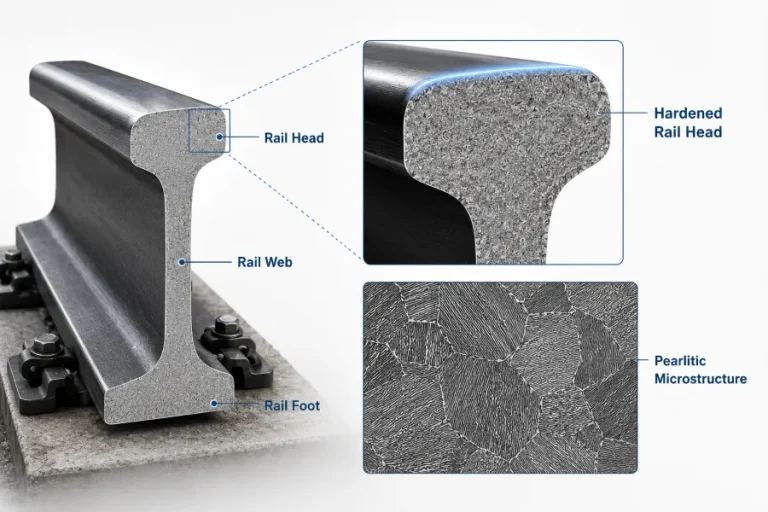
The standard usually specifies the rail profile, including the shape of the rail head, الويب, والقدم, as well as dimensional tolerances. It also defines the steel grade, التركيب الكيميائي, mechanical performance, testing methods, and quality requirements.
على سبيل المثال, two rails may both weigh around 60 كجم لكل متر, but their profiles and dimensions may be different. This means they may require different rail clips, منصات السكك الحديدية, لوحات السمك, ومكونات التثبيت الأخرى.
من وجهة نظر هندسية, a rail should always be considered as part of a complete track system rather than an independent steel product.
The existence of different rail standards is mainly the result of railway development history.
Early railway systems were built independently in different regions, and each country developed its own engineering practices based on local conditions, industrial capabilities, and transportation requirements.
European railway systems gradually developed standards around international compatibility, which led to the widespread use of UIC and EN standards. North America developed its own heavy-haul freight railway systems, where AREMA standards became widely adopted. الصين, اليابان, روسيا, كما طورت بلدان أخرى معايير وطنية تعتمد على شبكات السكك الحديدية الخاصة بها.
على الرغم من أن تكنولوجيا السكك الحديدية أصبحت دولية بشكل متزايد, هذه الاختلافات لا تزال موجودة اليوم. لا يحتاج المهندسون العاملون في مشاريع السكك الحديدية الدولية إلى فهم ملف السكك الحديدية نفسه فحسب، بل يحتاجون أيضًا إلى فهم الخلفية وراء كل معيار.
تعد معايير السكك الحديدية UIC من بين معايير السكك الحديدية الأكثر شهرة على المستوى الدولي.
تم تطويره من قبل الاتحاد الدولي للسكك الحديدية, تُستخدم معايير UIC على نطاق واسع في أوروبا والعديد من مشاريع السكك الحديدية في آسيا, أفريقيا, والشرق الأوسط.
تتضمن ملفات تعريف السكك الحديدية UIC الشائعة UIC54 وUIC60. فيما بينها, UIC60 هو أحد أكثر قضبان السكك الحديدية الثقيلة استخدامًا على نطاق واسع ويتم تطبيقه بشكل شائع في خطوط الركاب عالية السرعة, السكك الحديدية الرئيسية, and heavy-duty transportation systems.
UIC rails are typically flat-bottom rails designed for modern fastening systems. Their standardized profiles make them suitable for international railway projects where compatibility and long service life are important considerations.
In North America, railway projects often follow AREMA standards.
The American Railway Engineering and Maintenance-of-Way Association develops technical standards widely used by freight railways in the United States and other regions influenced by North American railway practices.
Common AREMA rail profiles include 115RE, 132يكرر, و 136RE.
Compared with many passenger railway systems, North American freight railways typically operate with higher axle loads and long-distance transportation requirements. لذلك, AREMA rails are designed for high durability, heavy loading conditions, وعمر الخدمة الطويل.
The 136RE rail, على سبيل المثال, is widely used in heavy-haul freight applications where track strength and wear resistance are critical.
Many railway professionals sometimes confuse EN standards with rail profiles.
في الحقيقة, في (المعيار الأوروبي) mainly defines manufacturing and technical requirements rather than simply naming a rail shape.
على سبيل المثال, في 13674 specifies requirements for railway rails, including dimensions, التسامح, and mechanical properties.
A rail profile such as UIC60 can be manufactured according to EN standards. لذلك, UIC60 and EN13674 are not competing standards; they describe different aspects of railway rail production.
Understanding this difference is important during international purchasing because specifications often include both the rail profile and the manufacturing standard.
China has developed its own railway rail standards, widely used throughout its extensive railway network.
Common Chinese rail profiles include 60kg/m, 75كجم/م, 50كجم/م, and 43kg/m rails.
The 60kg/m rail is the most widely used standard rail for modern Chinese mainline railways and high-speed railway systems. It provides a balance between strength, استقرار, and operational efficiency.
China’s railway development has resulted in large-scale applications of standardized rail systems, including matching fastening systems, النائمون, and track components.
Japan mainly uses JIS railway standards, including profiles such as 50N and 60N rails.
Japanese railway engineering places strong emphasis on precision manufacturing, مصداقية, and high-speed operation. JIS rail profiles are commonly found in Japanese railway systems and projects influenced by Japanese technology.
Other regions also maintain their own standards, such as BS standards in the United Kingdom and GOST standards in Russia. These standards reflect the unique operational requirements and railway history of each region.
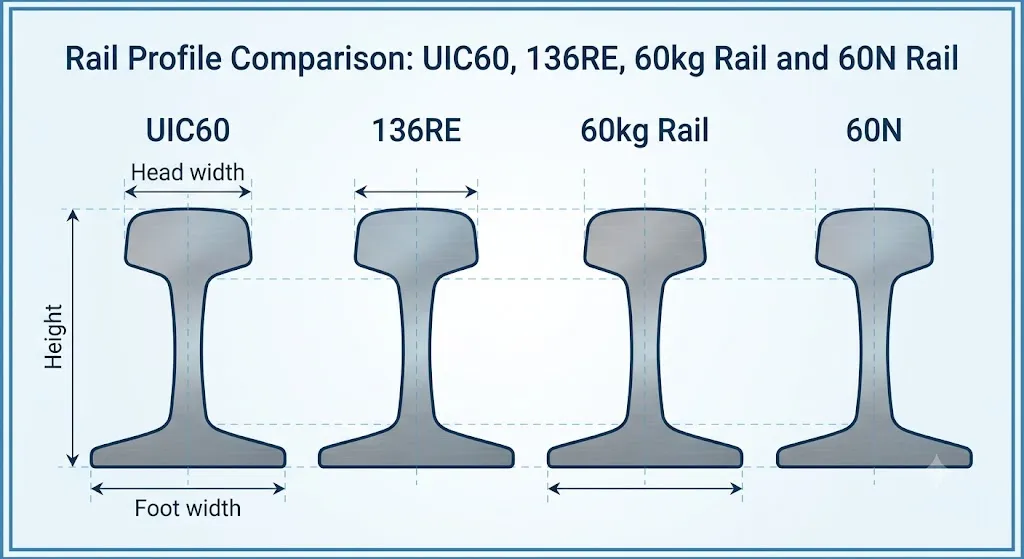
Although UIC60 and 60kg rail have similar weights, they are not necessarily interchangeable. Rail selection depends not only on weight but also on profile geometry, fastening compatibility, manufacturing standards, and existing track infrastructure.
على سبيل المثال, a UIC60 rail and a Chinese 60kg rail may have similar applications, but their dimensions and matching fastening components can be different. Before replacement or procurement, engineers should always verify the complete track system compatibility.
| نوع السكك الحديدية | Standard System | Main Region | وزن (Approx.) | Typical Application | الميزات الرئيسية |
| UIC60 | UIC / EN Standards | أوروبا, الشرق الأوسط, آسيا, أفريقيا | 60 كجم/م | السكك الحديدية عالية السرعة, mainline railway, heavy passenger and freight lines | One of the most widely used international rail profiles with excellent strength and compatibility |
| 136يكرر | معايير أريما | North America and heavy-haul railway markets | 67.5 كجم/م (136 lb/yd) | Heavy freight railway, mining railway, تطبيقات تحميل المحور العالي | Designed for high loading capacity, متانة, وعمر الخدمة الطويل |
| 60كجم السكك الحديدية | GB Standards (الصين) | China and international projects using Chinese standards | 60 كجم/م | السكك الحديدية عالية السرعة, passenger railway, mainline freight railway | Widely used in modern Chinese railway networks with mature supporting systems |
| 60N Rail | JIS Standards | Japan and related railway projects | Approx. 60 كجم/م | High-speed passenger railway and urban railway systems | High precision manufacturing and reliability for demanding operating conditions |
Selecting a rail standard is not only about choosing the rail itself.
The rail profile directly affects the design of other track components.
على سبيل المثال, a UIC60 rail requires compatible rail clips, منصات السكك الحديدية, لوحات السمك, and sleepers designed for the same profile. A fastening system designed for one rail section may not properly fit another rail type.
This is especially important when replacing rails in existing railway systems. Even if two rails have similar weights, differences in rail foot width, ارتفاع, or profile geometry can create compatibility problems.
لمشاريع السكك الحديدية الدولية, engineers usually consider the complete track structure rather than individual components separately.
There is no single “best” rail standard for every railway project.
The correct choice depends on several factors, including the existing railway system, سرعة القطار, تحميل المحور, بيئة التشغيل, متطلبات الصيانة, and availability of replacement components.
For a new railway project, engineers usually start by defining the operational requirements and then selecting a suitable rail profile and standard.
For an existing railway system, maintaining compatibility with current infrastructure is usually the priority. Using a different rail standard may require changes to fastening systems, النائمون, and maintenance equipment.
Railway rail standards represent decades of engineering experience and regional railway development. Standards such as UIC, أريما, في, غيغابايت, هو, and others are not simply different names for rails; they reflect different approaches to railway operation and design.
للمهندسين وفرق المشتريات, understanding these standards helps avoid compatibility issues and ensures better performance throughout the railway lifecycle.
في لويانغ فونيو للصناعات الثقيلة, نحن نقدم مكونات مسار السكك الحديدية مشتمل القضبان, rail plates, rail fish plate bolts, مقاطع السكك الحديدية, منصات السكك الحديدية, عوارض السكك الحديدية, إلخ. We also produce عجلات السكك الحديدية, والسكك الحديدية bogie frame and bolster related products for international railway projects. Our engineering team can assist customers in selecting compatible components according to different rail standards and project requirements.