Bizimle iletişime geçmek için WeChat kodunu tarayın
Bizimle iletişime geçmek için WeChat kodunu tarayın
Bize e-posta göndermekten çekinmeyin; size en kısa sürede cevap vereceğiz.
Geleceği kalp ve ruhla yaratmak


İnsanlar demiryolu satın aldığında, ilk sorular genellikle profille ilgilidir, ağırlık ve uzunluk. Hangi bölüm gerekli? Metre başına kaç kilogram? Proje hangi doğrusallık sınıfını gerektiriyor?? Ray çeliği kaliteleri genellikle daha sonra gelir.
Bu anlaşılabilir bir şey. R260 gibi kodlar, R350HT, Gerçek bir hat için birini seçmek zorunda kalana kadar U71Mn ve U75V pek bir anlam ifade etmiyor. O noktada, kalite önem kazanır çünkü rayın aşınma şeklini etkiler, Tekrarlanan tekerlek yüklemesi altında nasıl davranır?, nasıl kaynak yapılabilir ve, sonuçta, pistin ne sıklıkta bakıma ihtiyacı olduğu.
Pratik mühendislik amaçları için, Ray çeliği dört geniş kategoriye ayrılabilir: R260 gibi karbon-manganez kaliteleri, U71Mn ve 900A; U75V gibi mikro alaşımlı kaliteler; R350HT ve AREMA HH gibi ısıl işlem görmüş ve kafada sertleştirilmiş kaliteler; ve daha zorlu pistler için alaşımlı veya beynitik kaliteler.
Bu resmi bir taksonomiden ziyade çalışan bir sınıflandırmadır. Kesin not, kimya ve mekanik gereklilikler her zaman geçerli standartlarla kontrol edilmelidir. İÇİNDE 13674-1 Ve GB/T 2585-2021 gereksinimler.
Bu kılavuz, ihalelerde ve demiryolu projelerinde yaygın olarak karşılaşılan demiryolu kalitelerini ele almaktadır., R260'a özellikle dikkat ederek, R350HT, U71Mn ve U75V. Daha da önemlisi, aralarında seçim yaparken gerçekte neyin önemli olduğunu açıklıyor.
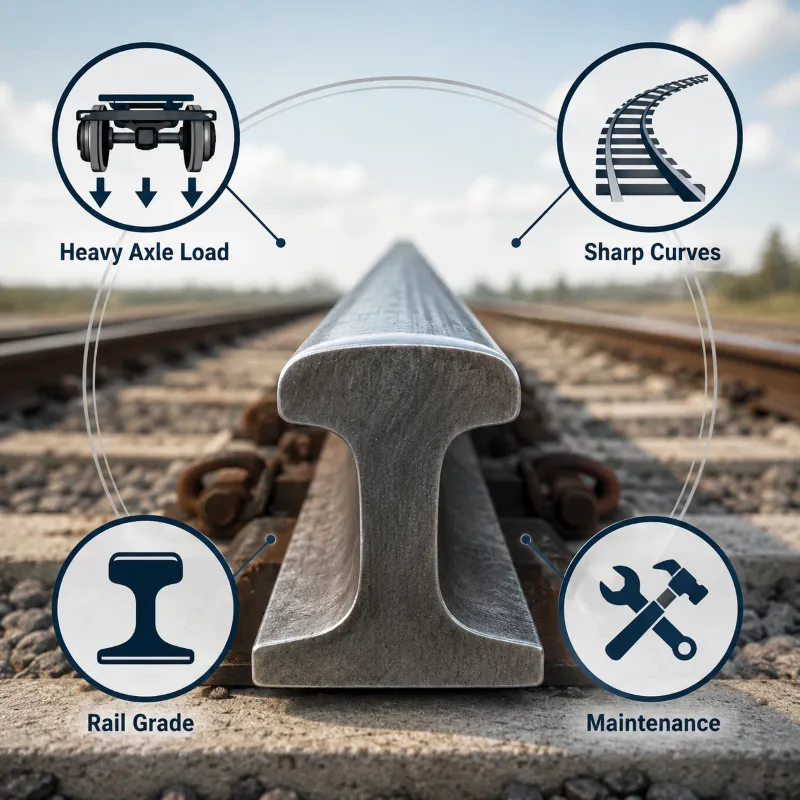
Ray bir kez yük taşımaz ve daha sonra eski durumuna dönmez.. Rayın aynı bölümü hizmet ömrü boyunca tekrar tekrar tekerlek yüklerine maruz kalır.
Bu tekrarlanan temas, ray çeliğini sıradan yapısal çelikten farklı kılan şeydir.
Kirişler için kullanılan yapı çeliği, Plakalar ve diğer yapı bileşenleri genellikle dayanıklılık esas alınarak tasarlanır, amaçlanan yükleme koşulları altında süneklik ve kaynaklanabilirlik. Demiryolunun çözmesi gereken bir sorunu daha var: tekerlek ile ray arasındaki küçük temas alanı tekrarlanan yuvarlanma ve kayma kuvvetlerine maruz kalır.
Bu nedenle ray çeliği tipik yapısal çeliğe göre çok daha fazla karbon içerir. Geleneksel bir ana hat rayı kabaca içerebilir 0.62 ile 0.80% karbon, yaygın yapısal çelikler sıklıkla 0.12 ile 0.25% menzil.
Doğru haddeleme ve soğutma işlemiyle, yüksek karbonlu ray çeliği ağırlıklı olarak perlitik bir mikro yapı geliştirir. Ferrit ve sementitin ince düzeni sertlik arasında yararlı bir denge sağlar, aşınma direnci ve tokluk.
Rakamlar fark hakkında hızlı bir fikir veriyor:
Son nokta pistte en önemli olanıdır. Bir rayın aşınmaya karşı dayanıklı olması gerekir, Çok sayıda yük döngüsünde plastik deformasyon ve yuvarlanma teması yorulması. Bu nedenle çelik kalitesi ray tasarımının bir parçasıdır, sadece maddi bir tanım değil.
Tekerleğin de aynı anda dikkate alınması gerekiyor. Tekerlek malzemesi ve tekerlek profili temas bölgesini ve raya aktarılan gerilimleri etkiler. Başka bir deyişle, bir ray sınıfı tamamen tek başına değerlendirilemez. Tekerlek malzemesi ve profilinin tekerlek rayı temas çiftinin diğer yarısı için neden önemli olduğunu görün.
Her ray standardını tam olarak aynı şekilde kapsayan tek bir sınıflandırma sistemi yoktur.. Pratik mühendislik çalışmaları için, Yine de, dört grup faydalıdır: karbon-manganez rayı, mikroalaşımlı ray, ısıl işlem görmüş ray, ve alaşım veya beynitik ray.
Bu gruplar arasındaki önemli fark sadece kimyasal bileşim değildir.. Üretim rotası ve bunun sonucunda ortaya çıkan mikro yapı, aynı temel çelik kimyasının pistteki performans şeklini değiştirebilir.
Karbon-manganez kaliteleri pratik bir dayanım dengesi sağladıklarından yaygın olarak kullanılmaktadır, aşınma direnci, kaynaklanabilirlik ve maliyet.
EN kapsamında R260 13674-1 tanıdık bir Avrupa sınıfıdır, kabaca 880 MPa minimum çekme mukavemeti ve yaklaşık 260–300 HB sertlik aralığı. Genellikle geleneksel ana hat ve karma trafik uygulamaları için düşünülür..
GB/T altında U71Mn 2585 yaygın olarak karşılaşılan diğer bir karbon-manganez kalitesidir. Manganez aralığı R260'ınkinden daha yüksektir, ve genellikle bununla ilişkilidir 50 kg/m ve 60 Çin spesifikasyonlarında kg/m ray.
900A, demiryolu ihalelerinde ve teknik belgelerde hâlâ görülebilen eski bir derece tanımıdır. R260 gibi geleneksel kalitelere genel olarak benzer mukavemet ve sertlik özelliklerine sahiptir., kesin gereklilikler geçerli spesifikasyona bağlı olmasına rağmen.
AREMA Sınıfı 260 Kuzey Amerika spesifikasyonlarında kullanılan başka bir geleneksel seçenektir, minimum çekme mukavemeti ile 980 MPa ve etrafındaki sertlik 300 HB.
Önemli olan bu kalitelerin otomatik olarak “düşük performanslı” raylar olmamasıdır.. Hattın orta düzeyde trafiği varsa, uygun aks yükleri ve ciddi aşınma sorunu yok, birinci sınıf ısıl işlem görmüş kaliteye ödeme yapmak için çok az mühendislik gerekçesi olabilir.
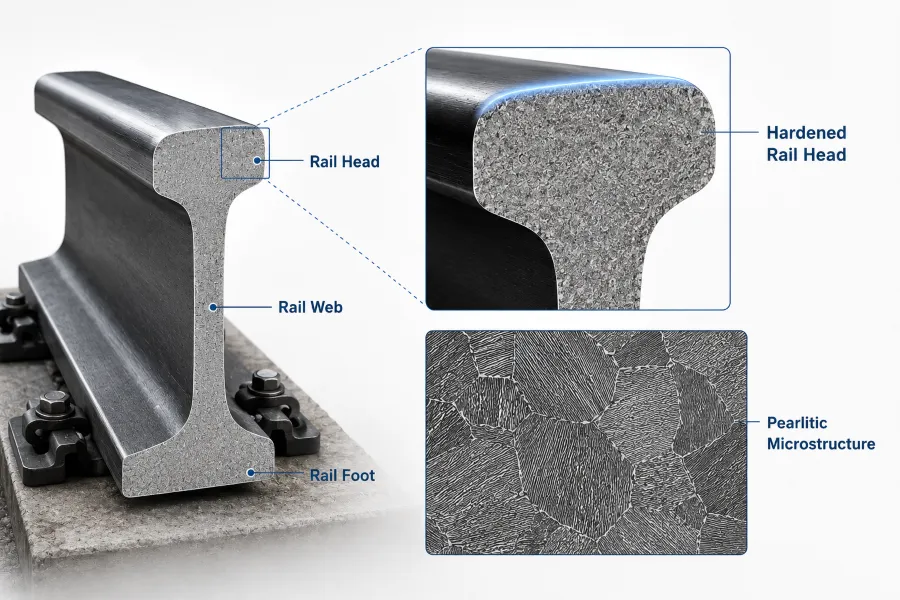
Mikroalaşım biraz farklı bir yaklaşım getiriyor.
Vanadyum gibi küçük elementlerin eklenmesi, tamamen yüksek karbon içeriğine veya ayrı bir kafa sertleştirme işlemine bağlı kalmaksızın mikro yapıyı iyileştirebilir ve mukavemeti artırabilir.
U75V iyi bir örnek. GB/T altında 2585, mikroalaşım aralığında vanadyum içerir ve kabaca 980 280–320 HB civarında sertlikle MPa minimum çekme mukavemeti. Geleneksel karbon-manganez kalitesinin sağlayabileceğinden daha fazla mukavemet ve yorulma direncinin gerekli olduğu yerlerde kullanılır..
Başka bir örnek 900ACrV'dir, bazı Avrupalı üreticilerden temin edilebilen bir krom-vanadyum çeşidi. Tam kimyası ve özellikleri üreticinin spesifikasyonuna bağlıdır, ancak geleneksel karbon ray ve tamamen ısıl işlem görmüş kaliteler arasındaki daha yüksek performans aralığında yer alır.
Bu raylar için, yükseltmenin nedeni çalışma koşullarından gelmelidir. Daha yüksek trafik, zorlu virajlar veya mevcut bir aşınma sorunu ek performansı haklı gösterebilir. Kalite, spesifikasyon sayfasında daha yüksek bir mukavemet numarası içerdiği için seçilmemelidir..
Özel rota atamaları, demiryolu operatörleri ve altyapı sahipleri tarafından alınan proje kararlarıdır.. Bu nedenle, uygulama ilgili mühendislik dokümantasyonu tarafından onaylanmadıkça, bir eğim belirli bir yüksek hızlı veya ana hat güzergahıyla ilişkilendirilmemelidir..
Isıl işlem görmüş ray tartışmayı değiştiriyor çünkü üretim süreci kimya kadar önemli hale geliyor.
Yuvarlandıktan sonra, kontrollü hızlandırılmış soğutma perlitik yapıyı iyileştirebilir ve ray kafasındaki sertliği artırabilir. Sonuç, ray bölümünün geri kalanında gerekli özellikleri korurken daha sert bir çalışma yüzeyidir.
EN kapsamında R350HT 13674-1 tanıdık bir örnek. Kabaca var 1175 MPa minimum tensile strength and a hardness range around 350–390 HB.
This makes it attractive for sections where rail wear is a persistent problem, particularly high-wear curves and heavy-haul applications.
R350LHT is another heat-treated grade with a small chromium addition. AREMA HH represents the high-hardness approach used in North American specifications, with hardness typically around 388 HB or above depending on the specific product.
There is an important practical point here: a harder rail is not automatically the better rail for every location.
If a conventional grade is already giving acceptable wear life on tangent track, upgrading the whole line to a premium grade may add cost without solving a real problem. Heat-treated rail makes the most sense when the operating conditions justify it.
When conventional pearlitic rail is no longer enough, manufacturers can use alloying and different cooling strategies to push the performance further.
Krom, molibden, nikel, boron and other alloying elements can be used depending on the grade and manufacturing route. Some of these steels are designed to develop bainitic microstructures, which can provide a useful combination of strength, hardness and fracture toughness.
Examples include BH Rail, R370CrHT and U78CrV, although their exact requirements depend on the relevant standard and manufacturer specification.
These grades are normally considered for demanding conditions such as small-radius curves, very high axle loads, severe wear or documented rolling contact fatigue.
They also come with a trade-off. The material cost is higher, welding becomes more specialized, and the benefit needs to be demonstrated by the actual track conditions.
For a rail buyer, that means the question should not simply be “What is the hardest grade available?”
A better question is:
What degradation mechanism are we trying to control?
The following comparison gives a practical starting point for four grades commonly encountered in railway specifications.
The values below are typical published values. Always confirm the current standard revision and the mill certificate for the actual delivery.
| Seviye | Standart | Karbon (%) | Manganez (%) | Key Alloying | Çekme Dayanımı (MPa, dk.) | Sertlik (HB) | Manufacturing Route |
|---|---|---|---|---|---|---|---|
| R260 | İÇİNDE 13674-1 | 0.62–0,80 | 0.70–1.20 | None | 880 | 260–300 | As rolled |
| R350HT | İÇİNDE 13674-1 | 0.72–0,80 | 0.70–1.20 | Cr ≤ 0.15 | 1175 | 350–390 | Heat treated |
| U71Mn | GB/T 2585 | 0.65–0.77 | 1.10–1.40 | None | 880 | 260–300 | As rolled |
| U75V | GB/T 2585 | 0.67–0.77 | 0.70–1.00 | V 0.04–0.12 | 980 | 280–320 | Microalloyed / as rolled |
One point about the names is worth clearing up. In grades such as R260 and R350HT, the number is closely associated with the specified hardness class. It does not mean that every section of rail will have exactly that hardness. R260, Örneğin, is specified within a hardness range of roughly 260–300 HB, while R350HT is around 350–390 HB.
The table also cannot tell you which grade is correct for a particular railway. That decision comes from the operating conditions.
For a closer comparison, see our separate guides on R260 vs R350HT and U71Mn vs U75V.
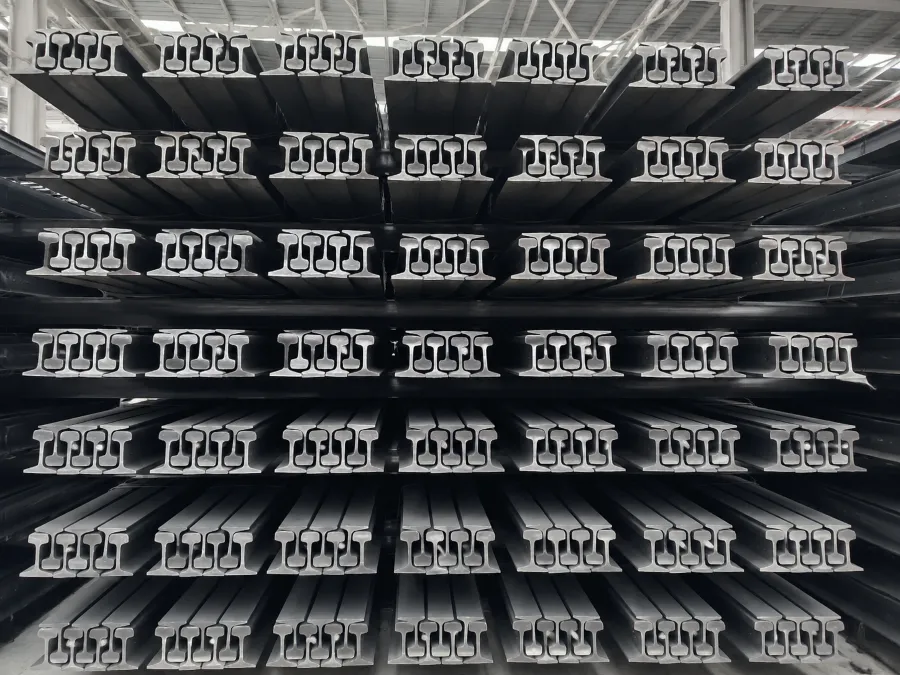
This is where rail steel selection becomes an engineering problem rather than a catalogue comparison.
I would not start by asking which grade has the highest tensile strength. I would start by asking what is actually damaging the rail.
Is the rail wearing at the gauge corner? Is rolling contact fatigue appearing on the head? Is plastic flow becoming a problem under high axle loads? Is the rail being ground frequently? Is lubrication effective on the curves?
Those questions tell you much more than a single hardness number.
The main factors to review are:
Higher axle loads increase the forces acting at the wheel-rail contact and can accelerate wear and plastic deformation.
As a rough starting point:
These are not design limits. Two railways with the same axle load can need different rail grades because their curve radii, annual tonnage, wheel condition and maintenance practices are different.
Curve radius is one of the factors that can turn an otherwise acceptable rail grade into a maintenance problem.
On tangent track, wheel-rail contact is relatively stable. On a tight curve, the gauge corner sees greater lateral loading and the contact conditions become more severe. Wear and rolling contact fatigue can then develop much faster.
As a general guide, standard carbon-manganese grades often perform well on large-radius tangent and gentle curves. As the radius decreases and the wear problem becomes more pronounced, microalloyed or heat-treated grades may be considered. Very tight curves with heavy traffic can justify specialist alloy or bainitic grades.
There is no useful universal rule saying that a particular radius must use a particular steel grade. Traffic tonnage, wheel profile, yağlama, grinding and actual wear measurements all matter.
That is why I would treat curve radius as a reason to investigate an upgrade, not as an automatic grade-selection formula.
This is one of the easiest mistakes to make when comparing rail specifications.
A higher hardness number looks attractive on paper. But the wheel and rail work as a pair. The difference in hardness, the wheel profile, contact stress and maintenance regime all influence what happens at the contact patch.
There is also the question of cost.
If a standard rail is already delivering acceptable wear life on a lightly loaded tangent section, replacing it with a premium heat-treated grade may not produce a useful return. On a heavy-haul curve where rail wear is driving frequent grinding or replacement, the calculation can be completely different.
Bu nedenle, wear data is more useful than a generic claim about percentage life improvement. If possible, compare wear rates under operating conditions close to the actual line—for example, millimetres of wear per 100 MGT.
A rail specification is only as good as the product delivered against it.
When reviewing a rail supplier, I would not look at tensile strength alone. The first question is whether the material, test results and physical rail can all be traced back to the same production heat.
The MTC should identify the applicable standard, ısı numarası, chemical composition and mechanical properties. Where EN 10204 Tip 3.1 veya 3.2 certification is required by the project, the certificate should match that requirement.
The important point is traceability. The heat number on the certificate should be consistent with the marking and documentation for the delivered rail.
For critical rail products, UT provides information about internal soundness.
The report should be traceable to the applicable acceptance criteria rather than simply saying “UT passed.” The actual standard and testing requirements should be clear.
Ray profili, dürüstlük, surface condition and end tolerances should be checked against the specified rail section.
A rail can have the correct steel grade and still fail to meet the dimensional requirements of the project.
For heat-treated rail, hardness should not be treated as a single number taken from the surface.
A hardness traverse from the rail head toward the depth of the section can show whether the hardening profile is consistent with the specified grade.
This is one of the areas where the manufacturing process matters just as much as the final certificate value.
If the rails will be welded on site, confirm that the selected grade has a qualified welding procedure for the method being used, such as aluminothermic or flash-butt welding.
Do not assume that a welding procedure qualified for one rail grade can automatically be transferred to another grade.
Nihayet, check that the grade and rail profile are actually produced to the standard specified in the tender.
A supplier offering an “equivalent” grade may be technically reasonable in some projects, but equivalence should be established by the project specification or engineering authority—not assumed from a similar hardness or tensile-strength value.
There are some simple things worth checking before placing an order.
A price far below the market level for a specified grade should prompt questions about material, process and certification.
The rail should also have clear identification markings that allow the manufacturer, grade and production information to be traced.
Another thing I would look at is the MTC itself. If certificates from many different heats show exactly the same chemical and mechanical values with no normal production variation, it is worth asking for clarification.
These checks do not replace formal inspection, but they can reveal problems early.
Evet. It is possible to use harder rail in high-wear curves and a conventional grade on tangent sections.
The important issue is not simply whether two grades can physically be connected. The welding procedure, transition requirements and maintenance strategy also have to be considered.
Where different grades are used on the same route, confirm the requirements against the applicable railway standard and qualified welding procedure. The maintenance team should also understand that different grades may wear at different rates.
A rail grade is only one part of the wheel-rail system.
The wheel matters because its material and profile determine the contact conditions at the rail head. A worn wheel profile can change the contact patch and increase local stress even if the rail grade itself is suitable.
This is why demiryolu tekerlekleri should be considered together with the rail specification and operating conditions.
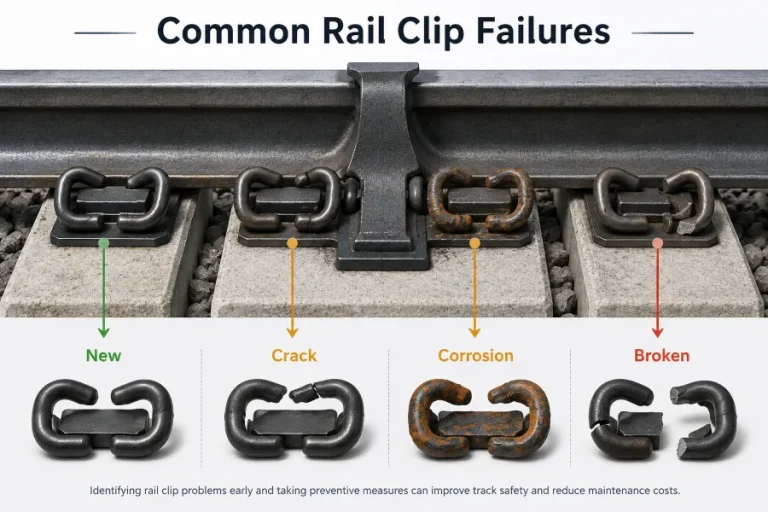
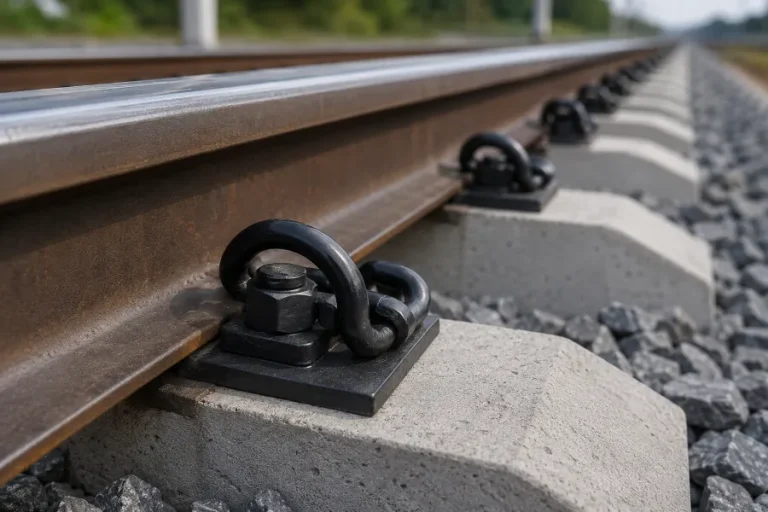
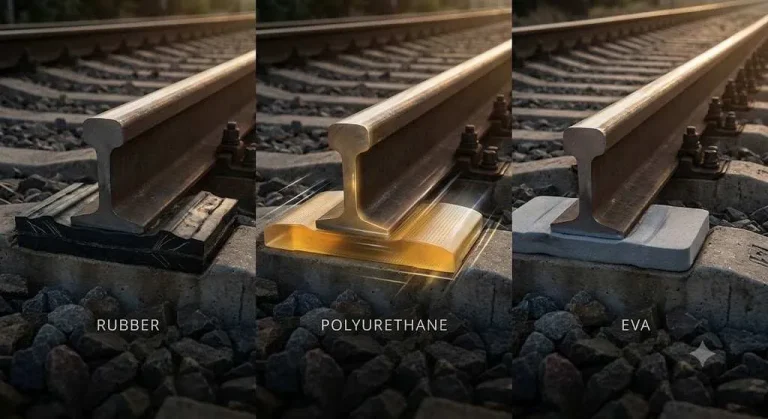
The fastening system matters as well. Elastik ray klipsleri provide rail restraint, sırasında ray pedleri influence the stiffness of the rail-seat area and the way loads are transferred into the sleeper.
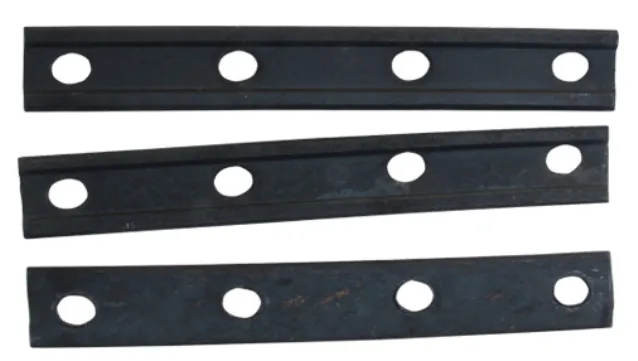
At rail joints, balık tabakları provide a mechanical connection where continuous welded rail is not used or where a joint is otherwise required.
The practical lesson is simple: upgrading the rail alone does not automatically solve a track problem.
A premium rail running with a poorly matched wheel profile, unsuitable fastening stiffness or inadequate maintenance will not necessarily deliver the service life expected from its material specification.
There is no single “best” rail steel grade.
R260 and U71Mn remain practical choices for many conventional applications. U75V provides a higher-strength microalloyed option, while R350HT and other heat-treated grades become more attractive when wear and heavy loading justify the additional cost. Alloy and bainitic grades are further options for particularly demanding conditions.
The right choice depends on what is happening on the track.
Axle load matters, but so do annual tonnage, eğri yarıçapı, wheel condition, contact stress, yağlama, grinding and maintenance access. That is why a rail grade should be selected from actual operating conditions rather than from the hardness column of a material table alone.
When purchasing rail, ask for traceable heat-level test certificates, UT results and dimensional inspection data. For heat-treated grades, look beyond the surface hardness and check the hardness profile. And if the rail will be welded, make sure the welding procedure is qualified for the grade you are buying.
If you are sourcing rail together with demiryolu tekerlekleri, rail steel pads, elastic rail clips or other track components, the same engineering approach should be applied across the complete wheel-rail system.
Luoyang Fonyo Ağır Sanayi A.Ş., Ltd.. supplies demiryolu tekerlekleri and track components with material certification, inspection documentation and OEM support. If you have a rail profile, annual tonnage, axle load or application requirement, you can contact our mühendislik ekibi to discuss the appropriate specification.
Teknik not: Grade designations, chemical limits and mechanical requirements can vary by standard revision and product specification. Always verify the latest applicable standard and project specification before procurement.
U71Mn is a conventional carbon-manganese rail grade, while U75V uses vanadium microalloying. U71Mn is commonly specified with around 0.65–0.77% carbon and 1.10–1.40% manganese, while U75V contains roughly 0.67–0.77% carbon and 0.04–0.12% vanadium.
U75V has a higher typical minimum tensile strength and hardness range. Whether that difference is useful depends on the operating conditions. It is not simply a matter of choosing the grade with the higher number.
Sometimes they are, and sometimes they are not.
On a heavily loaded curve with significant rail wear, the additional hardness of a grade such as R350HT can make a meaningful difference to maintenance requirements. On a lightly loaded or relatively low-wear section, the additional cost may not provide the same benefit.
The best way to make the decision is to compare actual wear and maintenance data from the line.
Evet. It is common in some applications to use harder rail in curves and conventional grades on tangent sections.
The grades should not simply be mixed without checking welding compatibility, transition requirements and the applicable railway standard. Maintenance planning should also account for different wear rates.
At a minimum, check the required material certificate, kimyasal bileşim, mekanik özellikler, heat number and traceability. Depending on the project, you may also need UT reports, dimensional inspection records and hardness data.
For heat-treated rail, a hardness-depth profile is particularly useful. If the rail will be welded on site, confirm that a qualified welding procedure is available for the selected grade.
Because the loading conditions are fundamentally different.
Structural steel is not designed for repeated wheel-rail rolling contact. Rail steel has a higher carbon content and a controlled microstructure designed to provide the hardness, wear resistance and fatigue performance required for railway service.
Using a material simply because its tensile strength looks acceptable on a datasheet ignores the contact conditions that actually govern rail performance.
HAYIR.
Hardness is important, but rail life also depends on wheel hardness and profile, aks yükü, traffic tonnage, eğri yarıçapı, contact stress, yağlama, grinding and other maintenance conditions.
A harder rail can be the right solution for a high-wear location, but it should not be treated as a universal upgrade for every section of track.