WeChat コードをスキャンしてご連絡ください
WeChat コードをスキャンしてご連絡ください
お気軽にメールをお送りください。できるだけ早くご返信させていただきます.
心と魂で未来を創る


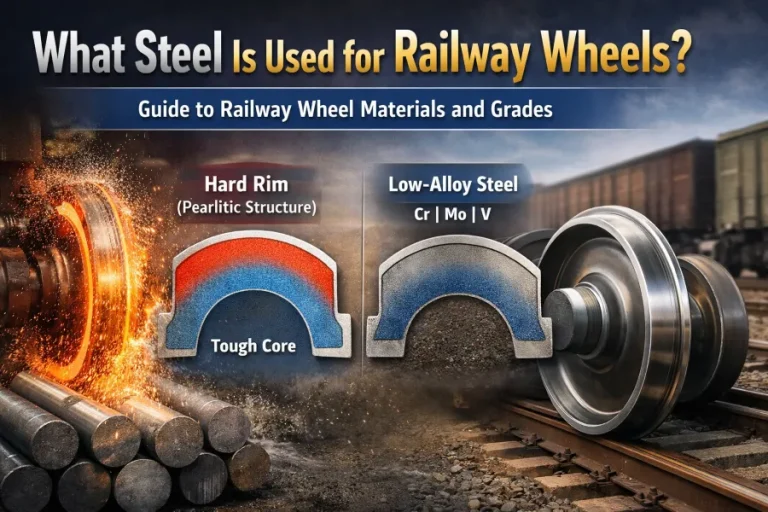
鉄道の車輪を外から見ると, とても単純な鋼片のように見えます. 実際には, ホイールのパフォーマンスは金属内部で何が起こっているかに大きく依存します. スチールの微細構造は、ホイールが長年の過酷な使用にどれだけ耐えられるかを決定する上で重要な役割を果たします。.
鉄道工学では, ホイール素材には一つの微細構造が何度も現れる: の フェライト-パーライト構造. 強度と強度の実用的なバランスを提供するため、数十年にわたって使用されてきました。, 靭性, そして耐摩耗性. そのバランスがなければ, 鉄道の車輪は摩耗が早すぎるか、脆くなりすぎて安全に運行できなくなります。.
この構造がなぜそれほど重要なのかを理解するには, フェライトとパーライトが実際に何であるかを調べる必要があります, そしてそれらが鋼鉄内部でどのように連携するか.
鋼は肉眼では均一に見えるかもしれません, but under a microscope it is made of different phases. Two of the most common phases in railway wheels steel are ferrite and pearlite.
Ferrite is relatively soft and ductile. It allows the material to absorb energy and deform slightly without cracking. In railway service, that toughness is extremely valuable because wheels are constantly exposed to dynamic loads, 不規則性を追跡する, and occasional impacts.
パーライト, 一方で, is harder and stronger. It forms a layered structure composed of ferrite and iron carbide, which gives it much better wear resistance than pure ferrite. とき 鉄道の車輪 rolls along the rail thousands of kilometers every month, that wear resistance becomes essential.
When ferrite and pearlite are distributed together throughout the steel, the result is a ferrite–pearlite microstructure. This structure allows the wheel to remain tough enough to resist cracking while still being hard enough to resist wear.
That combination is exactly what railway wheels need.

鉄道の車輪 operate in an environment that is surprisingly harsh. The contact patch between the wheel and the rail is very small, yet it carries enormous loads. Every rotation of the wheel generates stress at that contact point, and over time those stresses accumulate.
In addition to rolling contact, wheels must also tolerate heat generated during braking. Freight trains descending long grades can generate significant thermal loads in the wheel rim. The steel must remain stable even when the temperature rises.
If a wheel material is too soft, the tread will wear rapidly and require frequent reprofiling. This increases maintenance costs and reduces service life. 一方で, if the steel is too hard, it may lose toughness and become vulnerable to cracking under impact or thermal stress.
A ferrite–pearlite structure offers a practical compromise between these extremes. The ferrite contributes toughness and resistance to cracking, while the pearlite provides the hardness required for wear resistance. When properly controlled, this structure allows railway wheels to operate safely for long service intervals.

The microstructure of a railway wheel does not appear by accident. It is carefully created through a combination of steel composition and heat treatment.
Railway wheel steels typically contain a moderate carbon level, usually around 0.6 に 0.7 percent. This amount of carbon is high enough to promote the formation of pearlite but still low enough to maintain toughness. Alloying elements such as manganese and silicon are often included to improve strength and help control the transformation of the microstructure during cooling.
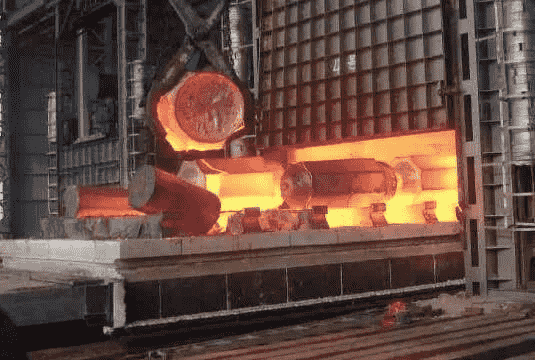
Once the wheel has been forged or rolled into shape, heat treatment becomes critical. One widely used method is リム焼き入れ, in which the outer rim of the wheel is cooled rapidly while the center cools more slowly. This creates a fine pearlite structure in the rim where wear resistance is most important, while the hub retains slightly softer material that improves impact resistance.
Cooling rate plays a key role in this process. Faster cooling tends to produce finer pearlite, which increases hardness and wear resistance. Slower cooling allows more ferrite to form, improving toughness. The art of wheel heat treatment lies in finding the right balance between these two effects.
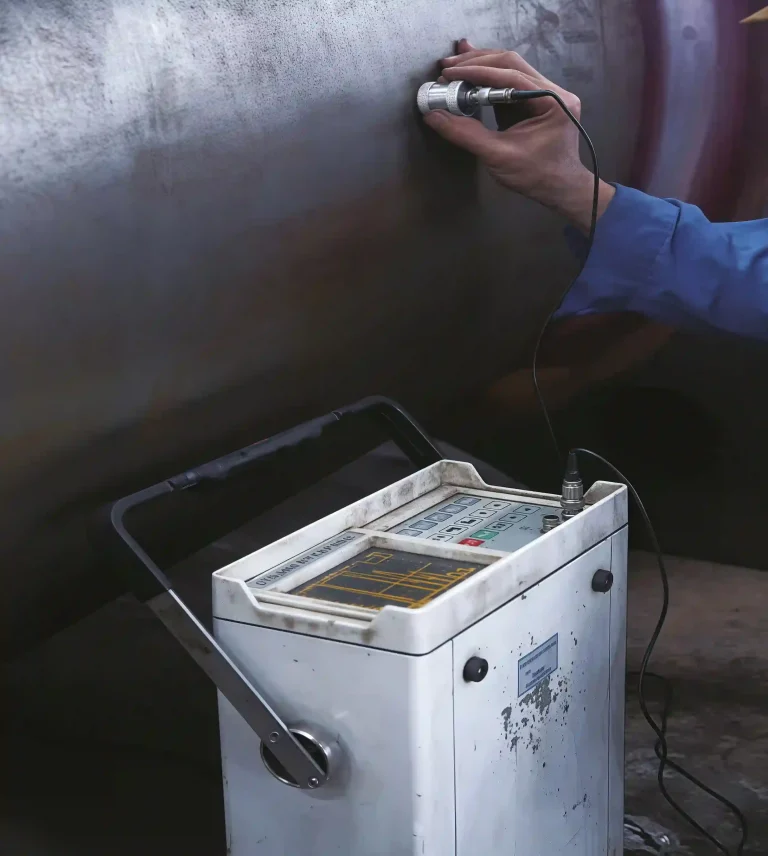
When a railway wheel is inspected in the laboratory, engineers examine its microstructure using metallographic techniques. Small samples are polished and etched, allowing the internal structure of the steel to be observed under a microscope.
適切に製造されたホイールには、通常、リム領域全体にフェライトとパーライトが均一に分布しています。. パーライト薄板の間隔も重要です, 一般に間隔が狭いほど耐摩耗性が向上するため.
エンジニアが注意深く観察するもう 1 つの要素は粒子サイズです. 通常、粒子が細かいほど疲労耐性が向上します, これは、何百万もの応力サイクルにさらされるコンポーネントにとって特に重要です.
これらの微細な詳細は微妙に見えるかもしれません, しかし、ホイールの寿命に大きな影響を与える可能性があります。.
近年では, いくつかのメーカーが導入しています ベイナイト鋼 鉄道車輪用, 特に高速旅客列車の場合. ベイナイト構造は、特定の条件下で優れた強度と耐摩耗性を提供します.
しかし, ferrite–pearlite wheels remain widely used around the world, especially in freight service. One reason is their long and well-documented performance history. Decades of operational data have demonstrated that properly produced ferrite–pearlite wheels can provide reliable service under a wide range of operating conditions.
Another advantage is manufacturing practicality. Ferrite–pearlite steels are easier to produce consistently, and their behavior during machining and reprofiling is well understood. For many railway operators, this reliability and predictability make ferrite–pearlite wheels the preferred choice.
When wheel failures occur, metallurgical investigations often trace the problem back to microstructure. Issues such as uneven pearlite distribution, excessive hardness, or internal segregation can all reduce the reliability of the wheel.
Maintaining a controlled ferrite–pearlite structure helps prevent several common problems, including tread spalling, 疲労亀裂, and premature wear. このため, microstructural control is a fundamental part of railway wheel manufacturing and quality assurance.
言い換えると, the safety of a railway wheel is not determined only by its shape or dimensions. It is also determined by the microscopic arrangement of phases within the steel.
Although railway wheels appear simple from the outside, their performance depends heavily on metallurgical design. The ferrite–pearlite structure provides an effective balance between toughness and wear resistance, allowing wheels to withstand the demanding conditions of railway operation.
Through careful control of steel chemistry, 熱処理, and cooling processes, manufacturers can produce wheels with a stable and uniform microstructure. This internal structure ultimately determines how well the wheel performs over thousands of kilometers of service.
For railway engineers and operators, understanding this relationship between microstructure and performance is essential when evaluating wheel quality and long-term reliability.
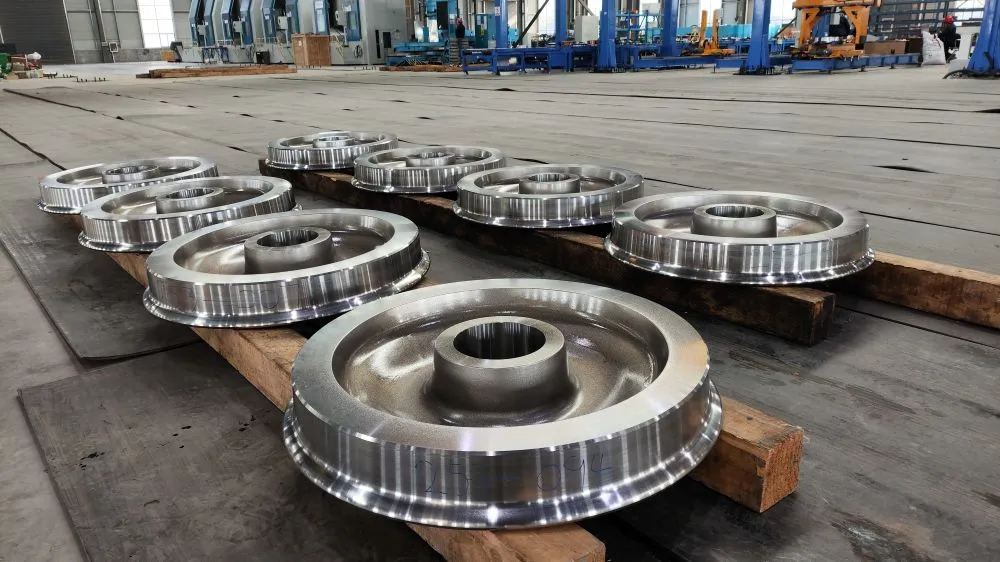
で 洛陽豊洋重工業株式会社, 株式会社., we specialize in the production of high-quality 鉄道の車輪, 鍛造部品, and precision-machined railway parts for global railway and heavy equipment industries.
With extensive manufacturing experience and strict quality control, our team works closely with customers to deliver reliable components that meet demanding operational requirements.
If you would like to learn more about our railway components or discuss your project requirements, 訪問してください: www.railwaypart.com