Scan WeChat-koden for at kontakte os
Scan WeChat-koden for at kontakte os
Du er velkommen til at sende os en e-mail, og vi vil svare dig hurtigst muligt.
At skabe fremtiden med hjerte og sjæl


Hvis man ser på jernbanehjul udefra, det virker som et meget simpelt stykke stål. I virkeligheden, the performance of a wheel depends heavily on what is happening inside the metal. The microscopic structure of the steel plays a major role in determining how well a wheel can survive years of heavy service.
I jernbaneteknik, one microstructure appears again and again in wheel materials: de ferrite–pearlite structure. It has been used for decades because it provides a practical balance between strength, sejhed, og slidstyrke. Without that balance, railway wheels would either wear out too quickly or become too brittle to operate safely.
To understand why this structure is so important, we need to look at what ferrite and pearlite actually are, and how they work together inside the steel.
Steel may look uniform to the naked eye, but under a microscope it is made of different phases. Two of the most common phases in railway wheels steel are ferrite and pearlite.
Ferrite is relatively soft and ductile. It allows the material to absorb energy and deform slightly without cracking. In railway service, that toughness is extremely valuable because wheels are constantly exposed to dynamic loads, spore uregelmæssigheder, and occasional impacts.
Perlelit, på den anden side, er hårdere og stærkere. It forms a layered structure composed of ferrite and iron carbide, which gives it much better wear resistance than pure ferrite. Når en jernbanehjul rolls along the rail thousands of kilometers every month, that wear resistance becomes essential.
When ferrite and pearlite are distributed together throughout the steel, the result is a ferrite–pearlite microstructure. This structure allows the wheel to remain tough enough to resist cracking while still being hard enough to resist wear.
That combination is exactly what railway wheels need.

Jernbanehjul operate in an environment that is surprisingly harsh. The contact patch between the wheel and the rail is very small, yet it carries enormous loads. Every rotation of the wheel generates stress at that contact point, and over time those stresses accumulate.
In addition to rolling contact, wheels must also tolerate heat generated during braking. Freight trains descending long grades can generate significant thermal loads in the wheel rim. The steel must remain stable even when the temperature rises.
If a wheel material is too soft, the tread will wear rapidly and require frequent reprofiling. This increases maintenance costs and reduces service life. På den anden side, if the steel is too hard, it may lose toughness and become vulnerable to cracking under impact or thermal stress.
A ferrite–pearlite structure offers a practical compromise between these extremes. The ferrite contributes toughness and resistance to cracking, while the pearlite provides the hardness required for wear resistance. When properly controlled, this structure allows railway wheels to operate safely for long service intervals.

The microstructure of a railway wheel does not appear by accident. It is carefully created through a combination of steel composition and heat treatment.
Railway wheel steels typically contain a moderate carbon level, usually around 0.6 til 0.7 percent. This amount of carbon is high enough to promote the formation of pearlite but still low enough to maintain toughness. Alloying elements such as manganese and silicon are often included to improve strength and help control the transformation of the microstructure during cooling.
Once the wheel has been forged or rolled into shape, heat treatment becomes critical. One widely used method is fælgslukning, in which the outer rim of the wheel is cooled rapidly while the center cools more slowly. This creates a fine pearlite structure in the rim where wear resistance is most important, while the hub retains slightly softer material that improves impact resistance.
Cooling rate plays a key role in this process. Faster cooling tends to produce finer pearlite, which increases hardness and wear resistance. Slower cooling allows more ferrite to form, improving toughness. The art of wheel heat treatment lies in finding the right balance between these two effects.
When a railway wheel is inspected in the laboratory, engineers examine its microstructure using metallographic techniques. Small samples are polished and etched, allowing the internal structure of the steel to be observed under a microscope.
A well-manufactured wheel typically shows a uniform distribution of ferrite and pearlite throughout the rim region. The spacing of the pearlite lamellae is also important, because finer spacing generally leads to better wear resistance.
Another factor engineers watch closely is grain size. Finer grains usually improve fatigue resistance, which is particularly important for components subjected to millions of stress cycles.
These microscopic details might seem subtle, but they can have a major impact on how long a wheel lasts in service.
I de senere år, some manufacturers have introduced bainitic steels for railway wheels, particularly for high-speed passenger trains. Bainitic structures can provide excellent strength and wear resistance under certain conditions.
Imidlertid, ferrite–pearlite wheels remain widely used around the world, especially in freight service. One reason is their long and well-documented performance history. Decades of operational data have demonstrated that properly produced ferrite–pearlite wheels can provide reliable service under a wide range of operating conditions.
Another advantage is manufacturing practicality. Ferrite–pearlite steels are easier to produce consistently, and their behavior during machining and reprofiling is well understood. For many railway operators, this reliability and predictability make ferrite–pearlite wheels the preferred choice.
When wheel failures occur, metallurgical investigations often trace the problem back to microstructure. Issues such as uneven pearlite distribution, excessive hardness, or internal segregation can all reduce the reliability of the wheel.
Maintaining a controlled ferrite–pearlite structure helps prevent several common problems, including tread spalling, fatigue cracking, and premature wear. Af denne grund, microstructural control is a fundamental part of railway wheel manufacturing and quality assurance.
Med andre ord, the safety of a railway wheel is not determined only by its shape or dimensions. It is also determined by the microscopic arrangement of phases within the steel.
Although railway wheels appear simple from the outside, their performance depends heavily on metallurgical design. The ferrite–pearlite structure provides an effective balance between toughness and wear resistance, allowing wheels to withstand the demanding conditions of railway operation.
Through careful control of steel chemistry, varmebehandling, og køleprocesser, manufacturers can produce wheels with a stable and uniform microstructure. This internal structure ultimately determines how well the wheel performs over thousands of kilometers of service.
For railway engineers and operators, understanding this relationship between microstructure and performance is essential when evaluating wheel quality and long-term reliability.
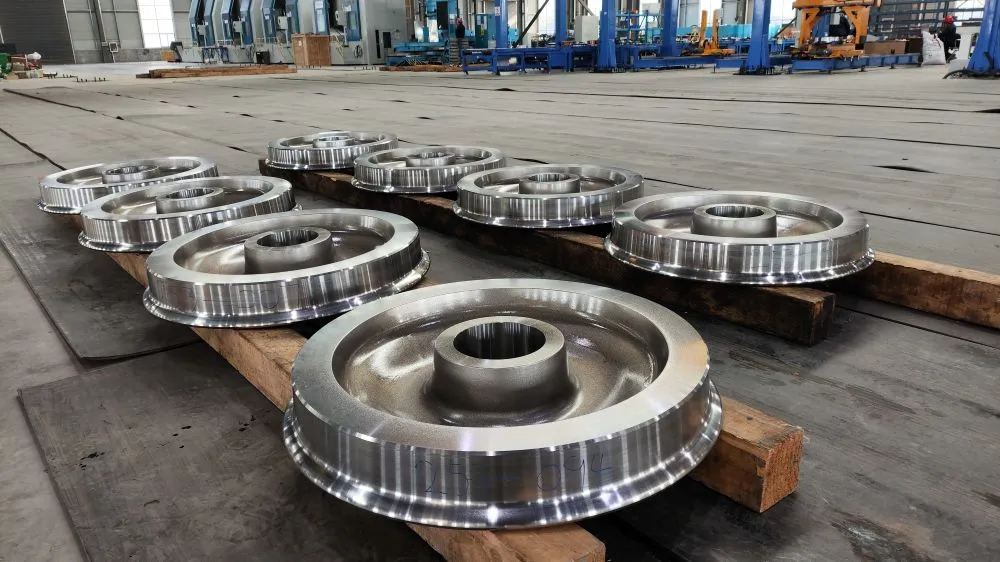
På Luoyang Fonyo Heavy Industries Co., Ltd., we specialize in the production of high-quality jernbanehjul, smedede komponenter, and precision-machined railway parts for global railway and heavy equipment industries.
With extensive manufacturing experience and strict quality control, our team works closely with customers to deliver reliable components that meet demanding operational requirements.
If you would like to learn more about our railway components or discuss your project requirements, besøg venligst: www.railwaypart.com