WeChat コードをスキャンしてご連絡ください
WeChat コードをスキャンしてご連絡ください
お気軽にメールをお送りください。できるだけ早くご返信させていただきます.
心と魂で未来を創る

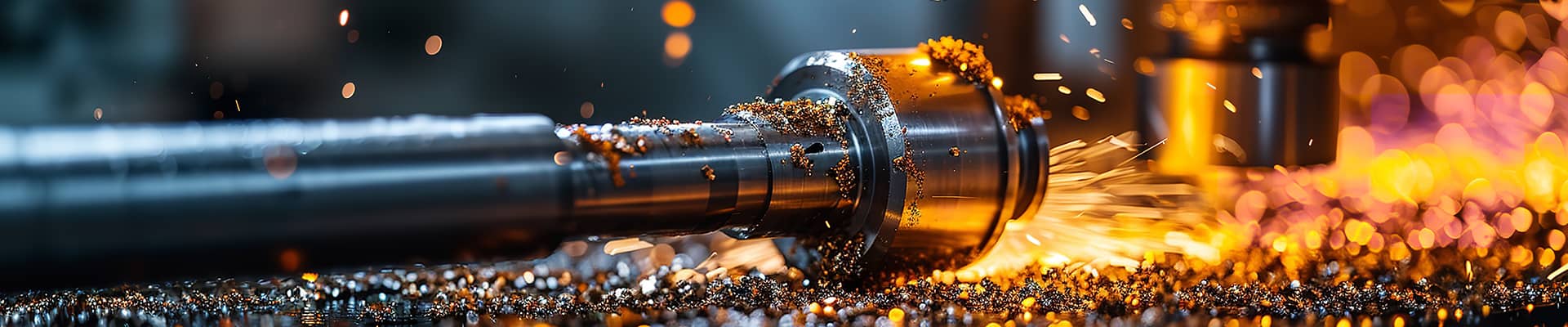
Heat treatment is a crucial step in the metal processing, which alters the internal structure and properties of metal materials through controlled heating, holding, and cooling to meet specific mechanical performance and application requirements. Heat treatment processes are widely used in industries such as automotive, 航空宇宙, machinery, and metallurgy to enhance the hardness, 強さ, 靭性, and wear resistance of materials. This article will provide a detailed analysis of the seven core heat treatment processes to help readers better understand the underlying technical principles and practical applications.
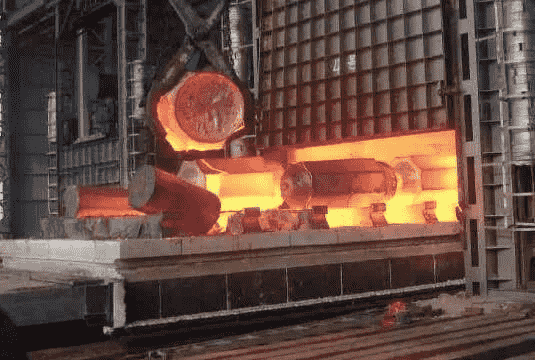
Annealing is a heat treatment process that involves heating metal to a certain temperature and holding it for a period of time, followed by slow cooling. Its main purpose is to eliminate internal stress in the metal, soften the material, and improve its workability or change its microstructure. Annealing mainly includes full annealing, spheroidizing annealing, and stress relief annealing, とりわけ.
During metal processing, especially after cold working, internal stress accumulates within the material, which may cause deformation or cracking during subsequent processing. Annealing effectively eliminates these stresses, reduces the material’s hardness, and makes it easier to perform subsequent operations such as cutting, stamping, and forming.
During the annealing process, the material’s grain structure changes, and some hardened structures become more uniform, ultimately giving the metal better plasticity and toughness. For iron-based materials, annealing often results in a finer microstructure, improving its mechanical properties.
Normalizing is a heat treatment process where metal is heated above the critical point and then air-cooled. Unlike annealing, normalizing has a faster cooling rate, resulting in a finer grain structure and increased material strength and hardness. Normalizing is generally applied to steel materials and is particularly effective in improving mechanical properties and material homogeneity.
During normalizing, the austenite phase in the metal transforms into pearlite, and the grain structure is refined, thereby enhancing the material’s strength and hardness while maintaining good toughness. This makes normalizing a fundamental process for many components before further processing, widely used in automotive, 機械的, and construction industries.
Quenching is a process where metal is heated above the critical temperature and then rapidly cooled. The aim is to increase the material’s hardness and strength. Common quenching media include water, oil, and air. During quenching, the austenite phase in steel transforms into martensite, which increases the material’s hardness and wear resistance.
Quenching is typically used for components that require high hardness, 耐摩耗性, and compressive strength, such as gears, ベアリング, and cutting tools. Due to the significant hardening layer formed during quenching, tempering is usually necessary after quenching to prevent brittleness.
Tempering is a necessary process after quenching, involving reheating the quenched metal to a certain temperature and then cooling it. The main purpose of tempering is to adjust hardness and increase toughness, reducing internal stress generated during quenching and preventing material brittleness.
Tempering can achieve different hardness and toughness levels depending on the heating temperature and time. Tempered materials have better toughness and impact resistance compared to quenched materials and are widely used in high-strength components, such as crankshafts and connecting rods in automotive engines.
Carburizing is a process where the surface of metal is heated to an appropriate temperature and treated in a carbon-rich atmosphere, allowing carbon atoms to penetrate the surface and increase the material’s surface hardness and wear resistance. This process is often used for parts that require surface hardening, especially mechanical parts such as gears and shafts. Carburizing processes typically include gas carburizing, liquid carburizing, and solid carburizing. After carburizing treatment, a high-hardness carburized layer forms on the material surface, which not only enhances the wear resistance of the parts but also improves their fatigue resistance. Since the parts retain the toughness of the inner layer after carburizing, this process is widely used in heavy-duty and wear-resistant mechanical components.
Nitriding involves heating the metal surface and placing it in a nitrogen or nitriding atmosphere to form a hard nitride layer on the surface, thereby increasing the material’s hardness, 耐摩耗性, and corrosion resistance. Nitriding is suitable for high-strength and wear-resistant parts, especially for surface treatment of automotive engine and aircraft components.
Unlike carburizing, the surface of materials after nitriding usually does not require further quenching treatment because the nitride layer itself already has sufficient hardness and corrosion resistance. The nitride layer is generally thin but has extremely high hardness, excellent wear resistance, and oxidation resistance.
Annealing is not limited to high-temperature heating of metal materials but also includes low-temperature annealing. In low-temperature annealing, metals are heated at a relatively low temperature to eliminate internal stresses, reduce surface oxidation, and improve material stability. This process is typically applied to the annealing of non-ferrous metals such as nickel-based alloys and aluminum alloys.
Low-temperature annealing can make the metal structure more uniform, reduce grain coarsening, and improve the material’s ductility and corrosion resistance. 場合によっては, annealing can also optimize the electrical and thermal conductivity of the material. For some precision mechanical parts, low-temperature annealing is a crucial step to ensure long-term stability in use. 結論
Heat treatment is an indispensable and crucial process in modern metalworking. By controlling the heating, holding, and cooling processes, it significantly enhances the properties of materials. The seven core processes, including annealing, 正規化する, 急冷, 焼き戻し, carburizing, nitriding, and low-temperature annealing, each have their unique characteristics and are suitable for different metal materials and application scenarios. In actual industrial production, the rational selection and application of these heat treatment processes can greatly improve the strength, 硬度, 耐摩耗性, and stability of components, ensuring product quality and service life.
洛陽豊洋重工業株式会社, 株式会社, 1998年に設立された鉄道鋳造部品のメーカーです. 当社の工場面積は72,600㎡です。, 以上の 300 従業員, 32 技術者, 含む 5 シニアエンジニア, 11 アシスタントエンジニア, そして 16 技術者. 弊社の生産能力は 30,000 年間トン. 現在, 私たちは主に鋳物を生産しています, 機械加工, 機関車の組立て, 鉄道車両, 高速鉄道, 鉱山機械, 風力, 等.
当社はCRRCに鉄道部品を供給しています。(以上を含む 20 CRRCの支店および子会社), Gemacエンジニアリングマシナリー, サニーグループ, 中信重工業, 等. 当社の製品はロシアに輸出されています, 米国, ドイツ, アルゼンチン, 日本, フランス, 南アフリカ, イタリアをはじめとする世界中の国.
連絡先:
電子メール:[email protected]
携帯:008615515321683