Escanea el código WeChat para contactarnos
Escanea el código WeChat para contactarnos
No dudes en enviarnos un correo electrónico y te responderemos lo antes posible.
Creando el futuro con corazón y alma


Heat treatment is a crucial step in the metal processing, which alters the internal structure and properties of metal materials through controlled heating, holding, and cooling to meet specific mechanical performance and application requirements. Heat treatment processes are widely used in industries such as automotive, aerospace, maquinaria, and metallurgy to enhance the hardness, fortaleza, tenacidad, and wear resistance of materials. This article will provide a detailed analysis of the seven core heat treatment processes to help readers better understand the underlying technical principles and practical applications.
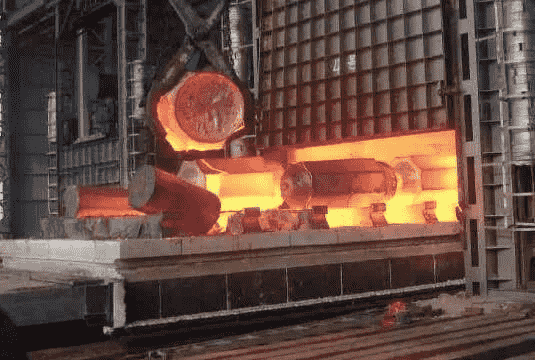
Annealing is a heat treatment process that involves heating metal to a certain temperature and holding it for a period of time, followed by slow cooling. Its main purpose is to eliminate internal stress in the metal, soften the material, and improve its workability or change its microstructure. Annealing mainly includes full annealing, spheroidizing annealing, and stress relief annealing, entre otros.
During metal processing, especially after cold working, internal stress accumulates within the material, which may cause deformation or cracking during subsequent processing. Annealing effectively eliminates these stresses, reduces the material’s hardness, and makes it easier to perform subsequent operations such as cutting, stamping, and forming.
During the annealing process, the material’s grain structure changes, and some hardened structures become more uniform, ultimately giving the metal better plasticity and toughness. For iron-based materials, annealing often results in a finer microstructure, improving its mechanical properties.
Normalizing is a heat treatment process where metal is heated above the critical point and then air-cooled. Unlike annealing, normalizing has a faster cooling rate, resulting in a finer grain structure and increased material strength and hardness. Normalizing is generally applied to steel materials and is particularly effective in improving mechanical properties and material homogeneity.
During normalizing, the austenite phase in the metal transforms into pearlite, and the grain structure is refined, thereby enhancing the material’s strength and hardness while maintaining good toughness. This makes normalizing a fundamental process for many components before further processing, widely used in automotive, mechanical, and construction industries.
Quenching is a process where metal is heated above the critical temperature and then rapidly cooled. The aim is to increase the material’s hardness and strength. Common quenching media include water, oil, and air. During quenching, the austenite phase in steel transforms into martensite, which increases the material’s hardness and wear resistance.
Quenching is typically used for components that require high hardness, resistencia al desgaste, and compressive strength, such as gears, aspectos, and cutting tools. Due to the significant hardening layer formed during quenching, tempering is usually necessary after quenching to prevent brittleness.
Tempering is a necessary process after quenching, involving reheating the quenched metal to a certain temperature and then cooling it. The main purpose of tempering is to adjust hardness and increase toughness, reducing internal stress generated during quenching and preventing material brittleness.
Tempering can achieve different hardness and toughness levels depending on the heating temperature and time. Tempered materials have better toughness and impact resistance compared to quenched materials and are widely used in high-strength components, such as crankshafts and connecting rods in automotive engines.
Carburizing is a process where the surface of metal is heated to an appropriate temperature and treated in a carbon-rich atmosphere, allowing carbon atoms to penetrate the surface and increase the material’s surface hardness and wear resistance. This process is often used for parts that require surface hardening, especially mechanical parts such as gears and shafts. Carburizing processes typically include gas carburizing, liquid carburizing, and solid carburizing. After carburizing treatment, a high-hardness carburized layer forms on the material surface, which not only enhances the wear resistance of the parts but also improves their fatigue resistance. Since the parts retain the toughness of the inner layer after carburizing, this process is widely used in heavy-duty and wear-resistant mechanical components.
Nitriding involves heating the metal surface and placing it in a nitrogen or nitriding atmosphere to form a hard nitride layer on the surface, thereby increasing the material’s hardness, resistencia al desgaste, and corrosion resistance. Nitriding is suitable for high-strength and wear-resistant parts, especially for surface treatment of automotive engine and aircraft components.
Unlike carburizing, the surface of materials after nitriding usually does not require further quenching treatment because the nitride layer itself already has sufficient hardness and corrosion resistance. The nitride layer is generally thin but has extremely high hardness, excellent wear resistance, and oxidation resistance.
Annealing is not limited to high-temperature heating of metal materials but also includes low-temperature annealing. In low-temperature annealing, metals are heated at a relatively low temperature to eliminate internal stresses, reduce surface oxidation, and improve material stability. This process is typically applied to the annealing of non-ferrous metals such as nickel-based alloys and aluminum alloys.
Low-temperature annealing can make the metal structure more uniform, reduce grain coarsening, and improve the material’s ductility and corrosion resistance. En algunos casos, annealing can also optimize the electrical and thermal conductivity of the material. For some precision mechanical parts, low-temperature annealing is a crucial step to ensure long-term stability in use. Conclusión
Heat treatment is an indispensable and crucial process in modern metalworking. By controlling the heating, holding, and cooling processes, it significantly enhances the properties of materials. The seven core processes, including annealing, normalizing, temple, tempering, carburizing, nitriding, and low-temperature annealing, each have their unique characteristics and are suitable for different metal materials and application scenarios. In actual industrial production, the rational selection and application of these heat treatment processes can greatly improve the strength, dureza, resistencia al desgaste, and stability of components, ensuring product quality and service life.
Industrias pesadas Co. de Luoyang Fonyo., Limitado, Fundada en 1998, es un fabricante de piezas de fundición para ferrocarriles.. Nuestra fábrica tiene una superficie de 72.600㎡, con más de 300 empleados, 32 tecnicos, incluido 5 ingenieros superiores, 11 ingenieros asistentes, y 16 tecnicos. Nuestra capacidad de producción es 30,000 toneladas por año. Actualmente, Producimos principalmente fundición., mecanizado, y montaje para locomotora, automotor, trenes de alta velocidad, equipo de minería, energía eólica, etc..
Somos el proveedor de repuestos ferroviarios para CRRC.(incluyendo más de 20 sucursales y subsidiarias de CRRC), Maquinaria de ingeniería Gemac, Grupo Sany, Industrias Pesadas Citic, etc.. Nuestros productos han sido exportados a Rusia., los estados unidos, Alemania, Argentina, Japón, Francia, Sudáfrica, Italia y otros países de todo el mundo..
Información del contacto:
Correo electrónico:[email protected]
Móvil:008615515321683