WeChat コードをスキャンしてご連絡ください
WeChat コードをスキャンしてご連絡ください
お気軽にメールをお送りください。できるだけ早くご返信させていただきます.
心と魂で未来を創る


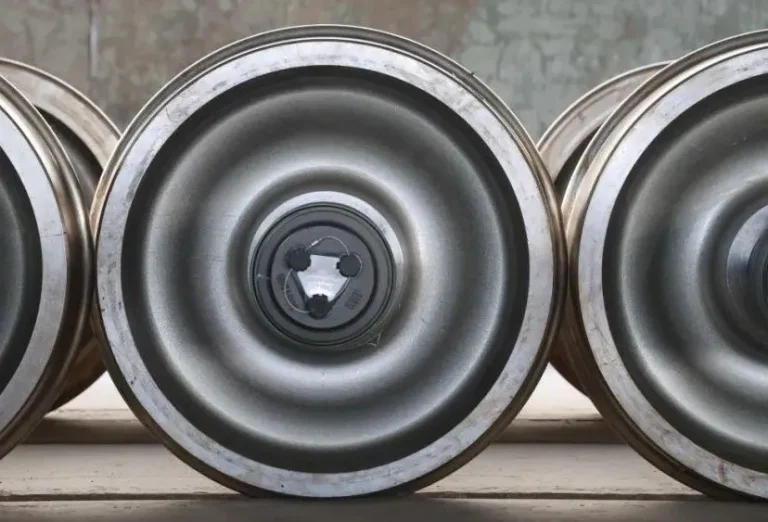
一見して, クレーンの車輪と鉄道の車輪はほぼ同じに見えます.
どちらも鋼製レールの上を走る鋼製車輪です.
どちらも重い荷物を持ちます.
そして遠くから, 交換可能に見えることもあります.
そのため、多くのバイヤーやプロジェクト エンジニアは、最初は次のように考えています。:
「車輪はただの車輪です。」
しかし実際の産業用途では, これら 2 つのホイール タイプは、まったく異なる動作環境向けに設計されています。.
あ クレーンホイール 強い衝撃に耐えられるように作られています, サイドスラスト, 一定の低速負荷. 鉄道の車輪, 一方で, 動的安定性を考慮して設計されています, 疲労耐性, 数百万回の転がり接触サイクル.
外見的には似ているかもしれない, しかし、その背後にあるエンジニアリング哲学はまったく異なります.
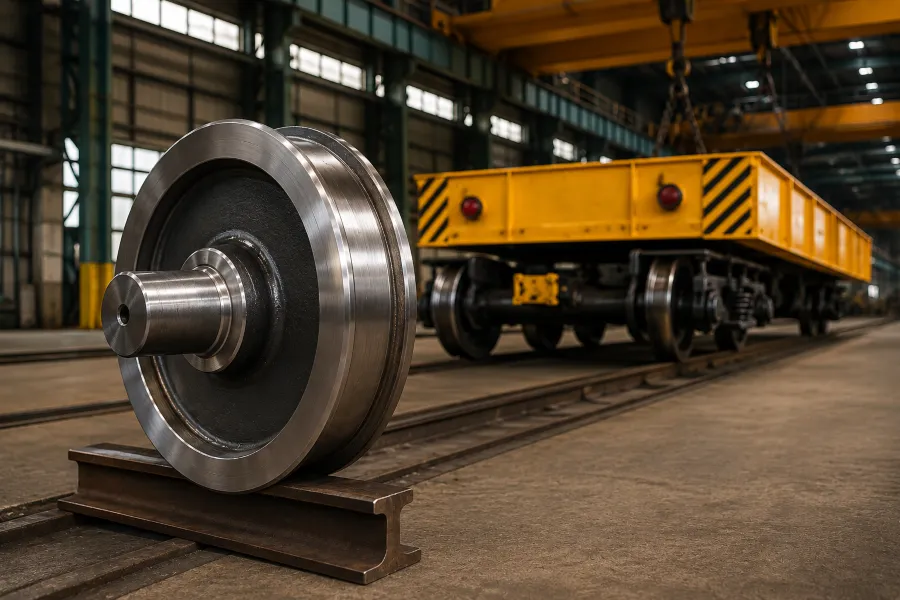
If you walk into a steel plant, port terminal, or heavy industrial workshop, you will quickly understand why crane wheels are built the way they are.
Their working conditions are extremely demanding.
Crane wheels regularly deal with:
Unlike railway vehicles, cranes usually operate over short distances at low speeds. But the pressure concentrated on each wheel can be enormous.
このため, crane wheel failures are often related to:
So the design priority for crane wheels is fairly straightforward:
They must survive heavy industrial abuse.
That is why many crane wheels use thicker flanges, higher surface hardness, and sometimes double-flange structures for better guidance and stability.
In crane applications, durability matters more than speed.
Railway wheels operate in a completely different world.
A railway wheel may travel hundreds of thousands of kilometers during its service life while experiencing millions of rolling contact cycles.
その時点で, the challenge is no longer simple load carrying.
The real concerns become:
Especially at higher speeds, a railway wheel is not just a structural component anymore. It becomes part of the vehicle’s running dynamics.
Even small changes in wheel profile geometry can affect:
This is one reason why railway wheel manufacturing standards are so strict.
The goal is not only to make the wheel strong enough, but also to ensure stable and predictable behavior over a very long operating life.
To non-engineers, crane wheels and railway wheels often appear nearly identical.
But the most important difference is usually hidden in the wheel tread profile.
Crane wheels typically use a flatter tread design. Since cranes move slowly, they benefit from having a larger contact area between the wheel and the rail. This helps distribute heavy loads and reduce surface pressure.
Railway wheels are different.
Their tread profile is intentionally designed with conicity.
This conical shape allows the wheelset to self-center on the rail and maintain stable running behavior at speed.
Without proper conicity, railway vehicles would experience unstable movement and excessive flange contact.
That is why railway wheel profiles are carefully controlled under standards such as:
鉄道システムにおいて, even small profile deviations can influence safety and long-term performance.
The material selection philosophy is also very different between crane wheels and railway wheels.
Crane wheels often prioritize:
Common materials include alloy steels such as 42CrMo or other forged heavy-duty grades. Surface hardening and induction hardening are frequently used to improve durability under high contact stress.
鉄道の車輪, しかし, are designed with a stronger focus on fatigue performance and toughness.
Grades such as ER7, ER8, ER9, and Class C are widely used because railway wheels must resist long-term cyclic stress without cracking.
Instead of maximizing hardness alone, railway wheel heat treatment is carefully balanced to achieve both strength and fatigue resistance.
This becomes especially important under high-speed braking and repeated wheel-rail contact conditions.
Technically, both wheel types roll on rails.
But in practice, they are rarely interchangeable.
A crane wheel used in railway service may suffer from poor dynamic performance and excessive fatigue damage.
A railway wheel used in crane applications may wear rapidly or fail under strong lateral loading conditions.
Even when the dimensions appear similar, the internal engineering targets are completely different.
This is particularly important in railway systems, where wheel performance is directly related to operational safety.
Many railway standards are not only controlling dimensions, だけでなく、:
These are things that cannot be judged simply by looking at the wheel externally.

Crane wheels and railway wheels may look similar from the outside, but they are engineered for entirely different purposes.
Crane wheels are built for heavy industrial punishment at low speeds. Railway wheels are built for long-distance dynamic performance and fatigue resistance.
Understanding this difference is important not only for selecting the correct wheel, but also for reducing maintenance costs, improving operational reliability, and ensuring long-term safety.
洛陽豊洋重工業株式会社, 株式会社. specializes in the manufacturing of forged railway wheels, クレーンの車輪, 産業用レールの車輪, and customized heavy-duty wheel solutions for global railway and industrial applications.
We can manufacture wheels according to international standards including AAR, で 13262, UIC, から, and customer technical drawings.
If you are looking for a reliable manufacturer for crane wheels or railway wheels, you may visit our website www.railwaypart.com and feel free to contact us through our official website.