WeChat コードをスキャンしてご連絡ください
WeChat コードをスキャンしてご連絡ください
お気軽にメールをお送りください。できるだけ早くご返信させていただきます.
心と魂で未来を創る


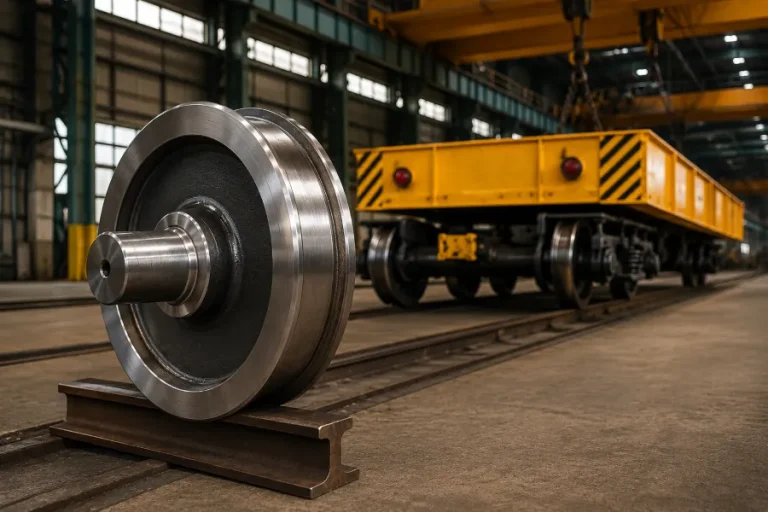
When people hear the phrase 鉄道の車輪 材料, 多くの場合、標準マニュアルからそのまま引用したように聞こえます, 数字がいっぱい, 成績, そして専門用語.
しかし実際のエンジニアリング作業では, material selection rarely starts with a table.
If you’ve ever stood beside an active railway line, the real questions become much more practical:
How heavy is the train?
How fast does it run?
How often does it stop?
And how long is the railway wheels expected to survive before anyone wants to think about replacing it?
エンジニアとして, we choose 鉄道の車輪 materials by answering one simple question first: What kind of life will this wheels live?
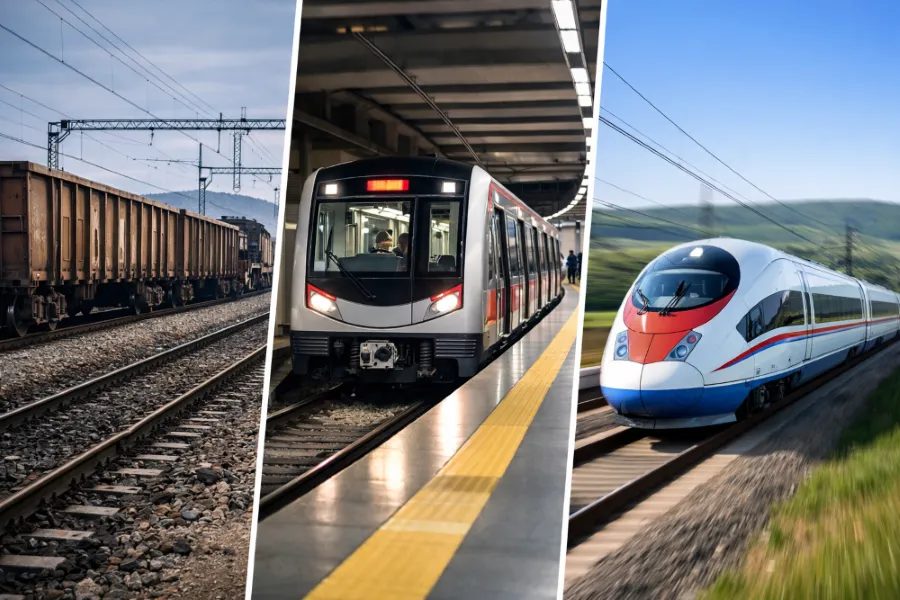
外側から, railway wheels may look similar, but in real work service, they may experience completely different conditions.
Freight wagons work in tough conditions. They carry heavy loads, roll over long distances, and often operate day after day with minimal attention. In many freight networks, the priority is not speed or comfort; it is reliability over a long time. This is why freight wheel material selection often surprises people outside the industry.
We don’t automatically chase the highest hardness or the strongest material on paper. A wheel that is too hard may look excellent in laboratory results, but if it works in real-world use of real word, it can become unforgiving. Small defects grow faster, and maintenance becomes less predictable.
What freight operators really value is stable, predictable wear.
A well-chosen freight wheel material wears steadily; it resists fatigue under repeated loading, and continues to perform even when track conditions are not quite perfect. As we know, from an engineering point of view, durability is not about extremes; it is about balance and consistency over a long service time.
As metro systems, they are almost the opposite of freight lines.
Instead of long, steady runs, metro wheels are constantly starting, 停止, and negotiating tight curves. So braking is frequent, thermal cycles are intense, and ride comfort is also important just as much as mechanical strength.
If a freight wheel is a marathon runner, a metro wheel is doing short sprints all day.
In this environment, railway wheel materials must be carefully chosen. Too much hardness can increase noise and vibration. Too much softness leads to rapid wear. The goal is not to maximize one property, but to keep several working together as follows.
Controlled hardness for stable wear
Sufficient toughness to handle repeated stress
Good surface quality to reduce noise and vibration
Metro operators care about predictability very much. A wheel material that behaves consistently makes maintenance planning easier, and service interruptions ess frequent and shorter, something passengers may never notice, but operators care about every day.
Locomotives and high-speed trains’ operation is different, and there is engineering thought is not the same, too.
より高速な場合, dynamic loads increase rapidly, and small material inconsistencies will matter more. In these applications, engineers focus heavily on some factors such as fracture resistance, material uniformity, and safety margins.
Although high-speed rail represents only a smaller share of the global market, it strongly influences how engineers think about railway wheesl safety. Lessons learned here often shape standards and design thoughts; they are more than just high-speed lines themselves.
One of the most common questions from international customers is:
“Why does this country use a different wheel material than ours?」
The short answer is simple: their railways live a different life.
Operating conditions shape material choices.
There are some factors that all play a role, 例えば, climate, トラックジオメトリ, 軸重, and traffic patterns.
A country with long-distance heavy freight routes will naturally prioritise materials that emphasise wear resistance, as well as fatigue durability. Dense urban networks with tight curves and frequent braking will favour balanced materials, so that they can control noise and surface behaviour.
With time, these practical choices become written into national standards.
Some railway systems depend on frequent inspections and replacement of components very often. While others aim to try to make service life longer between maintenance windows.
These philosophies directly influence material selection. A wheel material optimised for long intervals may not be ideal for a system that prefers early intervention — and vice versa.
This is why copying a material grade from another country, without understanding how the railway is operated, often leads to disappointing results.
Railway standards are not created in isolation.
They are shaped by decades of real service experience — including failures, lessons learned, and improvements made over time. Each requirement in a standard is there for a reason, even if that reason is not immediately obvious from the text itself.
From an engineer’s point of view, a standard is not a starting point.
It is the summary of what has already been learned in service.
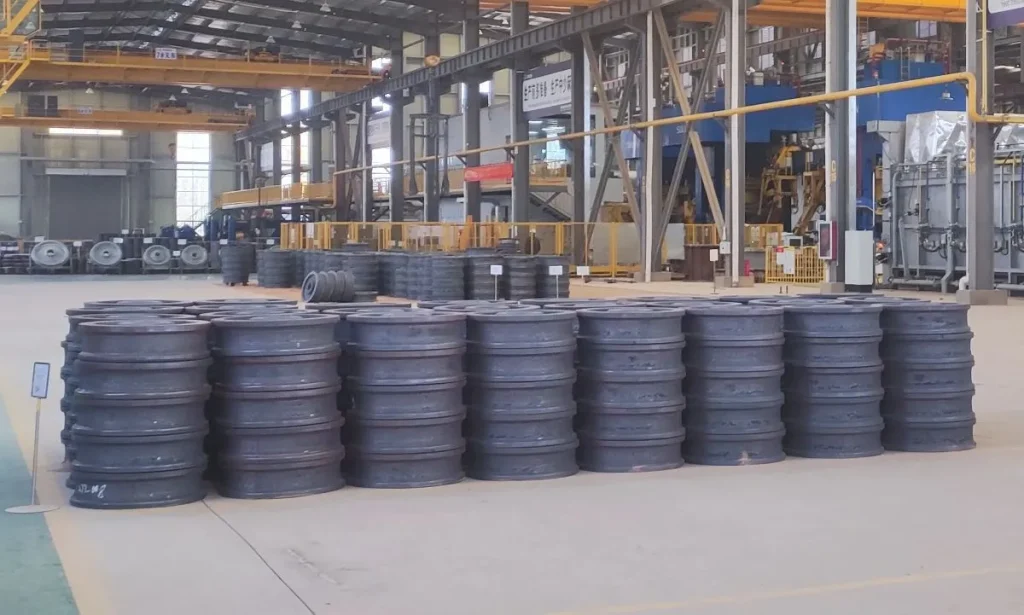
Another point we often overlooked is that railway wheels material performance does not depend on material alone.
The same material grade can perform very differently depending on:
The right processes must support a well-chosen material. When material selection, 熱処理, and inspection are treated as a single system, railway wheels behaviour becomes predictable — and predictability is what railway operators value most.
エンジニアリングの観点から, the most reliable wheel solutions come from understanding the life a wheel will live, not just the numbers written in a specification.
This is exactly how we approach railway wheel manufacturing at 洛陽豊洋重工業株式会社, 株式会社. By integrating material selection, 鋳造, 機械加工, 熱処理, and inspection under one system, we support railway wheel solutions that match real service conditions across different countries and applications.
To learn more about our railway wheel products and manufacturing capabilities, 訪問してください www.railwaypart.com
他の記事にも興味があるかもしれません:
鉄道車輪の熱処理の説明 パフォーマンス向上のために
鉄道車輪の超音波検査 内部検査を理解するために
鉄道車輪の構造と構成 完全なガイドについては
鉄道車輪の外観検査方法表面の欠陥を見つけるために
NDT と非破壊品質検査が鉄道車輪をどのように保証するか ホイールの信頼性を確保し、隠れた欠陥を検出します
鉄道車輪やその他の鉄道部品に関するご要望がございましたら, お願いします お問い合わせ.
当社のエンジニアリングチームが、お客様の動作条件や技術要件について喜んでご相談させていただきます。.