סרוק את קוד WeChat כדי ליצור איתנו קשר
סרוק את קוד WeChat כדי ליצור איתנו קשר
אתם מוזמנים לשלוח לנו מייל ואנו נענה לכם בהקדם האפשרי.
יצירת העתיד בלב ובנשמה


Selecting the correct בריח דג is far more important than many people realize. בעוד שמסילות ואדנים מקבלים לרוב את מירב תשומת הלב, a rail joint is only as reliable as the bolts that hold the fish plates firmly against the rail. A poorly selected or incorrectly installed fish bolt can lead to joint movement, accelerated rail wear, higher maintenance costs, ו, in severe cases, compromise track safety.
As a manufacturer of railway fastening components, we’ve worked with customers on metro systems, רכבות משא, כריית רכבות, and heavy-haul projects around the world. One thing we’ve learned is that many procurement issues don’t come from poor-quality bolts—they come from choosing the wrong specification.
The questions we hear most often include:
This guide answers these questions and explains how to select the right בריח דג based on railway standards, תנאי הפעלה, and engineering requirements.
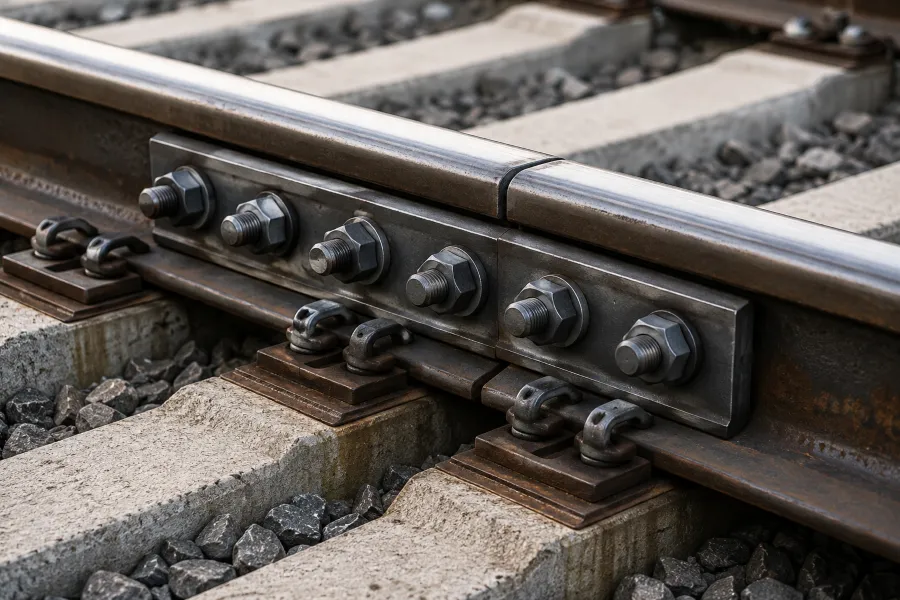
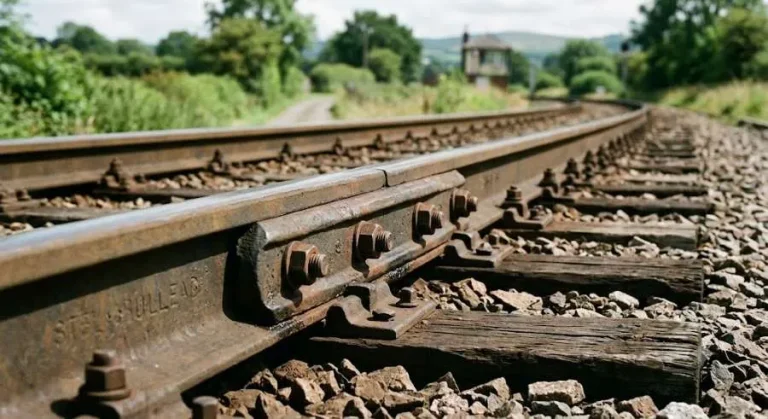
א בריח דג, ידוע גם בשם א railway fish bolt, rail bolt, אוֹ track bolt, is a high-strength fastener used to connect two fish plates (סורגים מפרקים) across a rail joint.
שלא כמו ברגים מבניים רגילים, fish bolts are specifically engineered for railway applications where they must withstand:
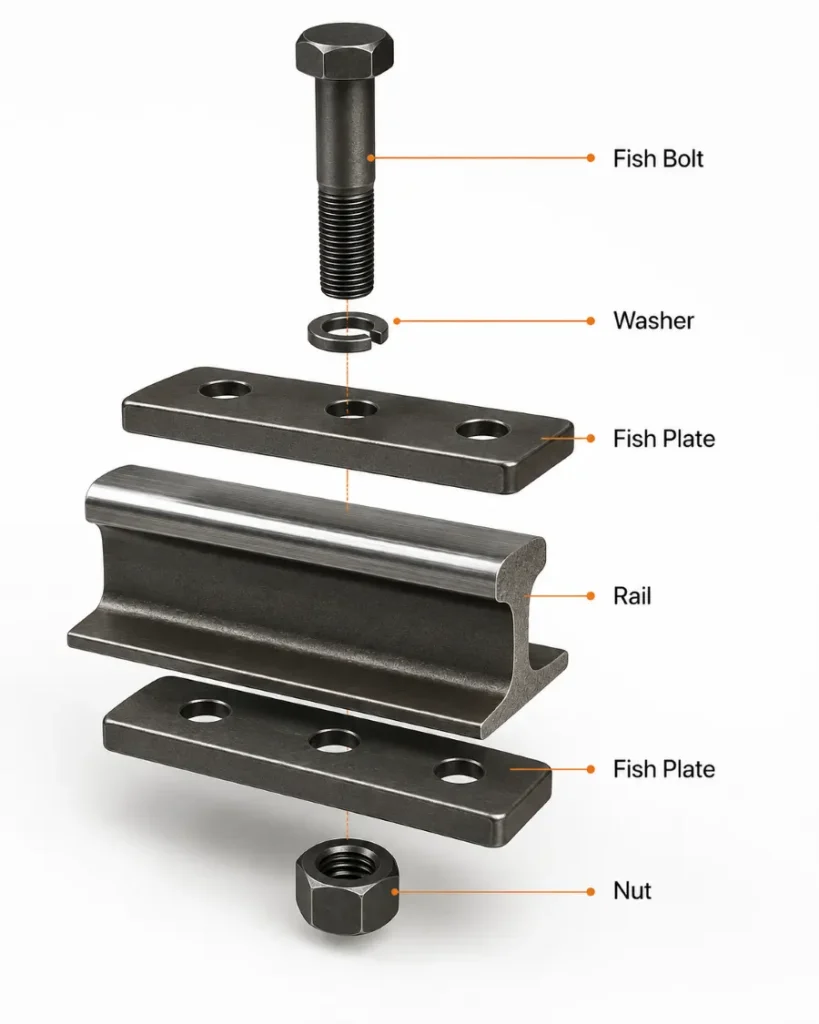
A typical bolted rail joint consists of:
Each component works together to maintain proper clamping force throughout the service life of the track.
Learn how fish plates work in a rail joint in our מדריך לצלחת דגי מסילה.
מנקודת מבט הנדסית, a fish bolt is much more than a simple fastener. Its primary function is to generate sufficient clamping force so that the fish plates and rail act as a single structural assembly under repeated train loads.
When the wrong bolt is selected—or when the correct bolt is improperly installed—the consequences can extend far beyond the fastener itself.
An undersized or low-strength bolt may gradually lose preload under cyclic loading. As the clamping force decreases, the fish plates begin to move slightly with every wheel passing over the joint.
This movement accelerates wear on both the fish plates and the rail, eventually increasing maintenance frequency.
Railway joints experience millions of loading cycles throughout their service life. If the bolt material, thread quality, or heat treatment is inadequate, fatigue cracks often initiate at the thread root.
מסיבה זו, railway fish bolts are almost always manufactured with rolled threads, which provide significantly better fatigue resistance than cut threads.
Replacing a fish bolt is inexpensive.
Replacing worn fish plates, damaged rails, or repairing a failed joint is not.
מהניסיון שלנו, selecting the correct bolt specification during procurement is one of the simplest ways to reduce long-term maintenance costs.
One of the first questions customers ask is:
The answer depends on the railway application rather than simply choosing the highest strength available.
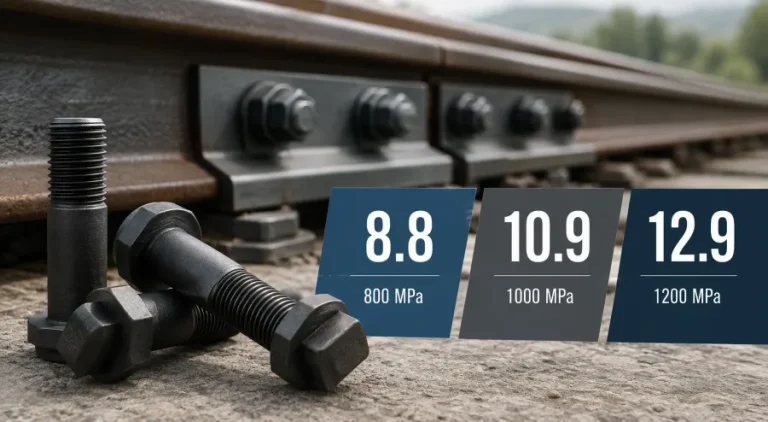
צִיוּן 8.8 is the most widely used strength class for conventional railway applications.
יישומים אופייניים כוללים:
היתרונות כוללים:
For many urban rail systems, צִיוּן 8.8 provides sufficient clamping force when properly installed and maintained.
צִיוּן 10.9 is commonly specified for more demanding railway environments.
יישומים אופייניים כוללים:
Compared with Grade 8.8, צִיוּן 10.9 offers:
From our engineering experience, צִיוּן 10.9 is the preferred choice for most heavy-duty railway projects because it provides an excellent balance between strength, התנגדות לעייפות, and ductility.
Although Grade 12.9 offers even higher tensile strength, it is not automatically the best option.
Higher-strength bolts are generally less ductile and more susceptible to hydrogen embrittlement if improper surface treatments are used.
Unless specifically required by the project specification, צִיוּן 12.9 is rarely necessary for conventional railway joints.
Many customers initially assume that “stronger is always better.” לְמַעֲשֶׂה, selecting the appropriate strength grade based on the operating environment usually delivers better long-term reliability.
| יישום רכבת | Recommended Grade |
| רַכֶּבֶת תַחְתִית & רכבת קלה | צִיוּן 8.8 |
| Conventional Passenger Railway | צִיוּן 8.8 אוֹ 10.9 |
| הובלה כבדה | צִיוּן 10.9 |
| Mining Railway | צִיוּן 10.9 |
| רכבת מהירה | צִיוּן 10.9 |
| Special Heavy-Duty Applications | צִיוּן 12.9 (אם צוין) |
Selecting the correct fish bolt size is just as important as choosing the appropriate strength grade. Even a high-strength bolt cannot perform properly if its diameter or length does not match the fish plate and rail profile.
Unlike general-purpose fasteners, railway fish bolts are designed to fit specific rail standards. The bolt diameter, thread type, head dimensions, and overall length are determined by the rail section and the corresponding fish plate.
Before ordering fish bolts, always confirm:
This information ensures the bolt provides the required preload without excessive clearance or installation issues.
Most railway projects in Europe, אַסְיָה, המזרח התיכון, and Africa follow UIC אוֹ IN תקנים, where metric fasteners are used.
| גודל בורג | Typical Rail Profile | Common Application |
| M22 | S49, UIC 50 | Light rail and metro systems |
| M24 | UIC 54, UIC 60 | רכבות נוסעים ומשא קונבנציונליות |
| M27 | UIC 60 הובלה כבדה | Heavy-haul railways and mining lines |
| M30 | Special rail sections | Heavy industrial applications |
Among these sizes, M24 is by far the most commonly specified railway fish bolt for UIC-standard railways.
For many UIC 54 ו-UIC 60 installations, M24 provides sufficient clamping force while remaining compatible with standard fish plate designs.
אוּלָם, some heavy-haul railways adopt M27 bolts to achieve a higher preload and improved resistance to joint movement under extreme axle loads.
Railways in North America generally follow ארמה תקנים, which use imperial dimensions rather than metric sizes.
| גודל בורג | Typical Rail Section | Common Application |
| 7/8 ב | 100 מִחָדָשׁ | Light-duty railway lines |
| 1 ב | 115 מִחָדָשׁ, 136 מִחָדָשׁ | Standard freight and passenger railways |
| 1-1/8 ב | כָּבֵד 136 מִחָדָשׁ | Heavy-haul freight corridors |
Although the functions are the same, AREMA fish bolts are not interchangeable with UIC fish bolts because their thread systems and dimensions are completely different.
Diameter is only one part of the specification.
Bolt length depends on the total thickness of the assembled joint, לְרַבּוֹת:
A bolt that is too short may not allow full thread engagement.
A bolt that is too long can reduce installation efficiency and increase the exposed thread length, making corrosion more likely over time.
מסיבה זו, railway engineers normally specify both bolt diameter and bolt length together rather than selecting them independently.
One of the most common mistakes we see is selecting a fish bolt before confirming the צלחת דגים.
במציאות, the fish plate determines almost every critical dimension of the bolt.
Each fish plate is designed with a specific hole diameter and spacing. Once the fish plate standard is confirmed, the matching fish bolt specification becomes straightforward.
A typical selection process looks like this:
| פרופיל רכבת | צלחת דגים | Recommended Fish Bolt |
| UIC 54 | UIC 54 צלחת דגים | M24 |
| UIC 60 | UIC 60 צלחת דגים | M24 or M27 |
| 115 מִחָדָשׁ | AREMA Joint Bar | 1 ב |
| 136 מִחָדָשׁ | AREMA Joint Bar | 1 in or 1-1/8 ב |
Rather than asking, “Which fish bolt should I buy?”, a better engineering question is:
This approach minimizes installation problems and ensures the joint achieves the required clamping force.
Looking for matching joint bars? Read our Rail Fish Plate Buying Guide to understand how rail profile, bolt hole pattern, and joint design work together.
It is a common misconception that bolts with the same diameter are interchangeable.
לְדוּגמָה, two M24 fish bolts may have different:
These differences can affect installation, preload, ואמינות לטווח ארוך.
Whenever possible, provide your supplier with the fish plate drawing, rail standard, or existing bolt specification instead of specifying only the diameter.
This allows the manufacturer to verify compatibility before production.
התשובה הקצרה היא no.
Although both systems serve the same purpose, they are designed according to different engineering standards.
The main differences include:
| פָּרִיט | UIC / IN | ארמה |
| Thread System | Metric | UNC |
| מידות | Metric | Imperial |
| Head Type | Hexagonal | Heavy Hex or Square |
| Rail Standards | UIC Rail Profiles | RE Rail Sections |
Attempting to install a UIC fish bolt into an AREMA fish plate—or vice versa—can result in improper thread engagement, incorrect preload, and installation failure.
If your railway project follows UIC standards, all fastening components—including fish plates, ברגים, אֱגוֹזִים, and washers—should follow the same standard.
The same principle applies to AREMA systems.
As a rule of thumb:
Never mix fastening systems within the same rail joint.
Maintaining compatibility across all components is the safest and most reliable approach.
The service life of a בריח דג depends not only on its strength grade but also on its resistance to corrosion.
Railway fasteners are exposed to rain, שֶׁלֶג, coastal salt spray, industrial pollution, and repeated wet-dry cycles throughout their service life. Without appropriate corrosion protection, rust can reduce thread performance, make future maintenance difficult, and eventually affect the integrity of the rail joint.
The most suitable coating depends on the operating environment rather than simply selecting the thickest protective layer.
Black oxide is one of the simplest surface treatments used for steel fasteners.
It provides a uniform appearance and offers light corrosion protection when combined with protective oil.
יישומים אופייניים כוללים:
Because the coating is extremely thin, black oxide should not be considered a long-term corrosion solution for outdoor railway projects.
Electroplated zinc is widely used because it offers a good balance between corrosion resistance and cost.
It is commonly specified for:
אוּלָם, engineers should pay particular attention when using electroplated coatings on high-strength bolts.
During the electroplating process, hydrogen may be introduced into the steel. If it is not properly removed through post-plating baking, צִיוּן 10.9 and Grade 12.9 ברגי דגים can become susceptible to hydrogen embrittlement, which may lead to delayed brittle failure under service loads.
Hot-dip galvanizing provides a much thicker zinc coating than electroplating.
It is often selected for:
The thicker coating significantly improves corrosion resistance and extends service life in aggressive environments.
אוּלָם, because the coating adds considerable thickness, both the bolt and nut threads must be manufactured specifically for hot-dip galvanizing to ensure proper assembly.
Modern non-electrolytic coatings such as Geomet ו דאקרומט have become increasingly popular for high-strength railway fasteners.
These coatings offer several advantages:
For many heavy-haul and high-speed railway projects, these coating systems have become the preferred solution for צִיוּן 10.9 ברגי דגים.
מהניסיון שלנו, they provide an excellent combination of durability and installation reliability, particularly where long maintenance intervals are required.
Sherardizing is a thermal diffusion zinc process that creates a uniform zinc-iron alloy layer on the bolt surface.
Compared with conventional galvanizing, it offers:
Although less common than hot-dip galvanizing, it is a practical option for railway fasteners operating in corrosive environments.
| טיפול פני השטח | Corrosion Resistance | Best Application |
| תחמוצת שחורה | נָמוּך | Indoor storage, temporary protection |
| Zinc Electroplating | בֵּינוֹנִי | Conventional railway projects |
| Hot-Dip Galvanizing | גָבוֹהַ | Coastal and tropical railways |
| Geomet / דאקרומט | Very High | Heavy-haul and high-strength bolts |
| שרארדיזציה | גָבוֹהַ | Corrosive environments requiring uniform coating |
There is no single coating suitable for every railway project.
במקום זאת, we recommend selecting the coating based on the operating environment and bolt strength.
As a general guideline:
Selecting the appropriate coating at the procurement stage can significantly reduce future maintenance costs and extend the service life of the entire rail joint.
After supplying railway fastening components for customers in different countries, we’ve noticed that most purchasing problems are not caused by manufacturing defects. במקום זאת, they usually result from incorrect specifications during the procurement stage.
Here are some of the most common mistakes—and how to avoid them.
Many buyers assume that a Grade 12.9 fish bolt is always better than Grade 10.9.
במציאות, higher strength does not necessarily mean better performance.
צִיוּן 12.9 bolts are less ductile and require stricter control of heat treatment and surface coating. For most heavy-haul, הוֹבָלָה, and passenger railway applications, צִיוּן 10.9 provides a more balanced combination of strength, התנגדות לעייפות, ואמינות לטווח ארוך.
A request such as “We need M24 fish bolts” does not provide enough information for manufacturing.
Different railway systems may use the same diameter but require different:
Whenever possible, provide the rail profile, fish plate drawing, or project standard instead of only the bolt diameter.
Although UIC and AREMA fish bolts perform the same function, they are designed according to different standards.
Mixing metric and imperial components can lead to installation difficulties, improper preload, and unnecessary replacement costs.
Always use fish bolts, אֱגוֹזִים, washers, and fish plates that comply with the same railway standard.
Some buyers focus only on the bolt material and overlook the surface coating.
אוּלָם, corrosion is one of the leading causes of maintenance issues in rail joints, especially in coastal regions, נמלים, כריית רכבות, and humid climates.
Choosing the correct coating at the beginning of a project is far less expensive than replacing corroded fasteners later.
From the outside, rolled threads and cut threads may appear similar.
Their fatigue performance, אוּלָם, is very different.
Rolled threads preserve the grain flow of the steel and introduce beneficial compressive stresses at the thread root, making them far more resistant to fatigue cracking.
For safety-critical railway applications, thread rolling should always be preferred over thread cutting.
Fish bolts are only one part of a complete fastening system. Learn how קליפס מסילה maintain rail clamping force and work together with ברגי דגים and fish plates in modern railway track systems.
A railway בריח דג is expected to remain secure under millions of load cycles during its service life. Achieving that level of reliability depends not only on the material grade but also on consistent manufacturing and rigorous quality control.
בְּ Luoyang Fonyo Heavy Industries Co., בע"מ., every production stage is designed to ensure that fish bolts meet the mechanical performance and dimensional accuracy required by railway standards such as EN, UIC, and AREMA.
Rather than relying on final inspection alone, we control quality throughout the entire manufacturing process.
The manufacturing process begins with certified steel from qualified suppliers.
Before production starts, the chemical composition of each batch is verified using a spectrometer to confirm that the material meets the required specification.
This step helps ensure consistent mechanical properties after heat treatment and reduces the risk of material variation between production batches.
The bolt head is formed through hot forging rather than machining.
Hot forging improves grain flow inside the steel, resulting in higher strength and better impact resistance compared with bolts produced from machined bar stock.
The forging process also produces a more accurate bolt head and minimizes material waste.
Heat treatment is one of the most critical steps in manufacturing railway fish bolts.
Temperature, זמן החזקה, and cooling rate are carefully controlled to achieve the required mechanical properties for each strength grade.
Proper heat treatment provides the balance of:
that railway applications demand.
One feature that distinguishes railway-grade fish bolts from ordinary industrial fasteners is the use of rolled threads.
Unlike cut threads, thread rolling forms the thread profile by cold working the steel.
This process preserves the natural grain flow and introduces compressive residual stress around the thread root, significantly improving fatigue performance under repeated railway loading.
For components subjected to millions of load cycles, rolled threads have become the industry standard.
Every production batch undergoes routine inspection before shipment.
Depending on customer requirements, testing may include:
Material certificates and inspection reports can also be provided to support project documentation and quality assurance requirements.
After inspection, fish bolts receive the specified surface treatment, such as zinc plating, hot-dip galvanizing, or Geomet coating.
Finished bolts are then packaged together with matching nuts and washers to simplify installation on site and reduce the possibility of component mismatch.
Raw Material → Hot Forging → Heat Treatment → Thread Rolling → Inspection → Packaging
Use real factory photos where possible instead of icons. Original manufacturing images strengthen EEAT and help differentiate the article from generic industry content.
Even the highest-quality fish bolt cannot perform as intended if it is installed incorrectly.
Proper installation ensures that the fish plates remain firmly clamped and that the rail joint maintains sufficient preload throughout its service life.
The following practices are recommended for most railway projects.
Each bolt size and strength grade has a recommended tightening torque.
Applying too little torque may allow the joint to loosen under vibration, while excessive torque can overstress the bolt or damage the threads.
Always follow the torque values specified by the applicable railway standard or project documentation.
For rail joints using four or six bolts, tightening should be carried out gradually in a balanced sequence rather than fully tightening one bolt at a time.
This helps distribute the clamping force evenly across the fish plates and minimizes uneven stress within the joint.
During the first period of operation, slight settlement may occur as the contact surfaces between the fish plates, מַעֲקֶה, and fasteners stabilize.
Many railway maintenance procedures therefore recommend checking the bolt preload after the line has been placed into service.
Regular inspections also help identify loose fasteners before they develop into larger maintenance issues.
A fish bolt assembly should always consist of compatible components manufactured to the same standard.
Mixing bolts, אֱגוֹזִים, or washers from different systems may result in incorrect thread engagement or uneven preload.
When replacing fish bolts during maintenance, it is good practice to replace the complete assembly rather than individual components.
Internal Link: Fish bolts work together with קליפס מסילה, רפידות מסילה, ו צלחות דגים to form a complete railway fastening system. Understanding how these components interact helps improve joint reliability and reduce maintenance requirements.
A fish bolt is specifically designed for railway rail joints. Compared with general-purpose structural bolts, it is manufactured to railway standards, uses higher-strength materials, and is designed to withstand continuous vibration, טעינת השפעה, and fatigue stresses. It is not recommended to replace a railway fish bolt with an ordinary commercial bolt.
The number of fish bolts depends on the fish plate design.
A standard 4-hole fish plate uses four fish bolts, while a 6-hole fish plate uses six fish bolts.
Each bolt passes through both fish plates and the rail web, securing the complete joint as a single assembly.
In most railway maintenance applications, reusing fish bolts is not recommended.
After long-term service and repeated loading, both the bolt and nut may experience wear that affects the ability to maintain the required preload.
Replacing the complete bolt assembly during maintenance provides greater reliability and helps reduce the risk of future joint loosening.
For most freight, נוֹסֵעַ, רַכֶּבֶת תַחְתִית, and heavy-haul railway projects, צִיוּן 10.9 provides an excellent balance between strength, קְשִׁיחוּת, והתנגדות לעייפות.
צִיוּן 12.9 is generally reserved for special engineering applications where exceptionally high strength is specified.
Choosing the highest grade is not always the best engineering solution.
לֹא.
UIC and AREMA fastening systems use different dimensions, thread standards, and component specifications.
To ensure proper installation and long-term performance, all components within a rail joint should comply with the same railway standard.
There is no universal answer because the best coating depends on the service environment.
For inland railways, zinc electroplating is often sufficient.
For coastal, כְּרִיָה, or high-humidity environments, hot-dip galvanizing, שרארדיזציה, or Geomet coatings generally provide better long-term corrosion protection.
Although a fish bolt is one of the smallest components in a railway fastening system, it plays a critical role in maintaining the integrity of every rail joint.
Selecting the correct bolt involves much more than choosing a diameter or strength grade. פרופיל רכבת, fish plate design, תנאי הפעלה, corrosion environment, and applicable railway standards all influence the final specification.
Understanding these factors at the procurement stage helps reduce installation problems, extend maintenance intervals, and improve the long-term reliability of the track.
בְּ Luoyang Fonyo Heavy Industries Co., בע"מ., we manufacture railway fish bolts, צלחות דגים, תפסי מסילה, and other railway fastening components for projects worldwide. Whether you require standard products or customized fasteners for a specific railway system, our engineering team can help you identify the most suitable solution based on your drawings, מפרט טכני, or project requirements.
If you’re planning a railway project or sourcing replacement fish bolts, אל תהסס לפנות אלינו. We’ll be happy to recommend the appropriate fish bolt size, דרגת כוח, surface coating, and matching fastening components for your application.
בנוסף לצלחות דגים, אנחנו גם מספקים ברגי דגים, תפסי מסילה, רפידות מסילה, אדני רכבת, ורכיבי מסילת רכבת אחרים.
צור איתנו קשר עוד היום לתמיכה טכנית, ייעוץ הנדסי, וציטוטים.