



Scan the WeChat code to contact us
Scan the WeChat code to contact us
Feel free to send us a email and we will reply to you as soon as possible.
Creating the future with heart and soul


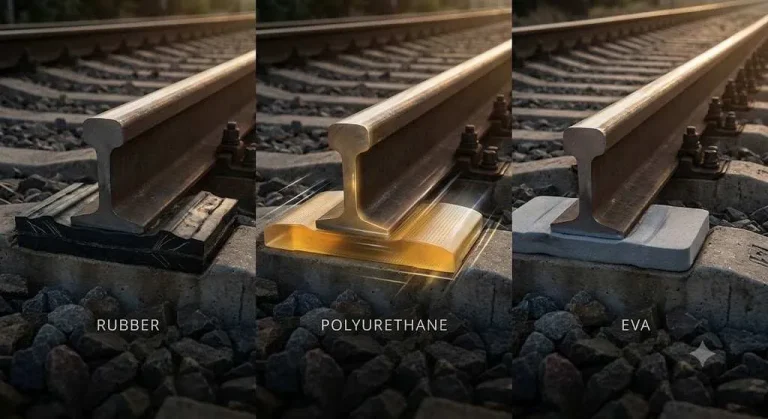
If you are specifying rail pad for a heavy haul line, the short answer is this: there is no single “best” material, but for axle loads of 25 t and above the…
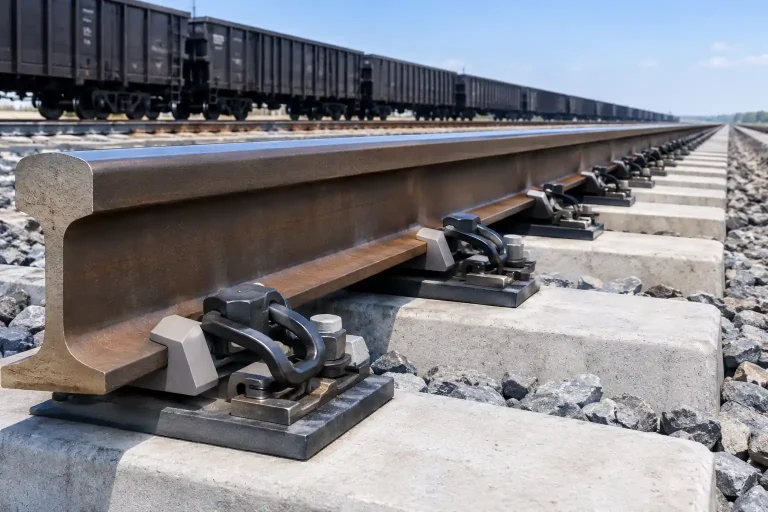
Railway fasteners for heavy haul railways are not just bigger versions of the clips on a passenger line. They are specified around a different problem entirely: not vibration at speed, but sustained…
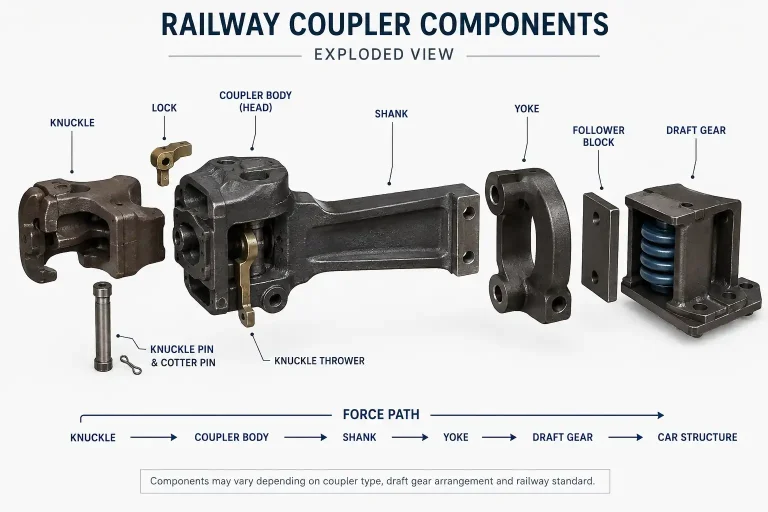
A railway coupler is not one part. It is a chain of cast steel components, each with one job, that together carry every tonne of force between two railcars. The main railway…
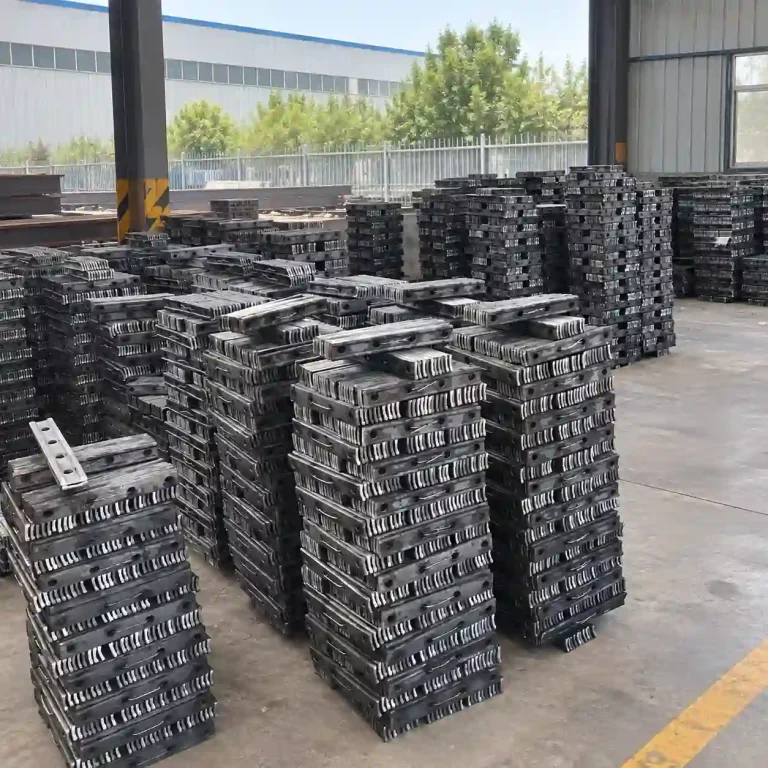
Sourcing railway fastening components from China comes down to five things done in the right order: write a complete RFQ, understand the MOQ, lock the lead time, agree payment terms, and spec…
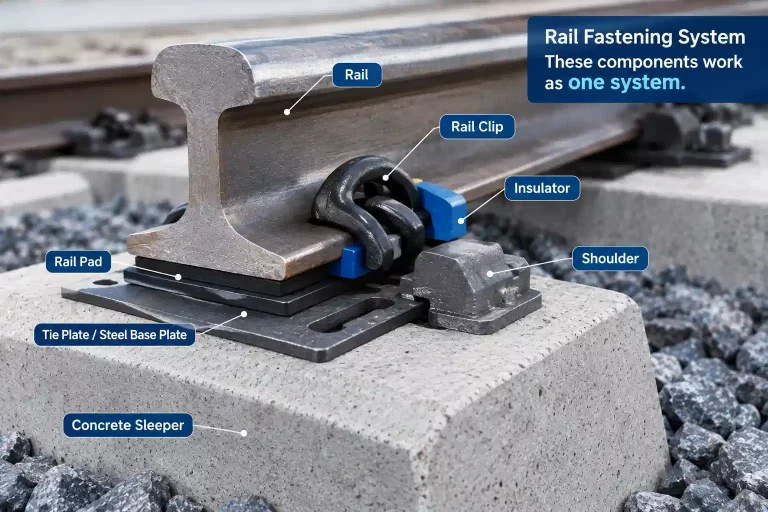
A rail fastening system is the set of components that holds the rail down to the sleeper and keeps it in gauge. It looks like a collection of small steel and plastic…
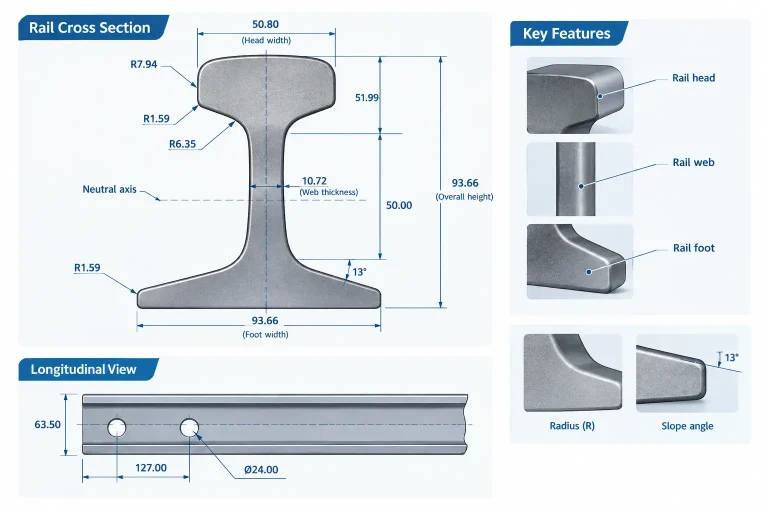
A railway rail may look simple from the outside: a long steel section with a wide bottom, a narrow middle, and a rounded top. But once you look at a railway rail…

A railway coupler connects two vehicles through a knuckle-and-lock mechanism. When two cars come together, the knuckles interlock and a lock drops into place behind them by gravity, holding the connection closed.…

Rail fish plate dimensions are always matched to the rail profile they join, not chosen as a standalone size. A fish plate is specified by its length, the number and diameter of…
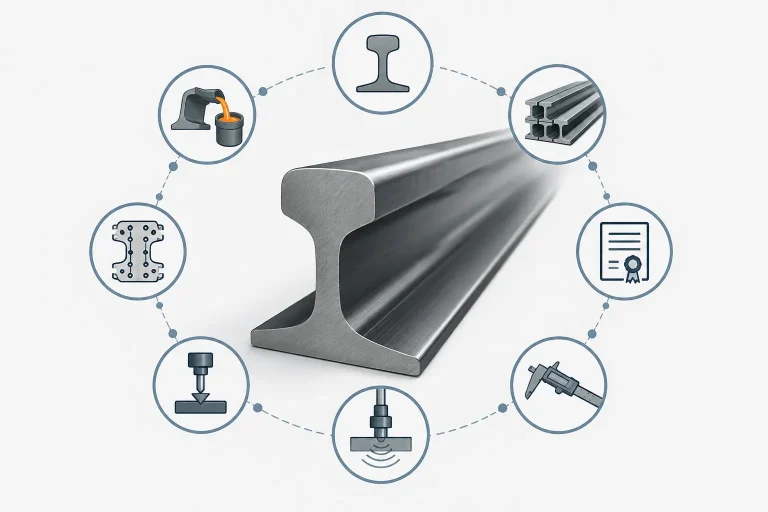
A railway rail specification is more than a weight and a steel grade. Before ordering, a buyer should verify the rail section and grade against the applicable standard, check that the material…
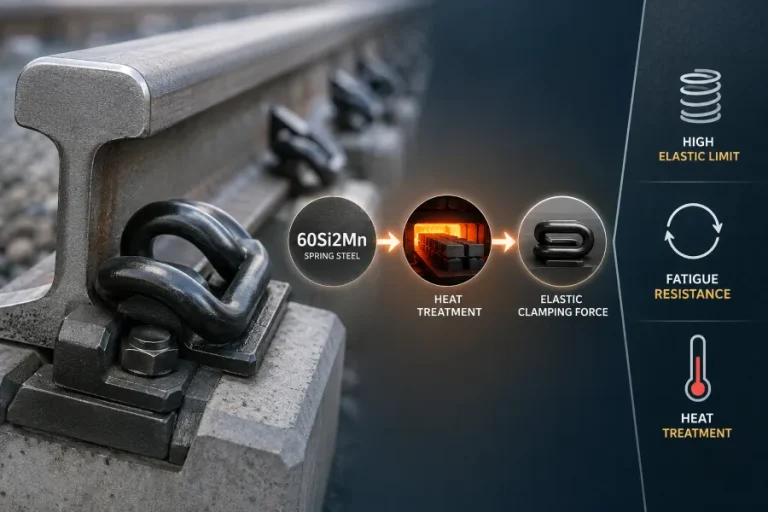
60Si2Mn is used for rail clips because it is a silicon-manganese spring steel with a high elastic limit and good fatigue resistance. After quenching and tempering, it forms a uniform tempered microstructure…
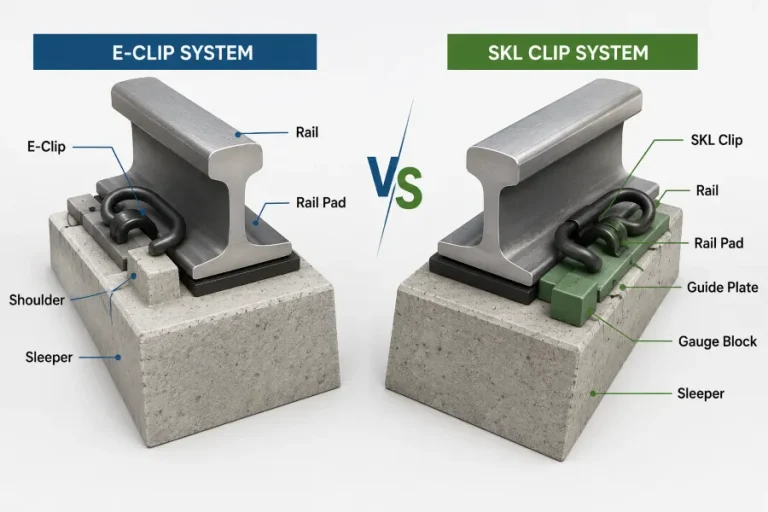
E-clips and SKL clips are both spring steel rail fastening clips used to hold the rail against the sleeper, but they belong to different fastening system families. E-clips use a compact asymmetric…
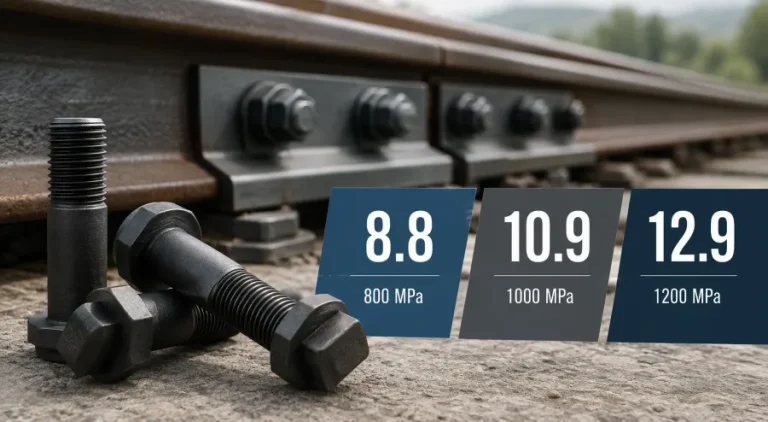
When you buy railway fish bolts or other high-strength fasteners, you will often see markings such as 8.8, 10.9, or 12.9 on the drawing, quotation, or inspection certificate. At first glance, the…