Scan the WeChat code to contact us
Scan the WeChat code to contact us
Feel free to send us a email and we will reply to you as soon as possible.
Creating the future with heart and soul


A certificate tells you a sample passed. It does not tell you the batch will. Choose a railway track supplier by looking for evidence of control, not evidence of compliance, and weigh it against replacement cost rather than purchase price.
Choosing a railway track supplier feels harder than it should be. The quotes all list the same standards, the photos all show clean factories, and every sales person promises the same thing. Then the shipment arrives and two bundles from the same order behave differently, and you find out the hard way that a certificate and a product are not the same object.
That gap between the paper and the part is where the whole decision lives. The rest of this article is about closing it.

Here is the thing nobody tells you about quality documents. A mill certificate, a test report, a dimensional inspection record. Each of them confirms that one sample met one requirement on one day. None of them tell you what the other nine thousand parts in the order look like.
Think about it as a distribution. A supplier whose hardness readings cluster tight around the middle of the spec is selling a different product from one whose readings scatter across the entire allowed band, even though both pass the same test. Both are “compliant.” Only one is controlled.
So when I review a supplier’s documents, I do not start with the tensile strength. I start by checking whether the heat number on the certificate matches the marking on the part, and whether the heat treatment record shows actual furnace data rather than a sentence saying treatment was performed. Those two checks separate a factory that controls its process from one that documents it.
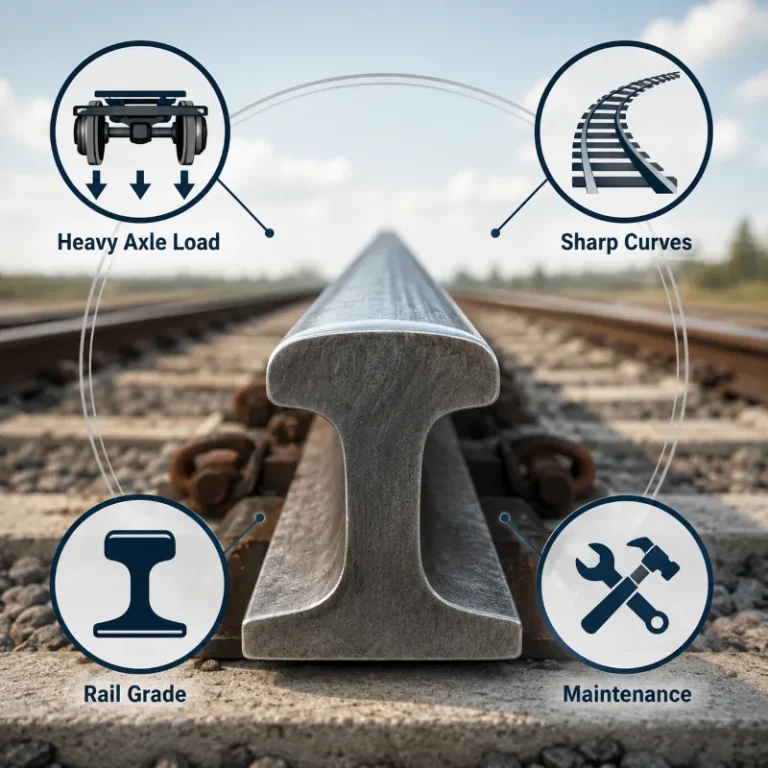
Before you judge suppliers, know what you are judging. The service life of a railway track component is not set by bulk strength. It is set by four things the buyer rarely sees:
A rail is under repeated load from the first day it is laid. Fatigue is governed by defect size and stress concentration, not by average strength. That is why a small jump in soundness can buy a disproportionate jump in cycles to failure. It is also why the cheapest quote is usually the most expensive one, once you price in the renewal it forces early.
This is where a lot of buyers stop, and I would be cautious about that. A wall of logos is not a quality system.
The certifications that carry weight are the ones tied to your market and your standard:
What I look for is not the certificate itself. I look for whether the system behind it is one system. A supplier who forges, rolls, machines, and heat-treats under a single quality system beats a chain of subcontractors every time, because the chain is where traceability quietly dies.
I have a single question that tells me more than a folder of documents. It is this:
“Can you make this same part to this same drawing fifteen years from now?”
Railway Track outlives procurement cycles. A component you cannot re-order to the same drawing becomes a maintenance problem long before it wears out. If a supplier hesitates, or tells you the drawing “can probably be matched,” that is your answer. A real manufacturer keeps the tooling, the process records, and the drawing revisions on file, because repeat supply on the same drawing is what proves process stability over time.
It sounds obvious, but I have lost count of how many buyers skip it because they were focused on the price per tonne.
Not every buyer can fly to the factory. You can still get most of the signal from the paperwork, if you know what to ask for. If you are buying across borders, the paper trail matters even more, which is why we wrote a separate guide on how to source railway fasteners from China.
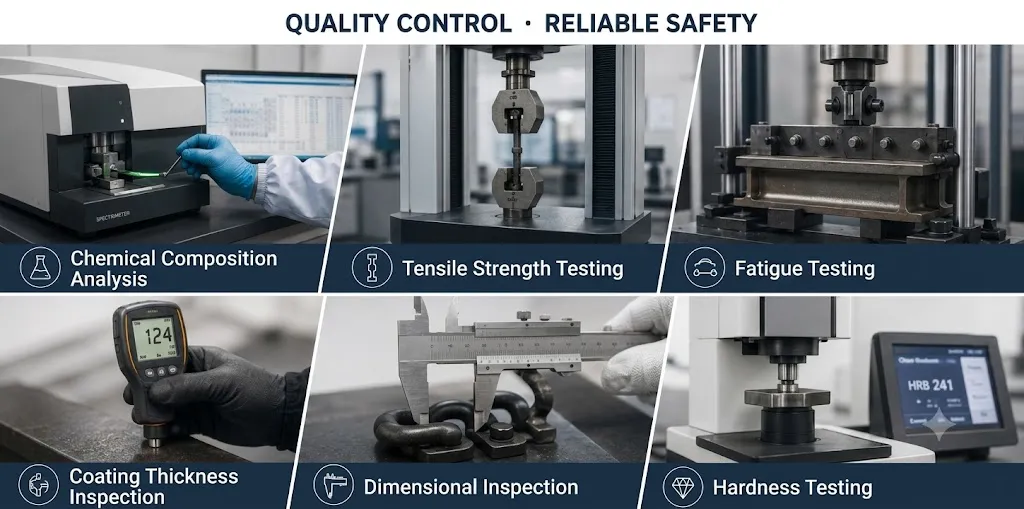
Ask for the things that indicate control:
A certificate you cannot tie to a specific heat or batch is a decoration. I would rather see a plain spreadsheet of furnace data than a glossy brochure of logos.
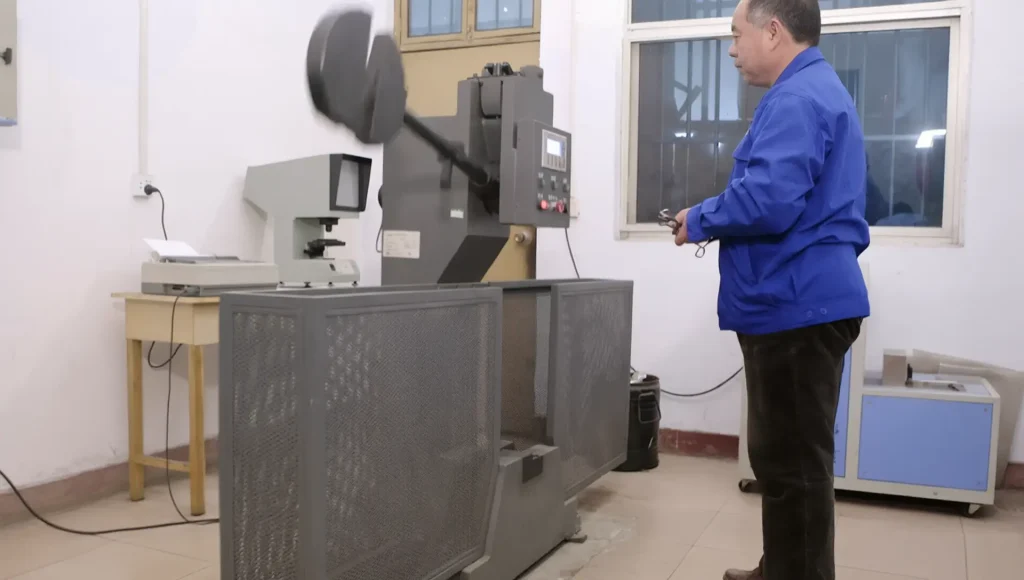
If you can visit, do not spend the day in the showroom. The audit questions that matter are boring:
None of these are on the standard checklist. All of them separate a factory that controls from one that performs.
A price that only makes sense if a process step was skipped is not a bargain. It is a warning.
If a fish bolt quote comes in twenty percent under everyone else, ask yourself which step disappeared. Was it the heat treatment? The reaming? The traceability paperwork? Something had to go, because the steel and the energy cost roughly the same for every factory.
This connects to the choice between purchase price and replacement cost. On railway track components, the material is usually a minor part of the total. Labour, possession time, and traffic disruption dominate. A component that lasts twice as long avoids that entire cost twice over. Judge price against that, not against the invoice.
For the procurement side, the questions are the same, framed as commercial terms. I would put these in front of a supplier before the PO:
A supplier who answers these cleanly is telling you they have done this before. A supplier who blurs them is telling you something else.
The first order is the audition, not the award. What you learn in the first year matters more than what the first shipment looked like:
One more thing worth stating plainly. The supplier who is cheapest this year and the supplier who can still supply you in fifteen years are usually not the same company. If you are buying for railway track that has to outlive several procurement cycles, choose for the long horizon.
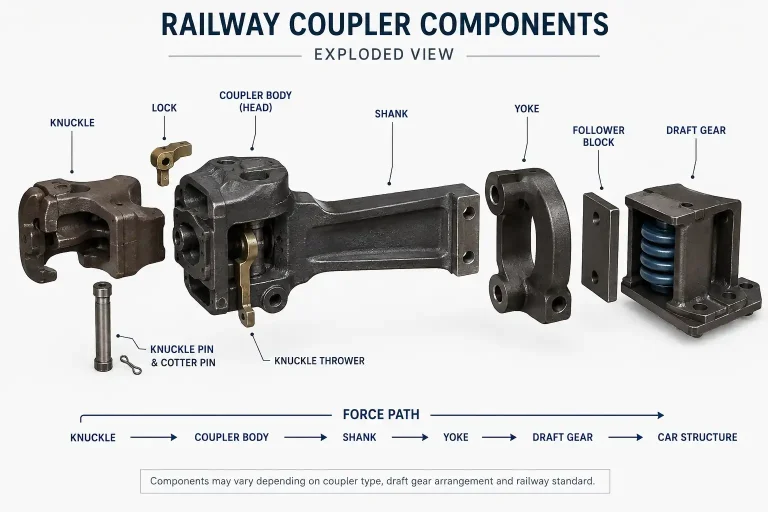
At FONYO, we manufacture fish plates, fish bolts, elastic rail clips, rail pads, and railway casting products alongside rail and coupler components, and we quote against the applicable standard with full material traceability, not against a catalog photo. Whether you are evaluating a new supplier or auditing one you already have, send us your drawing and your standard, and we will tell you exactly what we can hold, and what we cannot.
Does a test certificate guarantee quality?
No. It confirms a sample met a requirement on a given day. It says nothing about consistency across the production run. Process control records and heat-wise traceability are what indicate the whole batch behaves like the sample.
Is a wider product range always an advantage?
Not necessarily. Depth matters more than width. A supplier who makes three components extremely well under one quality system often beats one who lists twenty and subcontracts half of them.
How can a buyer verify quality without visiting the factory?
Ask for heat-wise traceability, actual furnace data, NDT scope and acceptance criteria, and batch-wide dimensional records. If the paperwork ties to specific heats and parts, you have most of what a visit would tell you.
Are forged components always better than cast?
No. They suit different geometries. Forging aligns grain flow with the stress path, which suits high-fatigue parts like clips and bolts. Casting handles complex shapes like crossings and coupler parts. Quality within each method matters more than the choice between them.
Why do drilled bolt holes outperform punched ones?
Punching leaves a work-hardened, micro-cracked edge that acts as a fatigue initiation site. Drilling and reaming produces a cleaner surface. Bolt holes are where plates and joint components usually crack, so this detail has outsized importance.
How should component quality be weighed against price?
Against replacement cost, not purchase cost. On track, material is a minor part of the total; labour, possession time, and traffic disruption dominate. A longer-lived component avoids that entire cost repeatedly.
What is the single most revealing question to ask a supplier?
Whether they can make the same part to the same drawing fifteen years from now. Track outlives procurement cycles, and a component you cannot re-order becomes a maintenance problem long before it wears out.