Scan the WeChat code to contact us
Scan the WeChat code to contact us
Feel free to send us a email and we will reply to you as soon as possible.
Creating the future with heart and soul


Sourcing railway fastening components from China comes down to five things done in the right order: write a complete RFQ, understand the MOQ, lock the lead time, agree payment terms, and spec the export packaging. Get those five right and the rest of the transaction is routine. Get any one of them wrong and you spend weeks unpicking a shipment you already paid for.
This guide covers each of the five, based on how the trade actually works rather than how the marketing pages describe it. It is written for a buyer who has to order rail clips, fish plates and fish bolts, not for someone browsing a catalogue.
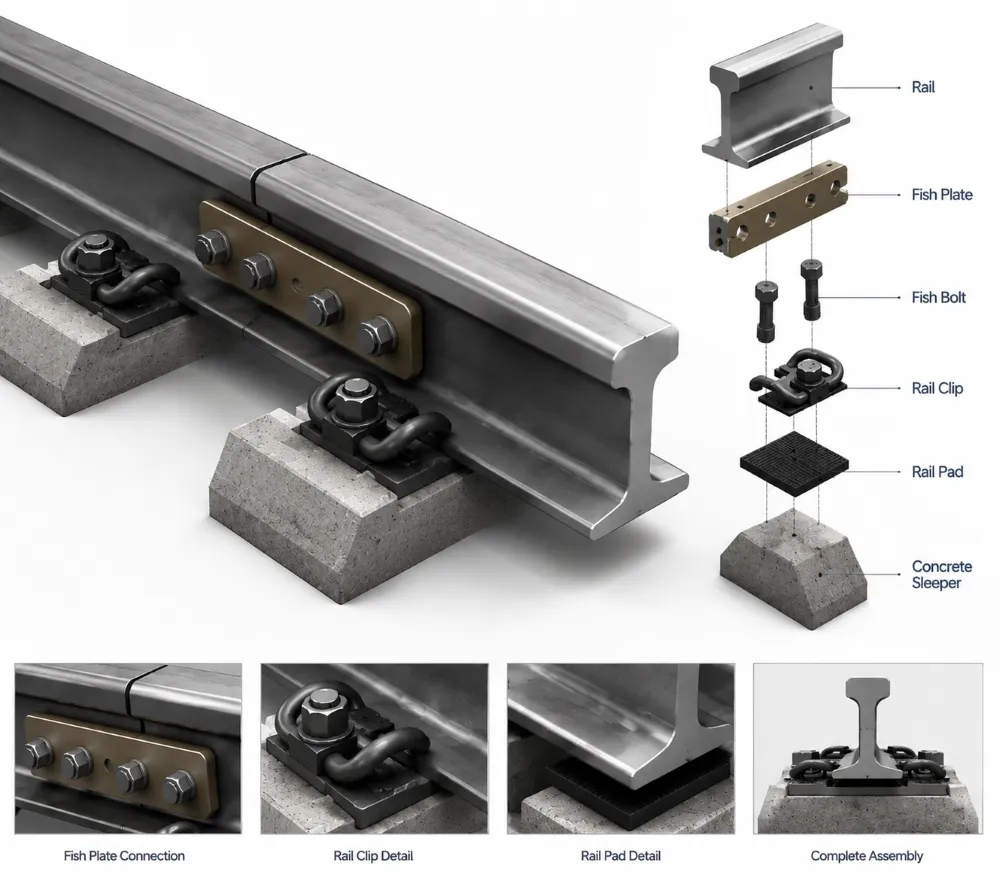
Most delayed quotations are not the supplier’s fault. They are the buyer’s. A factory cannot quote a railway fastening component from a one-line email that says “please send price for rail clips.”
A quote for these fasteners is matched to the rail they sit on, so the supplier needs more than a part number before it can put a price on the page.
A quote-ready RFQ needs five pieces of information:
If you send those five, a serious factory quotes within a few days. If you send one line, expect a slow back-and-forth that costs more time than it saves.
MOQ is the most misunderstood number in the whole sourcing conversation. It is not a price, and it is not a penalty. It is the smallest order the factory can run without losing money on setup.
For railway fastening components, MOQ splits roughly into three tiers, and this is a working classification rather than an official taxonomy:
| Supplier type | Typical MOQ | What you are really paying for |
| Small workshop or trading desk | 1–5 tonnes, or a few hundred pieces | Flexibility, higher per-unit price |
| Mid-size specialist | 5–20 tonnes | Setup amortised over a real production run |
| Large integrated mill | 20+ tonnes | Lowest unit cost, but only worth it at volume |
The thing nobody tells you: below about 10 tonnes, a first order carries a setup premium. The forging dies, the machining fixtures, the first-article inspection all have to be paid once, and on a small order that cost lands on a handful of parts instead of a container load. That is why the per-unit price on a 2-tonne trial order looks high and the per-unit price on a 20-tonne order looks like a bargain. It is the same cost, spread differently.
For first-time buyers, I would rather pay a slightly higher unit price on a small trial order and prove the supplier, than commit to a full container and discover the problem on delivery.
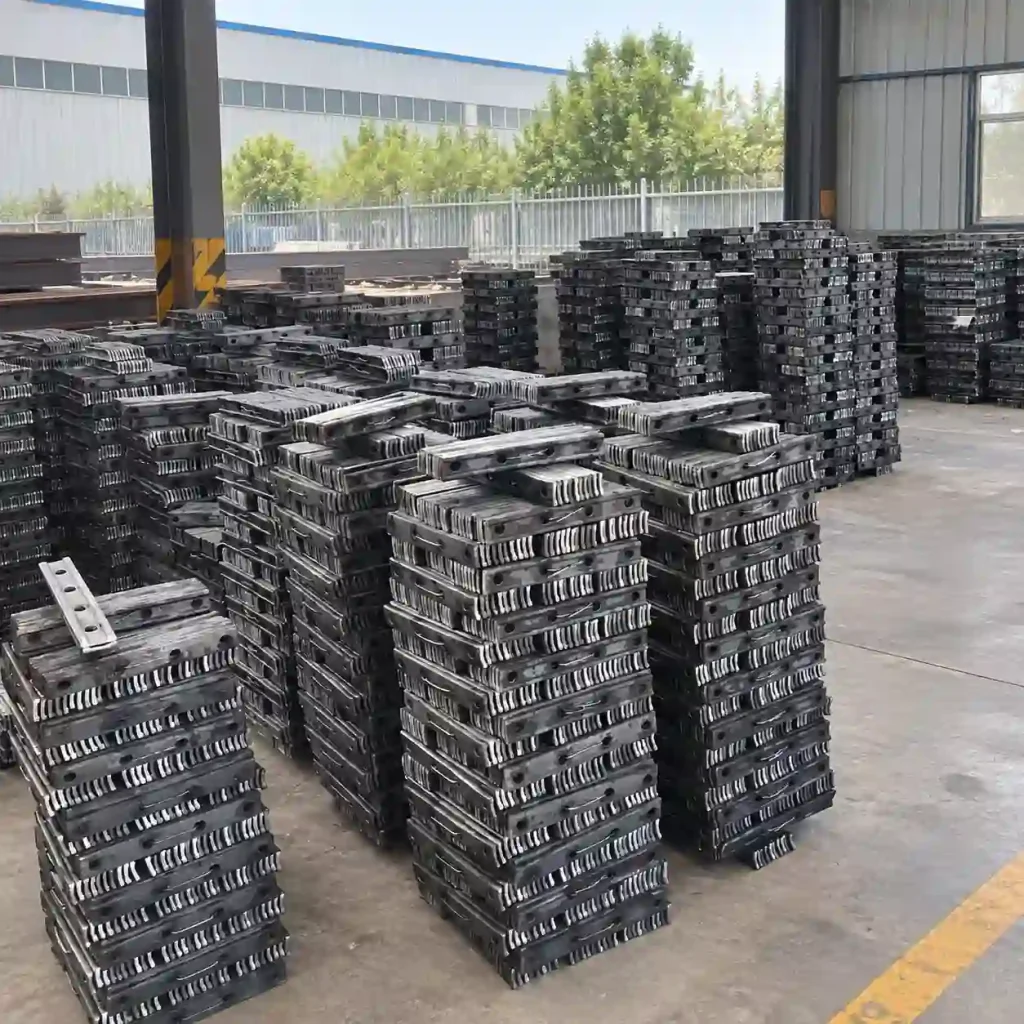
Lead time is where sourcing plans go to die, because buyers routinely forget that there are two lead times, not one.
The first is production. Standard railway fastening components run 4–6 weeks. Custom or tooling-dependent fasteners run 6–10 weeks, and a new tool with sample approval can push beyond that.
The second is shipping, and it stacks on top. Sea freight from a Chinese port to Europe is around five weeks plus customs clearance. To the US East Coast it is longer than to the West Coast. Air freight cuts that to about a week but costs several times more.
Add them together and a custom component can be 10–14 weeks door to door. If your project needs the parts in eight weeks, you did not have a supplier problem, you had a planning problem, and the RFQ should have gone out months earlier.
I have lost count of how many enquiries arrive with a deadline that is already impossible against the lead time. The lead time is not a number you negotiate down, it is a number you plan around.
The first order is where both sides are most cautious, and the terms reflect that.
The most common structure is 30% T/T deposit to start production, with the 70% balance against a copy of the bill of lading before release. That protects the buyer because the factory has not been fully paid until the goods are on the water, and it protects the factory because the deposit covers the material it has to buy.
Larger orders, roughly USD 100,000 and up, often move to a letter of credit at sight. Established buyers with a track record can negotiate open account terms later.
One rule I would treat as non-negotiable: avoid a supplier that demands 100% payment in advance before production starts. That is not a normal term, and it shifts all the risk onto you.
Packaging is the easiest thing to ignore and the most expensive thing to get wrong. Railway fastening components are heavy, and a loose pallet of fish plates shifts in transit and arrives with the edges knocked off the fishing faces.
The packaging question is really three questions:
A buyer who specifies “fumigation-free pallet, steel-strapped, oiled and bagged” has already avoided the three most common export headaches. A buyer who writes “standard packaging” has handed the decision to whoever is cheapest on the day.
Before the RFQ leaves your desk, this is the short version of what the supplier needs to answer without asking you anything back:
If the factory can quote from that without a single follow-up question, you are already ahead of most buyers. If it cannot, that is useful information too.
It depends on the supplier. Small workshops may take a few hundred pieces or a tonne or two, mid-size specialists want 5–20 tonnes, and large mills want 20 tonnes or more. Below about 10 tonnes expect a higher per-unit price because the setup cost is spread over fewer parts.
Two numbers, stacked. Production is typically 4–6 weeks for standard parts and 6–10 weeks for custom. Sea freight adds roughly five weeks to Europe plus customs, so door-to-door can be 10–14 weeks. Air freight is about a week but far more expensive.
Most common is 30% T/T deposit to start production and the 70% balance against a copy of the bill of lading. Large orders may use a letter of credit. I would avoid any supplier demanding 100% in advance.
The standard and rail section, a drawing or sample with tolerances, the material grade and surface finish, the quantity, the delivery terms, and the inspection requirements. A one-line “send price for rail clips” gets you a slow conversation, not a quote.
Yes. Heavy components need to be individually protected against rust, unitised on strapped pallets so the load cannot shift, and any timber pallets should be ISPM 15 compliant to avoid holds at the destination port.
Generally yes. Samples are often free or low cost, but you usually pay the freight. Sample approval is also the step that triggers the production lead time, so build it into the schedule rather than treating it as separate.
A railway fastening component looks interchangeable on a spreadsheet, and that is exactly the trap. The RFQ, the MOQ, the lead time and the packaging are all things you can copy from a template. The part nobody automates is confirming that the factory on the other end actually makes the fastener it is quoting, to the standard you named, with the traceability to prove it.
Whether you are sourcing a new rail fastening system or topping up a maintenance stock of clips and plates, the paperwork matters as much as the price. Both have to be right before the goods leave the port.
At Luoyang Fonyo Heavy Industries Co., Ltd., we manufacture fish plates, fish bolts, elastic rail clips, rail pads, railway wheels and railway casting products. If you are preparing an RFQ and are not certain the specification matches the standard, send us the drawing or an existing sample before you send the enquiry, and we will confirm the section, material grade and packaging against it first.