



Scan the WeChat code to contact us
Scan the WeChat code to contact us
Feel free to send us a email and we will reply to you as soon as possible.
Creating the future with heart and soul

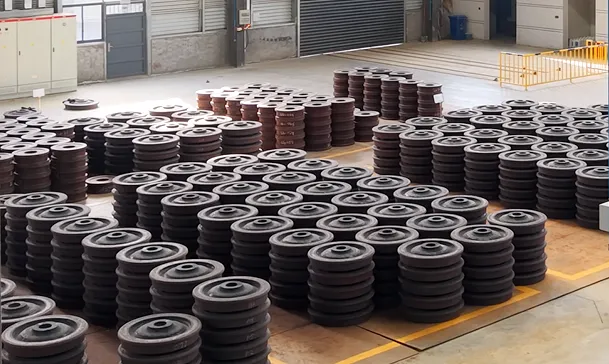
Selecting a railway wheel manufacturer starts with four things: the applicable standard the wheels are made to, the forging and heat treatment process behind them, the inspection and traceability the manufacturer can…
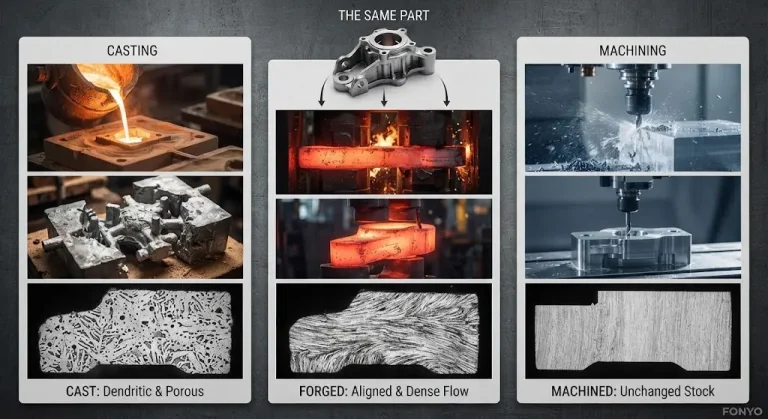
Casting vs forging vs machining produce the same drawing in three different ways. Casting pours molten metal into a mould and suits complex shapes and high volume. Forging compresses solid metal to…
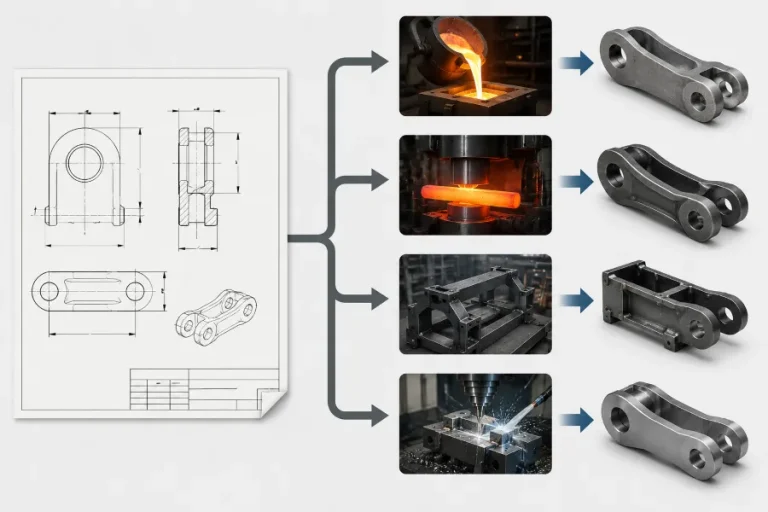
Choosing a manufacturing process for a railway component starts with three questions: what the component must survive, how many you need, and what happens if it fails. Casting suits complex shapes and…
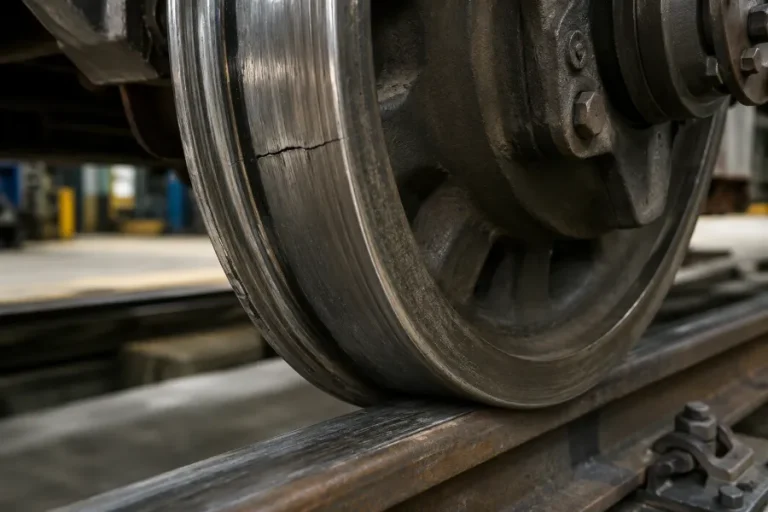
Railway wheels crack because of rolling contact fatigue, thermal loading and manufacturing defects. Rolling contact fatigue is the dominant cause: repeated wheel-rail contact stress creates three distinct crack mechanisms, starting at the…
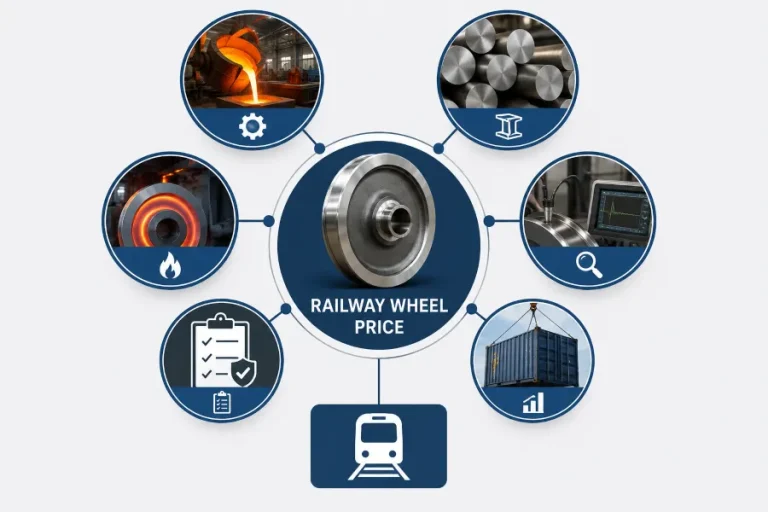
Railway wheel prices vary because a wheel is not one product but a family of engineering specifications. The price difference comes from the manufacturing process (forged or cast), the steel grade and…
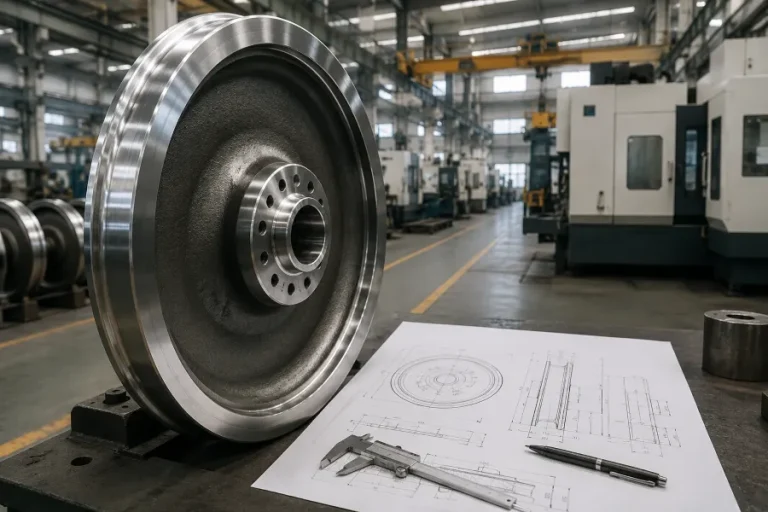
When a custom railway wheels inquiry arrives, the first questions are about the basics. What is the wheel for? What diameter? What standard does the project call for? How many pieces? Sometimes…
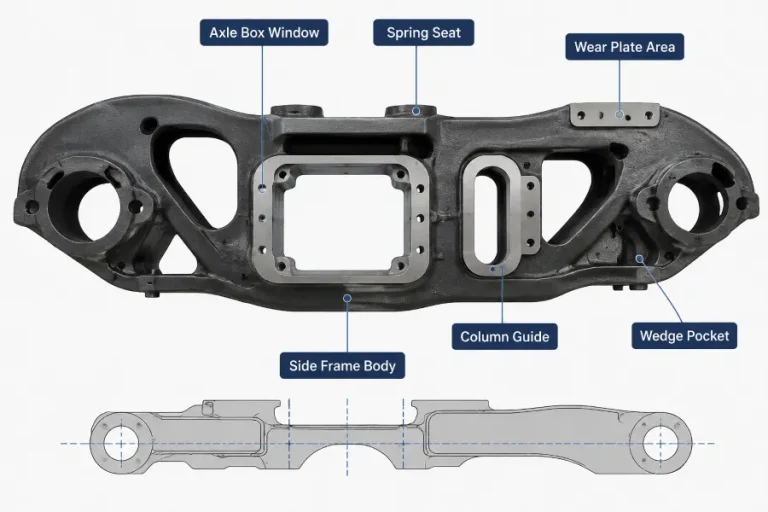
Railway side frame dimensions have a direct influence on the alignment, load distribution, suspension behavior and overall performance of a three-piece railway bogie. For cast steel side frames, dimensional accuracy is just…
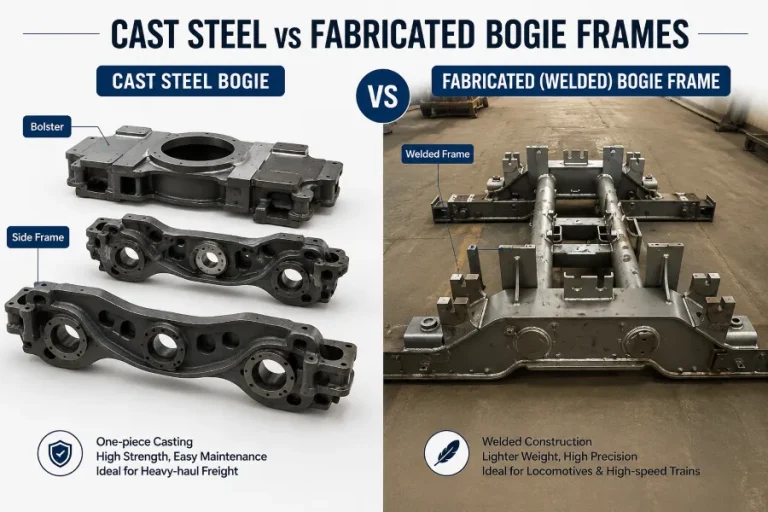
Cast steel bogie frames (side frames and bolsters) dominate heavy-haul freight because they are economical in large volumes and proven over decades of service. Fabricated bogie frames dominate locomotives and high-speed trains…
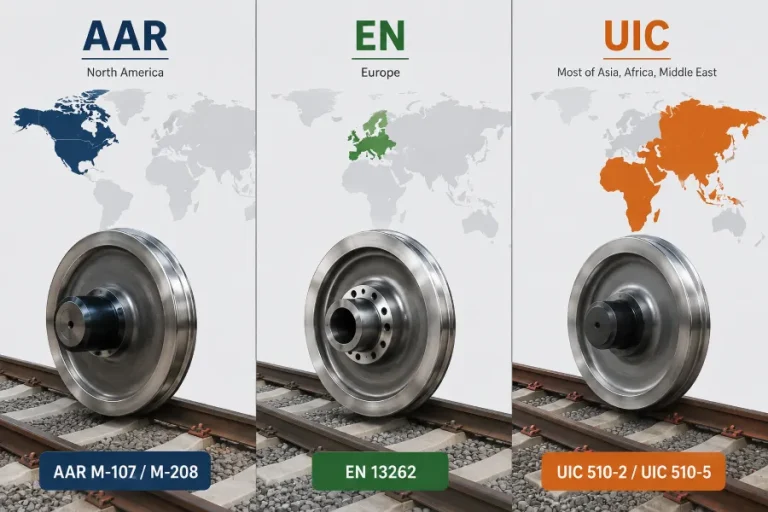
Buying railway wheels is rarely as simple as comparing prices. For railway operators, wagon builders, maintenance companies, and industrial rail systems, a wheel directly affects safety, service life, maintenance costs, and equipment…
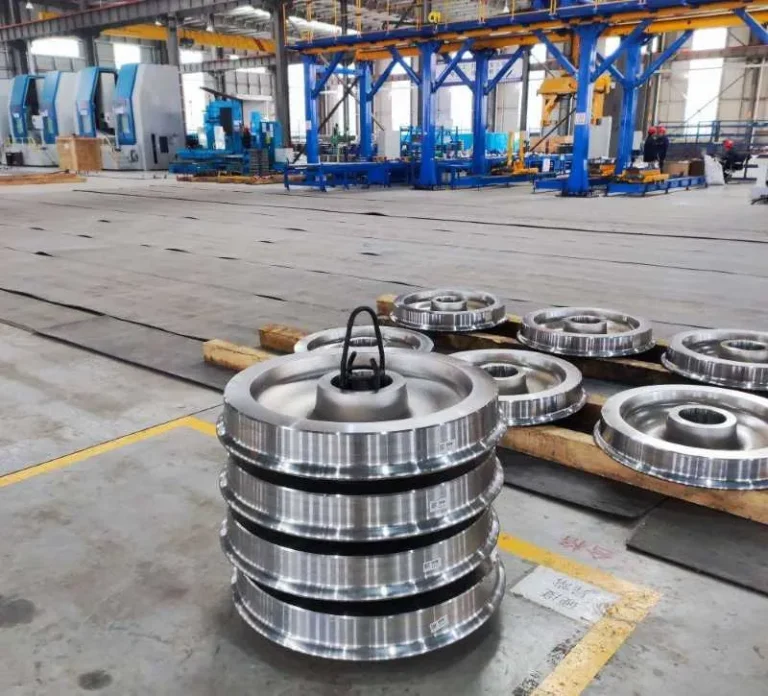
Choosing a railway parts supplier is one of the most important decisions in any railway project. Whether you are purchasing forged railway wheels, cast steel bogie components, couplers, rail fastening systems, or…
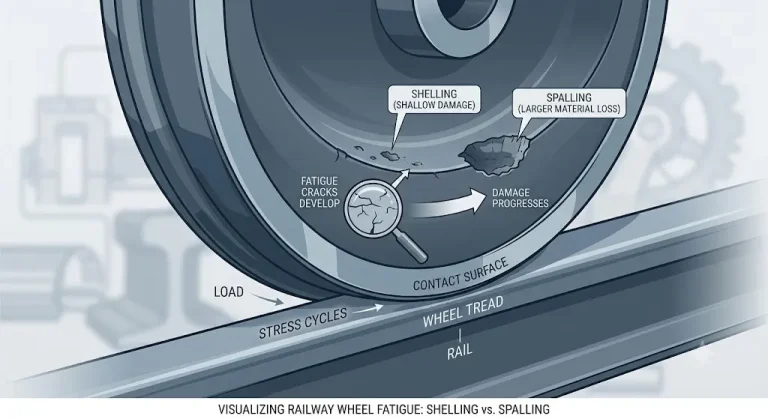
Railway wheels may look like simple steel components, but they are actually highly engineered parts that operate under extremely demanding conditions. During service, every wheel is exposed to repeated wheel-rail contact stress,…
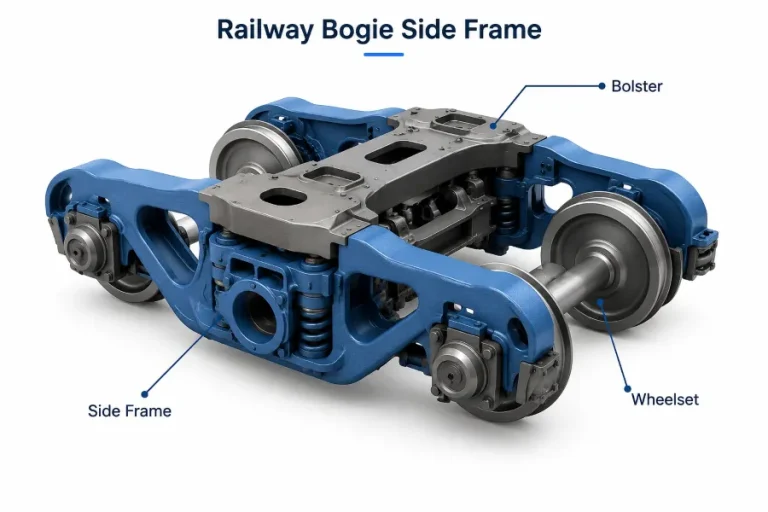
When engineers evaluate the reliability of a railway bogie, the side frame is usually one of the components that receives the most attention. Although it appears to be a relatively simple steel…