Scan the WeChat code to contact us
Scan the WeChat code to contact us
Feel free to send us a email and we will reply to you as soon as possible.
Creating the future with heart and soul

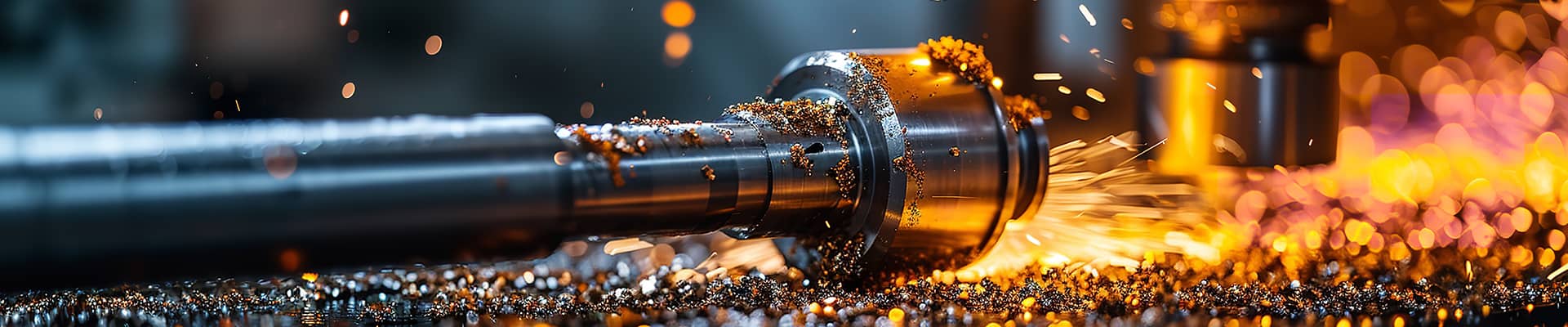
A mining railway needs the same categories of components as a mainline, but every one of them is specified harder. The rail is a heavy, head-hardened section for extreme axle loads and tight curves. The fastening uses M24-and-up bolts and high toe-load spring clips with sealed joints against abrasive dust. The rail pad is a stiff HDPE or rubber-metal grade, not a soft cushion. And everything is sized for a shorter replacement cycle, because mining railway track wears out several times faster than mainline track.
There is a habit of thinking about a mining railway as a mainline railway that got smaller. That is the wrong mental model, and it is the one that causes the expensive mistakes. A mine line is not a scaled-down railway. It is a different duty cycle entirely: heavier axle loads, sharper curves, abrasive dust everywhere, and maintenance windows measured in hours instead of days.
Once you accept that, the component choices stop being confusing. You are not picking “the good version” of a standard part. You are picking parts built for a job that a standard part was never designed to survive.
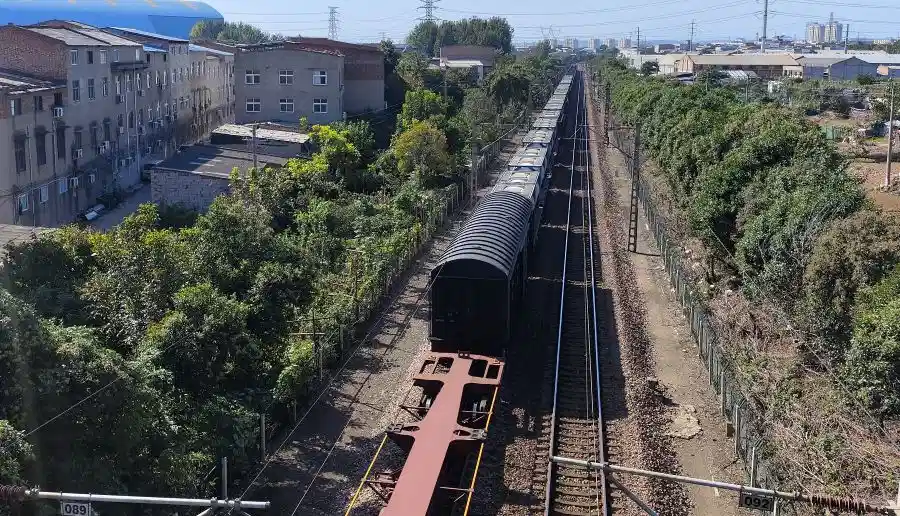
The difference shows up in four places, and they decide everything downstream.
First, axle load. Ore and coal trains run at 30 tonnes per axle and above, sometimes well above on dedicated heavy-haul mine lines. Every clip, bolt, and baseplate is loaded close to its fatigue limit on every pass.
Second, curvature. Mine lines are squeezed into pits, benches, and stockpile areas, so the curves are tight, with minimum radii in the 150 metre range on the harshest operations. Tight curves mean high lateral force and heavy rail-head wear on the high rail.
Third, environment. The track is surrounded by abrasive dust, coal fines, iron ore concentrate, overburden. That dust works into threads, clip seats, and insulators like lapping compound, and it grinds away protective coatings until bare steel rusts.
Fourth, access. A mine line runs through active working areas, so maintenance has to happen in short, opportunistic windows, often in poor conditions. You cannot shut the line for a week.
Those four things, axle load, curvature, dust, and access, are the whole story. Every component choice below is just an answer to one of them.
On a mine line the rail has two jobs that pull in opposite directions. It has to be heavy enough to carry the axle load without excessive deflection, and its running surface has to be hard enough to resist the wear and rolling contact fatigue that tight curves and dust accelerate.
The section side of that is straightforward: mine lines run the heavy sections, the 60E1-class rail and heavier, matched to the axle load and the annual tonnage the line is expected to carry. The heavier the section, the stiffer the rail and the less it deflects under a loaded wagon.
The grade side is where mine track differs from a branch line. The running surface wears hard on curves, so mine lines lean on head-hardened grades, the ones with a deliberately hardened rail head, rather than a plain carbon grade. This is the same logic as mainline heavy-haul, but applied to tighter curves and harsher conditions. If the grade is still an open question, our rail steel grades guide lays out the hardness and wear trade-offs.
The profile matters too. A mine line that runs a section nobody else in the region uses has just bought itself a permanent sourcing problem for fish plates, clips, and turnouts. Match the section the corridor and its suppliers already support.
This is where mining railway track differs most visibly from a passenger line. The fastening has to hold the rail against both vertical wheel load and the lateral force of heavy curving, while abrasive dust is trying to pack into every working surface.
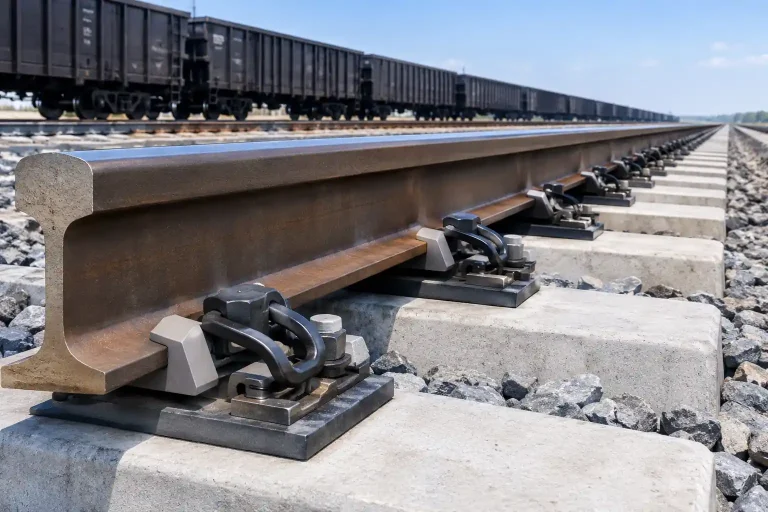
The structural core is the bolt-and-clip set. Bolt diameters start at M24 and go up, because the clamping force has to be high enough to keep the rail foot pressed down under a loaded, curving train. Spring clips are made from heat-treated spring steel, because a clip that takes a permanent set loses its toe load, and a lost toe load is a rail that starts to move. Toe loads on heavy-haul mine fastenings run into the 11 kN range and beyond, and the vertical resistance is specified so the rail cannot lift.
Baseplates are thickened, sometimes ribbed, to spread the concentrated load into the sleeper without crushing it. The insulator keeps the rail electrically isolated from the shoulder. If you want the full anatomy of how these pieces work together, our track fastening system guide walks through the assembly.
Then there is the dust. Abrasive dust destroys fastenings two ways: it jams threads and clip seats so clamping force quietly drops, and it grinds away the coating so the steel underneath rusts. Mining railway fastenings are therefore built with sealed joints, closed or shielded clip seats and bolt pockets that dust cannot pack into, and with coatings that tolerate abrasion, hot-dip galvanizing or a thicker zinc-based system rather than a thin decorative finish. In underground or wet workings, drainage and corrosion resistance become the priority, and stainless or zinc-nickel coated parts come into play.
The clip is also the first thing to fail on a mine line, and it fails in predictable ways. Our rail clip failure guide covers the wear modes and what to look for on inspection.
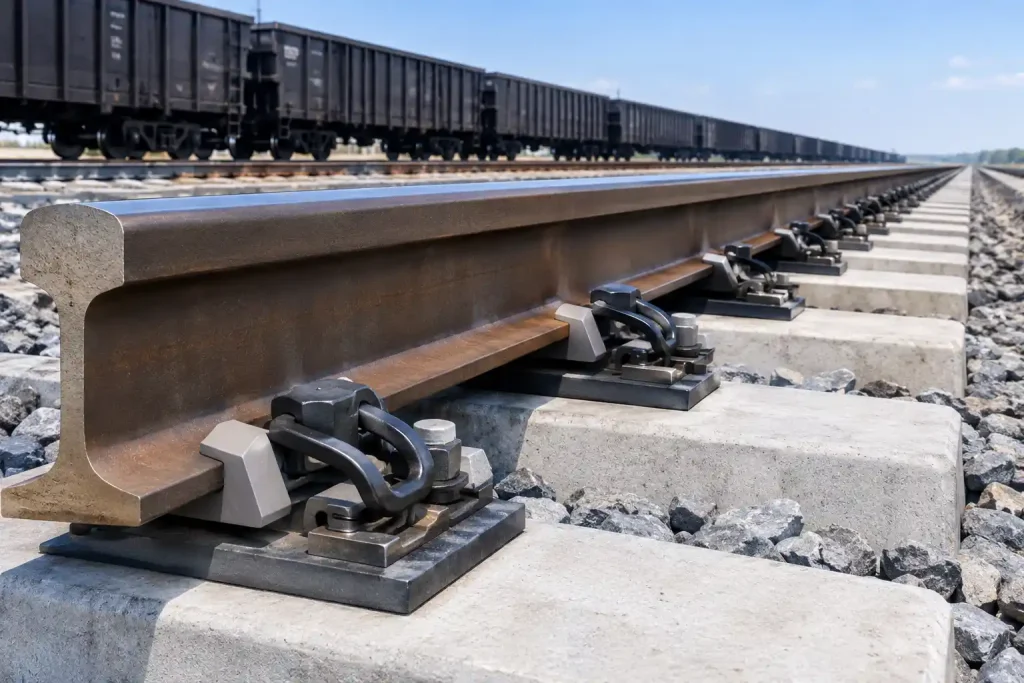
There is a reflex to think of the rail pad as a cushion, something to soften the ride. On a mine line that reflex is wrong. A pad that is too soft lets the sleeper and clips move too much under each wheel, which accelerates wear and fatigue exactly where you cannot afford it.
Mine and very heavy-haul lines therefore specify the stiff end of the pad family: rigid HDPE pads or rubber-metal composite pads, which give the maximum stiffness and load support, rather than the soft rubber pads used under passenger track. A thicker high-density rubber pad works where the axle load is high but not extreme; at the very top end, HDPE is the answer. The pad keeps the gauge stable and protects the sleeper seat from the rail foot crushing into it.
This is the same conclusion as heavy-haul mainline, and we go into the material trade-offs in our heavy haul rail pad guide. The short version for a mine line: choose stiffness over comfort, and match the pad to the axle load before you match it to anything else.
Mine lines still have joints, and the joint is where the trouble concentrates. A jointed mine track sees the same hammering impact as any jointed track, but with a loaded wagon and a tighter curve, the impact is harder and the plate works more.
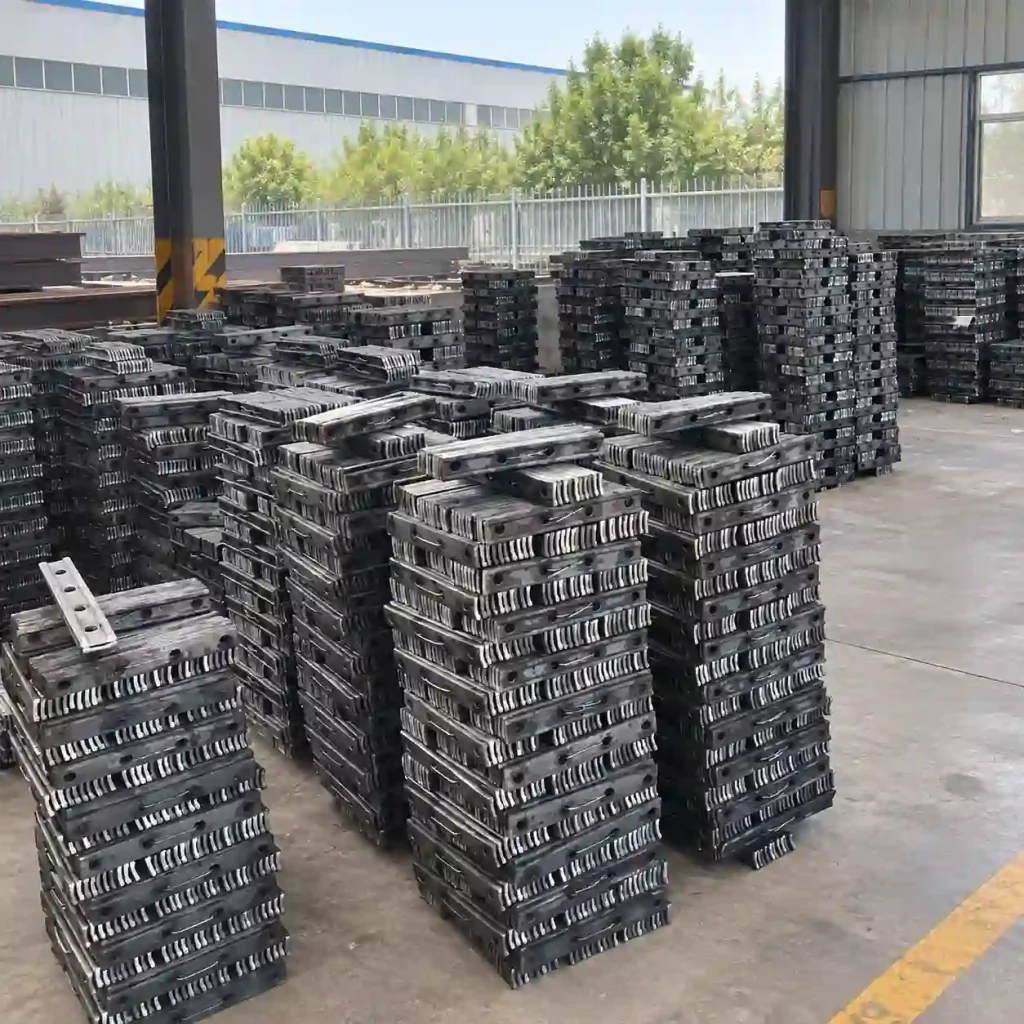
The rules are the same as anywhere, just enforced more tightly: a fish plate that matches the section, high-strength bolts tightened to specification, and re-tightening on a schedule. But on a mine line the cost of a loose joint is higher, because the curve is already loading the joint laterally and the dust is already wearing the contact faces. A plate that starts to crack at a bolt hole on a mine curve will go faster than it would on a straight mainline. Our fish plate crack guide explains the failure sequence and how to catch it early.
On the heaviest mine lines the trend is to weld joints into continuous rail where the geometry allows, and to reserve fish plates for the transition points and the places welding is not practical.
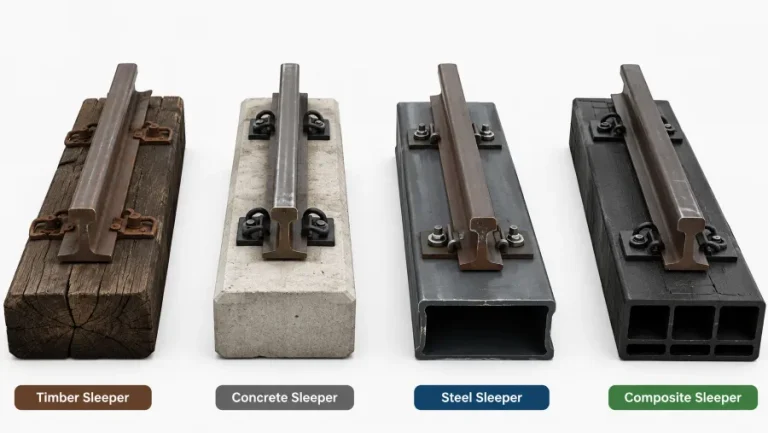
The sleeper choice on a mine line follows the load. Concrete sleepers with cast-in shoulders are the workhorse for heavy-haul mine track because they hold the fastening rigidly and survive the axle load. Steel sleepers show up where the ground is soft or where a line needs to be relaid quickly. Timber is rare on new heavy-haul mine construction, kept mostly for legacy sections and light industrial track.
What matters more than the sleeper material is the ballast and formation underneath it, because a sleeper sitting on a poorly packed, dust-clogged bed will work loose no matter how good the fastening is. Mine track maintenance is as much about draining and packing the ballast as it is about the components on top.
The number that surprises people is the replacement interval. Mining railway fastenings on extreme-wear sections often run on a 5 to 7 year replacement cycle, against 10 to 20 years on plain mainline track. The cycle shortens further on sharp curves, at transitions, and wherever dust ingress is worst.
That is not a defect in the components. It is just the arithmetic of a harder duty cycle, and the smart operators plan for it instead of being surprised by it. The practical move is to stock a defined kit, clips, bolts, pads, and insulators sized for the specific rail section, so a worn fastening can be replaced as a set rather than piecemeal. Replacing piecemeal leaves a joint with uneven clamping force, and uneven clamping force is how the next failure starts.
When a mining rail order comes in, a few lines tell you whether the supplier understands the duty cycle or is just quoting a standard part.
A mining railway punishes the same components a mainline uses, it just punishes them harder and faster. The rail has to be heavier and harder, the fastening has to clamp harder and seal better, the pad has to be stiffer, and everything has to be planned for a short replacement cycle. Get any one of those wrong and the failure shows up first at the tightest curve, in the worst weather, during the shortest maintenance window.
If you are speccing or resupplying a mine line, start with the axle load and the curve radius, then build the rail, fastening, and pad around them. At Luoyang Fonyo Heavy Industries Co., Ltd., we manufacture the railway track components for heavy-haul and mining duty, fish plates, bolts, clips, pads, and rail, and we quote against the section and the load, not against a generic catalog. Send us the axle load, the curve radius, and the section you run now, and we will confirm the specification before we put a number on it.
What makes a mining railway different from a mainline?
Four things: higher axle loads, tighter curves, abrasive dust, and shorter maintenance windows. Each one drives a harder specification on the rail, the fastening, the pad, and the replacement cycle.
What size bolts do mining fastenings use?
M24 and up on heavy mining duty, with the thread and grade matched to the clamping force required for the axle load. Smaller bolts appear only on light industrial track.
Why do mining fastenings need sealed joints?
Because abrasive dust, coal fines and ore concentrate, packs into threads and clip seats like lapping compound, quietly dropping clamping force, and grinds away the coating so the steel rusts. Sealed or shielded joints keep the dust out of the working surfaces.
What rail pad is best for a mining railway line?
A stiff pad, HDPE or rubber-metal composite, not a soft rubber cushion. The pad has to keep the gauge stable under heavy axle loads and protect the sleeper seat, which is the opposite priority from a passenger line.
How often do mining railway fastenings need replacing?
Often on a 5 to 7 year cycle on extreme-wear sections, against 10 to 20 years on plain mainline. The interval shortens on sharp curves and wherever dust ingress is worst.
Should mining railway lines weld the joints instead of using fish plates?
Where the geometry allows, continuous welded rail removes the joint, which is where hammering impact concentrates. Fish plates remain for transitions and the places welding is not practical, and they have to be re-tightened and inspected more aggressively on mine curves.
Do composite fastenings work on mine lines?
Composite baseplates and insulators are lighter and corrosion-proof, but their load capacity is limited to light rail and transit. Mining and freight use steel for the load path and composites only for insulation, because only steel carries 30-tonne-plus axle loads with an adequate fatigue