



Scan the WeChat code to contact us
Scan the WeChat code to contact us
Feel free to send us a email and we will reply to you as soon as possible.
Creating the future with heart and soul


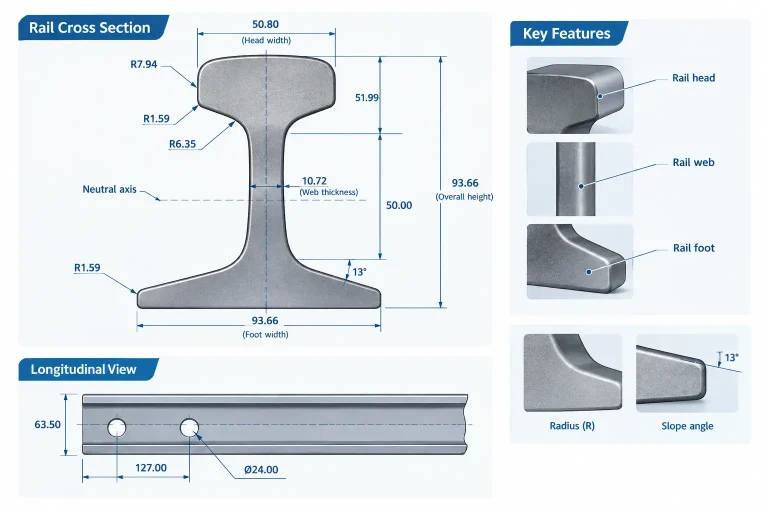
A railway rail may look simple from the outside: a long steel section with a wide bottom, a narrow middle, and a rounded top. But once you look at a railway rail…

A railway coupler connects two vehicles through a knuckle-and-lock mechanism. When two cars come together, the knuckles interlock and a lock drops into place behind them by gravity, holding the connection closed.…

Rail fish plate dimensions are always matched to the rail profile they join, not chosen as a standalone size. A fish plate is specified by its length, the number and diameter of…
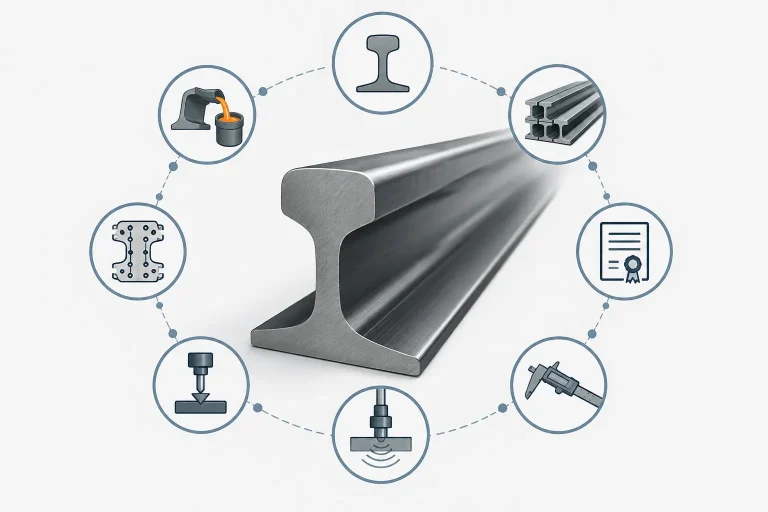
A railway rail specification is more than a weight and a steel grade. Before ordering, a buyer should verify the rail section and grade against the applicable standard, check that the material…
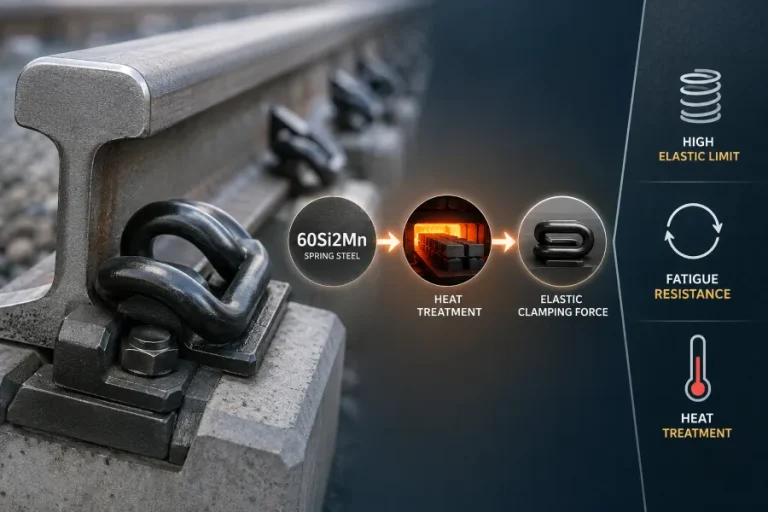
60Si2Mn is used for rail clips because it is a silicon-manganese spring steel with a high elastic limit and good fatigue resistance. After quenching and tempering, it forms a uniform tempered microstructure…
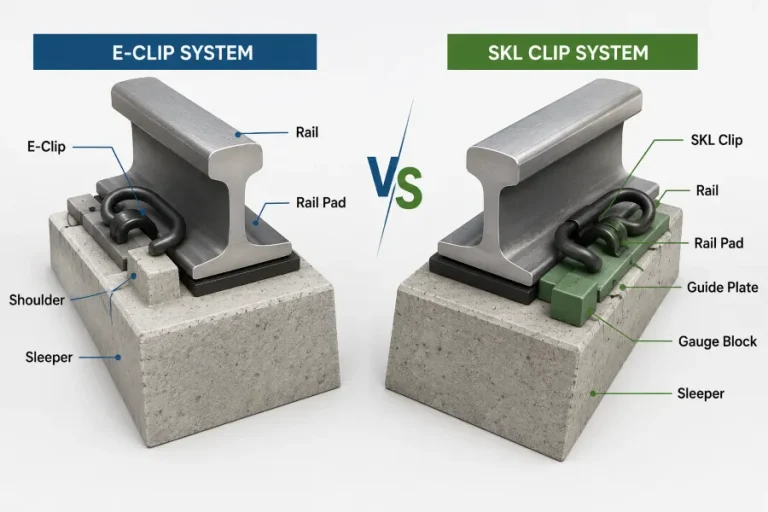
E-clips and SKL clips are both spring steel rail fastening clips used to hold the rail against the sleeper, but they belong to different fastening system families. E-clips use a compact asymmetric…
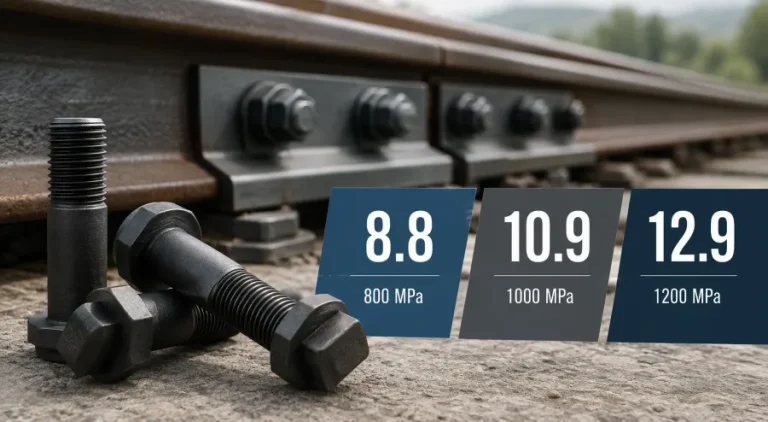
When you buy railway fish bolts or other high-strength fasteners, you will often see markings such as 8.8, 10.9, or 12.9 on the drawing, quotation, or inspection certificate. At first glance, the…
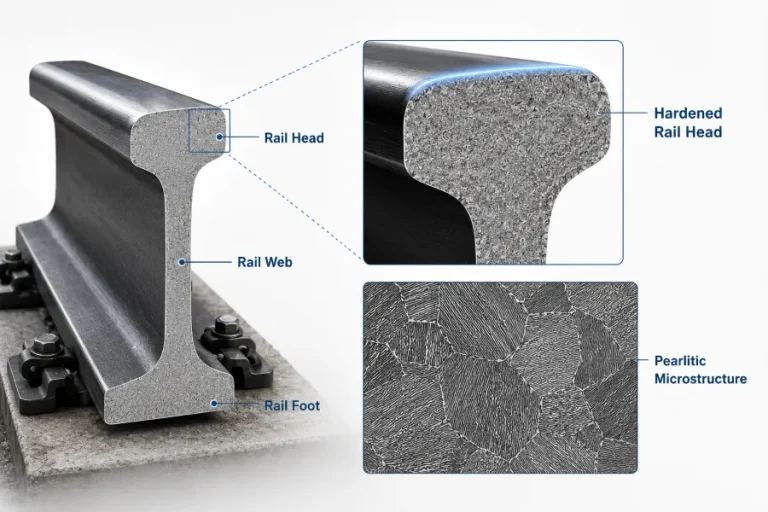
When people buy rail, the first questions are usually about profile, weight and length. Which section is required? How many kilograms per metre? What straightness class does the project call for? The…
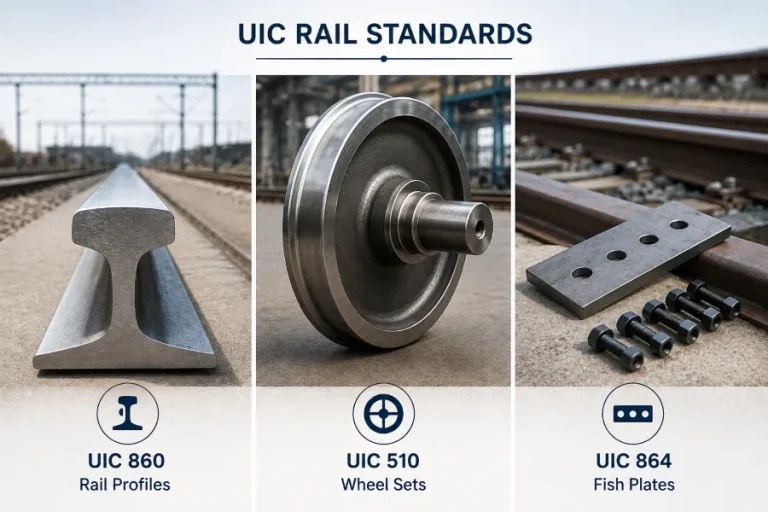
UIC rail standards are a set of technical specifications developed by the International Union of Railways that define dimensions, materials, testing methods and acceptance criteria for railway components including rails, wheels, fasteners…
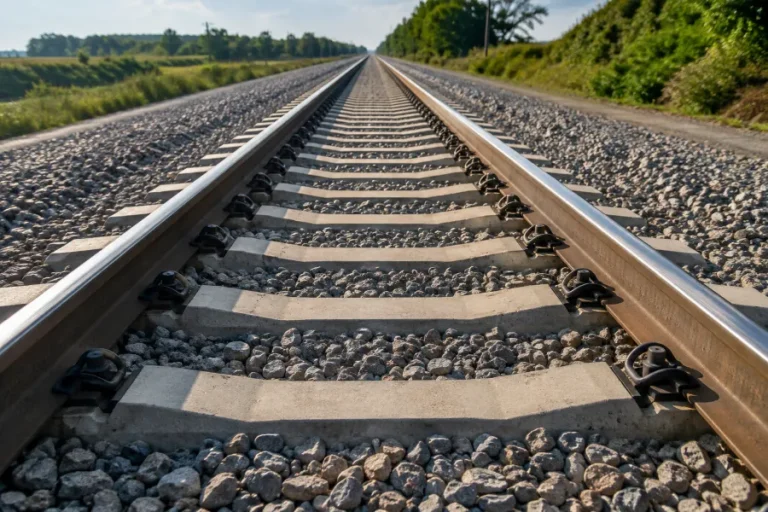
Railway track maintenance is the scheduled inspection, repair and replacement of rails, fasteners, sleepers and ballast to keep track geometry safe and trains running. It runs on defined cycles and wear limits…
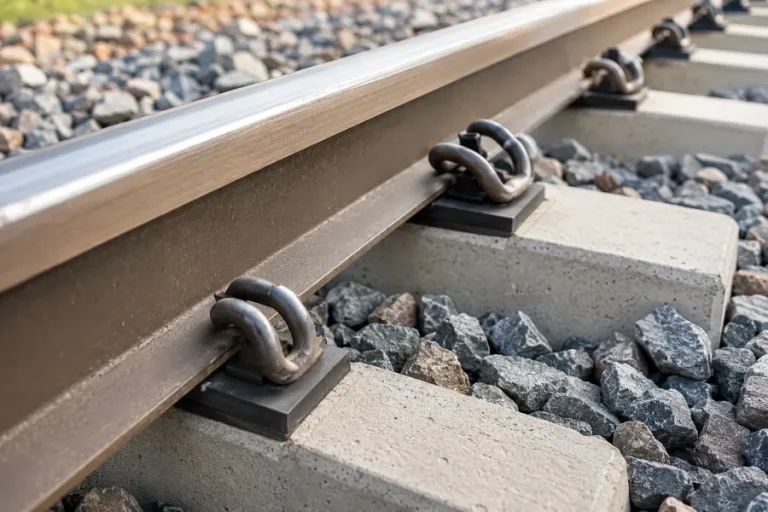
If you’ve spent time on a railway track, you’ve probably noticed that the rail doesn’t just sit on the sleeper. Something holds it down, keeps it aligned, and stops it from creeping…
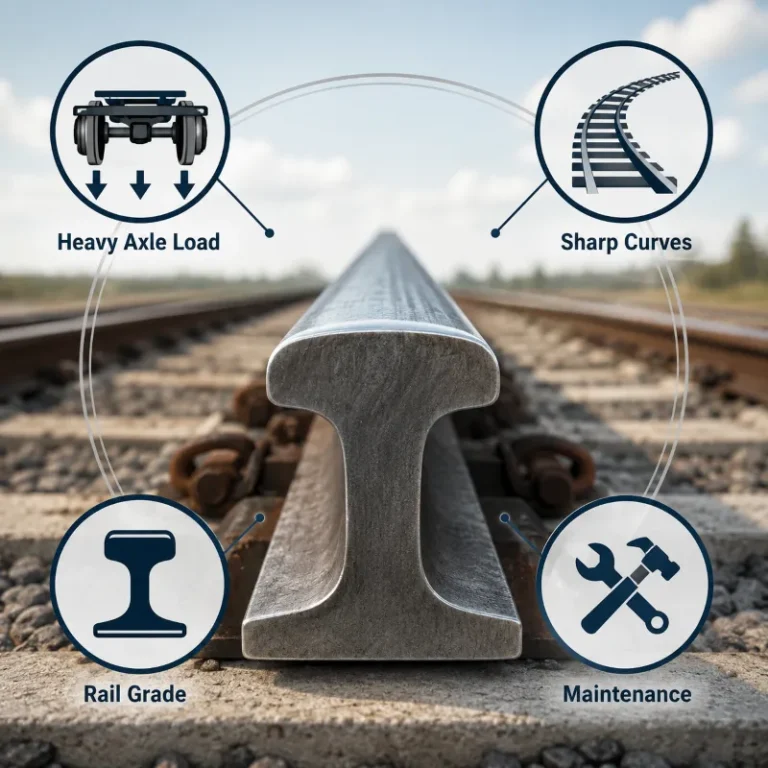
If you’ve ever been involved in a railway project, you’ve probably heard someone ask,” How long should these rails last?” It sounds like a simple question, but after years of working with…