Scan the WeChat code to contact us
Scan the WeChat code to contact us
Feel free to send us a email and we will reply to you as soon as possible.
Creating the future with heart and soul

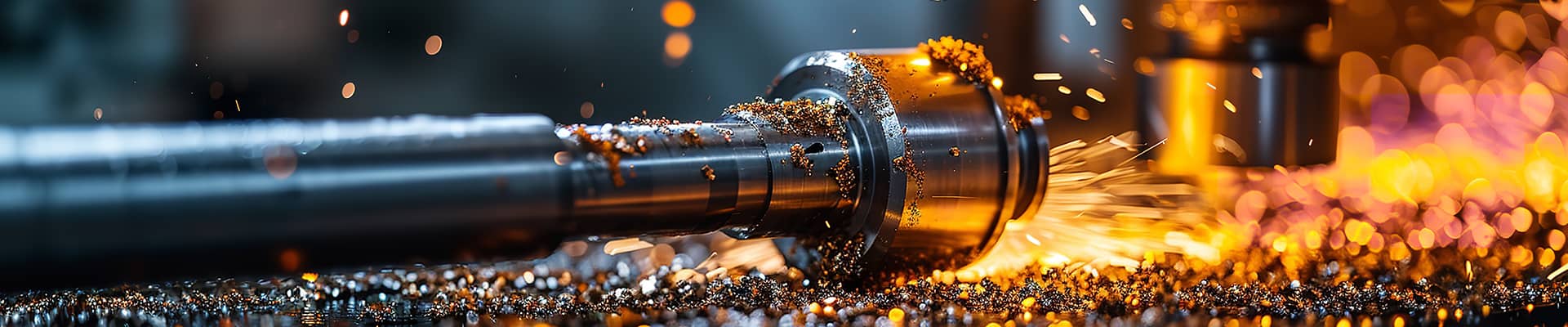
Ask a foundry “what is the biggest casting you can make,” and you will usually get a number. Ask the question properly, and you will get a much more useful answer. The size a foundry can cast is not one number. It is a set of separate physical limits, and the foundry is only as big as the smallest one. A shop that can pour ten tonnes of steel but cannot heat treat a part that size, or machine it, or even lift it, is not really a ten-tonne foundry.
That is the thing nobody tells you up front. The melting furnace is the number buyers ask about, but it is rarely the limit that matters. The real ceiling is usually somewhere else, and knowing where to look is the difference between a part that arrives sound and one that arrives as an expensive problem.
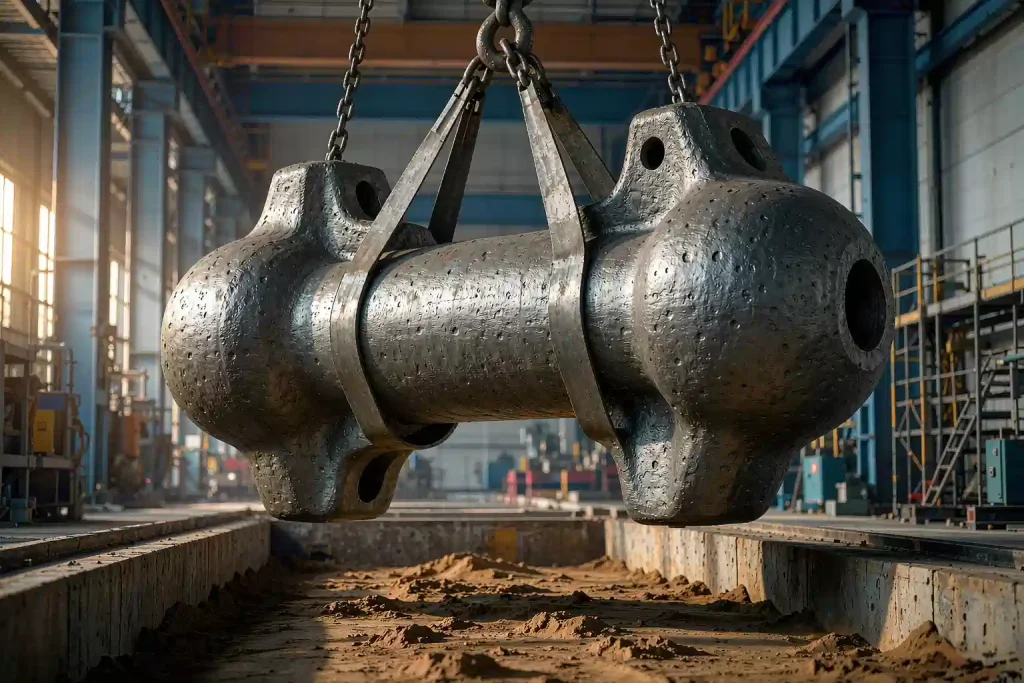
A large casting has to pass through five physical constraints, one after another. Miss any one of them and the whole thing falls apart, no matter how big the furnace is.
The melt has to arrive at once. A casting is not poured in installments. The full mass of liquid metal, at the right temperature and the right chemistry, has to be ready at the same moment and delivered into the mould in one continuous pour. For a large part that can mean several furnaces tapped in coordination into a single ladle, with the chemistry matched across every heat. The question is not “how big is your biggest furnace.” It is “how much correct-chemistry metal can you get into one mould in one pour.”
The crane has to lift it, full and moving. A casting starts as more than its finished weight of liquid metal, plus the ladle. The overhead crane has to lift that load and traverse it over the mould without a pause, because the metal is cooling every second it hangs there. Crane capacity is not a support detail. It is often the thing that sets the true ceiling on what can be poured whole.
The mould has to hold the part, and the pressure. A big casting sits in a mould that is itself a heavy structure, with a floor and pit that have to carry it. The mould has to resist the ferrostatic pressure of a tall column of liquid steel without moving, and the gating has to fill it evenly. You cannot pour a part the floor cannot physically contain.
Solidification has to be controlled. Once poured, the metal has to freeze in the right order, with feeders sized to keep liquid metal flowing into the sections that freeze last. Get this wrong and the part shrinks internally into porosity you will not see until it fails in service. On a heavy section this is a design problem, not luck.
Then it has to be heat treated and machined at the same scale. Pouring is only half the job. The casting has to fit inside a heat treatment furnace big enough to normalise and temper it whole, then onto a machine bed long and rigid enough to finish it to the drawing. A foundry that pours a large part and then ships it out for heat treatment or precision machining has reintroduced every handoff the single-piece casting was meant to avoid.
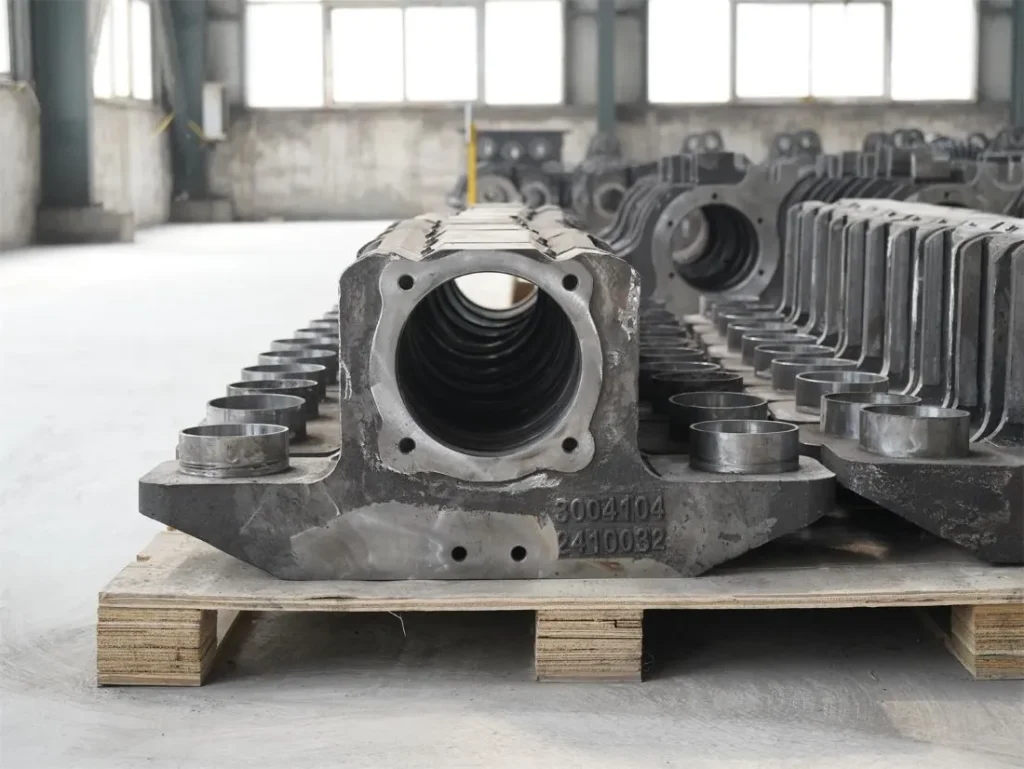
Put those five limits together and a foundry’s real capability is the largest part it can take through the whole route, not the weight it can melt. This is where I get cautious about the way capability is advertised.
A foundry that has delivered a five-tonne cast steel part has proven it can melt, pour, cool, heat treat, and machine a part of that size, as a complete, sound unit. That is a real, verifiable statement. It is not the same thing as saying “we can do any size.” The honest way to state a capability is to say what has been delivered, and then confirm anything larger against the drawing, because each of the five limits has to be checked for the specific part.
A five-tonne casting is also not a small thing. It is a serious industrial component. But the point is not the number. The point is that the number only means something when every step behind it is in place. I would rather buy from a foundry that says “five tonnes, and here is how we take it through every stage” than one that claims a bigger number and goes quiet when I ask about the heat treatment furnace or the crane.
The size question is really a question about how the part is built, and this is where the decision gets interesting. A part that is too large, or too awkward, to cast in one piece can often be cast in sections and welded, or cast and then welded to a fabricated structure.
One-piece casting has real advantages. No welds to inspect, no residual stress from assembly, uniform material throughout. For a part under cyclic load, a single sound casting is often the cleanest answer. But it costs more in tooling and it needs the whole route, melt to machine, to be available at that size. We covered the trade-off in detail when comparing cast steel and fabricated bogie frames,and the same logic applies to any large component.
Fabrication and welding gets you around a size limit, but it introduces welds, and welds introduce their own inspection burden and their own failure modes. There is no universal answer. The right choice depends on the duty cycle, the load, and whether the part can be cast sound in one piece at all.
I have seen both go wrong. A one-piece casting poured by a foundry that could not actually handle the size, and a welded assembly that cost more to inspect than it saved in casting. The decision should be made on engineering grounds, not on whichever route the supplier happens to prefer.
If you are sourcing a large casting, the questions that matter are not about the furnace. They are about the whole route.
A foundry that answers these directly is one you can work with. A foundry that dodges them, or that only talks about melt capacity, is one to be careful with. The NDT methods you should require on a large part are the same ones you would ask for on any load-bearing casting, and they matter more here because a heavy part fails expensively.
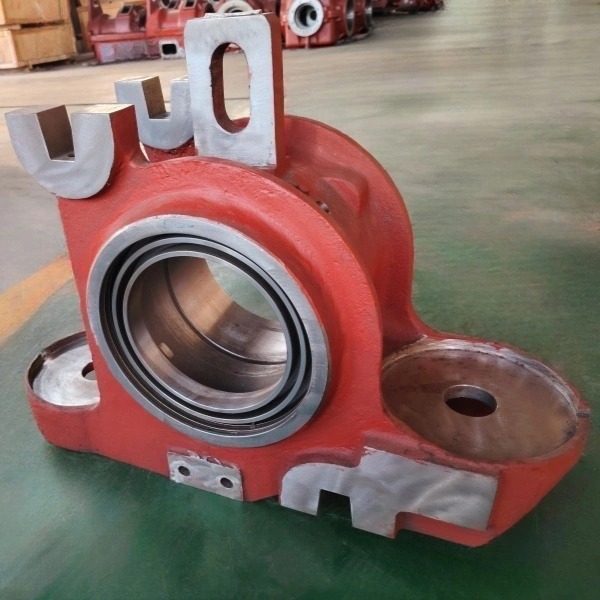
A large casting looks like a single object, but it is really the result of five separate capabilities all being present at once: melt, lift, mould, solidify, and finish. The foundry is only as large as the smallest one, and that is why the number a foundry quotes is worth less than the route behind it.
Whether you are speccing a heavy railway casting, a mill housing, or a mining component, start by asking how the part gets through every stage, not how big the furnace is. A foundry that can walk you through the whole route, and that confirms feasibility against your drawing, is worth more than one that just claims a bigger number.
At FONYO, we manufacture large steel and iron castings for railway, mining, engineering machinery, and wind power applications, with the melt, heat treatment, machining, and inspection capability to take a part from drawing to finished casting. We have written before about our expertise in large castings and the same route applies to the heavy parts we make for mining and railway duty. If you have a large casting in mind, send us the drawing before you quote. We will check it against our melt, furnace, and machining envelope and tell you honestly whether it should be one piece or built another way.
There is no single answer, because the limit is set by several things at once: melt capacity, crane capacity, moulding floor size, heat treatment furnace size, and machining reach. A foundry is only as large as the smallest of these, so the useful measure is the largest part it can take through the whole route.
Not on its own. A furnace can only supply the metal. If the foundry cannot lift the part, hold the mould, heat treat it, or machine it, a bigger furnace does not change what it can actually deliver. The melt is one limit among five.
A single casting avoids welds, so there is no weld inspection and no residual stress from assembly, and the material is uniform throughout. But it needs the whole route to be available at that size. Welding gets around a size limit but introduces welds and their own failure modes, so the choice depends on the part and its duty.
It proves the foundry has delivered a sound, finished part of that weight through melt, pour, heat treatment, and machining. That is real and verifiable. It is not the same as claiming any size, and anything larger should be confirmed against the drawing.
No. Melting ten tonnes is only the first step. The part still has to be lifted, moulded, solidified soundly, heat treated, and machined. If any of those cannot be done at that size, the foundry cannot really deliver a ten-tonne casting.
Ask for the internal dimensions of the heat treatment furnace and confirm the part fits inside it whole. A part treated in sections, or sent out for treatment, introduces handoffs and can end up with properties that vary across it.
No. The right choice depends on the duty cycle, the load, and whether the part can be cast sound in one piece. Sometimes a welded assembly is the correct engineering answer. It should be decided on engineering grounds, not supplier preference.