Escanea el código WeChat para contactarnos
Escanea el código WeChat para contactarnos
No dudes en enviarnos un correo electrónico y te responderemos lo antes posible.
Creando el futuro con corazón y alma


Railway rails may look similar at first glance, pero están lejos de ser intercambiables. A UIC60 rail used on a European high-speed railway cannot simply be replaced with a 136RE rail used on a North American freight line. Asimismo, a plato de pescado, clip de riel, o almohadilla de riel designed for one rail profile will not fit another.
This is why understanding rail types is essential for railway engineers, contratistas, equipos de mantenimiento, and procurement professionals. Before selecting any track component, the first step is identifying the rail profile installed on the track.
Around the world, railway rails are manufactured according to different national and international standards. Europe primarily uses EN rail profiles such as UIC54 and 60E1. North America follows AREMA standards with profiles like 115RE and 136RE. Russia and neighboring countries commonly use GOST profiles such as R50 and R65, while China has its own GB/T standard with 50 kg/m y 60 kg/m rails widely used across the national railway network.
Although these rails often perform similar functions, they differ in dimensions, peso, cross-sectional geometry, and compatible fastening systems. Selecting the wrong rail profile can lead to installation problems, accelerated wear, or even safety risks.
En esta guía, we’ll explain how railway rails are classified, compare the most common rail profiles used around the world, and show how to select the right rail for different railway projects. We’ll also explain how rail profiles determine the selection of platos de pescado, clips de riel, almohadillas de riel, y otros componentes de fijación.
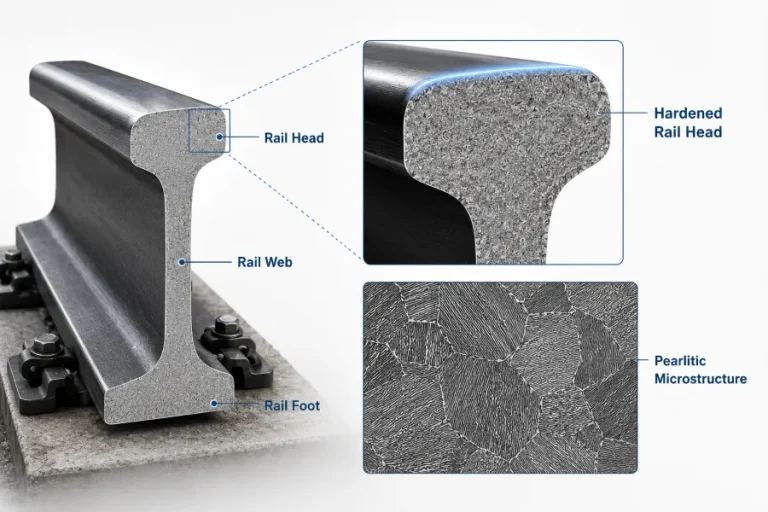
When people refer to a “rail type,” they may actually be talking about several different things.
Some describe rails by their weight, como 50 kilogramos/m o 60 kilogramos/m. Others refer to national standards like AREMA, EN, o GOST. Many engineers identify rails directly by their profile designation, como UIC60, 136RE, o R65.
These naming methods describe different aspects of the same product, which is why they are often confused.
For railway manufacturers and maintenance engineers, sin embargo, the rail profile is the most important identifier because it determines almost every component connected to the rail.
A rail profile directly affects:
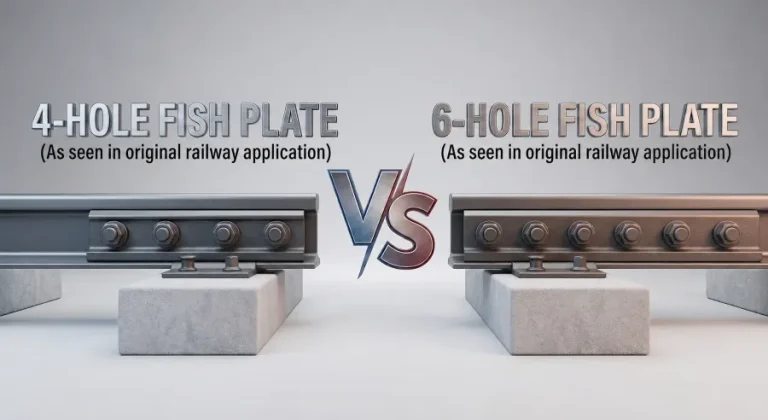
Por ejemplo, a Plato de pescado UIC60 cannot be installed on a 136RE rail, even though both rails weigh approximately 60 kilos por metro. Their head width, espesor de la red, and foot dimensions are different, making them mechanically incompatible.
Similarmente, an elastic rail clip designed for a 60E1 rail seat may not provide the correct clamping force on a 115RE rail.
This is why railway projects always begin by identifying the rail profile before selecting any fastening components.
Lectura relacionada
There is no single way to classify railway rails. Depending on the project, engineers may classify them by weight, perfil, manufacturing standard, or application.
Understanding these classification methods makes it much easier to identify the correct rail and avoid selecting incompatible fastening components.
This is the most widely used classification method in international railway engineering.
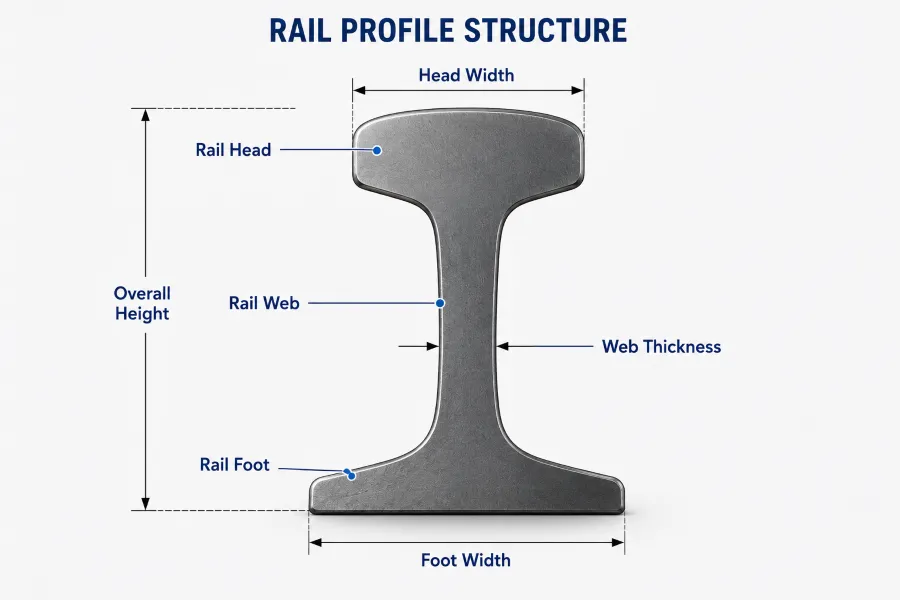
A rail profile defines the complete cross-sectional shape of the rail, incluido:
Because every fastening component is designed around these dimensions, the rail profile serves as the primary reference during design and procurement.
Some of the world’s most common rail profiles include:
| Perfil de carril | Estándar | Typical Region |
| UIC54 (54E1) | EN 13674 | Europa, Oriente Medio, África |
| UIC60 (60E1) | EN 13674 | Europa, High-Speed Rail |
| 115RE | AREMA | América del norte |
| 132RE | AREMA | América del norte |
| 136RE | AREMA | Heavy Haul Railways |
| R50 | GOST | Rusia, Central Asia |
| R65 | GOST | Rusia, Heavy Haul Lines |
| 50 kilogramos/m | GB/T | Porcelana |
| 60 kilogramos/m | GB/T | China High-Speed & Transporte pesado |
These profiles may have similar weights but different geometries. Como resultado, they require different fish plates, clips de riel, almohadillas de riel, and fastening assemblies.
Another common method is to classify rails by their linear weight.
Rail weight is usually expressed in:
En términos generales, heavier rails provide greater bending strength and are better suited to high axle loads and heavy traffic.
Los ejemplos típicos incluyen:
| Peso del riel | Aplicación típica |
| 30–43 kg/m | Light industrial railways |
| 50 kilogramos/m | Ferrocarriles convencionales de pasajeros y mercancías. |
| 54 kilogramos/m | Mainline railways |
| 60 kilogramos/m | High-speed and heavy-haul railways |
| 68–75 kg/m | Extremely heavy-haul applications |
En América del Norte, rail weight is identified differently.
Instead of kilograms per meter, engineers use pounds per yard, resulting in designations such as 115RE, 132RE, y 136RE.
Although rail weight provides a useful indication of load-carrying capacity, it should never be used as the only selection criterion. Two rails with nearly identical weights may still have different cross-sectional dimensions and require completely different fastening systems.
Different countries and regions have developed their own railway standards over decades of railway construction.
The most common standards include:
| Estándar | Primary Regions | Common Rail Profiles |
| EN 13674 | Europa | 54E1, 60E1 |
| AREMA | Estados Unidos, Canadá | 115RE, 132RE, 136RE |
| GB/T | Porcelana | 50 kilogramos/m, 60 kilogramos/m |
| GOST | Rusia, Central Asia | R50, R65 |
| ÉL | Japón | 50norte, 60 kilos |
| IRS | India | 52 kilos, 60 kilos |
Although these standards share many engineering principles, they define different rail dimensions, tolerancias, grados de acero, and inspection requirements.
Para proyectos ferroviarios internacionales, selecting the correct standard is just as important as choosing the correct rail profile.
Rail profiles are also selected according to the operating conditions of the railway.
Las aplicaciones típicas incluyen:
| Tipo de ferrocarril | Common Rail Profiles |
| Ferrocarril de alta velocidad | 60E1, UIC60, 60 kilos |
| Ferrocarril de transporte pesado | 136RE, R65, 75 kilos |
| Passenger Railway | UIC54, UIC60 |
| Freight Railway | 115RE, 132RE, R50 |
| Metro & Subway | 50 kilos, 54E1 |
| Riel de grúa | QU70, QU80, QU100 |
| Ferrocarril industrial | P38, P43, QU Series |
Each application places different demands on the rail in terms of axle load, velocidad del tren, resistencia a la fatiga, rendimiento de desgaste, y requisitos de mantenimiento.
Selecting the correct rail profile ensures not only structural reliability but also compatibility with the complete railway fastening system, helping reduce maintenance costs and extend track service life.
Although hundreds of rail profiles have been developed over the past century, only a relatively small number are widely used in today’s railway networks. Most modern railways are built according to one of several major standards, incluido EN, AREMA, GB/T, GOST, ÉL, y IRS.
If you’re involved in an international railway project, understanding these standards can help you select compatible rails and fastening components while avoiding costly specification errors.
The table below summarizes the most common railway rail profiles used around the world.
| Perfil de carril | Estándar | Peso | Primary Regions | Aplicaciones típicas |
| UIC54 (54E1) | EN 13674 | 54.43 kilogramos/m | Europa, Oriente Medio, África | Pasajero & Ferrocarriles de carga |
| UIC60 (60E1) | EN 13674 | 60.21 kilogramos/m | Europa, High-Speed Rail | Alta velocidad & Heavy Traffic |
| 115RE | AREMA | 56.9 kilogramos/m | América del norte | Ferrocarriles de carga |
| 132RE | AREMA | 65.5 kilogramos/m | América del norte | Mainline Freight |
| 136RE | AREMA | 67.5 kilogramos/m | América del norte | Ferrocarriles de transporte pesado |
| R50 | GOST | 51.7 kilogramos/m | Rusia & Central Asia | Conventional Railways |
| R65 | GOST | 64.9 kilogramos/m | Rusia & Heavy-Haul Lines | Heavy Freight |
| 50 kilogramos/m | GB/T | 50 kilogramos/m | Porcelana | Conventional Railway |
| 60 kilogramos/m | GB/T | 60 kilogramos/m | Porcelana | Alta velocidad & Heavy-Haul |
| JIS 50N | ÉL | 50.4 kilogramos/m | Japón | Conventional Railway |
While some of these rails have similar weights, their dimensions are different. A rail profile is defined not only by its weight but also by its head width, espesor de la red, ancho del pie, and overall height. These differences determine which fish plates, clips de riel, almohadillas de riel, and sleepers can be used.
European railways have gradually standardized around the EN 13674 specification. Hoy, two profiles dominate most new railway construction projects.
UIC54, also known as 54E1, is widely used on conventional passenger and freight railways throughout Europe, el Medio Oriente, África, and many developing railway networks.
Compared with heavier rail sections, UIC54 offers an excellent balance between structural strength and construction cost, making it suitable for medium axle loads and mixed traffic.
Las aplicaciones típicas incluyen:
Because UIC54 has been used for decades, compatible fish plates, clips, and fastening systems are readily available worldwide.
UIC60, officially designated 60E1 under EN 13674, has become one of the most widely used rail profiles in the world.
Designed for higher axle loads and higher operating speeds, UIC60 is commonly installed on:
Its larger cross-section provides greater bending stiffness, improved fatigue resistance, and longer service life under intensive traffic.
For many international railway projects, UIC60 has become the preferred rail profile because it combines high performance with global availability.
Unlike Europe, North America follows AREMA estándares, where rails are identified by their weight in pounds per yard rather than kilograms per meter.
The most common profiles include 115RE, 132RE, y 136RE.
115RE is commonly used on conventional freight lines, branch railways, and industrial tracks.
Although lighter than modern heavy-haul rails, it continues to provide reliable performance for moderate traffic volumes.
132RE offers greater structural capacity than 115RE and is frequently selected for busy freight corridors with higher axle loads.
Many Class I railroads continue to use this profile across extensive sections of their networks.
136RE is considered the standard heavy-haul rail profile across North America.
It is widely installed on railways carrying heavy bulk commodities such as coal, mineral de hierro, grain, and containers.
Compared with lighter AREMA profiles, 136RE offers:
Because of its different cross-sectional geometry, a 136Barra de unión RE cannot be replaced with a UIC60 fish plate, even though their weights are relatively close.
China has developed its own series of railway rail standards, primarily based on rail weight.
Hoy, two profiles dominate the national railway system.
El 50 kg rail is commonly used on conventional passenger and freight railways, ferrocarriles industriales, and branch lines.
Although newer railways increasingly adopt heavier rail sections, el 50 kg profile remains an important part of existing railway infrastructure.
El 60 kg rail has become China’s primary rail profile for modern railway construction.
It is widely used for:
Because China’s high-speed railway network is one of the largest in the world, el 60 kg rail has become one of the highest-volume rail profiles currently in production.
Railways in Russia and many neighboring countries follow the GOST estándar.
The two most common profiles are R50 y R65.
R50 is typically installed on conventional railways with moderate traffic density.
It remains popular across existing railway networks throughout Eastern Europe and Central Asia.
R65 is the dominant heavy-duty rail profile under the GOST system.
Its higher weight and stronger cross-section make it suitable for:
Many international railway projects supplying Russia, Kazajstán, Mongolia, and neighboring markets continue to specify R65 rails together with matching fastening systems.
There is no single global standard, but several rail profiles dominate international railway construction.
En términos generales:
For manufacturers and procurement engineers, identifying the rail profile should always be the first step before selecting fish plates, clips de riel, almohadillas de riel, traviesas, or other railway fastening components.
Although railway rails around the world may appear similar in function, their geometry and mechanical behavior can be quite different. Even small variations in head width, espesor de la red, or rail foot dimensions can make two rail profiles completely incompatible.
Para ingenieros y equipos de adquisiciones, understanding these differences is critical when designing track systems or selecting replacement components.
Below is a practical comparison of the most commonly confused rail profiles.
A primera vista, UIC60 (60E1) y 60 kg rail may seem almost identical because both are close in weight and widely used on high-speed railways.
Sin embargo, they are not interchangeable without confirmation of detailed dimensions.
In many international projects, 60 kg rail and UIC60 are sometimes treated as “equivalent in load capacity,” but from a manufacturing perspective, ellos son not fully interchangeable without engineering verification.
In particular:
This is one of the most common misunderstandings in international railway procurement.
Both profiles are widely used in heavy rail applications, but they belong to completely different design systems.
Even though their weights are similar, UIC60 fish plates cannot be used on 136RE rails.
The consequences of mismatch include:
Por esta razón, railway operators always specify rail profile and joint bar type together.
R65 (GOST) and UIC60 are often compared in heavy freight applications, especially in Eastern Europe and international mining projects.
Although both can handle high loads, their design philosophy is different:
R65 prioritizes strength and durability, while UIC60 balances speed and load efficiency.
Selecting the correct rail profile is not only a structural decision, but also a system-level engineering decision. It affects the entire railway track structure, including fastening systems, traviesas, and maintenance cycles.
In real engineering projects, rail selection is usually based on the following key factors:
Axle load is one of the most important parameters.
| Axle Load Level | Recommended Rail Profile |
| Light (<16 t) | 50 kilos, UIC54 |
| Medio (16–22 t) | UIC54, 115RE |
| Pesado (22–25 t) | UIC60, 132RE |
| Very Heavy (>25 t) | 136RE, R65, 60 kg reinforced |
Higher axle loads require deeper rail sections with better fatigue resistance.
Speed affects dynamic impact and vibration.
Higher speed requires better surface quality and tighter manufacturing tolerances.
Different railways require different performance priorities:
In most real projects, rail profile selection is not optional—it is defined by national standards.
Switching between systems requires full redesign of fastening components.
One of the most critical engineering principles in railway track design is this:
Rail profiles and fastening systems must be designed as a complete system, not as independent components.
A mismatch between rail profile and fastening components can lead to serious operational problems.
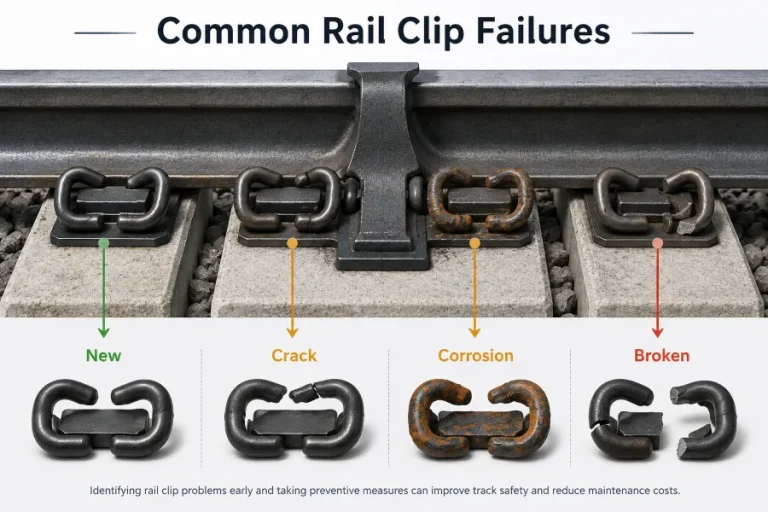
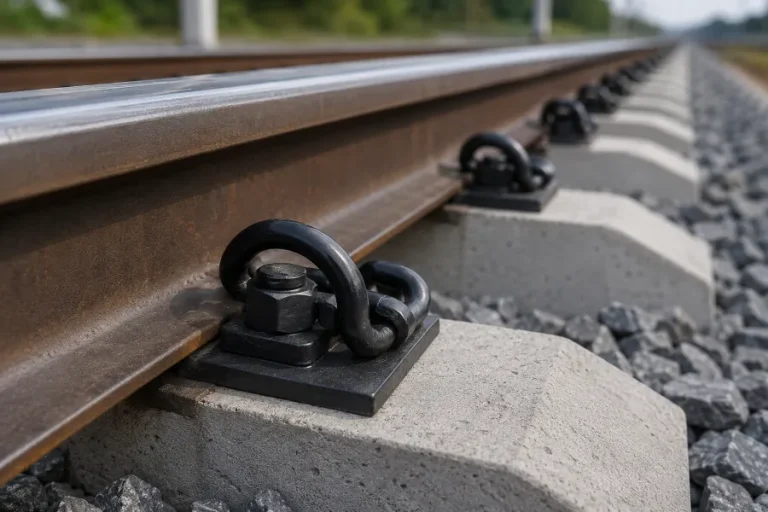
Clips de riel must match rail seat geometry and clamping force requirements.
Por ejemplo:
Incorrect clip selection may lead to:
Almohadillas de riel act as the elastic interface between rail and sleeper.
Different rail profiles require different pad stiffness and geometry:
As explained in our detailed guide:
Comparación de materiales de almohadillas de riel: Caucho vs EVA vs poliuretano
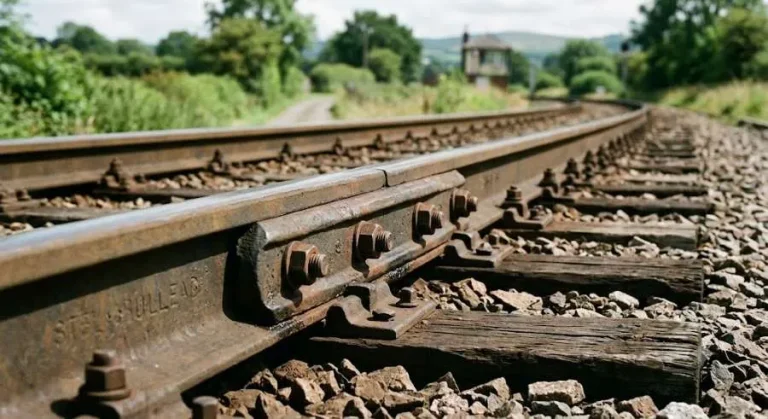
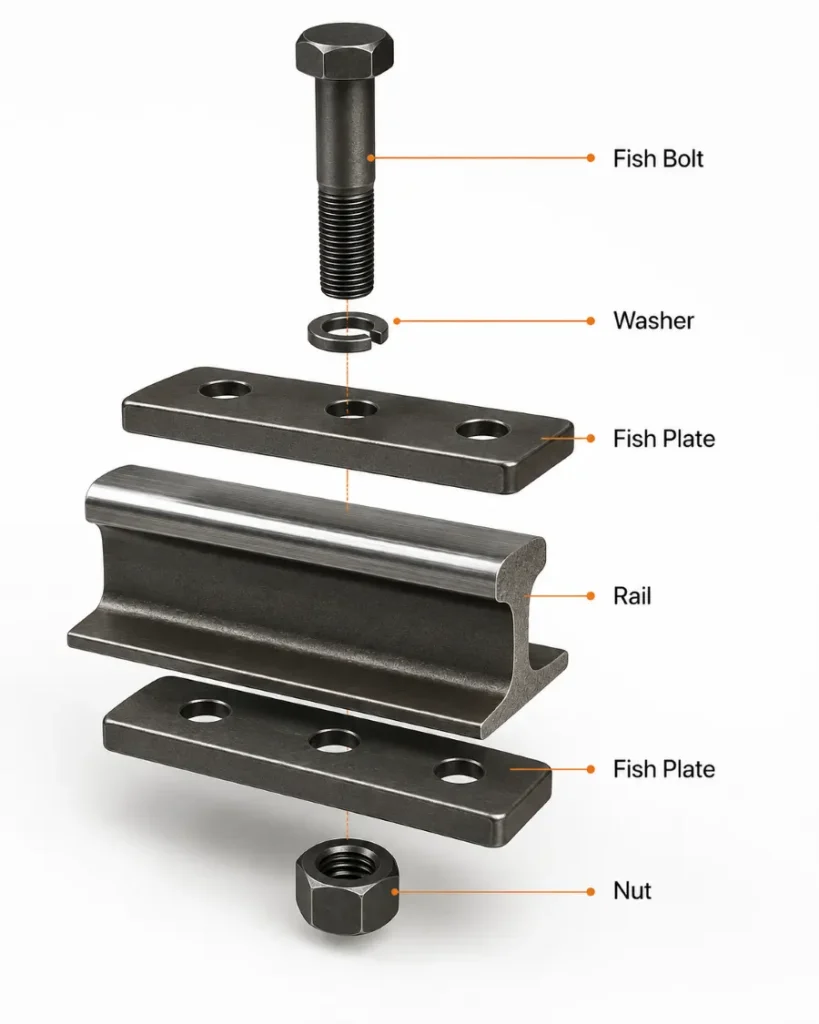
Platos de pescado (barras conjuntas) are one of the most profile-sensitive components in railway systems.
Each rail profile requires a perfectly matched joint bar:
Even small differences in rail head geometry will prevent proper bolt alignment.
Traviesas must be designed according to rail load and fastening system:
Sleeper design determines rail seat geometry, which directly affects clip selection.
The most widely used rail profile globally is UIC60 (also known as 60E1). It is commonly used in Europe, high-speed rail systems, and many international railway projects because it offers a good balance between strength, speed capability, and global standardization.
UIC60 (60E1) follows the European EN 13674 estándar, mientras 60 kg rail follows the Chinese GB/T standard.
Although they are similar in weight, they are not fully interchangeable because:
In engineering practice, substitution requires full technical verification.
136RE is an AREMA rail profile used mainly in North America.
It is widely used in heavy-haul freight railways such as coal, mineral, and container transport corridors.
No. UIC60 and 136RE belong to different railway design systems:
They differ in geometry, fastening design, and joint systems. Direct substitution is not recommended.
Heavy-haul railways typically use:
Selection depends on axle load, densidad de tráfico, y estrategia de mantenimiento.
Rail profiles are usually marked on the rail web. You can identify them by:
For accurate identification, engineers often use rail profile gauges.
Fish plates must match rail profiles because they connect two rail ends and transfer load across the joint.
If the profile does not match:
This is why each rail type has a dedicated fish plate design.
En Industrias pesadas Co. de Luoyang Fonyo., Limitado., we supply a full range of railway track components, incluido:
With decades of manufacturing experience and international supply capability, we support railway projects in Europe, América del norte, Sudamerica, África, and Asia.
If you are planning a railway project or need assistance in selecting compatible rail fastening components, our engineering team can help you match the correct system based on your rail profile and application requirements.