Scan WeChat-koden for at kontakte os
Scan WeChat-koden for at kontakte os
Du er velkommen til at sende os en e-mail, og vi vil svare dig hurtigst muligt.
At skabe fremtiden med hjerte og sjæl


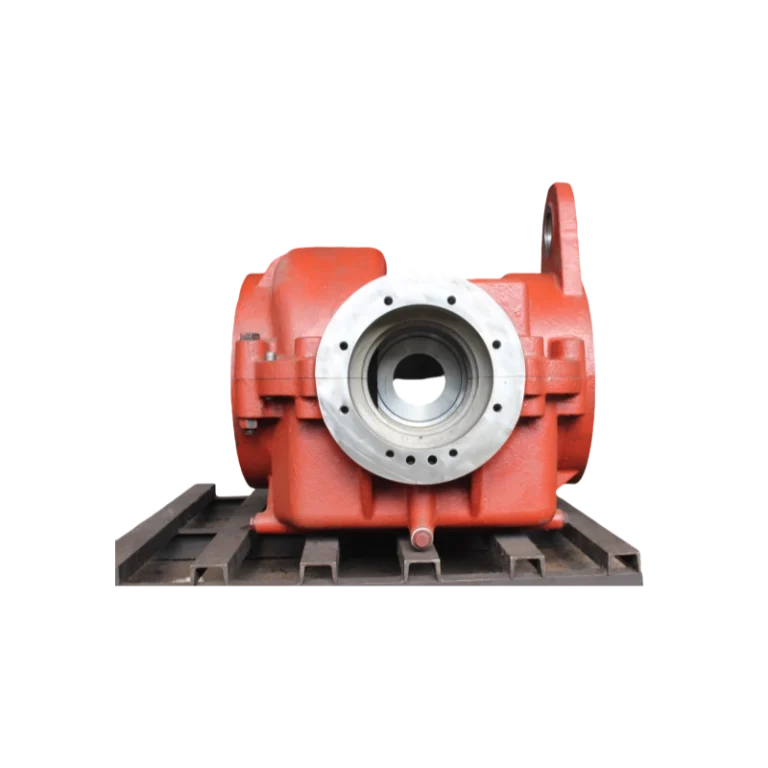
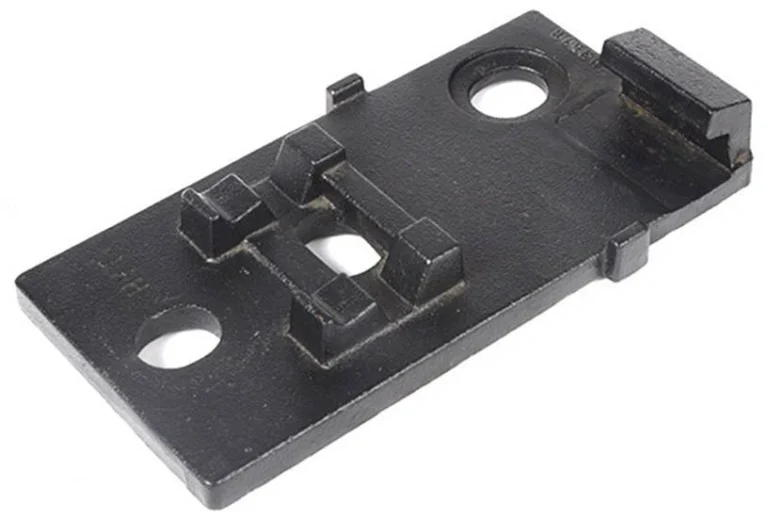
Grov slibning er det første trin i afgratning. Dens kernemål er at fjerne synlige blitz og grater fra støbning overfladen hurtigt. I praksis, arbejdere bruger typisk en vinkelsliber med en grov slibeskive (60-80 kornskive af aluminiumoxid). Vinkelsliberens høje hastighed og kraftfulde kraft fjerner effektivt fremspring, men man skal sørge for at kontrollere den påførte kraft. Hvis slibeskiven kommer i kontakt med støbning for dybt eller i en uhensigtsmæssig vinkel, der kan let dannes ridser på overfladen. Disse ridser påvirker ikke kun udseendet, men kan også tjene som stresskoncentrationspunkter, reducere udmattelsesstyrken af støbegodset.
For at minimere ridser, -en “røre” slibemetode anbefales: briefly contacting the grinding disc with the casting surface and then immediately lifting it, avoiding prolonged pressure on the same area. På samme tid, the abrasive disc grit size should be adjusted according to the size of the burr. For burrs exceeding 2mm, use a 60-grit abrasive disc, and for burrs less than 1mm, use an 80-grit abrasive disc. Experiments have shown that this method can control surface scratch depths to within 0.05mm, significantly lower than the 0.2mm achieved by traditional continuous grinding.
Sandblasting is a key step after rough grinding. High-velocity steel shot impacts the casting surface to remove residual burrs and scale. The choice of steel shot diameter directly affects the treatment effect: diameters less than 0.8mm lack sufficient impact force to completely remove burrs larger than 0.2mm. Diameters exceeding 1.0mm produce excessive kinetic energy, potentially causing surface dents. Experimental data show that 0.8mm steel shot, operating at a pressure of 0.5MPa, can achieve both cleanliness (Sa2.5) and a surface roughness of Ra ≤ 3.2μm.
In addition to the diameter of the steel shot, the sandblasting angle and pressure also require strict control. It is recommended to maintain a sandblasting angle between 45° and 60° to avoid vertical blasting that can cause localized excessive erosion. The pressure should be adjusted based on the thickness of the casting: castings over 20mm thick can use a pressure of 0.6MPa, while castings less than 10mm thick should be reduced to 0.4MPa to prevent deformation. Desuden, the surface should be immediately purged with compressed air after sandblasting to prevent secondary damage caused by residual steel shot.

Rounding the edges of castings is a step that 90% of factories overlook, yet it directly impacts assembly safety and product life. According to GB/T 6403.2-2008, the radius of the edge rounding of rail castings must not be less than 2mm (R2). If this standard is not met, sharp edges may cause injuries to operators during assembly. More seriously, the stress concentration factor at corners can be 3-5 times higher, making them the initiation point for fatigue cracks.
Chamfering can be performed using a handheld chamfering machine (with an R2 blade) or a hand file, focusing on easily missed areas such as hole edges and interface seams. Ved inspektion, a radius gauge should be used to verify that all edges meet safety requirements. For complex castings, it is recommended to use a 3D scanner to create edge models and simulate stress distribution using software to identify high-risk areas in advance.
Magnetic particle testing is an essential non-destructive testing step after burr removal. Under formalingsprocessen, mechanical stress may cause invisible microcracks (typically less than 0.1mm in width) in the casting surface. If undetected, these cracks may expand into critical defects during service. Ved inspektion, the casting must be fully magnetized (longitudinal magnetization current 12-15A/mm). Fluorescent magnetic powder is then sprayed on the surface, creating visible magnetic marks at cracks.
Key inspection areas include sandblasted surfaces, rounded edges, and thick-thin transition zones. If cracks are found, they must be removed using a carbon arc gouging machine (no more than 2mm in depth) and repaired with welds. The repaired areas must be re-rounded and inspected. For large castings, it is recommended to use an automated magnetic particle inspection machine with programmable control of the magnetization direction and inspection path to ensure 100% dækning.

For rail castings destined for sea transport, anti-rust sealing oil is the final protective barrier. Salt spray concentrations in sea transport can reach 10-20 times that of land, and ordinary anti-rust oil can become ineffective within two months. Solvent-diluted rust-proof oil (such as F20-1) is recommended. It’s barium petroleum sulfonate and lanolin magnesium soap that form a dense protective film on the casting surface, providing salt spray resistance for over 72 timer.
When spraying, the oil film thickness should be controlled between 8-12μm (measured using a wet film thickness gauge). A film that is too thick will easily attract dust, while a film that is too thin will provide insufficient protection. Important: Avoid using cheap butter as a substitute for rust-proof oil. The animal fat it contains can become rancid at high temperatures, accelerating corrosion. Before packaging, ensure the oil film is completely dry (allow it to stand at room temperature for 2 timer). Apply a secondary layer of VCI bags with a humidity indicator card inside to ensure the relative humidity is below 40%.
Luoyang Fonyo Heavy Industries Co., Ltd, grundlagt i 1998, er en producent af støbte jernbanedele. Vores fabrik dækker et område på 72.600㎡, med mere end 300 medarbejdere, 32 teknikere, inklusive 5 senioringeniører, 11 assistentingeniører, og 16 teknikere. Vores produktionskapacitet er 30,000 tons om året. For tiden, vi producerer hovedsageligt støbning, bearbejdning, og montage til lokomotiv, jernbanevogn, højhastighedstog, mineudstyr, vindkraft, osv. Vores produkter er blevet eksporteret til Rusland, USA, Tyskland, Argentina, Japan, Frankrig, Sydafrika, Italien og andre lande.
Kontakte: Stella Liu
E-mail: [email protected]
WhatsApp: +86-152-3615-7103