WeChat 코드를 스캔하여 문의하세요
WeChat 코드를 스캔하여 문의하세요
이메일을 보내주시면 최대한 빨리 답변해 드리겠습니다..
마음과 영혼을 다해 미래를 창조하다


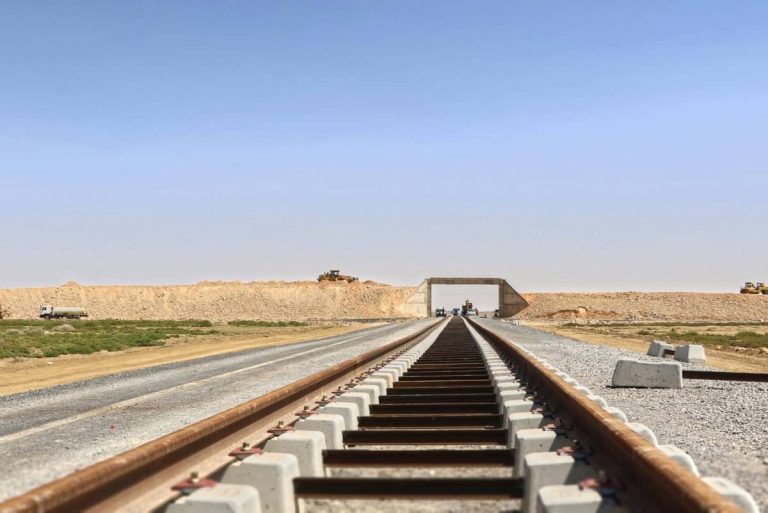
중거리 철도의 유지보수 및 수리, 레일 연삭은 매우 중요한 작업입니다.. 레일 연삭이 필요한 이유? This is because the service life of rails is directly related to rolling contact fatigue cracks and rail wear. Fatigue cracks affect the running state of wheels and rails, increase maintenance costs, shorten the service life of rails, and even cause rail breaks. 레일 마모, especially the side wear of the upper rail on curves, can lead to rapid rail damage.
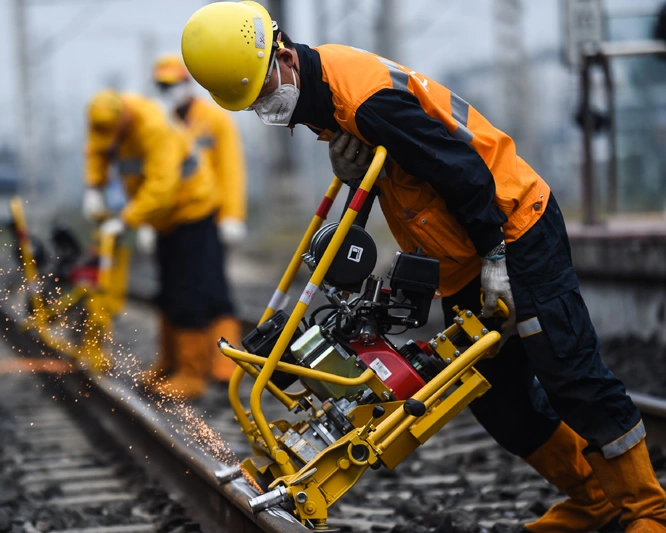
To slow down the development of rolling contact fatigue and wear damage between rails and wheels and extend the service life of rails, modern rail maintenance and repair technologies must be adopted. 현재, rail grinding (갈기) technology is widely used by heavy-haul railways around the world as the main means to alleviate rolling contact fatigue and wear damage of rails.
간단히 말해서, after a period of use, rails will develop problems such as side wear, wave wear, hidden rail defects, rail cracks, rail flanges, and scratches, losing their standard “나” 모양. All these are signs of rail “illness”, which disrupts the optimal rail profile, alters the wheel-rail contact state, increases wheel-rail noise, accelerates the deterioration of vehicle and track components, and exacerbates the further spread of rail damage.
After the rail wears down, it can no longer maintain its optimal profile. The cure for this is to perform a kind of “수술” on the rail-rail grinding. Rail grinding essentially involves cutting the surface of the rail to remove defects and restore it to its optimal profile.
The more severe the rail damage, the greater the amount of cutting required, the larger the workload, the greater the difficulty, and the shorter the rail’s lifespan. 그러므로, corrective grinding and restorative grinding are like “treating diseases”, while the best approach is to prevent the rail from “falling ill”, 즉, to carry out regular preventive grinding to eliminate damage in its nascent stage. The reason why preventive grinding is good is that it does not require a large amount of rail cutting, generally controlled within 0.1 to 0.2mm. 이쪽으로, it can extend the rail’s lifespan without a large amount of cutting, making it the most economical and effective method.
(1) Corrective grinding, also known as restorative grinding, with each grinding amount ranging from 0.5 to 4.6mm;
(2) Transitional grinding, which aims to transform the corrective grinding system into a preventive or periodic grinding system;
(3) Preventive grinding or periodic grinding, which only requires the removal of a small amount of metal, 0.2 to 0.3mm, and is the most economical and effective;
(4) Special grinding to achieve a specific rail cross-section shape and a smooth rail contact surface. To achieve the best quality of rail grinding, the grinding method is usually determined based on multiple factors such as the line grade of the operation section, transportation capacity, target rail cross-section, pre-grinding rail condition, grinding cycle, and block time.
According to the maintenance and repair practices of heavy-haul railway lines in various countries around the world, among the four types of grinding operations, preventive grinding has the highest cost-effectiveness. 요즘에는, preventive rail grinding technology has become an indispensable part of heavy-haul railway line maintenance and repair. According to statistical data, in Canada, the use of rail grinding technology can extend the lifespan of rails in curved sections by 2.2 times and in straight sections by 3 에게 4 타임스; in the United States, experiments have shown that preventive grinding technology reduces the annual rail damage rate by 65% compared to corrective grinding; in Australia, the use of preventive grinding technology can extend the rail lifespan by 50% 에게 58%.
Regular preventive grinding of rails can extend their lifespan by 5 에게 8 연령, improve train operation, maintain passenger comfort, reduce hunting motion, lower noise, reduce energy consumption, and decrease the maintenance costs of locomotive components and tracks, resulting in both economic and social benefits. Research shows that when the micro-cracks on the rail do not exceed 0.2mm, preventive grinding is the best time to stop the accelerated deterioration trend of the rail.
Sliding shoe grinding involves pressing a grinding stone against the rail and moving it back and forth to remove the surface layer of the rail. This grinding method can only grind the rail head longitudinally, cannot adjust the rail profile, and cannot grind turnouts. 게다가, it is relatively slow and is gradually being phased out. Grinding wheel grinding typically uses a high-speed rotating grinding wheel driven by an electric motor or hydraulic motor to grind the rail. This is an active grinding method and is currently the main grinding method. Milling grinding is a new type of rail profile restoration operation mode. The milling cutters are installed on the radial surface of the milling wheel, and each milling section has several milling cutters. There are several milling sections in one rotation of the milling wheel, and all the milling cutters together form the required rail head profile.
On railways, the rail head rolling surface is usually ground by grinding machines or grinding cars to eliminate surface irregularities and surface defects of the rail, thereby restoring the rail head profile to its original design shape, slowing down the further development of surface defects, improving the smoothness of the rail surface, and achieving the goals of enhancing passenger comfort, reducing wheel-rail noise, and extending the rail’s lifespan. In addition to small-scale rail grinding tools, the major large-scale rail grinding equipment currently available in China mainly includes the GMC-96x rail grinding train, the CMC-20 rail grinding car (switch grinding car), the GMC-96b rail grinding train, and the PGM-48 rail grinding train etc. Each type of equipment has its unique capabilities and advantages.
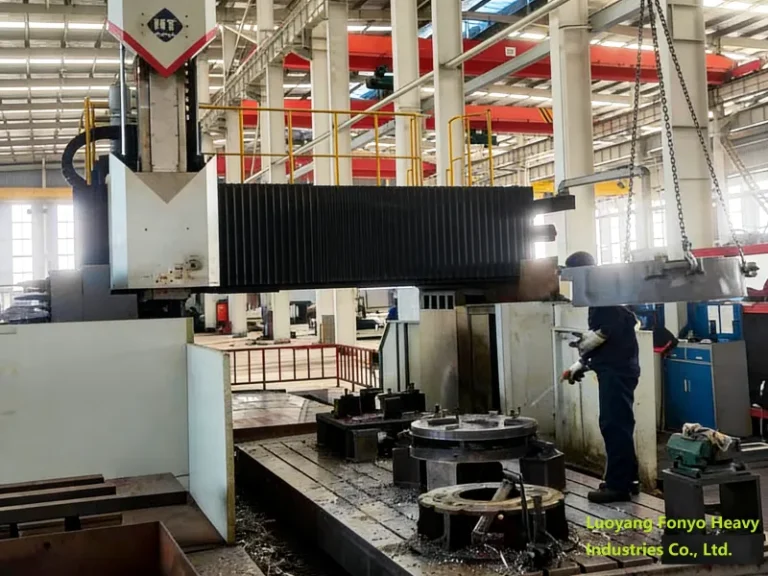
뤄양포뇨중공업(Luoyang Fonyo Heavy Industries), 주식회사, 1998년에 설립된 철도 주조 부품 제조업체입니다.. 우리 공장의 면적은 72,600㎡입니다., 이상으로 300 직원, 32 기술자, 포함 5 수석 엔지니어, 11 보조 엔지니어, 그리고 16 기술자. 우리의 생산 능력은 30,000 연간 톤. 현재, 우리는 주로 주조물을 생산하고 있습니다, 가공, 기관차 조립 및 조립, 철도 차량, 고속 열차, 광산 장비, 풍력, 등.
우리는 CRRC에 철도 부품을 공급하고 있습니다.(이상 포함 20 CRRC의 지사 및 자회사), Gemac 엔지니어링 기계, 삼니그룹, 중공업, 등. 우리의 제품은 러시아로 수출되었습니다, 미국, 독일, 아르헨티나, 일본, 프랑스, 남아프리카, 이탈리아와 전 세계의 다른 나라들.
연락처 정보:
이메일:[email protected]
이동하는:008615515321683