WeChat 코드를 스캔하여 문의하세요
WeChat 코드를 스캔하여 문의하세요
이메일을 보내주시면 최대한 빨리 답변해 드리겠습니다..
마음과 영혼을 다해 미래를 창조하다


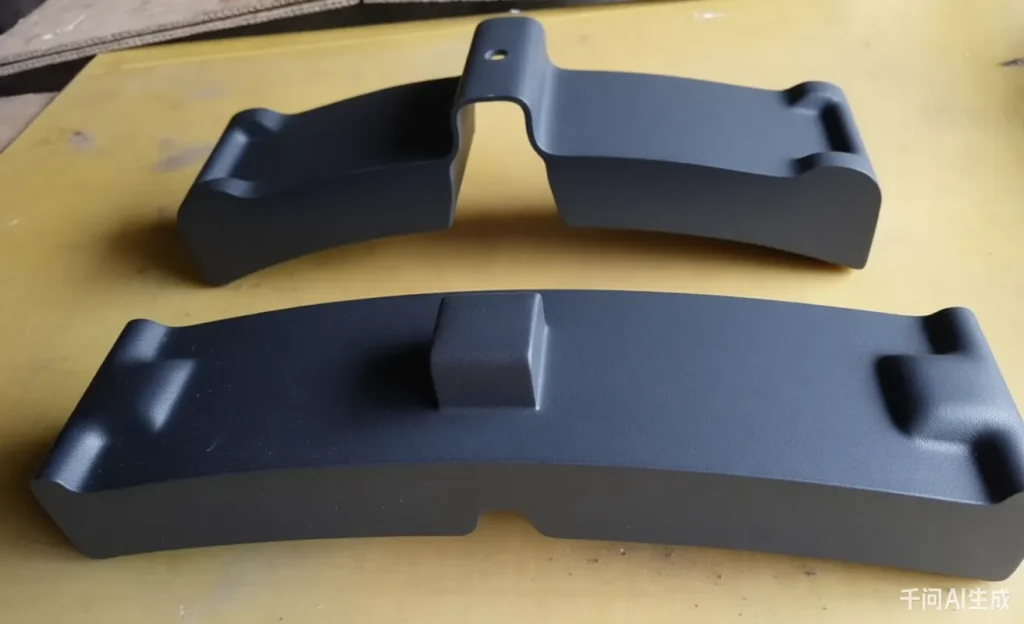
Hi! I’m an engineer who designs railway braking systems. You’ve probably taken the train many times, but you might not know exactly how this giant vehicle comes to a smooth stop. 오늘, I’ll explain in simple words the little unsung hero in the train braking system, it is the r어웨이 브레이크 슈즈.
You can think of it as a supercharged version of the rubber shoe on your bicycle brake, but its job is much tougher and smarter.
Simply put, its job is to “rub.”
When the driver wants to brake:
Signal sent: The driver pulls the brake lever, just like you squeeze your bike brake, and a “brake” signal is sent.
Force transfer: Modern trains use high-pressure air or hydraulic fluid to transfer that braking force. This pressure pushes the brake shoe tightly against a fast-spinning steel disc (called a brake disc; on some older trains, it rubs against the wheel itself).
Friction slows it down: When two things rub hard against each other, they create strong friction. This force acts like invisible hands pulling backward on the train, slowing it down.
Stopping: The train stops completely once the friction has “used up” all the kinetic energy (the energy of motion).
The key point: It uses rubbing to create friction and grind away the train’s forward momentum.
Here’s an important question: A train is very heavy and moves very fast, so it has a lot of forward momentum. After friction “destroys” this momentum, where does it go?
The answer: Almost all of it turns into heat!
You can try a quick experiment: Rub your hands together fast—do they feel warm? Train braking works the same way, just on a huge scale. 그만큼 브레이크 슈 and steel disc rub together so intensely that they can reach temperatures of several hundred or even over a thousand degrees in seconds, sometimes spraying sparks (you might see this near the wheels when a train pulls into a station).
This is a huge challenge for the brake shoe:
Fear of heat fade: Just like an eraser can get soft and slippery when too hot, ordinary materials lose their grip when overheated, making braking less effective. That’s why our brake shoes are made of special composite materials like mixes of metal, ceramic fibers, etc. they act like “heat-resistant warriors” and stay strong even under high heat.
Fear of expansion and contraction: Metal expands when hot. If not designed well, the parts could jam when expanded or leave too much gap when cooled, slowing down brake response. Engineers have to carefully calculate and leave just the right amount of “thermal expansion room.”
Fear of wearing out: Rubbing under such high heat every day causes fast wear. Our goal is to find the “perfect material mix” that is wear-resistant, heat-resistant, and provides steady friction.
The brake shoe can’t do this job alone—it works as part of a precise braking team:
Partner: Brake disc / 바퀴: This is what it rubs against. They must be hard and strong enough to handle the heat.
Power source: Pneumatic / hydraulic system: This is its “muscle,” providing and precisely controlling how tightly it grips.
Brain: Electronic control system: This is the smartest part. Modern trains have an “intelligent braking brain.”
It automatically adjusts braking force based on speed, load, and whether the track is slippery to prevent skidding or braking too hard.
Like a car’s ABS, it prevents the wheels from locking up on icy or slippery tracks.
When going down a long slope and needing continuous braking, it directs the system to brake intermittently, allowing the brake shoe to cool down and avoid overheating.
그래서, a smooth stop is the result of seamless teamwork between the brake shoe, brake disc, power system, and computer.

When designing brake shoes, we mainly focus on solving these challenges:
Stable performance: Friction must be reliable in all seasons—dry or wet—not affected by the weather.
Longer lifespan: Changing brake shoes is a hassle. We try to make them more wear-resistant to reduce how often they need replacement.
Quiet and eco-friendly: We try to avoid sharp squealing noises when braking and use non-toxic, environmentally friendly materials.
경량: Reducing weight without losing strength helps cut down the train’s energy use.
5. Future trends
More intelligence—brake shoes may have built-in sensors to tell us their “health” and temperature in real time, allowing preventive maintenance. Materials keep improving too, moving toward more heat-resistant and wear-resistant options like carbon-fiber composites.
Railway brake shoes are among the most critical safety components on a train. By relying on the fundamental principle of friction, they convert massive kinetic energy into heat, withstand extreme operating conditions, and work seamlessly with modern braking systems to ensure every stop is safe, smooth, 그리고 신뢰할 수 있는.
If you are looking for reliable railway brake shoes for your fleet or projects, we are an experienced manufacturer with long-term know-how in railway braking components. We supply brake shoes designed for stable performance, 내구성, and consistent quality under demanding service conditions.
For more information about our railway brake shoe products and manufacturing capabilities, please contact 뤄양포뇨중공업(Luoyang Fonyo Heavy Industries), 주식회사., and you can visit our website www.railwaypart.com 우리에 대한 더 많은 정보를 얻으려면.
직접 문의하실 수도 있습니다:
왓츠앱: +86 15515351287
이메일: [email protected]