Scannez le code WeChat pour nous contacter
Scannez le code WeChat pour nous contacter
N'hésitez pas à nous envoyer un email et nous vous répondrons dans les plus brefs délais.
Créer l'avenir avec cœur et âme


Dans l'entretien et la réparation des chemins de fer lourds, Le meulage des rails est une tâche très importante. Pourquoi le meulage des rails est-il nécessaire? En effet, la durée de vie des rails est directement liée aux fissures de fatigue au contact du roulement et à l'usure des rails.. Les fissures de fatigue affectent l'état de fonctionnement de roues et rails, augmenter les coûts de maintenance, raccourcir la durée de vie des rails, et même provoquer des ruptures de rail. Usure des rails, notamment l'usure latérale du rail supérieur dans les courbes, peut entraîner des dommages rapides aux rails.
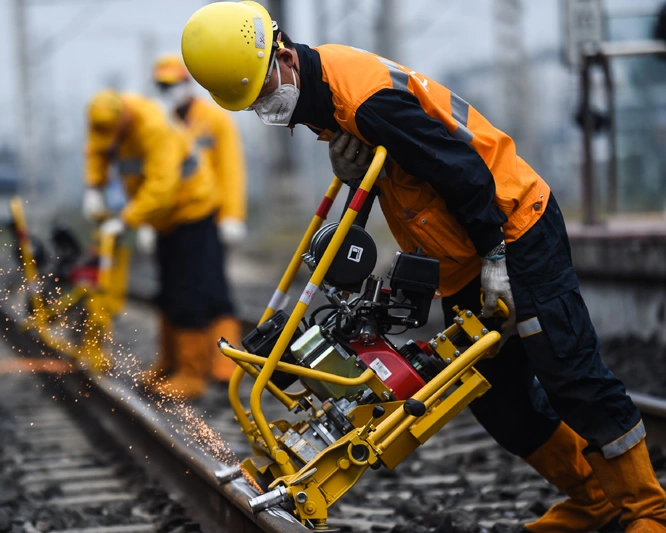
Ralentir le développement de la fatigue de contact de roulement et des dommages d'usure entre les rails et les roues et prolonger la durée de vie des rails, des technologies modernes d’entretien et de réparation ferroviaire doivent être adoptées. Actuellement, meulage de rails (fraisage) technology is widely used by heavy-haul railways around the world as the main means to alleviate rolling contact fatigue and wear damage of rails.
En termes simples, after a period of use, rails will develop problems such as side wear, wave wear, hidden rail defects, rail cracks, rail flanges, and scratches, losing their standard “je” forme. All these are signs of rail “illness”, which disrupts the optimal rail profile, alters the wheel-rail contact state, increases wheel-rail noise, accelerates the deterioration of vehicle and track components, and exacerbates the further spread of rail damage.
After the rail wears down, it can no longer maintain its optimal profile. The cure for this is to perform a kind of “surgical operation” on the rail-rail grinding. Le meulage du rail consiste essentiellement à découper la surface du rail pour éliminer les défauts et lui redonner son profil optimal..
Plus les dommages aux rails sont graves, plus la quantité de coupe requise est grande, plus la charge de travail est importante, plus la difficulté est grande, et plus la durée de vie du rail est courte. Donc, Le meulage correctif et le meulage réparateur sont comme “traiter les maladies”, alors que la meilleure approche consiste à empêcher le rail de “tomber malade”, c'est, effectuer un meulage préventif régulier pour éliminer les dommages à leur stade naissant. La raison pour laquelle le meulage préventif est efficace est qu’il ne nécessite pas une grande quantité de coupe des rails., généralement contrôlé au sein 0.1 à 0,2 mm. Par ici, cela peut prolonger la durée de vie du rail sans avoir à couper beaucoup, ce qui en fait la méthode la plus économique et la plus efficace.
(1) Corrective grinding, also known as restorative grinding, with each grinding amount ranging from 0.5 to 4.6mm;
(2) Transitional grinding, which aims to transform the corrective grinding system into a preventive or periodic grinding system;
(3) Preventive grinding or periodic grinding, which only requires the removal of a small amount of metal, 0.2 to 0.3mm, and is the most economical and effective;
(4) Special grinding to achieve a specific rail cross-section shape and a smooth rail contact surface. To achieve the best quality of rail grinding, the grinding method is usually determined based on multiple factors such as the line grade of the operation section, transportation capacity, target rail cross-section, pre-grinding rail condition, grinding cycle, and block time.
According to the maintenance and repair practices of heavy-haul railway lines in various countries around the world, among the four types of grinding operations, preventive grinding has the highest cost-effectiveness. Nowadays, preventive rail grinding technology has become an indispensable part of heavy-haul railway line maintenance and repair. According to statistical data, in Canada, the use of rail grinding technology can extend the lifespan of rails in curved sections by 2.2 times and in straight sections by 3 à 4 fois; in the United States, experiments have shown that preventive grinding technology reduces the annual rail damage rate by 65% compared to corrective grinding; in Australia, the use of preventive grinding technology can extend the rail lifespan by 50% à 58%.
Regular preventive grinding of rails can extend their lifespan by 5 à 8 années, improve train operation, maintain passenger comfort, reduce hunting motion, lower noise, reduce energy consumption, and decrease the maintenance costs of locomotive components and tracks, resulting in both economic and social benefits. Research shows that when the micro-cracks on the rail do not exceed 0.2mm, preventive grinding is the best time to stop the accelerated deterioration trend of the rail.
Sliding shoe grinding involves pressing a grinding stone against the rail and moving it back and forth to remove the surface layer of the rail. This grinding method can only grind the rail head longitudinally, cannot adjust the rail profile, and cannot grind turnouts. De plus, it is relatively slow and is gradually being phased out. Grinding wheel grinding typically uses a high-speed rotating grinding wheel driven by an electric motor or hydraulic motor to grind the rail. This is an active grinding method and is currently the main grinding method. Milling grinding is a new type of rail profile restoration operation mode. The milling cutters are installed on the radial surface of the milling wheel, and each milling section has several milling cutters. There are several milling sections in one rotation of the milling wheel, and all the milling cutters together form the required rail head profile.
On railways, the rail head rolling surface is usually ground by grinding machines or grinding cars to eliminate surface irregularities and surface defects of the rail, thereby restoring the rail head profile to its original design shape, slowing down the further development of surface defects, improving the smoothness of the rail surface, and achieving the goals of enhancing passenger comfort, reducing wheel-rail noise, and extending the rail’s lifespan. In addition to small-scale rail grinding tools, the major large-scale rail grinding equipment currently available in China mainly includes the GMC-96x rail grinding train, the CMC-20 rail grinding car (switch grinding car), the GMC-96b rail grinding train, and the PGM-48 rail grinding train etc. Each type of equipment has its unique capabilities and advantages.
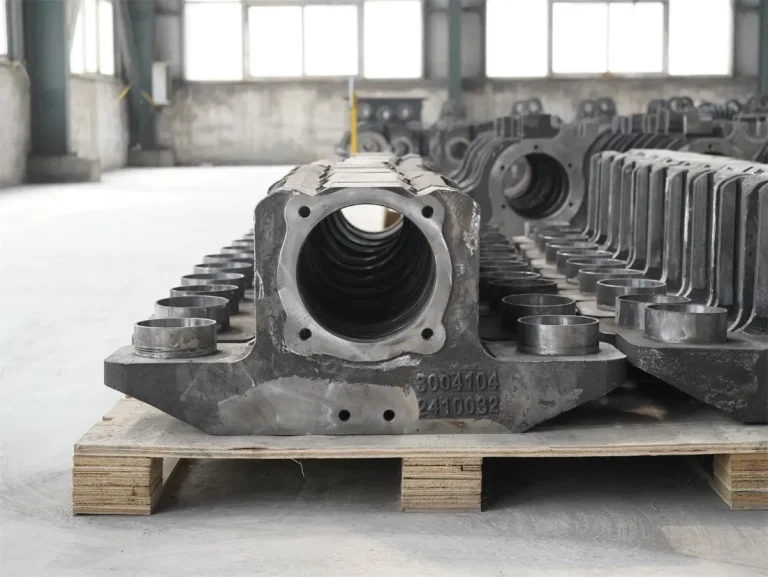
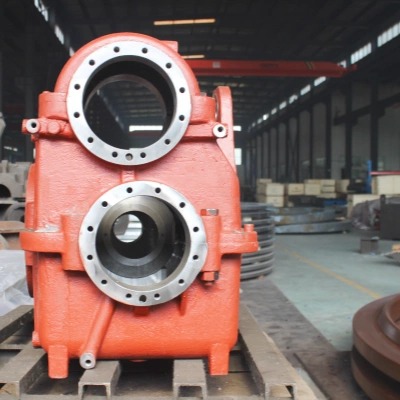
Luoyang Fonyo Heavy Industries Co., Ltée, fondée en 1998, est un fabricant de pièces moulées ferroviaires. Notre usine couvre une superficie de 72 600㎡, avec plus de 300 employés, 32 techniciens, y compris 5 ingénieurs supérieurs, 11 ingénieurs adjoints, et 16 techniciens. Notre capacité de production est 30,000 tonnes par an. Actuellement, nous produisons principalement du moulage, usinage, et montage pour locomotive, wagon, trains à grande vitesse, équipement minier, énergie éolienne, etc..
Nous sommes la fourniture de pièces ferroviaires au CRRC(dont plus de 20 succursales et filiales de CRRC), Machines d'ingénierie Gemac, Groupe Sany, Industries lourdes Citic, etc.. Nos produits ont été exportés vers la Russie, les États-Unis, Allemagne, Argentine, Japon, France, Afrique du Sud, Italie et autres pays du monde.
Coordonnées:
E-mail:[email protected]
Mobile:008615515321683