Scan the WeChat code to contact us
Scan the WeChat code to contact us
Feel free to send us a email and we will reply to you as soon as possible.
Creating the future with heart and soul


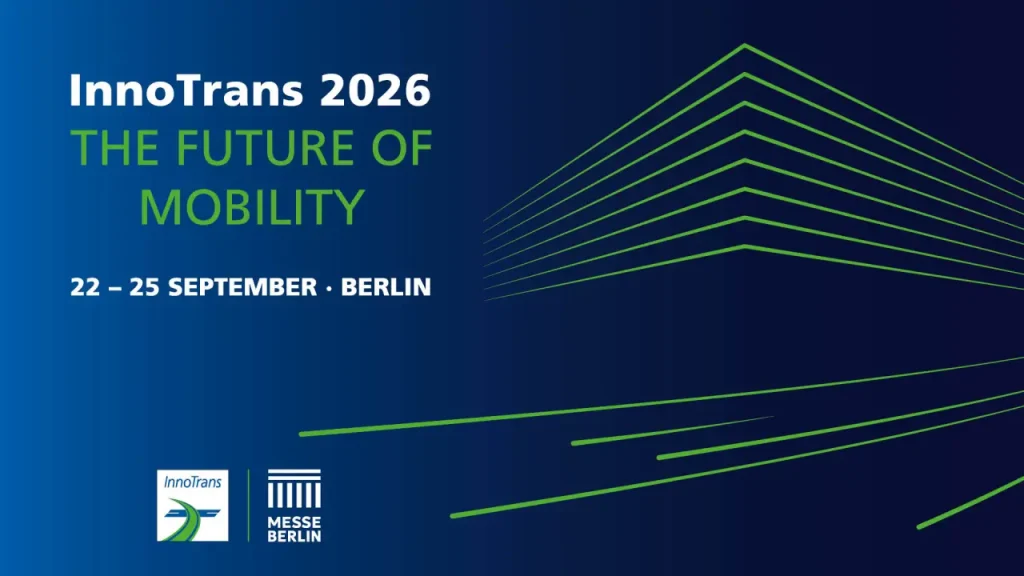
InnoTrans 2026, held in Berlin from 22 to 25 September, made one thing clearer than any keynote could: the technologies buyers have been watching from a distance are now inside the spec sheets. Across 113 vehicles on display and roughly 180 world premieres, three themes dominated: artificial intelligence, digitalisation, and alternative propulsion. The fair is over, but the signal it sent to procurement teams is not. The next generation of rolling stock and infrastructure will be bought differently, and the suppliers who understand that will be easier to work with.
Walk the outdoor tracks at any InnoTrans and you used to see metal first. Locomotives, wagons, coaches, all of it judged by weight, gauge, and axle load. That is still there, but in 2026 the conversation around every vehicle started with software.
Siemens Mobility introduced Vectron X, a platform it calls software-defined, with an onboard app store in the way a phone has an app store. Alstom showed a “Talk to my train” assistant meant to help maintenance staff diagnose faults through conversation.
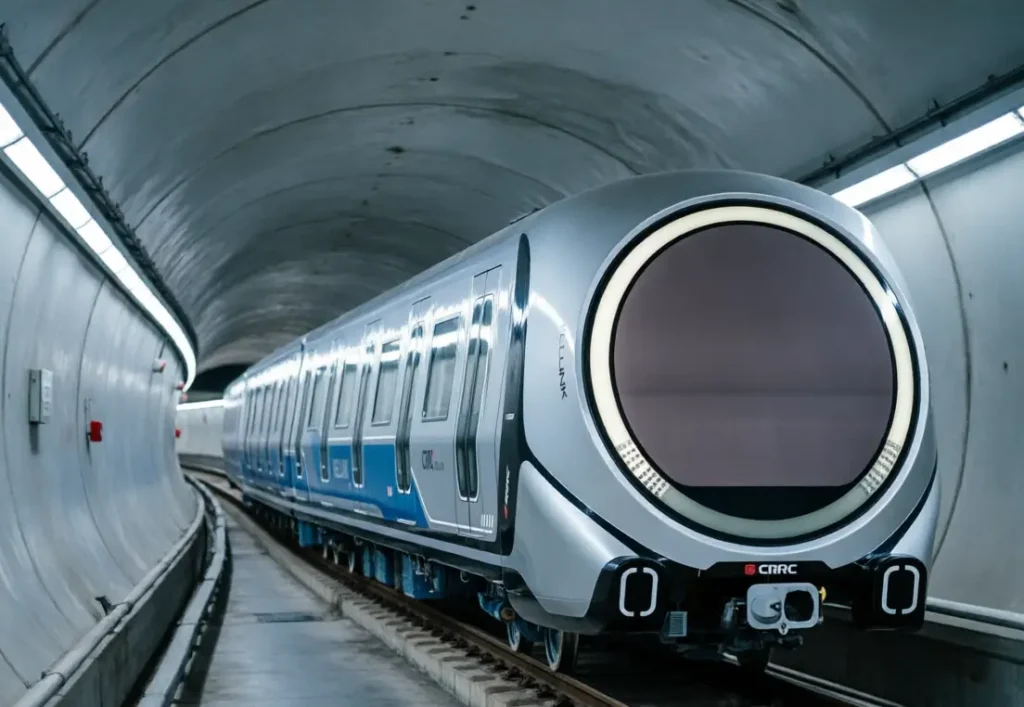
Stadler brought a narrow-gauge hydrogen train. CRRC displayed a 2,000 kW hydrogen fuel cell hybrid locomotive wrapped around a deep-learning driving platform with 360-degree environmental detection.
The pattern is not subtle. Propulsion, control, and diagnostics are being fused into a single digital stack, and that has a direct consequence for anyone writing a purchase order. A buyer who evaluates a vehicle only on mechanical specification is now looking at half the product.
I think that is worth sitting with for a moment, because it changes what “good supplier” means.
The three themes at InnoTrans 2026 sound abstract until you translate them into procurement language. That translation is where most of the value hides.
Artificial intelligence moved from the slides to the shop floor. This is the part I would pay closest attention to. AI at this fair was not a data-science experiment; it was inspection, diagnostics, and driver assistance doing real work. Downer, working with Future Maintenance Technologies, showed an automated inspection system combining drones, LiDAR, laser, and optical sensors, with machine learning flagging anomalies from collection through to reporting. That is a maintenance workflow, not a demo.
Knorr-Bremse’s LEADER Flow system uses live data from trains ahead to coach the driver toward smoother, more efficient running. The company reports average energy savings above 10% in tests. That figure comes with a condition, of course, test results on specific routes rather than a universal promise, but it tells you the direction of travel.
Digitalisation is now a procurement criterion, not an afterthought. Systems like voestalpine’s zentrak condition monitoring and Hexagon’s CALIPRI wheelset measurement feed operational data into analytics that flag wear before it becomes failure. A railway wheel that is measured in operation, rather than only at a periodic inspection, is a different purchase from the one most teams have been making. The supplier who can hand over data, not just parts, is the one whose quote survives the next decade.
Alternative propulsion stopped being a niche. Hydrogen and battery traction appeared across the outdoor tracks, from Stadler’s narrow-gauge hydrogen unit to Škoda’s battery RegioPanter and CAF’s battery Civity. On non-electrified lines, diesel replacement is no longer a question of “if” but “which technology fits the duty cycle.” That is a procurement decision, and it is a harder one than it looks, because the right answer depends on route length, charging or refuelling infrastructure, and operating pattern more than on any catalogue number.
It also pushes the same railway fasteners for heavy haul and running gear to carry different loads than the diesel fleet they replace, which is easy to overlook when the discussion stays at the level of “green versus diesel.”
Here is the thing nobody spells out at the fair. When a vehicle becomes software-defined and its maintenance becomes predictive, the vendor relationship stops being transactional.
Imagine two suppliers bidding on a fleet of wheelsets. One delivers wheels to a dimensional spec and sends an inspection certificate. The other delivers the same wheels but can also feed condition data into a predictive maintenance platform, so wear is tracked against operating history rather than discovered at a periodic check. The second supplier is not selling a component; they are selling a service wrapped around a component.
Neither approach is wrong. A railway that inspects wheelsets on a fixed schedule has run safely for decades. But the buyer who is also being asked, by their own operations team, to move toward condition-based maintenance will find the second supplier easier to justify in front of a budget committee. That is the quiet shift InnoTrans 2026 made visible.
I would be cautious about treating any of this as settled. A lot of what appeared in Berlin is at the world-premiere stage, which means limited field history. A hydrogen locomotive with a deep-learning driving platform is genuinely interesting, but its total cost of ownership over a 25-year life is still an estimate, not a measured fact.
The smart procurement move is not to bet on a technology. It is to bet on a supplier who can prove the boring parts: traceability, certification, and documentation. A predictive maintenance platform is only as good as the data feeding it, and the data is only as good as the components that generated it. If the wheelset supplier cannot tell you which heat the steel came from and which standard the wheel was tested against, the analytics downstream are building on sand.
I have written before about why some railway castings pass inspection but still fail in service, and the lesson applies here in reverse. A component that carries clean traceability from day one is the only kind worth plugging into a predictive system.
That is the link most buyers miss between the two halves of InnoTrans 2026. The flashy digital layer and the unglamorous metallurgy are the same purchase.
If you are writing requirements this year, these are the questions worth putting to every supplier, regardless of whether they exhibited in Berlin.
First, ask whether the component is specified against a named standard, and ask to see the correspondence between the certificate and the physical marking. EN 13262 for wheels, UIC and AREMA for track parts, the relevant ISO for castings. If a supplier hesitates on this, the conversation should not move to predictive maintenance.
Second, ask how the supplier handles data, not just parts. Do they provide measurement or condition information that your own maintenance systems can ingest? This matters more for wheelsets, brakes, and track fastenings than for a one-off casting, but the question is cheap to ask everywhere.
If you are already reviewing how a rail fastening system is specified, this is the moment to check whether the supplier can tell you how it will behave over its life, not just how it measures on day one.
Third, ask for the testing conditions behind any performance claim. A 10% energy saving means little without knowing the route, the load, and the weather it was measured under. A good supplier will volunteer that context; a weak one will hope you do not ask.
None of these questions is new. What InnoTrans 2026 changed is how much they now determine the outcome of a tender.
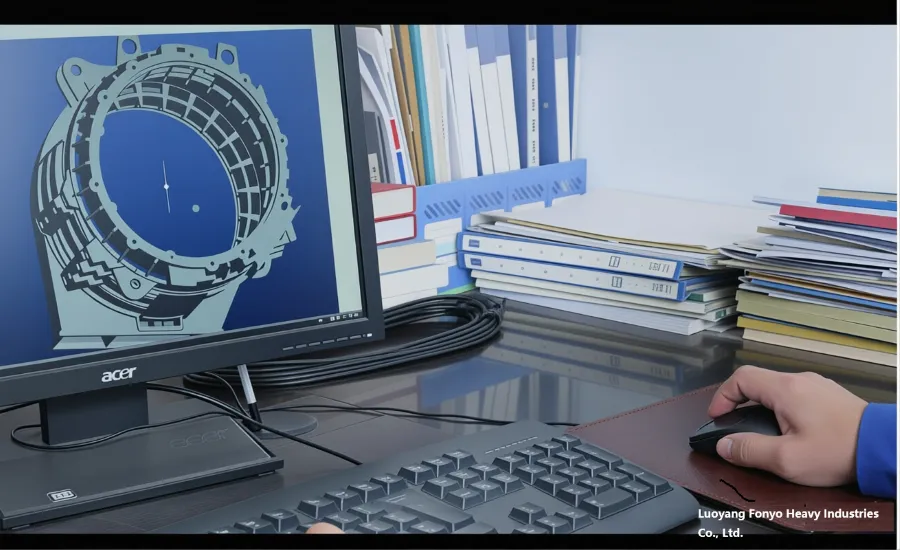
A railway wheel or a rail fastening system may look like it belongs on the mechanical half of the fair, far from the software demos. In practice it sits at the junction. Every predictive maintenance story told in Berlin depends on components that are specified, traceable, and measured correctly from the day they are delivered.
Whether you are designing a new fleet or replacing worn track parts, the same discipline applies. The technology on display at InnoTrans 2026 is real and it is moving fast, but it does not replace sound component engineering. It builds on top of it.
If you are thinking through how new propulsion or predictive maintenance changes your fleet, it may help to step back and review how train wheels are designed in the first place, because the fundamentals have not gone anywhere.
At Luoyang Fonyo Heavy Industries Co., Ltd., we manufacture railway wheels, railway fasteners such as fish plates, fish bolts, elastic rail clips, rail pads, and large railway casting products. If you are evaluating how the next generation of rolling stock and track fits your network, we are happy to review a drawing or an existing sample and give you a technical assessment before you commit to a quote. The fair told us where the industry is going. Your specification tells us what you actually need.
What were the main themes of InnoTrans 2026?
Artificial intelligence, digitalisation, and alternative propulsion. The fair brought together 3,190 exhibitors from 59 countries and showed 113 vehicles, with AI moving into maintenance, diagnostics, and operations rather than staying in the background.
Does AI in rail maintenance mean fewer suppliers are needed?
Not exactly. AI changes what buyers ask for, but it does not remove the underlying components. Predictive maintenance still needs wheels, brakes, and fastenings that are traceable and correctly specified, so the supply base becomes more important, not less.
Are hydrogen and battery trains ready to replace diesel everywhere?
It depends on the duty cycle. On some non-electrified routes they are being deployed now; on others the infrastructure for refuelling or charging is not there yet. The right choice follows route length and operating pattern, not a blanket rule.
Should I prioritise software features or component quality when buying?
Component quality first. A predictive platform is only as reliable as the data it receives, and that data comes from well-specified, traceable parts. The digital layer adds value on top of sound engineering, not instead of it.
How do I know if a supplier’s performance claims are credible?
Ask for the testing conditions behind any number. Energy savings, wear life, and reliability figures only mean something when you know the route, load, and environment they were measured under.
Do these trends affect track components like fish plates and clips?
Yes. Condition monitoring and data-driven maintenance increasingly extend below the vehicle to track and fastening systems, so the same expectations around traceability and documentation now apply to components that were once bought purely on dimension.
Is InnoTrans worth following if I do not attend?
Yes. It is the clearest single snapshot of where the industry is investing, and the themes it surfaces typically show up in tender requirements within a few years.