Scan the WeChat code to contact us
Scan the WeChat code to contact us
Feel free to send us a email and we will reply to you as soon as possible.
Creating the future with heart and soul


UIC rail standards are a set of technical specifications developed by the International Union of Railways that define dimensions, materials, testing methods and acceptance criteria for railway components including rails, wheels, fasteners and vehicle dynamics. The most important ones for procurement are UIC 860 (rail profiles), UIC 510 (wheel sets), UIC 864 (fish plates and bolts) and UIC 518 (vehicle dynamic behavior).
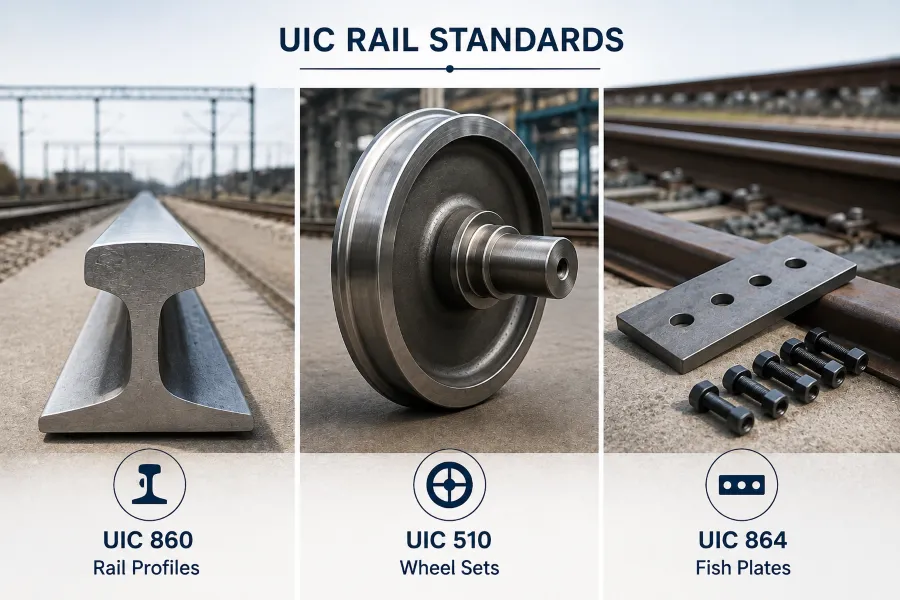
The cast steel vs fabricated bogie frames question deserves a straight engineering answer, not a sales pitch. The same is true of UIC rail standards: they are not paperwork, they are the reason a wheel made in one country fits a rail laid in another.UIC
UIC stands for Union Internationale des Chemins de fer, or International Union of Railways. Founded in 1922, it is the global body that produces what used to be called “UIC Leaflets” and are now increasingly published as IRS (International Railway Standard) documents. These documents cover everything from wagon numbering systems to high-speed line design, but for anyone buying or specifying railway components, a small subset matters far more than the rest.
Here is why UIC rail standards matter in practice. A railway track maintenance program built around UIC-compliant components means your spare parts pool works across borders. Your fish plates fit the rail profile your supplier shipped. Your wheels match the gauge and the running surface the track engineer designed for. When standards diverge, none of those things is guaranteed.
The other thing worth knowing: UIC rail standards have been migrating into EN (European Norm) documents over the past two decades. UIC 860 for rail profiles lives on inside EN 13674-1. The geometry is essentially unchanged, but EN versions tend to add tighter tolerances, more rigorous testing requirements and formal certification schemes. If your project specification cites an EN number, you are usually still working with UIC-derived requirements.
This is where most people start, and for good reason. The rail profile determines everything downstream: which fasteners fit, how much wear the head can tolerate before replacement, what the moment of inertia is, and whether your grinding machine has the right template.
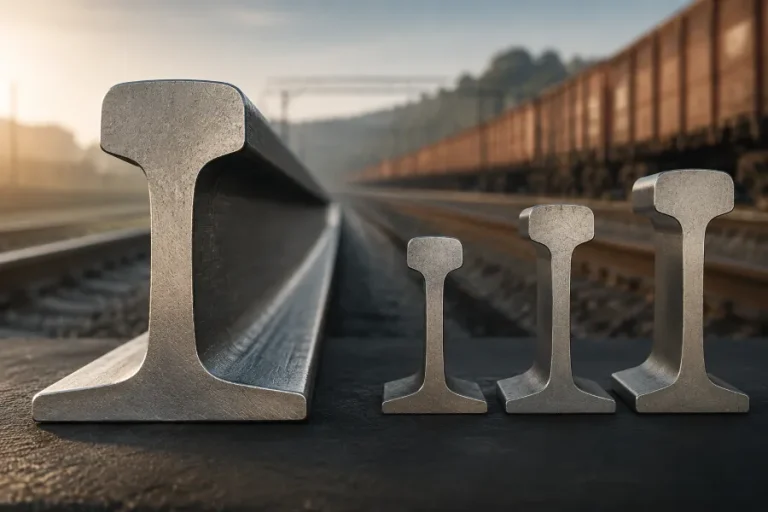
UIC 860 defines three primary flat-bottom profiles that still dominate international projects:
UIC 50 (50.46 kg/m). Head width 70 mm, height 152 mm, foot width 125 mm. Light branch lines, industrial sidings, low-speed applications where cost per metre matters more than stiffness. You still see it on secondary networks in parts of Asia, Africa and Eastern Europe.
UIC 54 / 54E1 (54.43 kg/m). Head width 70 mm, height 159 mm, foot width 140 mm. The conventional mainline workhorse before UIC 60 took over. Adequate for mixed traffic at moderate speeds. Its moment of inertia sits around 2,338 cm4, which tells you something about why it got replaced on heavy corridors.
UIC 60 / 60E1 (60.21 kg/m). Head width 72-74.3 mm, height 172 mm, foot width 150 mm, web thickness 16.5 mm. This is the profile you encounter on virtually every new high-speed line, heavy-haul corridor and mixed-traffic mainline built in the last 30 years outside North America. Moment of inertia roughly 3,038 cm4. The taller section and thicker web give it significantly better resistance to vertical bending, and the heavier head lasts longer under wear.
The transition from UIC leaflets to EN norms is worth understanding because it shows up in procurement documents. UIC 860-0 defined the original profiles. EN 13674-1 absorbed them as 50E1, 54E1 and 60E1, then added stricter straightness tolerances, surface quality requirements and ultrasonic testing protocols to satisfy high-speed TSI (Technical Specifications for Interoperability) demands. The shape is the same. The bar for proving you made it correctly went up.
Steel grades add another layer. Under the UIC/EN system, common grades include R260 (minimum tensile strength 880 MPa, standard mainline use) and R350HT (heat-treated, minimum 1,175 MPa tensile strength, for heavy-haul and high-speed lines where wear resistance drives rail life). Older UIC documentation sometimes references Grade 900A and Grade 1100, which map closely onto R260 and R350HT respectively.
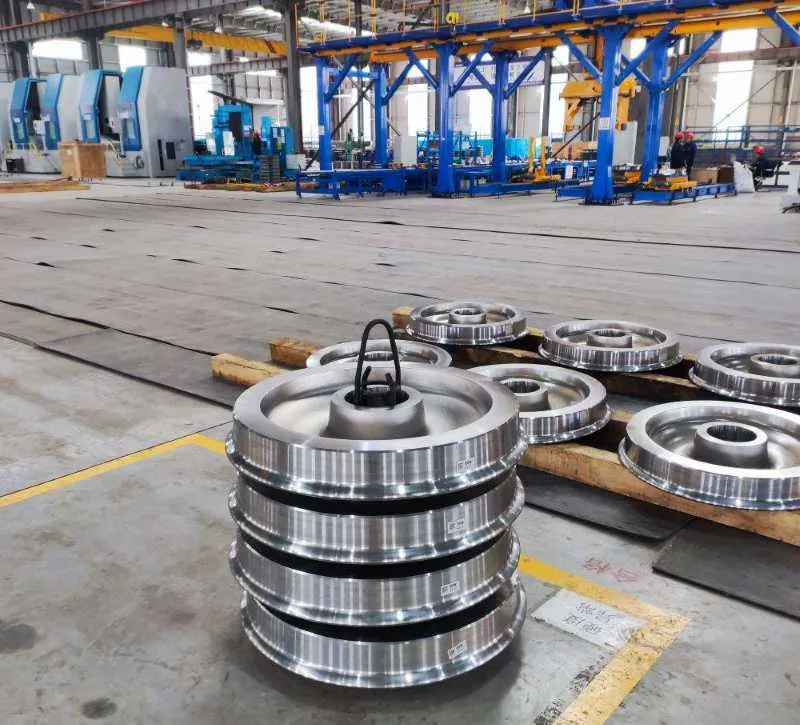
Rails are only half the interface. The railway wheels that run on them have their own UIC rail standards specifications, and getting this wrong is considerably more expensive than ordering the wrong fish plate.
UIC 510-1 and UIC 510-2 cover wheel set dimensions and tolerances. These specify bore diameter, seat positions, wheel base (the distance between the two wheels on an axle) and the critical running surface geometry: tread profile, flange height, flange thickness and back-to-back distance. The tolerance bands here are tight because they directly affect gauge holding, hunting stability and the contact patch position on the rail head.
UIC 510-5 deals specifically with forged solid wheels, covering material requirements, heat treatment zones (the rim needs different properties from the plate and hub) and acceptance testing including hardness mapping and residual stress measurement. If you are sourcing train wheel design replacements, this is the document that defines what “acceptable” looks like on the inspection report.
One detail that catches procurement teams off guard: UIC wheel standards and AREMA wheel standards are not interchangeable. The tread profiles differ. The flange geometry differs. A wheel manufactured to UIC 510 will not ride correctly on AREMA-profiled rail without reprofiling, and even then the match is imperfect. On international projects where rolling stock crosses between UIC-gauge and non-UIC networks, this is a genuine engineering problem, not a paperwork nuisance.
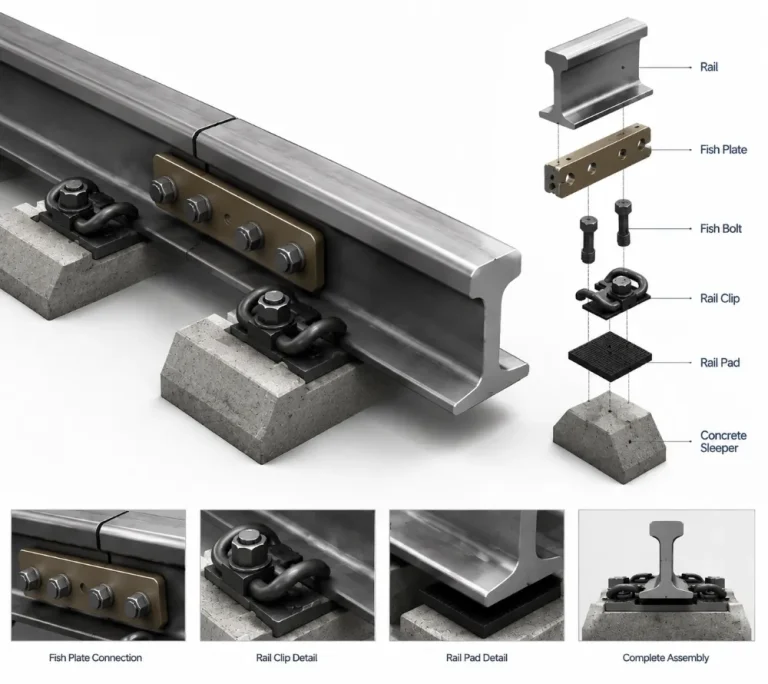
Fish plates, fish bolts, elastic clips and rail pads do not get the attention that rails and wheels do, but they are the components that fail first when tolerances stack up wrong.
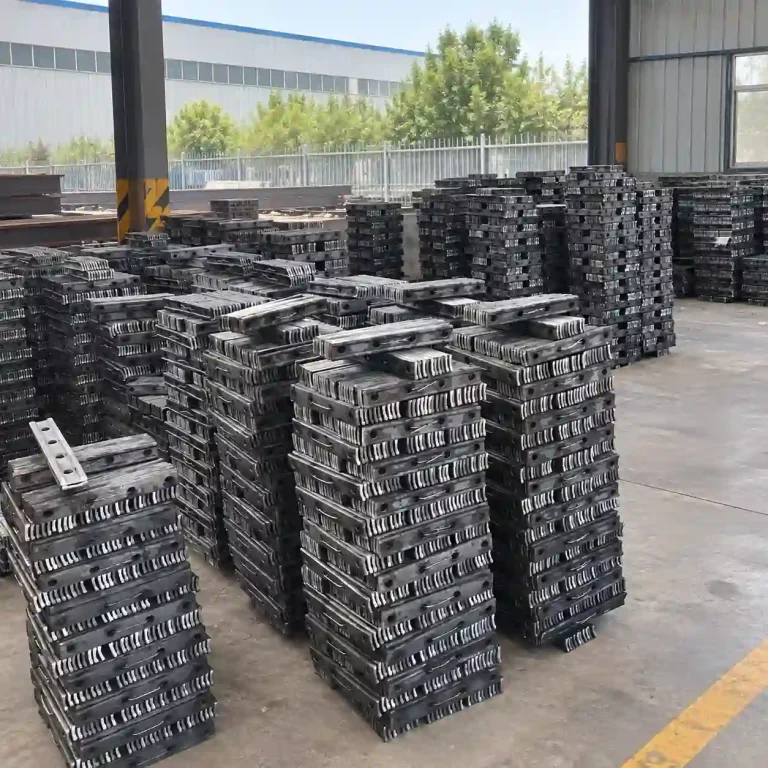
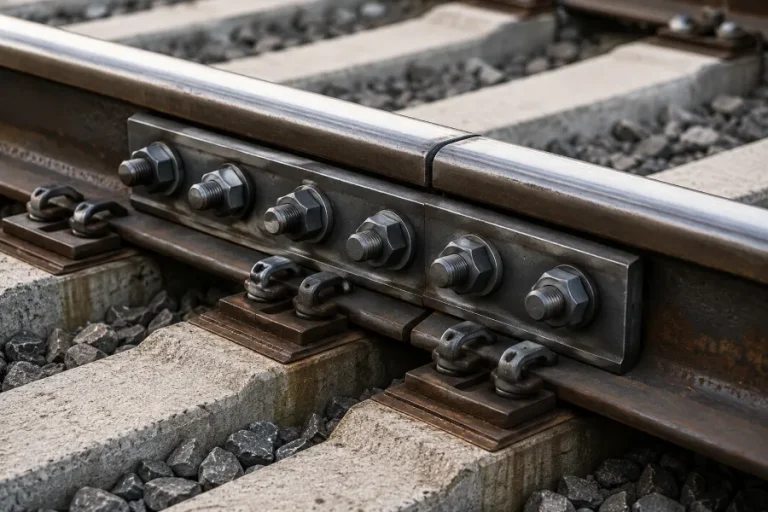
UIC 864 specifies fish plates (joint bars) for UIC rail profiles. It defines the fishing surface geometry (the curved surfaces that clamp against the rail web), hole spacing, dimensional tolerances and material grade requirements. A fish plate made to UIC 864 for a UIC 60 rail will not fit a UIC 54, and it definitely will not fit an AREMA 136RE. The profile matching here is precise.
The standard also covers the bolt circle: hole diameter, pitch (spacing along the fish plate length) and the allowable positional tolerance. When fish bolt loosening becomes a chronic problem on a jointed track section, the first thing an experienced inspector checks is whether the fish plates and bolts were actually manufactured to the same standard revision as the rail. Mismatched revisions can leave gaps at the fishing surface that no amount of retorquing will fix.
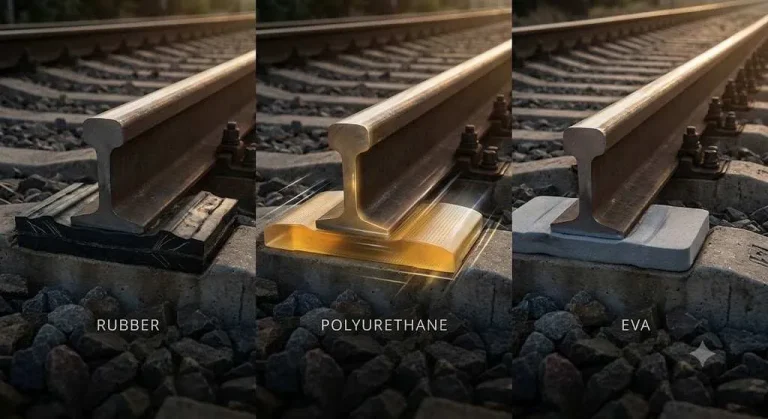
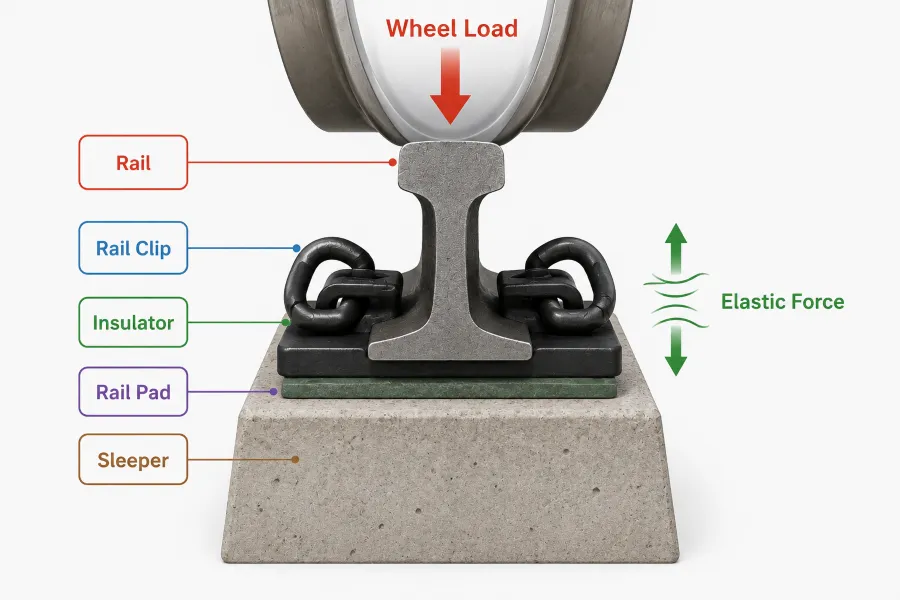
For modern fastening systems, elastic rail clips and rail pads fall under a mix of UIC-derived EN standards (EN 13481 for clip performance, EN 45545 for fire behavior) and proprietary supplier specifications. The UIC influence here is indirect but real: the rail profile defined by UIC 860 determines the clip geometry, and the clip determines the pad design. Change the rail standard, and the whole fastening system cascades.
Most railway casting products specifications we see from procurement teams cite a combination of UIC, EN and occasionally national standards. The pattern is fairly consistent: UIC or EN for the geometry and material baseline, plus project-specific additions for testing frequency, documentation and traceability.
What separates competent specifications from dangerous ones is not which standards are cited, but how precisely they are invoked. “Comply with UIC 860” is ambiguous: which revision? Which grade? Which test report format? A well-written specification reads like “Rail profile per UIC 860-0 / EN 13674-1, 60E1, grade R350HT, ultrasonic tested per EN 13674-1 Annex C, with mill certificate per EN 10204 3.1.” The difference between those two sentences is the difference between receiving exactly what you engineered and receiving something that looks close enough until it does not.
This is especially relevant for cast steel bogie frames, where AAR M-211 governs North American designs but UIC 615-4 and EN 13749 cover European practice. The same physical part can be acceptable under one standard and rejected under another, purely because the test method or the acceptance criterion differs. Knowing which standard applies to your project is step zero. Getting it written into every purchase order is step one.
UIC rail standards exist because railways are among the few industries where components made in different countries, by different suppliers, must work together on the same track for decades without being able to talk to each other during installation. They are imperfect, they overlap with EN norms, and they evolve slowly. But they are also the reason that a replacement wheelset from one manufacturer, running on rail from another, held down by fasteners from a third, does not shake itself apart in the first thousand kilometres.
Whether you are writing a technical specification for an international tender, auditing a supplier’s compliance documentation, or simply trying to understand why two supposedly identical components do not fit together, the UIC rail standard system is the reference point that makes the conversation possible.
A UIC rail standard may look like a table of numbers on a PDF. It is actually a promise about how a component will behave in service, verified by tests that someone ran and signed their name to. That promise is only as reliable as the inspection process behind it.
At FONYO, we manufacture railway wheels, fish plates, fish bolts, elastic rail clips and rail pads to UIC, EN and project-specific standards for operators who treat component quality as an engineering requirement, not a checkbox on a purchase order.
Whether you need a single component validated against a specific UIC leaflet revision or a complete fastening system designed for a multi-standard railway project, our engineering team can review your specification and confirm material grades, applicable standards and testing requirements before production begins.
Send us your specification or drawings, and we will reply with a technical assessment.
UIC (International Union of Railways) originally produced standalone leaflets such as UIC 860 for rail profiles. Over the past two decades, many of these have been absorbed into EN (European Norm) documents. EN 13674-1 now contains the UIC 54 and UIC 60 profiles as 54E1 and 60E1. The geometry is essentially unchanged, but EN versions typically add tighter manufacturing tolerances, more rigorous testing protocols and formal certification requirements. In procurement terms, citing EN 13674-1 generally means you are working with UIC-derived profiles at a higher quality bar.
UIC stands for Union Internationale des Chemins de fer, or International Union of Railways. It is a Paris-based organisation founded in 1922 that develops technical standards for the global railway industry. Its standards cover rail profiles, wheel sets, fasteners, vehicle dynamics and much more, and they are widely used in Europe, Africa, the Middle East and Asia on projects that require international interoperability.
It depends on the component and the region. For rail profiles, UIC 60 (60E1 under EN 13674-1) is the default choice for new mainlines, high-speed lines and heavy-haul corridors worldwide outside North America. For wheels, UIC 510-1/510-2 covers dimensions and UIC 510-5 covers forged solid wheel requirements. For fish plates and bolts, UIC 864 specifies the joint bar geometry for each UIC rail profile. The key rule: match every component in your fastening system to the same standard family and revision level.
Not exactly. UIC 60 is a rail profile defined in UIC Leaflet 860. EN 13674-1 is the European Norm that adopted that profile and redesignated it as 60E1. The cross-sectional geometry is effectively identical, but EN 13674-1 adds stricter requirements for straightness, surface quality, ultrasonic testing and documentation. If your project operates in Europe or references European funding, the EN citation is usually required.
Because UIC standards define the exact dimensions, material grades and testing criteria that determine whether a component from Supplier A will fit and function correctly with components from Suppliers B and C on the same track. A fish plate made to UIC 864 for UIC 60 rail will not fit a UIC 54 or an AREMA profile. Wheels made to UIC 510 will not match an AREMA tread profile. Citing the correct UIC (or EN) standard in your procurement specification is the only way to guarantee interoperability across a multi-source supply chain.