Scan the WeChat code to contact us
Scan the WeChat code to contact us
Feel free to send us a email and we will reply to you as soon as possible.
Creating the future with heart and soul


In railway manufacturing, hardness is often associated with durability. Harder railway wheels usually offers better wear resistance and longer service life under heavy loads. Because of this, many people assume that increasing wheel hardness is always beneficial.
But experienced railway engineers know the reality is far more complicated.
In actual railway service, some of the most serious wheel failures are not caused by excessive wear. They are caused by cracking, shelling, spalling, and rolling contact fatigue. In many cases, these failures become more severe when wheel hardness increases beyond a balanced range.
This is why modern railway wheel engineering is not simply about achieving maximum hardness. The real challenge is balancing hardness, toughness, wear resistance, and fatigue performance at the same time.
Railway wheels operate under extremely demanding conditions. During service, the wheel tread continuously experiences:
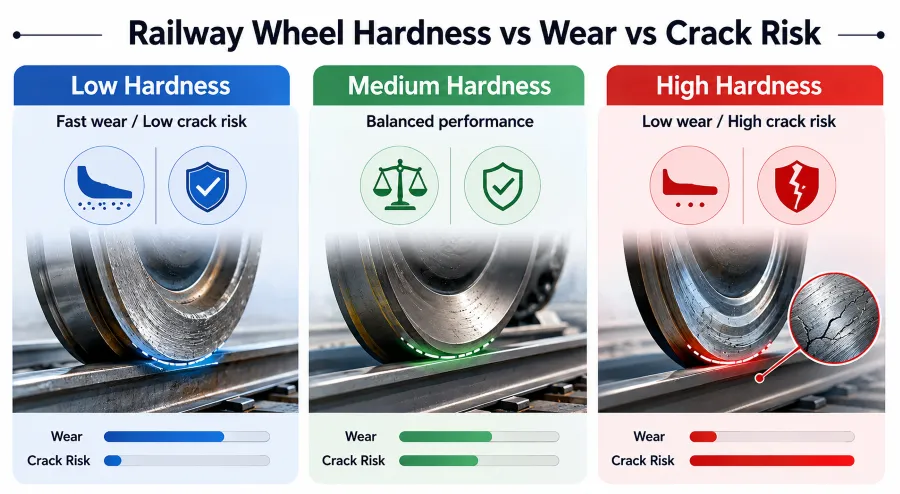
When wheel material is too soft, the tread surface deforms more easily under load. This accelerates material removal and increases wheel wear.
As hardness increases, the wheel surface becomes more resistant to plastic deformation and abrasion. In most cases, this improves wear resistance and reduces tread wear rates.
This is one reason why heavy-haul railway wheels are often designed with higher hardness levels than standard passenger train wheels.
However, wear resistance is only one part of railway wheel performance.
Many wheel failures begin at the wheel tread surface.
Under repeated rolling contact stress, microscopic cracks can gradually form on the wheel surface. If the wheel material becomes excessively hard, its ability to absorb stress through plastic deformation decreases.
As a result:
This is especially important in heavy-haul railways, high axle load applications, and routes with frequent braking or tight curves.
In these conditions, railway wheels are constantly exposed to rolling contact fatigue (RCF). A wheel with very high hardness may resist wear effectively, but it can also become more sensitive to fatigue cracking.
Once cracks begin to propagate beneath the tread surface, problems such as shelling and spalling may develop rapidly.
One of the most important concepts in railway wheel engineering is the balance between wear and fatigue.
A wheel with low hardness may wear faster, but mild wear can sometimes remove small surface cracks before they grow deeper.
A wheel with excessive hardness behaves differently.
Because the tread wears more slowly, surface cracks may remain active for a longer period. Over time, these cracks can continue propagating into the wheel rim, increasing the risk of serious fatigue damage.
This phenomenon is often referred to as the “wear-fatigue trade-off” in railway engineering.
In other words:
This is why railway wheel design is never based on hardness alone.
Two railway wheels can have similar hardness values but very different service performance.
The reason is microstructure.
Modern railway wheel manufacturing focuses heavily on controlling:
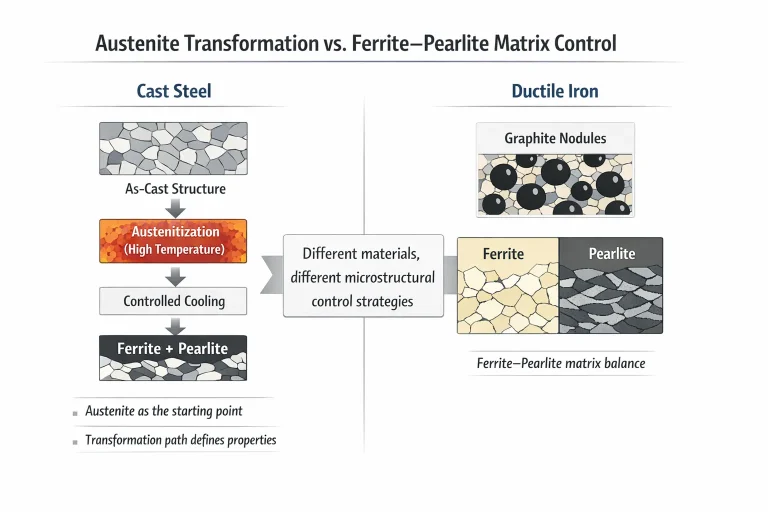
For example, a fine pearlitic microstructure can significantly improve both wear resistance and fatigue performance compared with coarse pearlite.
This is why advanced railway wheel production requires much more than simply increasing hardness numbers during heat treatment.
The internal structure of the wheel rim ultimately determines how the wheel behaves under real railway operating conditions.
Railway wheels must not only resist wear. They must also resist fracture.
Toughness allows the wheel material to absorb impact energy and slow crack propagation. Without sufficient toughness, cracks can spread rapidly under cyclic loading.
This is particularly critical in freight railways where wheels experience:
For this reason, railway wheel manufacturers carefully balance:
instead of maximizing a single property.
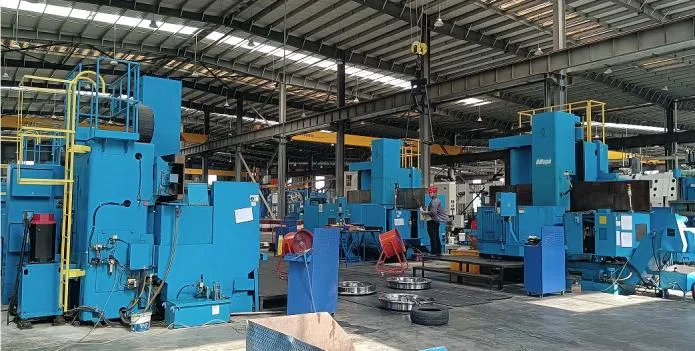
Modern railway wheel production involves a combination of:
The goal is to create a wheel that performs reliably under long-term cyclic loading while maintaining stable wear behavior.
In high-quality railway wheel manufacturing, engineers focus not only on achieving target hardness values, but also on ensuring:
These factors are essential for improving railway wheel service life and operational safety.
In railway engineering, wheel performance is always a balance.
A wheel that is too soft may wear too quickly. A wheel that is too hard may become vulnerable to cracking and fatigue failure.
This is why modern railway wheel development increasingly emphasizes microstructure control and fatigue optimization rather than simply increasing hardness.
Ultimately, the best railway wheel is not the hardest wheel.
It is the wheel that achieves the best balance between wear resistance, toughness, fatigue resistance, and long-term operational reliability.
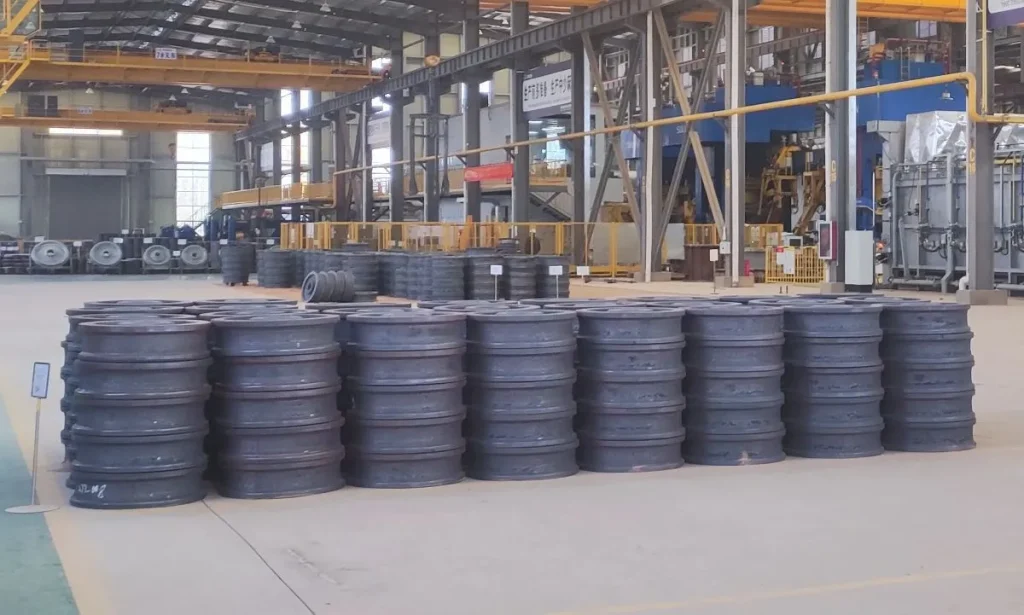
As a professional manufacturer of railway wheels and railway components, we specialize in the production of high-performance forged and cast railway parts for freight railways, locomotives, and heavy-duty rail systems.
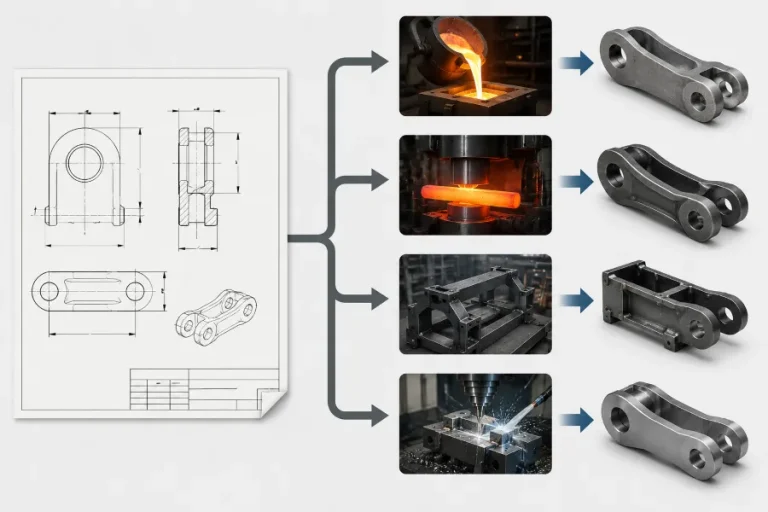
At Luoyang Fonyo Heavy Industries Co., Ltd., we provide integrated manufacturing solutions including railway wheel forging, heat treatment, machining, and full inspection processes to ensure stable mechanical performance and long service life under severe railway operating conditions.
In railway wheel engineering, we fully understand that wheel performance is not determined by hardness alone. The real performance of a railway wheel depends on the combined control of hardness, toughness, wear resistance, and rolling contact fatigue resistance.
That is why our production of railway wheels and railway components focuses on precise microstructure control, including pearlite refinement, controlled cooling, and optimized rim heat treatment processes. These factors are critical to improving both wear resistance and crack resistance in railway wheel applications.
Through strict quality control systems, including hardness testing, ultrasonic inspection, and microstructure analysis, we ensure that every railway wheel and forged railway component meets the required performance standards for long-term railway operation.
As a reliable manufacturer of railway wheels and casting and forging railway components, Luoyang Fonyo Heavy Industries Co., Ltd. is committed to delivering railway products that perform consistently in real-world railway environments, especially in heavy-load and high-stress railway applications.