WeChat コードをスキャンしてご連絡ください
WeChat コードをスキャンしてご連絡ください
お気軽にメールをお送りください。できるだけ早くご返信させていただきます.
心と魂で未来を創る


鉄道線路コンポーネント あらゆる鉄道インフラプロジェクトの基礎となる. 重量物貨物輸送ラインで使用されるかどうか, 地下鉄システム, 産業鉄道, または高速旅客ネットワーク, 各コンポーネントは安全性を確保する上で特定の役割を果たします, 安定した, 効率的な列車運行.
レールは線路の中で最も目立つ部分ですが、, それらは完全なトラック システムの 1 つの要素のみを表します. 現代の鉄道路線は、輪荷重を伝達するために連携して動作する複数の設計コンポーネントで構成されています。, トラックのジオメトリを維持する, 振動を吸収する, 厳しい環境条件下で何年にもわたる繰り返しの交通に耐えます。.
鉄道線路の信頼性はレール自体の品質だけで決まるわけではありません, だけでなく、のパフォーマンスについても 魚皿, フィッシュボルト, 弾性レールクリップ, レールパッド, 枕木, およびその他の固定コンポーネント. たとえ小さな締結部品であっても、トラックの安定性に直接影響を与える可能性があります, メンテナンスの頻度, と耐用年数.
鉄道請負業者向け, インフラストラクチャ所有者, 販売代理店, とメンテナンスエンジニア, 新築用の製品を選択する際には、これらのコンポーネントがどのように連携して機能するかを理解することが不可欠です, トラックのリニューアル, またはメンテナンスプロジェクト.
このガイドでは、主要な鉄道線路コンポーネントの包括的な概要を説明します。, それらの機能, 一般的な材料, 国際規格, 選択に関する考慮事項. 鉄道締結製品を調達している場合でも、単に鉄道線路の建設方法を学んでいる場合でも, この記事は、鉄道線路システム全体を理解するのに役立ちます.
鉄道線路コンポーネント 集合的に完全な鉄道線路構造を形成する個々の部品です。. 各コンポーネントは特定の機械的機能を実行します, 同時に、これらが連携して、低速の産業運転から高速旅客サービスに至るまでの速度で非常に重い軸重を運ぶことができるシステムを構築します。.
一般的な鉄道線路には次の主要コンポーネントが含まれています:
一緒に, these components create a complete railway track system that can safely transfer dynamic train loads from the rail down through the fastening system, 枕木, ballast, and finally into the ground.
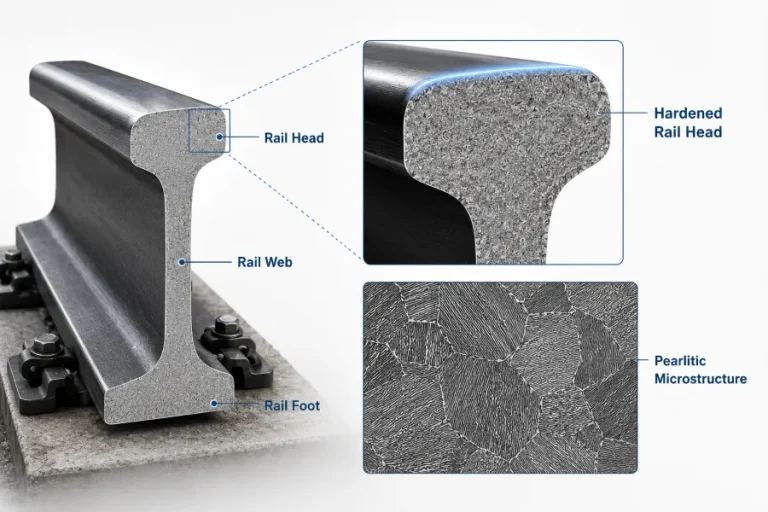
レール are the primary load-bearing members of a railway track. They provide the running surface for 電車の車輪 while guiding vehicle movement and transferring wheel loads into the supporting track structure.
現代の鉄道レールは通常、慎重に制御された化学組成と熱処理を施した高張力炭素鋼または低合金鋼から製造されています。. レールプロファイルの選択は軸荷重に依存します, 電車の速度, トラック分類, および地域の基準.
コモンレール規格には以下が含まれます:
各プロファイルの寸法が異なります, 重さ, および対象用途. 大型貨物鉄道では、より高い軸荷重に耐えるために、より大きなレールセクションが使用されるのが一般的です。, 一方、地下鉄およびライトレールシステムは、運用要件に応じて軽量レールのプロファイルを採用する場合があります。.
プロファイルの選択に加えて, レールの材質の品質, 硬度, 耐摩耗性, と製造精度はすべてトラックの性能と耐用年数に影響します.
関連記事: 鉄道のレールの種類の説明: UIC60, 136RE, R65, 60kg およびその他の鉄道レールのプロファイル.
スリーパーズ, 北米では鉄道枕木としても知られています, レールと固定システムの構造的基礎を提供します。. その主な役割は、車輪荷重をレールからバラストに伝達しながら、正しい軌道ゲージを維持することです。.
マクラギは単純な構造部材に見えますが、, それらはトラックの安定性に大きな影響を与えます, メンテナンス要件, 全体的な動作パフォーマンス.
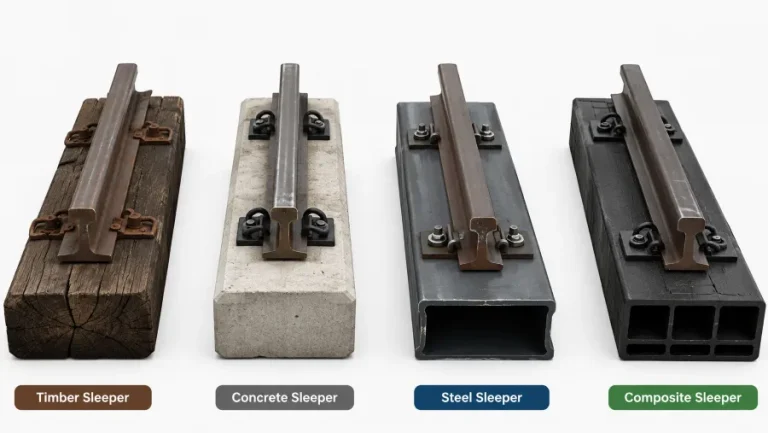
今日, いくつかのタイプの枕木が世界中で使用されています:
コンクリートまくらぎは、高い強度を提供するため、ほとんどの現代の幹線鉄道で推奨されるソリューションとなっています。, 優れた寸法安定性, 比較的少ないメンテナンスで長い耐用年数を実現.
開閉器では木製枕木が依然として一般的, 橋, 加工の柔軟性と復元力が実用的な利点をもたらす歴史的鉄道.
耐久性とリサイクル性を考慮して、一部の地域では鋼製枕木が使用されています。, while composite sleepers continue to gain attention in projects that require high corrosion resistance or sustainable materials.
Selecting the appropriate sleeper depends on many factors, 軸重を含む, 電車の速度, 気候, メンテナンスの実践, and local railway standards. Rather than focusing on a single material, engineers typically evaluate the entire track system to achieve the desired balance between performance, 耐久性, and lifecycle cost.
関連記事: 適切な鉄道枕木材料の選び方?
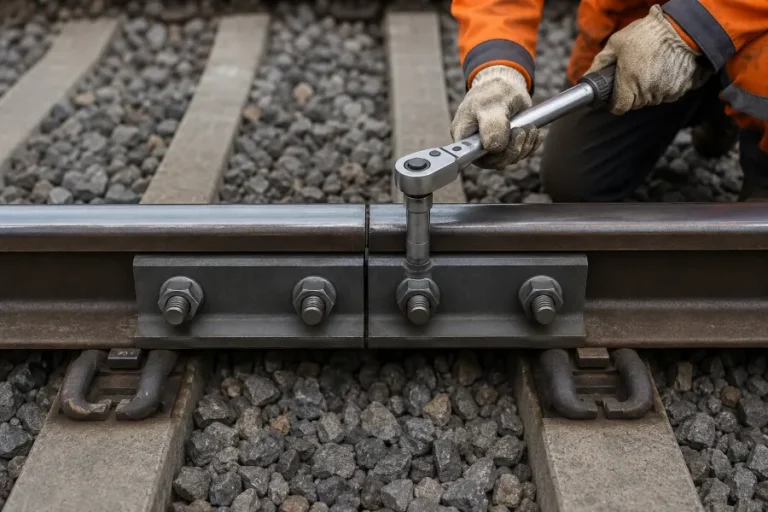
魚プレート, ジョイントバーとも呼ばれます, are steel connectors installed on both sides of a rail joint. They maintain alignment between adjacent rails and allow wheel loads to transfer smoothly across the joint.
連続溶接レールですが (CWR) has significantly reduced the number of mechanical rail joints in modern railways, fish plates remain essential for many applications, 含む:
魚プレート are manufactured to match specific rail profiles. それらの寸法, bolt hole spacing, and contact surfaces must correspond precisely to the rail section they are designed to connect.
プロジェクトの要件に応じて, fish plates may be supplied in standard carbon steel, heat-treated steel, or alloy steel grades to improve wear resistance and fatigue performance.
Selecting the correct fish plate ensures accurate rail alignment, minimizes joint impact, and extends the service life of both the rail and fastening system.
関連記事: レールフィッシュプレートの説明: 種類, 規格, Materials and Applications.
フィッシュボルト are specially designed fastening bolts used together with fish plates to secure rail joints. They provide the clamping force required to keep fish plates tightly connected to the rails while resisting repeated dynamic loads generated by passing trains.
通常の構造用ボルトとは異なります。, fish bolts are engineered specifically for railway applications. They are manufactured to precise dimensional tolerances and mechanical property requirements defined by railway standards.
Common bolt grades include:
A complete fish bolt assembly normally consists of:
Proper tightening torque is critical. Insufficient preload may allow joint movement and accelerate wear, while excessive torque may overstress the bolt or damage the joint components.
To achieve long-term reliability, manufacturers typically perform mechanical testing, hardness inspection, 寸法検証, and surface treatment quality control before shipment.
関連記事: フィッシュボルトガイド: 適切なグレードの選び方, 鉄道プロジェクトの規模と規格.
While rails carry the train and sleepers provide structural support, neither can perform their role effectively without a reliable fastening system. This is where elastic rail clips become essential.
An 弾性レールクリップ is designed to hold the rail firmly in position while allowing a controlled amount of flexibility. Rather than locking the rail rigidly in place, the clip applies a constant clamping force that accommodates the small movements caused by passing trains, 熱膨張, and track settlement. This balance between strength and elasticity helps reduce stress throughout the track structure and contributes to longer service life.
Different railway systems use different clip designs depending on their operating conditions and standards. Some of the most widely used types include:
Although their shapes vary, これらはすべて同じ基本機能を実行します。つまり、線路が動的荷重に応答できるようにしながらレールの位置を維持します。.
のパフォーマンス レールクリップ 素材と製造プロセスに大きく依存します. 数百万回の負荷サイクル後もクリップが設計されたクランプ力を確実に維持できるように、慎重に制御された熱処理を施したばね鋼が一般的に使用されます。. 不十分な熱処理または一貫性のない材料特性は、弾性の低下につながる可能性があります, 疲労亀裂, または早期の失敗.
このため, 鉄道プロジェクトでは通常、寸法精度に対する厳しい要件が指定されています。, ばね力, 疲労寿命, 硬度, および腐食保護.
関連記事: さまざまな鉄道プロジェクトに適した弾性レール クリップを選択する方法
鉄道締結部品の中でも, レールパッド レールの下に隠れているため見落とされがちです. 実際には, レールと枕木の両方を保護するという重要な役割を果たします。.
レールフットと枕木またはベースプレートの間に取り付けます, レールパッドは締結システム内の弾性インターフェースとして機能します。. ホイールが通過するたびに衝撃力と振動が発生します. このエネルギーの一部を吸収する弾性層がないと, 荷重の多くはコンクリートまくらぎに直接伝達されます。, 応力集中が増大し、摩耗が加速する.
適切に選択されたレールパッドが役立ちます:
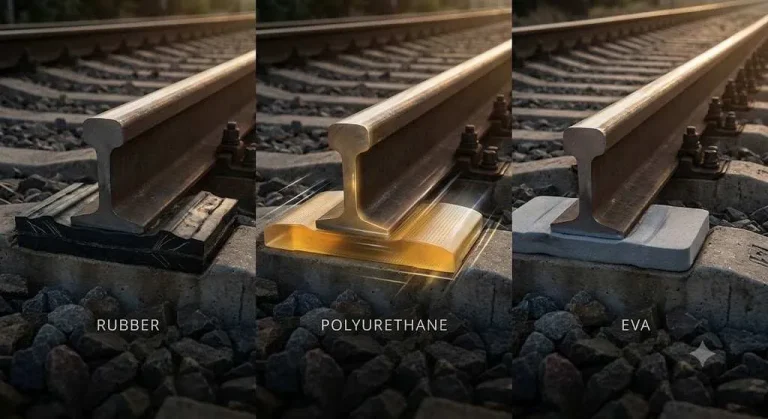
動作環境が異なれば、異なるパッド材料が必要になります. ゴムはその優れた弾性と耐久性により、依然として最も一般的な選択肢の 1 つです。. EVA パッドは、一貫した剛性と耐候性が必要な場所で広く使用されています。, 一方、特殊な用途には HDPE やその他の人工ポリマーを選択することもできます。.
The pad stiffness is just as important as the material itself. A pad that is too soft may allow excessive rail movement, while one that is too stiff may transmit more impact to the supporting structure. Engineers therefore select rail pads based on axle load, 電車の速度, track structure, and maintenance strategy rather than material alone.
関連記事: Rail Pad Materials Explained: ゴム, エヴァ, HDPE and Other Options.
Looking at each component individually helps explain its function, but a railway track performs as a complete system rather than a collection of independent parts.
電車が線路の上を通過するとき, the wheel load follows a continuous path through every structural layer. Each component contributes to transferring that load safely while minimizing deformation, 振動, and fatigue.
The load path can be simplified as follows:
輪列 → レール → レールクリップ → レールパッド → Sleeper → Ballast → Subgrade
このプロセス内では各コンポーネントが個別の責任を負います.
の レール 輪重を直接受けて軌道に沿って分散します. そのプロファイルと材質によって、曲げにどれだけ効率的に耐えられるかが決まります。, 着る, 転がり接触疲労.
の レールクリップ レールを枕木に固定する. 必要なクランプ力を維持しながら、列車の通過や温度変化に応じて制御された弾性運動を可能にします。. この弾力がないと, 応力がレールと締結システムに集中する可能性があります.
レールの下, の レールパッド 輪重によって発生する衝撃エネルギーの一部を吸収します。. 振動を軽減し、圧力をより均一に分散することで、, レールと枕木の両方を局所的な過度の応力から保護します。.
の 枕木 次に、荷重をバラストに移す前に、荷重をより広い領域に分散させます。. 同時に, they maintain the correct rail gauge and provide a stable platform for the fastening system.
の ballast distributes the load further into the track foundation while providing drainage and resisting lateral and longitudinal track movement. ついに, の subgrade supports the entire structure and transfers the remaining load into the ground.
Because every component depends on the others, the performance of the track is only as strong as its weakest element. A high-quality rail cannot compensate for inadequate fastening components, just as premium rail clips cannot overcome problems caused by damaged sleepers or poor ballast conditions.
This systems approach is one of the reasons why railway engineers evaluate complete track performance rather than selecting components in isolation. Compatibility between rails, 締結システム, 枕木, and supporting structures is essential for achieving long service life, メンテナンスコストの削減, and reliable railway operation.
The terms 鉄道線路のコンポーネント そして 鉄道固定システム are often used interchangeably, but they do not refer to exactly the same thing.
Railway track components include every major element that forms the track structure—from rails and sleepers to ballast and subgrade. A railway fastening system, しかし, refers specifically to the components that secure the rail to its supporting structure.
Although fastening systems differ between railway networks and manufacturers, most modern designs include the following components:
Working together, these components perform several important functions.
初め, they hold the rail securely in position under repeated dynamic loading. Every passing train generates vertical, 横方向, and longitudinal forces that must be transferred safely into the sleeper without allowing excessive rail movement.
2番, the fastening system provides controlled elasticity. Contrary to what many people assume, a rail should not be clamped as rigidly as possible. A certain amount of elastic movement helps reduce impact loading, 振動を吸収する, and prevent excessive stress from concentrating in the rail or sleeper.
三番目, fastening components maintain track geometry over time. By resisting gauge widening, rail overturning, and longitudinal creep, they help preserve the designed alignment of the railway and reduce maintenance requirements.
Because every railway project has different operating conditions, there is no universal fastening system suitable for all applications. High-speed passenger railways, heavy-haul freight lines, 地下鉄システム, crane rail installations, and industrial railways all place different demands on the fastening system. 軸重などの要因, 電車の速度, レールプロファイル, 枕木タイプ, 環境条件, and maintenance strategy all influence the selection of fastening components.
Rather than evaluating each part individually, engineers typically assess the performance of the fastening system as a complete assembly, ensuring that all components work together to provide the required stiffness, 耐久性, そして長期的な信頼性.
Material selection has a direct influence on the strength, 耐久性, 疲労耐性, and maintenance requirements of railway track components. Since different components perform different mechanical functions, they are manufactured from materials specifically chosen for those operating conditions.
The following table summarizes the materials most commonly used throughout the railway industry.
| 成分 | Common Materials | Primary Performance Requirements |
| レール | High-carbon steel, パーライト鋼, 合金鋼 | 高強度, 耐摩耗性, 疲労耐性 |
| フィッシュプレート | Medium-carbon steel, heat-treated alloy steel | 強さ, 靭性, 耐衝撃性 |
| Fish Bolt | 炭素鋼, 合金鋼 (学年 8.8, 10.9, 等) | High tensile strength and reliable preload |
| 弾性レールクリップ | Spring steel | Elastic recovery, 疲労寿命, consistent clamping force |
| レールパッド | ゴム, エヴァ, HDPE, polyurethane | Elasticity, vibration reduction, 耐候性 |
| Sleeper | Prestressed concrete, 木材, 鋼鉄, 複合 | Structural stability and long service life |
Selecting the right material is rarely about choosing the strongest option. その代わり, engineers aim to achieve the best balance between mechanical performance, 耐久性, 製造コスト, メンテナンス要件, and expected service life.
例えば, spring steel is ideal for rail clips because it can maintain elastic deformation over millions of load cycles. Using a higher-strength structural steel without adequate spring properties would actually reduce the clip’s long-term performance.
同様に, the hardness of a railway rail must be carefully controlled. A rail that is too soft may wear rapidly under heavy traffic, while excessive hardness can increase the risk of brittle fracture under certain operating conditions.
Rail pads provide another good example. Their effectiveness depends not only on the material itself but also on stiffness, 厚さ, and long-term compression characteristics. The same material may perform differently depending on formulation and manufacturing quality.
As railway technology continues to develop, manufacturers are also introducing improved alloys, engineered polymers, and advanced heat-treatment processes to enhance durability while reducing lifecycle costs.
Railway infrastructure is built according to national and international standards that define dimensions, 材料特性, テスト方法, およびパフォーマンス要件. Following these standards helps ensure compatibility between components supplied by different manufacturers and provides confidence in long-term operational safety.
Several standards are widely adopted around the world.
UIC standards are commonly used across Europe, 中東, アフリカ, and many international railway projects. They specify rail profiles, fastening components, テスト方法, and other technical requirements for interoperable railway systems.
AREMA standards are widely applied throughout North America and in many heavy-haul railway projects worldwide. They cover rail sections, 締結システム, track construction, 検査, とメンテナンスの実践.
European EN standards define material specifications, 機械的特性, production tolerances, and quality requirements for many railway products manufactured within or supplied to European markets.
British Standards continue to be referenced in numerous railway projects, particularly where existing infrastructure follows traditional UK specifications.
Australian Standards are commonly adopted for railway infrastructure serving mining operations, 貨物鉄道, and regional transportation networks.
China’s GB standards cover a broad range of railway products and are widely applied in domestic railway construction as well as many international infrastructure projects supported by Chinese contractors.
Although these standards differ in certain technical details, they share the same objective: ensuring that railway components meet consistent levels of safety, 信頼性, and interchangeability.
When sourcing railway track components, buyers should verify not only compliance with the applicable standard but also the manufacturer’s quality management system, 検査手順, and production capability. Certification alone cannot replace consistent manufacturing quality.
Choosing railway track components is not simply a matter of matching dimensions on a drawing. Every railway project has unique operating conditions, and components should be selected as part of an integrated track system rather than in isolation.
Several factors are typically considered during the selection process.
高速鉄道, heavy-haul freight lines, 地下鉄システム, 産業用トラック, and crane rail installations all impose different loading conditions. Components suitable for one application may not provide the required performance in another.
Heavier axle loads and higher traffic density increase stresses throughout the track structure. Components with greater fatigue resistance and higher mechanical strength are generally required for demanding service conditions.
魚プレート, レールクリップ, レールパッド, and many fastening accessories are designed for specific rail profiles. Ensuring compatibility between components is essential for proper installation and long-term performance.
Temperature fluctuations, 湿度, coastal environments, desert climates, and corrosive industrial conditions all influence material selection and protective surface treatments.
Different countries and railway operators specify different standards. Selecting components manufactured in accordance with the required specifications helps simplify installation, メンテナンス, and future replacement.
The lowest purchase price does not always result in the lowest overall project cost. Products with better materials, tighter manufacturing tolerances, and higher fatigue performance often reduce maintenance frequency and extend service life, providing greater value over the lifetime of the railway.
実際に, experienced engineers rarely evaluate a single component independently. その代わり, they consider how rails, 締結システム, 枕木, and supporting structures interact as a complete track system. This integrated approach leads to more reliable operation, メンテナンス要件の軽減, and improved long-term performance.
| 成分 | 関数 | Related Article |
| レール | Load bearing | Rail Types |
| レールクリップ | Fastening | 弾性レールクリップ |
| レールパッド | Vibration control | レールパッドの材質 |
| フィッシュプレート | Rail joint | 魚のプレート |
| Fish Bolt | Joint fastening | フィッシュボルト |
| Sleeper | Load transfer | スリーパーズ |
Railway track components operate under demanding conditions every day. 重い軸重, repeated impact, 振動, 温度変化, and exposure to harsh environments all place continuous stress on the track structure. Even components that appear relatively simple—such as a rail clip or fish bolt—are expected to perform reliably through millions of load cycles.
このため, quality is determined by much more than whether a component meets its nominal dimensions. 材料の選択, 製造の一貫性, 熱処理, 寸法精度, and inspection procedures all contribute to long-term performance in service.
例えば, a rail clip with inconsistent spring properties may gradually lose its clamping force. A fish plate with poor machining accuracy can create uneven load transfer at the rail joint. 同様に, inadequate heat treatment of fish bolts may reduce fatigue resistance, increasing the likelihood of premature failure under repeated loading.
To minimize these risks, reputable manufacturers implement quality control throughout the production process rather than relying solely on final inspection. Typical quality assurance measures include:
These procedures help ensure that every component performs consistently once installed on the railway.
で 洛陽豊洋重工業株式会社, 株式会社., we manufacture and export a wide range of railway track components for customers around the world. Our product portfolio includes rail fish plates, フィッシュボルト, 弾性レールクリップ, レールパッド, and other railway fastening products manufactured in accordance with international standards such as UIC, で, アレマ, BS, and other customer-specific specifications.
Whether the requirement is for standard products or customized solutions, our focus remains the same: delivering reliable railway components supported by strict quality control, 技術的専門知識, and responsive customer service.
Railway track parts are the individual parts that form a complete railway track system. They include rails, 枕木, レール固定部品, 魚皿, フィッシュボルト, ballast, and other supporting elements that work together to safely support and guide train operations.
鉄道線路コンポーネント refer to the entire track structure, while the railway fastening system specifically consists of the components that secure the rail to the 寝台車, のような レールクリップ, レールパッド, 絶縁体, shoulders, and fastening bolts.
The principal components include レール, 枕木, レールクリップ, レールパッド, 魚皿, フィッシュボルト, ballast, and the supporting subgrade. Each serves a different function in maintaining track strength, 安定性, そして安全性.
Elastic レールクリップ apply continuous clamping force to hold the rail securely while allowing controlled elastic movement. This helps reduce vibration, accommodate thermal expansion, and improve the overall durability of the fastening system.
レールパッド reduce impact forces, 振動を吸収する, distribute wheel loads more evenly, and protect both the rail and the sleeper from excessive stress. They also contribute to quieter railway operation and longer component life.
はい. Although continuously welded rail has reduced the number of mechanical rail joints on many mainline railways, 魚皿 remain widely used for industrial railways, クレーンレール, 一時的なトラック, メンテナンス作業, 伸縮継手, and certain conventional railway applications.
Most elastic レールクリップ are manufactured from high-quality spring steel. After appropriate heat treatment, spring steel provides the elasticity, 疲労耐性, and long-term clamping force required for railway applications.
Common standards include UIC, で, アレマ, BS, として, and GB specifications. The applicable standard depends on the railway network, 国, project requirements, そして顧客の仕様.
Selection depends on several factors, レールプロファイルを含む, 軸重, 電車の速度, 枕木タイプ, 環境条件, 適用される規格, とメンテナンス戦略. Components should always be evaluated as part of the complete track system rather than individually.
はい. manufacturers can produce 鉄道部品 顧客の図面によると, レールプロファイル, 材質仕様, surface treatments, and applicable international standards. Customization is particularly common for 魚皿, フィッシュボルト, レールクリップ, and other fastening products used in specialized railway projects.
Although railway tracks may appear straightforward from the outside, they are highly engineered systems made up of components that must work together under demanding operating conditions. From rails and sleepers to 魚皿, フィッシュボルト, 弾性レールクリップ, そして レールパッド, every component contributes to the safety, 安定性, and service life of the railway.
Understanding the function of each component—and, more importantly, how they interact as a complete system—helps engineers, 請負業者, and procurement professionals make better decisions during design, 工事, そしてメンテナンス. Selecting compatible components manufactured to recognized international standards can improve track reliability, メンテナンスの必要性を軽減する, and lower lifecycle costs.
If you are looking for a reliable supplier of 鉄道線路のコンポーネント, our team is ready to support your project with technical expertise and manufacturing experience. We supply a wide range of railway fastening products for freight railways, 旅客鉄道, 地下鉄システム, 産業用トラック, およびクレーンレールの用途, with solutions tailored to your specific technical and project requirements.
To learn more about individual railway track components, we recommend the following guides: