Scansiona il codice WeChat per contattarci
Scansiona il codice WeChat per contattarci
Sentiti libero di inviarci un'e-mail e ti risponderemo il prima possibile.
Creare il futuro con cuore e anima


Analisi del principio di funzionamento e della tecnologia del motore e del cambio nei veicoli ferroviari
Panoramica Di il motore e il cambio
Come veicolo principale del moderno trasporto ferroviario, la progettazione e le prestazioni del sistema di alimentazione del veicolo ferroviario sono direttamente correlate all'efficienza operativa e alla sicurezza. Il motore del servosterzo e il cambio, come componenti chiave per la trasmissione di potenza, ottenere la conversione dell’energia e la distribuzione dell’energia attraverso un coordinamento preciso. Questo articolo analizzerà sistematicamente la logica di funzionamento del motore elettrico e del cambio del veicolo ferroviario da tre dimensioni: principio di funzionamento, caratteristiche tecniche e meccanismo collaborativo.
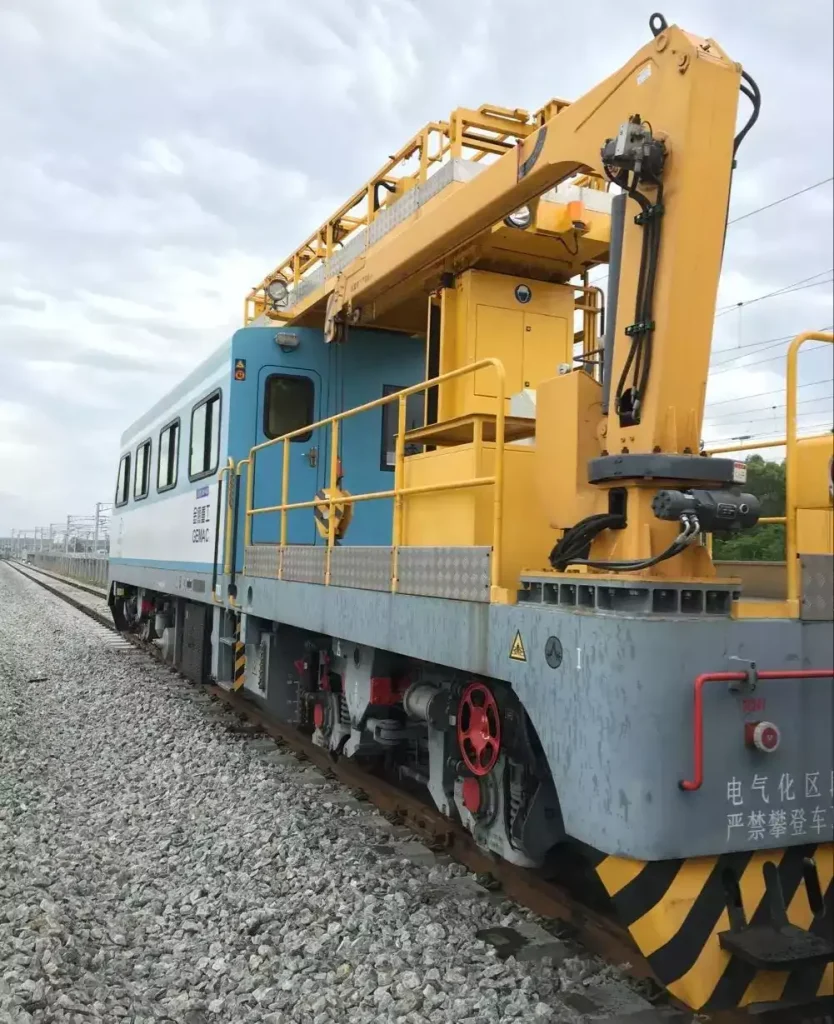
Motore: conversione dell'energia elettrica in energia meccanica Il compito principale del motore del vagone ferroviario è convertire in modo efficiente l'energia elettrica in energia meccanica. La sua fonte di energia è solitamente ottenuta ottenendo elettricità ad alta tensione (come 1500 V CC o 25 kV CA) dalla catenaria o dalla terza rotaia attraverso il pantografo o il pattino collettore e quindi regolando la tensione attraverso il trasformatore di bordo e l'inverter per far funzionare il motore di trazione. 68 Prendiamo come esempio il motore asincrono CA trifase. Il suo principio di funzionamento si basa sull'induzione elettromagnetica: quando l'avvolgimento dello statore è eccitato, genera un campo magnetico rotante, che taglia le barre del rotore per formare una corrente indotta e quindi genera coppia per far ruotare la ruota.
(1)Caratteristiche tecniche: ad alta velocità, attraverso la frequenza variabile (VF) tecnologia di controllo, il motore può realizzare una regolazione continua della velocità 0-100% gamma di velocità per soddisfare le esigenze dei vagoni ferroviari’ frequenti partenze e arresti e velocità variabile.
(2)Regenerative braking: when it is slow or downhill, the motor can be converted to the generator model, which will give feedback to the power grid, and the kinetic energy efficiency can reach 30%.
(3)Adattabilità ambientale: the IP65 protection class design ensures stable operation in moist, dust and another harsh environment. With a new type rack car as an example, the motor outputs high torque on steep slope road (ad esempio 30% under the slope should be up to 200 kn m.), while in a flat road needs to switch to the high-speed mode (più di 80 km per hour), the motor of high power density and thermal management requirements.
Cambio: the core of the power distribution and transmission ratio regulating the function of the gearbox is regulating motor output speed and torque, matching the power demand under different working conditions. The gearboxes of rail vehicles are mainly divided into three types: mechanical, hydraulic transmission and continuously variable transmission. Their design needs to take into account reliability, efficiency and maintenance convenience.
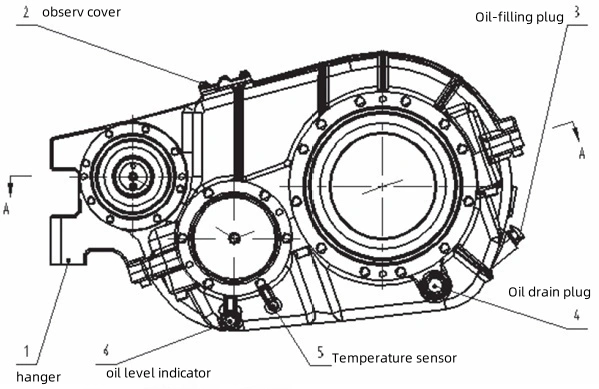
(1)Mechanical transmission structure (MT/AMT) principio: by gear set a fixed ratio. Ad esempio, a dual-speed transmission uses a low-speed gear (with a gear ratio of 1:5) to handle uphill driving, while a high-speed gear (1:1) is suitable for flat road driving.
(2)Scenari applicativi: overloaded freight rail cars commonly use this kind of structure. The transmission efficiency can reach 98%, but the shift shock needs to depend on the electronic control clutch buffer.
Hydraulic automatic transmission (AT)
The core technology, the hydraulic torque converter, through the oil transfer of the power, cooperates with the planetary gear set to achieve a smooth shift. Per esempio, the AT transmission of a certain model of orbital vehicle contains 3 sets of planetary gears, which can provide 6 forward gears, and the transmission ratio covers 2.5:1 A 0.6:1.
Vantaggio: without the mechanical clutch, it reduces power interruption, which is especially suitable for frequent start-stop urban rail vehicles. Stepless transmission (CVT) innovative design: the steel belt combined with a conical wheel, by cone wheel spacing ratio continuous change. Per esempio, the CVT system of a certain cog rail vehicle can dynamically adjust the transmission ratio (0.5-5.0) during driving, keeping the motor always in the high-efficiency speed range and reducing energy consumption by 15%. Challenge: steel band limit torque (ad esempio 4000 n · m) is easy to slip and needs to cooperate with hydraulic clamping to increase friction.
Motor and transmission of coordinated control of modern power systems for rail vehicles through the intelligent control unit to realize the depth of the motors and gearboxes. Per esempio, a high-speed emu adopted “traction – freno – drive” integration control system, its working process is as follows: data acquisition, real-time sensor monitoring parameters such as speed, pendenza, and load;
Decision-making operation: the control unit based on the default algorithm such as fuzzy PID calculation target velocity ratio and motor output power; Adjust the transmission gear execution feedback: electric hydraulic draw stem, at the same time-frequency converter to adjust motor speed, error control within + / – 2%. Typical case: in the rack in the power system, motor and transmission to realize dynamic switching. When the vehicle enters the cogged rail section with a 30% pendenza, the control system increases the transmission ratio to 5:1 and amplifies the motor torque to the peak. On straight and adhered sections, the transmission ratio drops to 0.8:1, and the vehicle speed increases to 120km/h. The entire process can complete the mode switch without stopping.
Technology development and future trends of lightweight material
Aluminum alloy and carbon fiber composite shell weight 40%, while increasing the cooling efficiency. Diagnosi intelligente: embedded sensors, such as vibration frequency 0.5-10 KHZ) combined with AI algorithms, realize transmission wear warning and life prediction. Hybrid: fuel battery and supercapacitor hybrid system can reduce the dependence on catenary and apply to section expansion without electricity. Railcar motor and transmission work is essentially a convert electrical energy efficiently to adapt to the complex working conditions of mechanical energy. With the advancement of materials science and intelligent control technology, future power systems will develop towards higher efficiency and lower maintenance costs, providing core support for the greening and intelligence of rail transit.
Fornitore
Luoyang Fenyo Heavy Industries Co., Ltd,fondata nel 1998, è un produttore di parti ferroviarie in fusione. La nostra fabbrica copre un'area di 72.600㎡, con più di 300 dipendenti, 32 tecnici, compreso 5 ingegneri senior, 11 ingegneri assistenti, E 16 tecnici. La nostra capacità produttiva è 30,000 tonnellate all'anno. Attualmente, produciamo principalmente fusione, lavorazione, e assemblaggio per locomotiva,vagone ferroviario,treni ad alta velocità, attrezzature minerarie,energia eolica,ecc. I nostri prodotti sono stati esportati in Russia, gli Stati Uniti, Germania, Argentina, Giappone, Francia, Sudafrica,Italia e altri paesi.
Contatto:Cathy Xu
E-mail:[email protected]
Mobile:008615515321683