Scansiona il codice WeChat per contattarci
Scansiona il codice WeChat per contattarci
Sentiti libero di inviarci un'e-mail e ti risponderemo il prima possibile.
Creare il futuro con cuore e anima


Quando le persone guardano per la prima volta alla produzione di componenti ferroviari, spesso si concentrano sulle macchine. Chiedono cose come: che tipo di attrezzatura CNC viene utilizzata, o quanto sia preciso. But from an engineering point of view, that is not where quality actually comes from. n real production, especially for railway applications, machining quality is not defined by a single machine. It is defined by how stable the entire process is—from rough machining to high-precision machining all the way to final inspection.
Even a high-end CNC machine cannot compensate for an unstable process upstream. Per esempio, if internal stress is not properly released during rough machining, the part can still deform later, no matter how precise the finishing equipment is.
That is why we treat high-precision machining for railway components as a system, not a single operation.
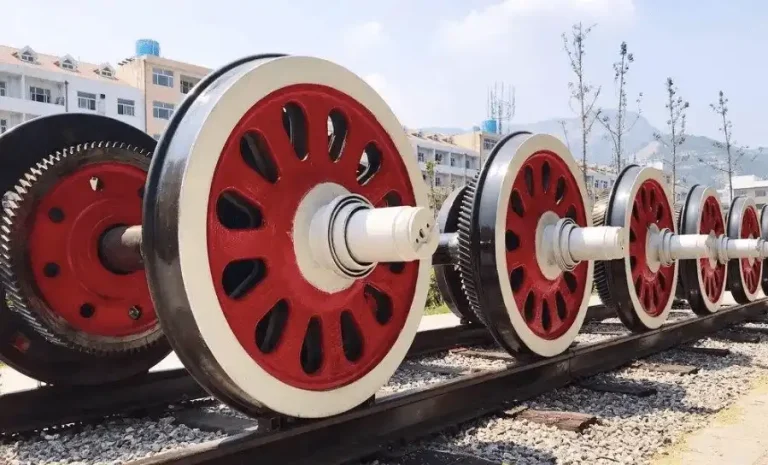
High-precision machining for railway components is a controlled manufacturing process that uses CNC equipment to produce railway parts such as wheels, assi, and bushings within strict dimensional and geometric tolerances. It ensures stability, ripetibilità, and long-term performance in railway applications.
In railway component manufacturing, problems are rarely about whether a part can be made.
The real question is whether it can be made consistently over time.
A small deviation in roundness, coassialità, or surface condition may seem insignificant at first. But in real railway operation, these small deviations can gradually turn into vibration issues, uneven wear, or reduced bearing life.
This is why experienced engineers rarely evaluate machining capability by equipment alone.
Invece, we focus on whether the entire process is stable and predictable from start to finish.

In real manufacturing, machining is not a single step. It is a controlled sequence of operations.
It starts with rough machining, where the goal is not accuracy but stability. In questa fase, we mainly remove excess material and begin releasing internal stress within the raw material.
If this step is not controlled properly, later processes will always carry hidden deformation risk.
After that comes semi-finishing, where we begin to establish reliable reference surfaces. This is the stage where geometry starts to stabilize.
Finalmente, precision machining focuses on dimensional consistency. A questo punto, the goal is not to remove material aggressively, but to control micro-level variation.
Each step builds on the previous one. If one step is unstable, the final result will never be stable.
In railway component production, material form plays a critical role in both cost and efficiency.
Bar stock machining starts from solid steel. It is flexible and widely used, especially for complex or prototype parts. Tuttavia, when the final geometry includes hollow structures, a large amount of material must be removed.
This leads to longer machining time and higher material waste.
Tube machining, d'altra parte, starts from a near-net shape. Seamless tubes produced through processes such as the Mannesmann method already contain the internal cavity.
This means machining is mainly focused on refining dimensions rather than removing bulk material.
Dal punto di vista ingegneristico, this is not just a material choice. It is a decision that directly affects production efficiency and cost structure.
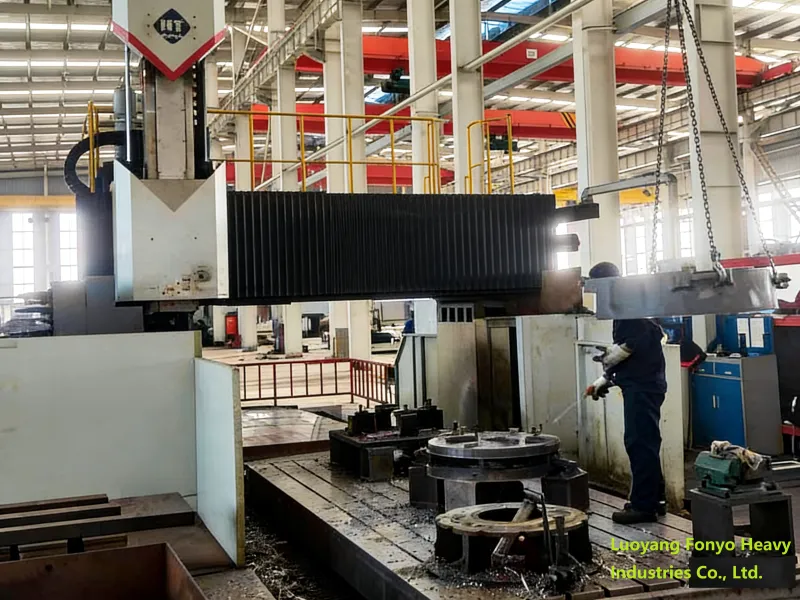
CNC equipment is often described in simple terms such as higher precision or better efficiency.
But in real production, its impact is more structural than that.
The most important improvement is consistency.
Nella produzione ferroviaria, producing one accurate part is not difficult. The real challenge is producing hundreds or thousands of parts with the same level of accuracy.
Advanced CNC systems help reduce variation caused by manual operation, tool wear differences, and setup inconsistencies.
Another important factor is process repeatability.
When machining parameters are controlled digitally, results become more predictable, especially in long production runs.
Efficiency is also improved, but only becomes meaningful when stability is already achieved. Altrimenti, speed alone does not create value.
Dal punto di vista ingegneristico, machining is not just a manufacturing step.
It is a control system that directly influences final component behavior.
Every stage of the process matters: material condition, rough machining strategy, thermal treatment, and final finishing all interact with each other.
A change in one stage will always influence the next.
That is why machining quality cannot be judged in isolation. It must be evaluated as a complete system.
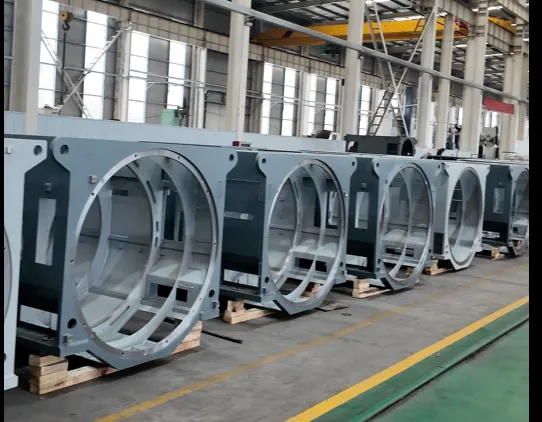
A Luoyang Fonyo Heavy Industries Co., Ltd., we focus on high-precision machining for railway components with engineering-driven process control and advanced CNC equipment.
Our approach is not only about achieving dimensional accuracy, but about ensuring long-term stability and reliability in real railway operating conditions.
Scopri di più su: www.railwaypart.com
Domande frequenti
High-precision machining for railway components refers to a controlled CNC machining process used to produce parts such as railway wheels, assi, and bushings within strict dimensional and geometric tolerances. The goal is to ensure consistency, stabilità, and reliable performance under real operating conditions.
Machining accuracy directly affects how railway components perform over time. Small deviations in roundness, allineamento, or surface quality can lead to vibration, uneven wear, or reduced bearing life. Nei sistemi ferroviari, these issues tend to accumulate during operation rather than appear immediately.
CNC machining uses programmed control to automate cutting operations, which improves repeatability and consistency. Conventional machining relies more on manual operation, which can introduce variation between parts. In railway component manufacturing, CNC machining is preferred for maintaining stable quality across production batches.
Consistency is achieved through process control rather than relying on a single machine. This includes managing raw material condition, controlling stress during rough machining, maintaining stable cutting parameters, and verifying dimensions throughout production. The goal is to prevent variation before it appears, not just detect it at the end.
Common materials include forged steel for wheels and axles, seamless tubes for hollow components, and bar stock for smaller precision parts. The material choice depends on the mechanical requirements, geometria, and production volume of the component.
Tube machining starts from a hollow structure, which reduces material removal and machining time. This makes it more efficient for components such as sleeves and bushings. Bar stock machining offers more flexibility but often results in higher material waste for hollow parts.
CNC equipment provides stability and repeatability, especially when machining large parts like railway wheels or heavy shafts. It helps maintain geometric accuracy over long machining cycles and reduces variation caused by manual adjustments.
Machining influences surface quality, precisione dimensionale, and internal stress distribution. These factors directly affect wear behavior, resistenza alla fatica, e affidabilità a lungo termine. Poor machining control may not cause immediate failure, but it can significantly shorten service life.