Scan the WeChat code to contact us
Scan the WeChat code to contact us
Feel free to send us a email and we will reply to you as soon as possible.
Creating the future with heart and soul


Before you commit a custom part to production, you check four things: whether the drawing is complete and unambiguous, whether the material and heat treatment are specified in a way the foundry or machine shop can actually hold, whether the tolerances match what the chosen process can deliver, and whether the inspection and acceptance criteria are agreed before the first pour or the first cut.
Miss any one of these and the problem does not disappear. It just shows up later, as scrap, as a delayed delivery, or as a part that passes its own drawing but fails in service. In custom part manufacturing, these four checks are what separate a part that is managed from one that is merely produced.
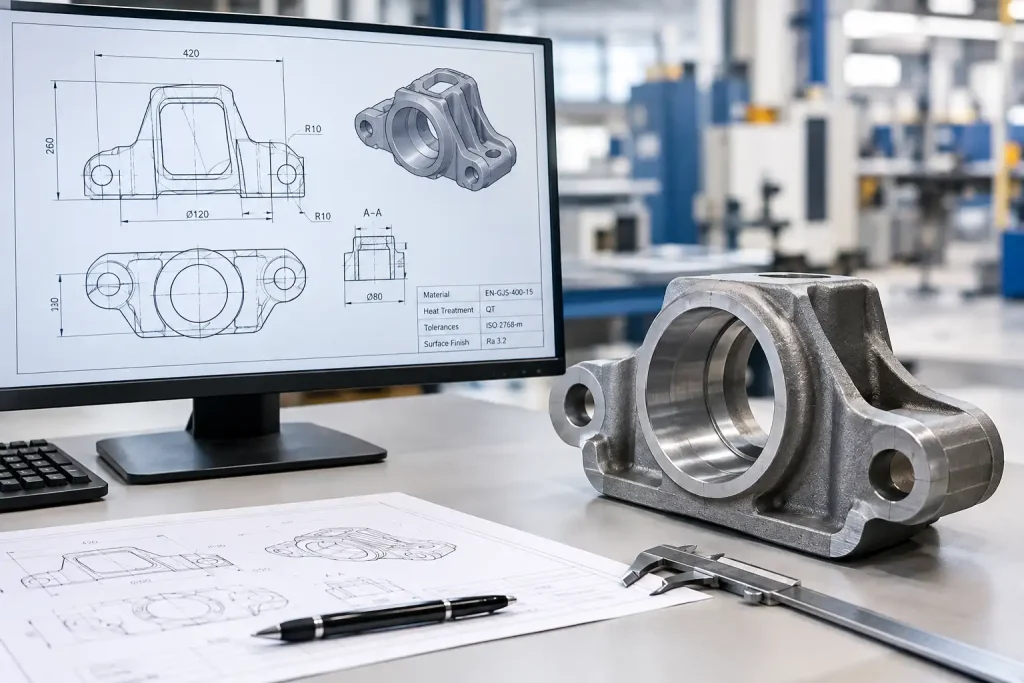
Most of the expensive mistakes I have seen on custom parts trace back to the drawing being treated as a rough starting point instead of a binding specification.
A drawing that says “steel” is not a material specification. A drawing that says “as per standard” without naming the standard is not a tolerance specification. A drawing with no revision block is not a controlled document. When a supplier has to guess, the guess is usually the cheapest thing they can defend, not the thing you actually needed.
Before you send a custom part out, the drawing has to answer three questions on its own. What is the exact material grade and condition? What are the critical dimensions, and which datum do they hang from? And what does the part look like when it is finished, including surface finish, coatings, and edge breaks?
Here is a mistake that shows up constantly. An engineer picks a manufacturing process first, then tries to force a material onto it.
The material and the process are not two separate decisions. A grade of cast steel that pours cleanly in a sand mould may be a poor choice for a forging. A steel that machines beautifully may be a nightmare to weld. If you are specifying a large cast housing, the material choice has to be made against the casting process, because how the metal solidifies decides whether you get sound material or a part full of shrinkage and porosity.
The difference between casting, forging and machining is worth understanding before you commit, and I have covered it in more detail in my article on casting vs forging vs machining
When I review a custom part specification, the material line is the first thing I look at. Is the grade written exactly, or is it a generic term? Is the condition stated, annealed or quenched and tempered? Is there a hardness range, and is it a range the process can actually hit? A hardness of HRC 45 on a grade that tops out at HRC 35 is not a specification. It is a wish.
This is one of the checks an engineer should run before manufacturing a custom part, because a material line that is not specific is a defect waiting to be poured. In custom part manufacturing, the material call is not a formality. It is where the part either becomes manufacturable or does not.
This is the single most common way a custom part manufacturing budget gets destroyed.
A drawing that applies a tight tolerance to every dimension is not more precise. It is just more expensive, and often less manufacturable. Tight tolerances belong on the surfaces that mate, the bores that take a bearing, the faces that locate against something. They do not belong on a cosmetic fillet or a non-functional web.
The question to ask is the one a machinist would ask you. What happens if this dimension is off? If the honest answer is “nothing,” relax it. The tolerance you do not spend on a non-functional surface is money and lead time you can spend on the one bore that actually has to be round and on size.
This is also where the choice of process comes back into the conversation. A sand casting will never hold the tolerance a machined part holds, and it should not be asked to. The drawing has to match the process. If you need a precision bore, you design the part so that bore is machined after casting, and you put the tight tolerance on the machined surface, not on the as-cast one.
Getting this tolerance-to-process match right is one of the checks before manufacturing a custom part that costs almost nothing on paper and saves a great deal on the shop floor. If the process decision itself is still open, the question of how to choose the right manufacturing process deserves its own look before you lock anything in.

For a casting, the manufacturability questions get answered long before any metal is melted.
Will the section feed, or will it leave shrinkage in the middle of a heavy boss? Where is the parting line, and does it put flash somewhere it will hurt? Is there draft on the vertical faces so the pattern will actually release? These are foundry questions, and they are cheapest to answer while the part is still a drawing and a 3D model.
That is why a proper check before manufacturing includes a foundry review, not just a design review. A supplier who can look at your model and tell you where the hot spots are, how they would gate it, and where they would put risers is doing their job. A supplier who just says “we can cast anything” is not.
People leave inspection to the end and then wonder why the argument happens.
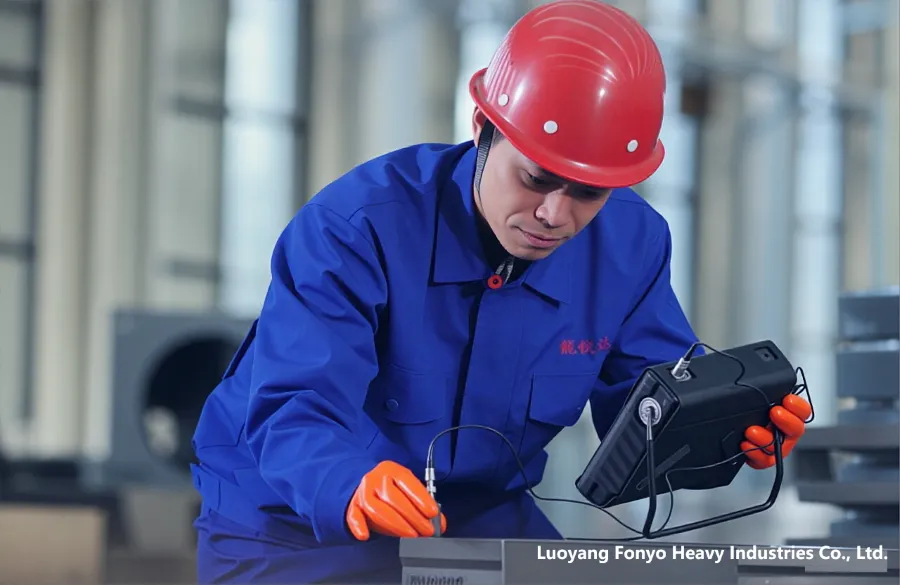
You cannot argue about whether a part is acceptable after it is already cast and machined, because by then both sides have money in it. The acceptance criteria have to be written down before the first part exists. What gets inspected, by what method, against what acceptance standard, and what happens to the parts that do not meet it. Agreeing on these acceptance criteria is one of the most overlooked checks before manufacturing a custom part.
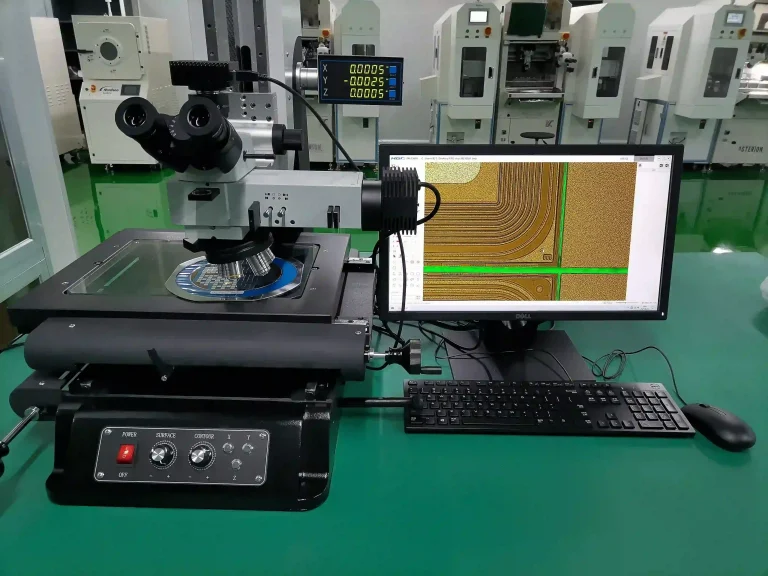
For a critical railway part this means naming the standard, not just saying “inspect it.” NDT casting inspection is not one thing. It is a decision about which method, magnetic particle or ultrasonic, applies to which feature, and what the accept and reject limits are. If the part needs a material certificate, say so before production, because a heat number is not something you can reconstruct after the fact.
This one matters more than most people expect.
A custom part that fails in service is only useful to you if you can trace it back to a specific heat, a specific mould, a specific shift. Otherwise you are guessing about how big the problem is. The time to require traceability is before manufacturing, because the batch identity has to be built into the process from the raw material onward. In custom part manufacturing, traceability is not something you bolt on at the end. It is either built in from the first heat, or it does not exist.
A supplier who can tell you, for any part, which heat number of steel it came from and which inspection record goes with it, is giving you something a cheap supplier cannot. That traceability is part of what separates a component that is bought once from one that is managed over a whole service life.
Here is the thing nobody tells you early enough. The most valuable conversation you can have about a custom part is the one before the drawing is frozen.
Once a drawing is signed off, every change costs. Before it is signed off, the foundry or the machine shop can tell you which tolerance is going to cost you double, which feature will not fill cleanly, and which material you are over-specifying for no benefit. That feedback is worth more than any amount of re-quoting after the fact.
This is not about letting the supplier design your part for you. It is about using their process knowledge while it is still free to change things. The engineer who sends a nearly-finished drawing and asks “what would you change” gets a cheaper, more manufacturable part than the engineer who sends a frozen drawing and asks “how much.”
Before you manufacture a custom part, the work is mostly on paper. The material has to be specified exactly and matched to the process. The tolerances have to be earned by function, not sprayed on by default. The casting or machining questions have to be asked while the part is still a model. The inspection and traceability have to be agreed before there is anything to inspect. Get these right and custom part manufacturing becomes a disciplined process rather than a gamble.
None of this is glamorous. It is the difference between a part that is manufactured and a part that is managed. Whether you are designing a new component or getting an existing one quoted, the questions worth asking are all about what happens before the first pour and the first cut.
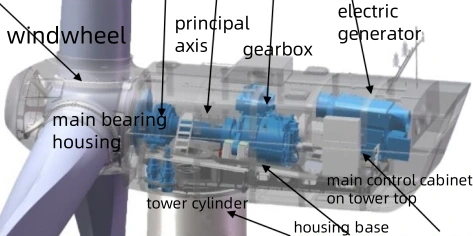
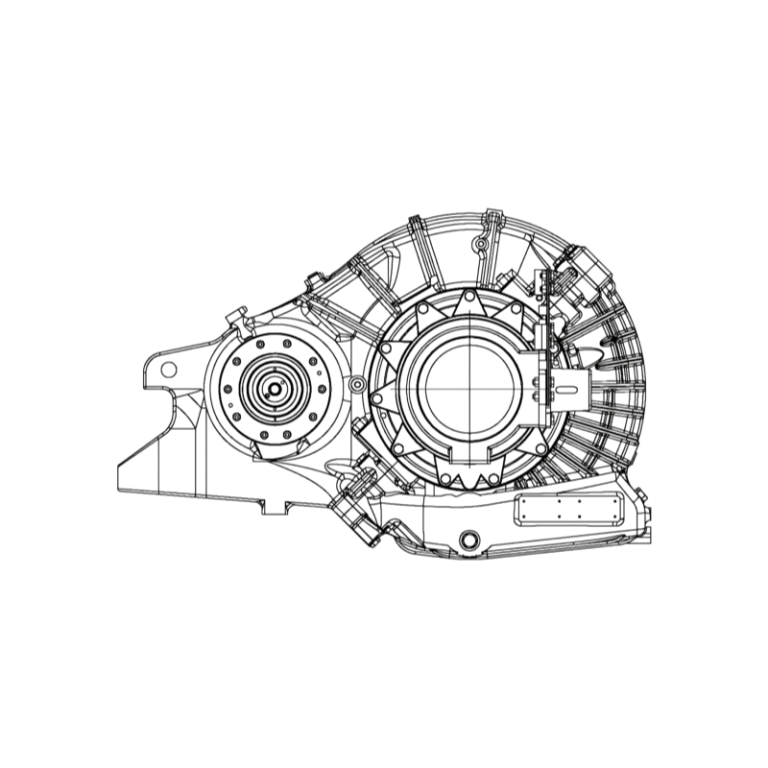
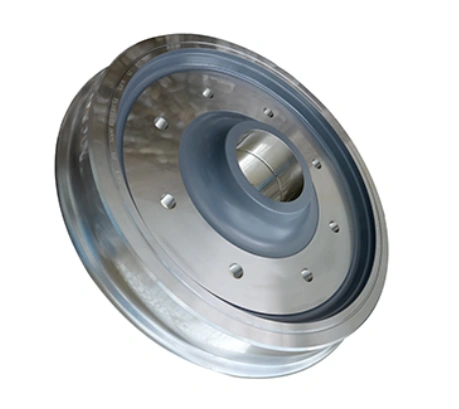
At FONYO, we manufacture custom railway castings including gearbox housings, motor stator press rings, wind turbine housings, and bogie side frames and bolsters, produced to the material, heat treatment, and inspection requirements your drawing and standard call for. If you are preparing a custom part for quotation or want a technical assessment of your drawing, material, and acceptance criteria, send us the specification and the model. We will come back with an engineering view, not a sales pitch.
The drawing. It has to be complete and unambiguous on its own, with the exact material grade, the critical dimensions and their datums, and the finished condition. If a supplier has to guess anything, the part is already at risk.
Because tolerance drives cost more than almost anything else. A tight tolerance on a non-functional surface doubles machining time for no benefit, while a loose tolerance on a mating bore causes assembly failures. Tolerances should be applied only where function demands them.
Almost always. The cheapest time to change a design is before it is frozen. A foundry or machine shop can flag a tolerance that will cost double or a feature that will not fill cleanly, while those changes are still free.
It means the part can be traced back to a specific heat of material and a specific inspection record. For parts that fail in service, that is what lets you know how big the problem really is, and it has to be built into the process from the start.
No. A casting is a near-net-shape process, not a precision one. Precision features should be designed to be machined after casting, and the tight tolerance should go on the machined surface, not the as-cast one.
That depends on how critical the part is and what standard governs it. If it carries load in a safety-critical application, or if a standard such as EN 13674 or the relevant casting standard requires it, then NDT should be specified before production, with the method and accept limits written down.