Scan the WeChat code to contact us
Scan the WeChat code to contact us
Feel free to send us a email and we will reply to you as soon as possible.
Creating the future with heart and soul


Casting vs forging vs machining produce the same drawing in three different ways. Casting pours molten metal into a mould and suits complex shapes and high volume. Forging compresses solid metal to align the grain and suits safety-critical, high-cycle parts. Machining cuts a solid block and suits precision parts in small quantities. The right process follows the part’s load, geometry, volume and tolerance, not a simple ranking, and many parts combine two or three of them.
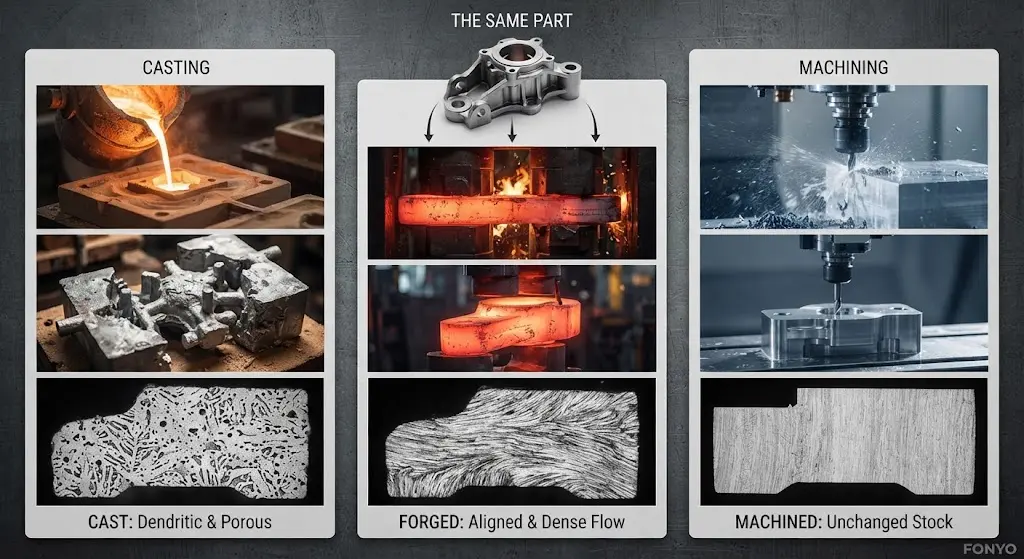
If you have ever sent a part drawing to two suppliers and received two different process recommendations back, you have seen how the same drawing can become very different parts. One supplier wants to cast it. Another wants to forge it. A third says machining is the only sensible route.
At first glance, it looks like the suppliers disagree about cost.
In practice, casting vs forging vs machining is not quite that straightforward.
The process decides the grain structure of the metal, and the grain structure decides how the part behaves under load. A cast part, a forged part and a machined part with identical dimensions are not the same part. They carry load differently, fatigue differently and cost differently to make. Choosing the wrong one is not a pricing mistake. It is an engineering mistake that shows up later as a failed part.
So how do you decide between casting, forging and machining for your part?
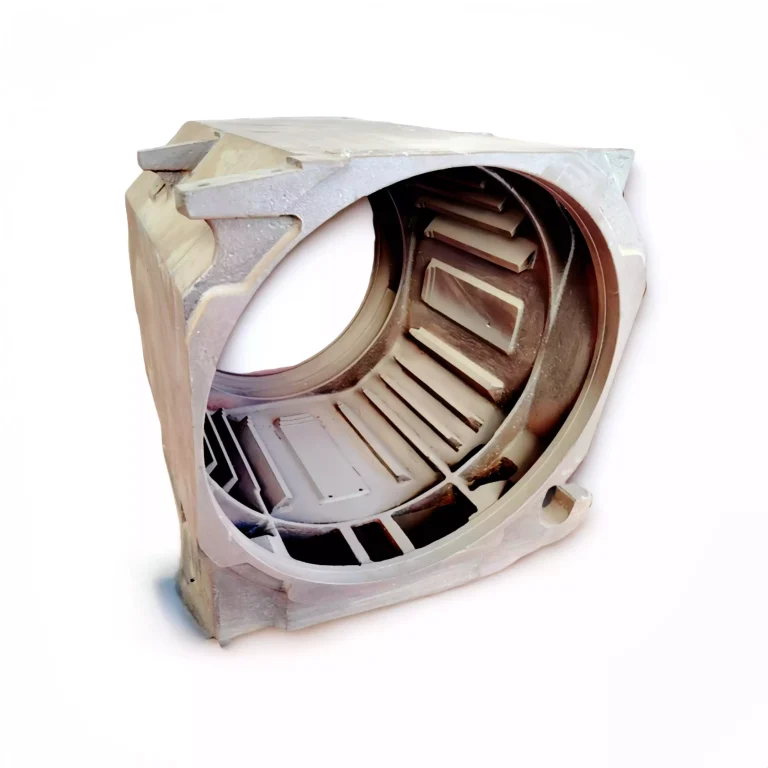
Casting melts metal and pours it into a mould, where it solidifies into shape. The process is chosen for geometry: casting can produce complex shapes, internal cavities, hollow sections and thin walls that the other two processes struggle to match.
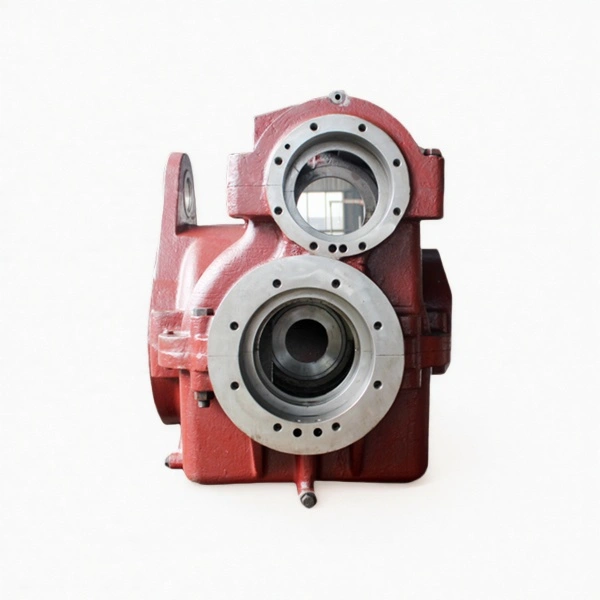
Casting is often the right call when the part has a shape that would be expensive or impossible to produce any other way. A housing with internal channels, a large structural component with awkward features, a part with an internal cavity: these are casting’s home ground.
Casting also scales well. The tooling is a mould or pattern, and once that investment is made, the cost per part falls as the volume rises. For a large run of identical parts, casting is often the most economical route.
The trade-off is the internal structure. Molten metal shrinks as it solidifies and can trap gas, inclusions or porosity, which is why castings are inspected with ultrasonic and radiographic methods. A well-made casting is reliable, but it depends on the gating, the solidification control and the heat treatment. In the casting vs forging vs machining decision, this internal structure is casting’s defining trade-off.
For the specific case of cast and forged railway components, our guide to casting vs forging compares the two in more detail.
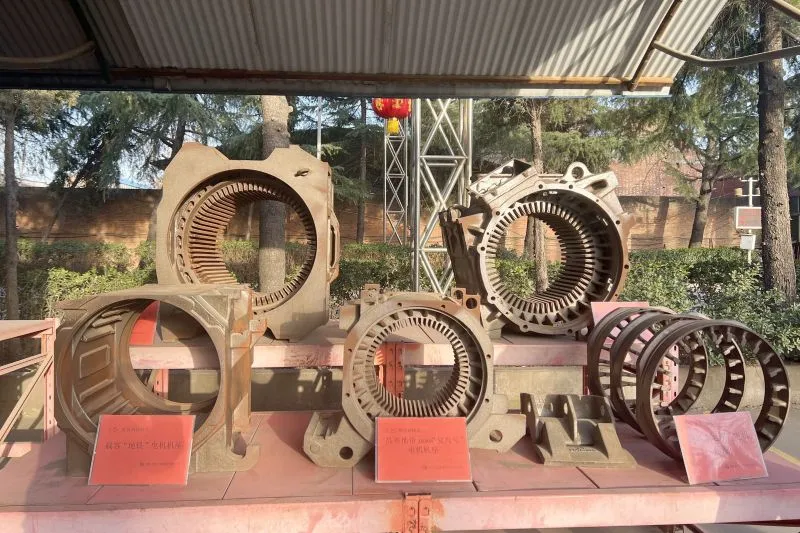
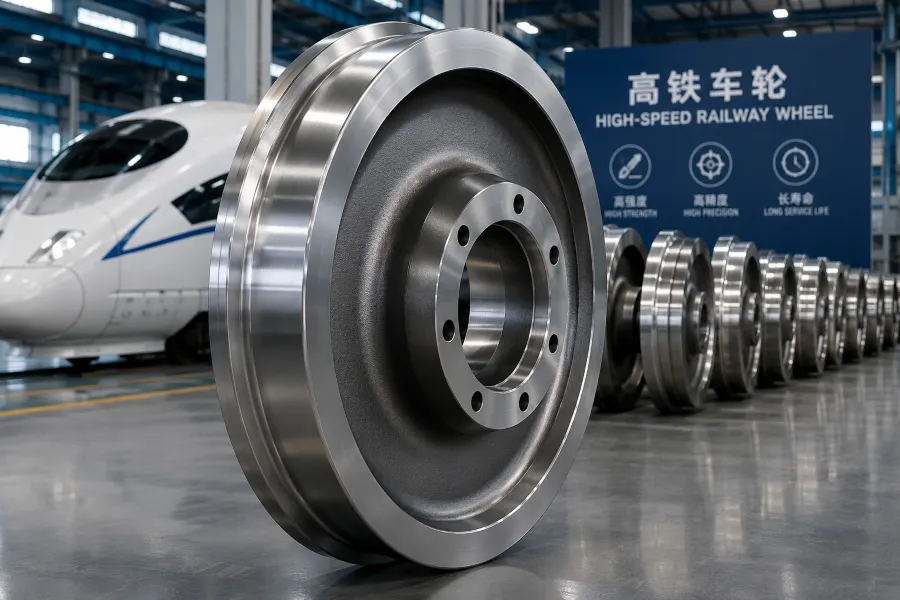
Forging shapes solid metal under compressive force, which refines the grain structure and aligns it along the contour of the part. The result is a dense, strong component with excellent fatigue resistance.
Forging is often the right call for parts that must survive cyclic or impact loading: shafts, couplers, suspension components, wheels. These parts live and die by fatigue, and the aligned grain flow of forging gives them the fatigue life that casting cannot match.
The trade-off is shape and cost. Forging cannot produce the complex internal cavities that casting can, and the dies and equipment are expensive. Forging works best when the geometry is relatively simple and the volume justifies the tooling.
The strength difference between a forged part and a cast part is not a marketing claim. It comes from the grain: forging compresses and aligns the grain structure, while casting leaves a less uniform structure with possible internal discontinuities. That is why the same steel can behave very differently depending on how it was shaped, and it is the core of the casting vs forging vs machining comparison.
For the wheel side of the question, our guide to train wheel design explains how a forged wheel is engineered before any metal is shaped.
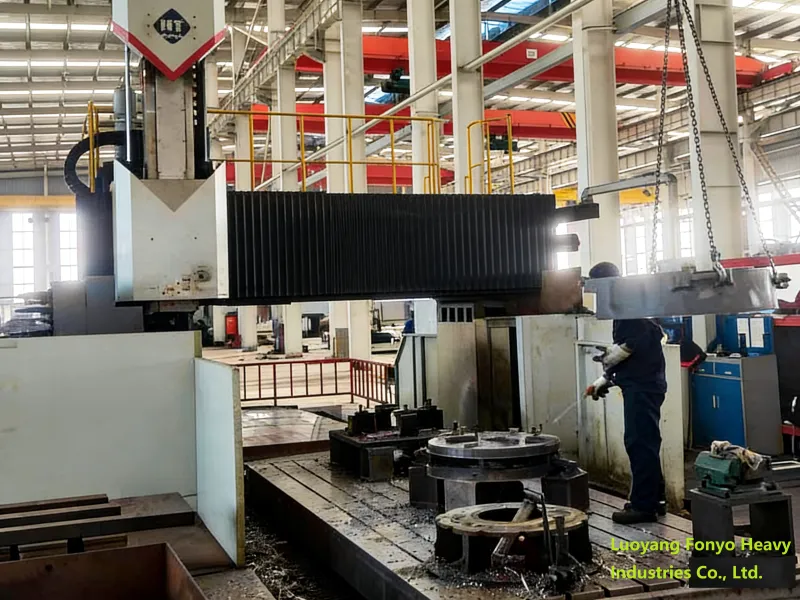
Machining is subtractive: it starts with a solid block or bar and cuts away everything that is not the part. There is no mould, no die, no tooling to wait for. The part goes from CAD drawing to finished component in the shortest possible time.
Machining is often the right call when precision is the priority. It produces the tightest tolerances and the finest surface finishes of the three processes, part after part. For small batches, prototypes and parts where the design is still changing, machining is the most flexible route.
The trade-off is material waste and unit cost at volume. Cutting a complex shape from solid can turn 50 percent or more of the raw material into chips, depending on the geometry. For anything beyond a small batch, casting or forging with a machining finishing pass becomes more economical.
The key insight about machining is that it is rarely a rival to casting and forging. It is usually their finishing partner. A cast or forged blank is often machined to final dimensions, because the precision and surface finish the application demands come from the machining stage. This is the part of the casting vs forging vs machining question that most people miss. Our guide to manufacturing process selection covers how these routes fit together into a full production plan.
The difference between casting, forging and machining is not one number. It is a set of trade-offs across strength, geometry, precision, volume and cost.
| Factor | Casting | Forging | Machining |
|---|---|---|---|
| Strength and fatigue | Moderate | Highest | Depends on base material |
| Complex shapes and cavities | Excellent | Limited | Limited |
| Precision and surface finish | Needs finishing | Needs finishing | Excellent |
| Tooling cost | Moderate to high | High | None |
| Cost at high volume | Lowest | Moderate | Highest |
| Cost at low volume | High | High | Lowest |
| Material waste | Low | Low | High |
This table is a simplified comparison, not a universal rule. The actual choice depends on the specific part, its loads, its tolerance and its volume.
The grain structure is the thread that runs through all three columns. Forging aligns the grain, casting leaves a more random structure, and machining from solid keeps whatever grain the bar stock already had. If your part is fatigue-critical, that grain difference matters more than the price difference, and it is what makes casting vs forging vs machining a real engineering decision rather than a cost comparison.
Here is the thing that surprises people new to this question: casting, forging and machining are rarely competitors in practice. They are stages.
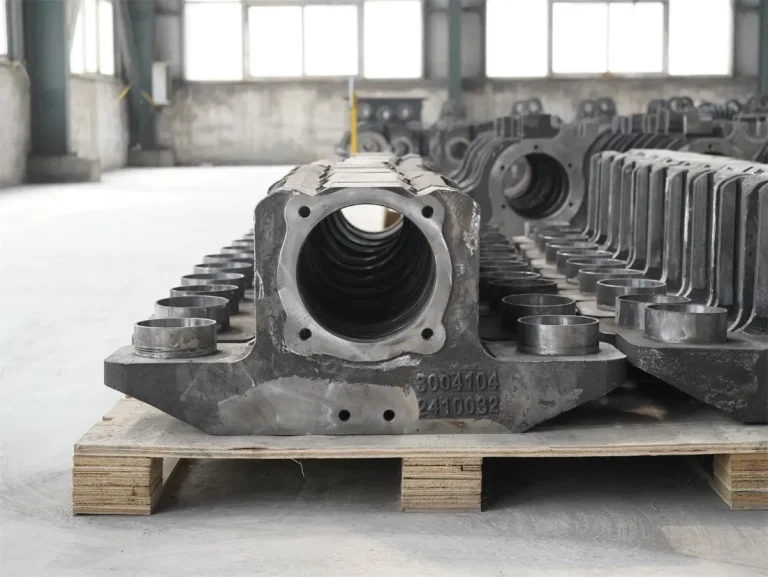
A typical route for a demanding part is forge the blank for strength, then machine it for precision. Or cast the near-net shape for economy, then machine the critical surfaces. A part that is “cast” or “forged” in conversation is often “cast and machined” or “forged and machined” in the purchase order.
This matters because it changes the question. Instead of asking “should I cast, forge or machine this part?”, the more useful question is often “which process forms the blank, and which surfaces need machining?”. That reframe is the most practical answer to the casting vs forging vs machining question.
That is also why choosing a supplier that only offers one process can be limiting. A supplier who only forges will recommend forging. A supplier who only machines will recommend machining. The right supplier can look at the drawing and tell you which route, or which combination, actually fits.
Imagine two versions of the same part. One is forged and then machined to final tolerance. The other is machined entirely from solid bar. Both meet the drawing. The forged-and-machined one has aligned grain in the high-stress areas and costs less per piece at volume. The from-solid one gets to market faster and needs no tooling. The right choice depends on the volume and the load, not on which process sounds more advanced.
There is no single correct answer to the casting vs forging vs machining question, and any supplier who gives you one without asking about your part is selling you their equipment.
A practical selection looks more like this:
| Question | What It Points To |
|---|---|
| What loads does the part carry, and do they cycle? | Fatigue-critical parts favour forging |
| How complex is the shape? | Complex shapes and cavities favour casting |
| How precise does it need to be? | Tight tolerances favour machining or a machining finish |
| How many do you need? | High volume favours casting; low volume favours machining |
| How fast do you need it? | Machining has no tooling lead time |
| What is the material? | Not every alloy forges or casts well |
These are starting points, not a universal rule. The final decision should be checked against the drawing, the loads and the applicable standard.
The practical answer, in most real projects, is a combination. The question is not which single process wins, but which process forms the blank and which process finishes it.
Casting, forging and machining each move the engineering difficulty to a different place: casting into the foundry, forging into the die, machining into the cutting tool. The right choice puts that difficulty where you can control it, and combines the three where the part needs it.
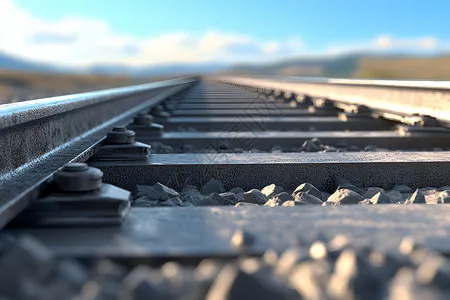
That is why I would not recommend choosing a process based on a single property, like strength or cost, or on what a supplier happens to make. Start with the load and the geometry. Check the volume and the tolerance. Then compare the routes, including the combinations, and choose the one you can verify. The same discipline applies on the track side, where a railway track maintenance program depends on parts being made the way their loads demand.
At FONYO, we manufacture railway casting products, railway wheels and machined components, which means we can compare casting, forging and machining on their engineering merits rather than on the process we happen to sell. For any part, we can review the drawing, the loads and the standard, and recommend the route or combination that fits.
If you have a drawing, specification or an existing part sample, send us the details. Our engineering team can help check the required process, material, standard and production requirements before quotation.
Forging is generally the strongest because it aligns the grain structure along the part, which improves fatigue and impact resistance. Casting is moderate because solidification can leave internal discontinuities. Machining from solid depends on the base material, since it keeps whatever grain the bar stock already had.
Choose casting when the part has complex geometry, internal cavities or hollow sections that would be difficult to forge, or when you need a large volume of identical parts and the tooling cost can be spread across them.
Choose machining when precision and surface finish are the priority, when the quantity is small, when you need the part quickly with no tooling lead time, or when the design is still changing.
Yes, and in practice they usually are. A common route is to forge or cast a near-net shape for strength or economy, then machine the critical surfaces to final tolerance. Machining is often the finishing partner of the other two.
Forging compresses and aligns the grain structure of the metal, which creates a denser, more consistent structure. Casting solidifies from molten metal, which can leave a less uniform structure with possible internal discontinuities.
At low volume, machining is usually the least expensive because it needs no tooling. At high volume, casting or forging becomes more economical because the tooling cost is spread over many parts and there is less material waste.
Ask them to look at the drawing and explain which process or combination fits the loads, geometry, volume and tolerance, rather than recommending whatever equipment they happen to have.