Digitalize o código WeChat para entrar em contato conosco
Digitalize o código WeChat para entrar em contato conosco
Sinta-se à vontade para nos enviar um e-mail e responderemos o mais breve possível.
Criando o futuro com coração e alma


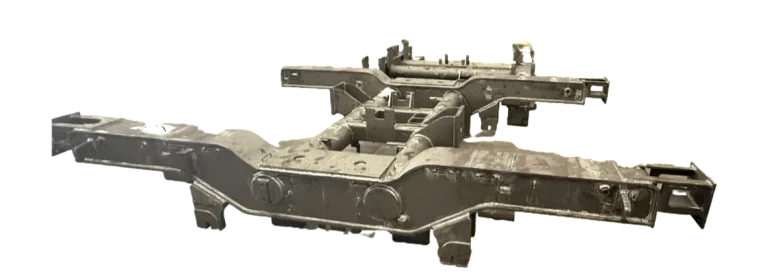
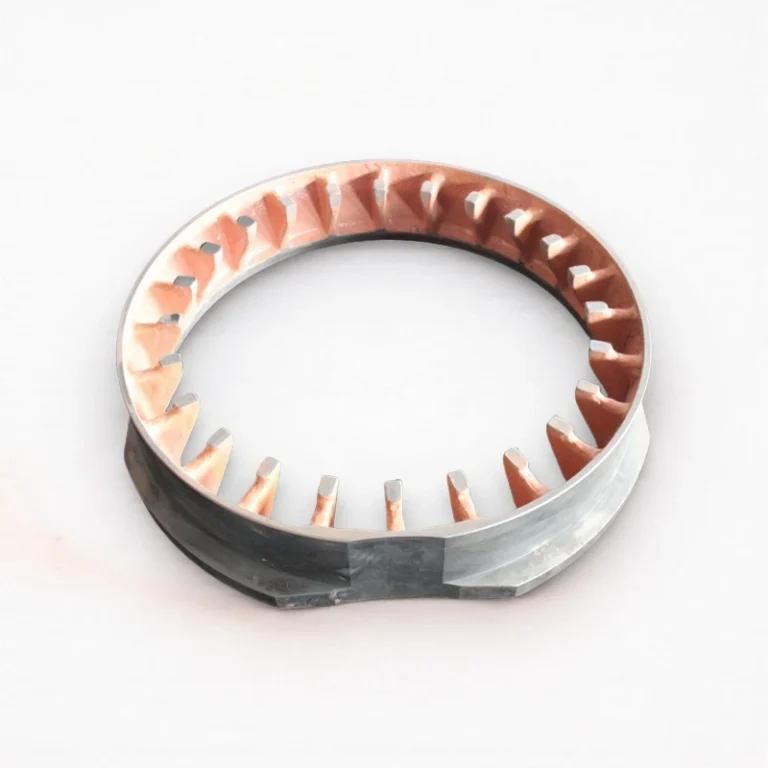
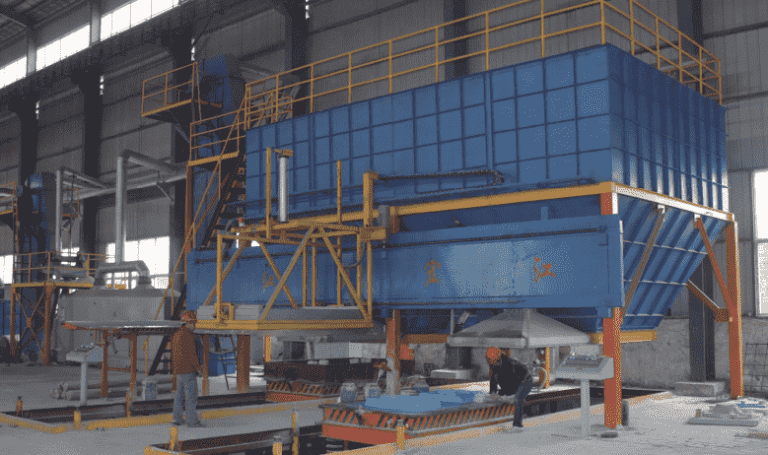
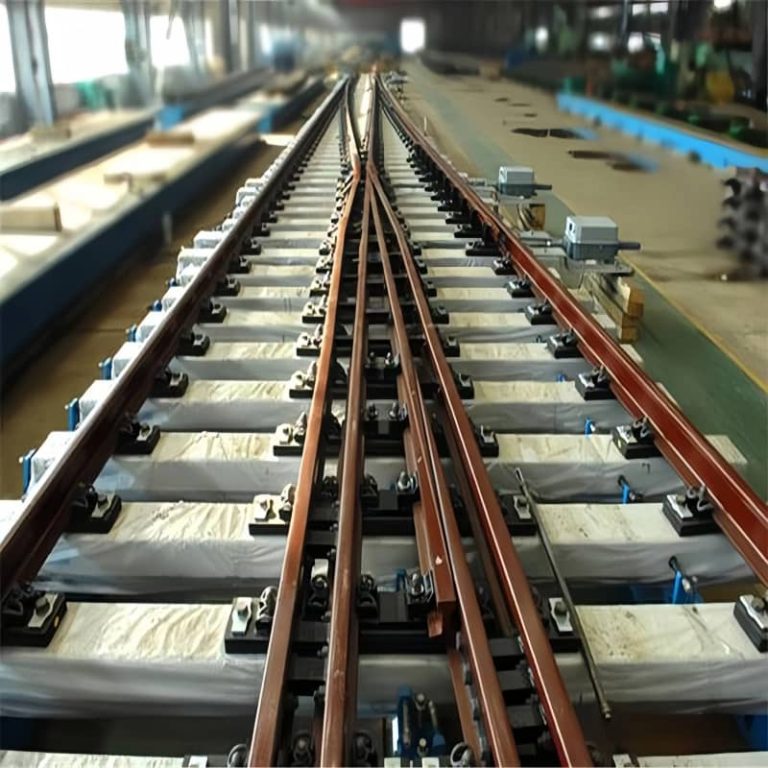
The coated sand casting production is the mainly used for peças ferroviárias. Existem diferentes soluções para os problemas causados na produção.
1. The main process of coated sand core making
The heating temperature is 200-300℃, the curing time is 30-150s, and the sand-shooting pressure is 0.15-0.60MPa. For sand cores with simple shapes and coated sands with good fluidity, a lower sand-shooting pressure can be selected. A lower heating temperature can be selected for thin sand cores. When the heating temperature is low, the curing time can be appropriately extended. The resin used for coated sand is phenolic resin. Advantages of the core-making process: suitable strength performance; boa fluidez; good surface quality of the sand core (Ra=6.3-12.5μm); strong anti-hygroscopicity of the sand core; boa colapsabilidade, and easy cleaning of castings.

1.1. Mold (die) temperatura
The casting temperature is one of the main factors affecting the thickness and strength of the shell. It is generally controlled at 220-260℃ and is selected according to the following principles:
1.1.1Ensure sufficient heat is required for softening and curing of the resin on the coated sand.
1.1.2Ensure that the required shell thickness is formed and the shell (essencial) surface is not coked;
1.1.3 Try to shorten the crusting and hardening time to improve productivity.
1.2 Sand blasting pressure and time
The sand blasting time is generally controlled within 3 para 10 segundos. If the time is too short, the sand mold (essencial) cannot be formed. The sand blasting pressure is generally around 0.6 MPa. If the pressure is too low, it is easy to cause insufficient blasting or looseness.
1.3.Hardening time:
The length of the hardening time mainly depends on the thickness of the sand mold (essencial) and the temperature of the casting mold, and is generally around 60 para 120 segundos. If the time is too short, the shell layer is not completely solidified and the strength is low; if the time is too long, the surface layer of the sand mold (essencial) is easy to burn, which affects the quality of the casting. Example of process parameters for coated sand molding (essencial): Serial number Drawing number Shell thickness (milímetros) Peso (kg) Casting temperature (℃) Sand shooting time (é) Hardening time (é) 1 (Guide sleeve) DN80-05 8~10 2.5~2.6 220~240 2~3 60~80 2 (Valve body) DN05-01 10~12 3.75~3.8 240~260 3~5 80~100
2. Problems and solutions in the application of coated sand
There are many core-making methods, generally classified into two categories: thermosetting and cold-setting. Coated sand core-making falls into the thermosetting category. Each core-making method has its own advantages and disadvantages, and the decision to use depends primarily on factors such as product quality requirements, complexidade, production batch size, production costs, and product price. Coated sand core-making is particularly effective for castings with high surface quality, high dimensional accuracy, and complex shapes.
2.1. Method for determining the strength and gas generation of coated sand
Under the premise of a certain quality of original sand and resin, the key factor affecting the strength of coated sand is mainly the amount of phenolic resin added. The more phenolic resin is added, the higher the strength will be, but the gas emission will also increase, and the collapsibility will decrease. Portanto, in production applications, the strength of coated sand must be controlled to reduce gas emission and improve collapsibility. A balance point must be found when formulating strength standards. This balance point is to ensure the surface quality of the sand core and the strength under the premise that no deformation or core breakage occurs during pouring. Only in this way can the surface quality and dimensional accuracy of the casting be guaranteed, and the gas emission can be reduced, the porosity defects of the casting can be reduced, and the sand production performance of the sand core can be improved. For the storage and transportation of sand cores, workstation equipment and sand core trolleys can be used, and a 10mm to 15mm thick sponge can be laid on them to reduce the loss rate of the sand core.
2.2. Storage period of coated sand cores
Any sand core will absorb moisture, especially in the southern region where the relative humidity is high. The storage period of the sand core must be specified in the process documents. The lean production method of first-in-first-out should be used to reduce the storage volume and storage period of the sand core. Each company should determine the storage period of the sand core based on its own factory conditions and local climatic conditions.
2.3. Control the supply quality of the coated sand
When the coated sand enters the factory, it must be accompanied by the supplier’s quality assurance information, and the company will inspect according to the sampling standards. It can only be put into storage after passing the inspection. If the company’s sampling inspection fails, the quality assurance and technical departments will make a decision on the result, whether to accept it with concessions or return it to the supplier.
2.4. When the qualified coated sand is found to be broken and deformed during core making?
The fracture and deformation of sand cores during core making are usually attributed to the low strength of the coated sand. Na verdade, the fracture and deformation of sand cores are related to many production processes. If abnormal conditions occur, the real cause must be found before a thorough solution can be found.
3. The specific reasons are as follows:
3.1The mold temperature and dwell time during core making determine whether the hardened core shell thickness meets process requirements. Parameters specified in the process must fall within a certain range, and this range depends on the operator’s skill. When the mold temperature is at the upper limit, the dwell time can be adjusted to the lower limit; when the mold temperature is at the lower limit, the dwell time can be adjusted to the upper limit. Continuous training is required to improve operator skills.
3.2 During core making, phenolic resin and sand particles will stick to the mold. They must be cleaned promptly and sprayed with mold release agent. De outra forma, they will accumulate and break or deform the sand core when the mold is opened.
3.3 The spring push rod on the static mold of the hot core box mold will lose its elasticity due to long-term operation under high temperature conditions, causing the sand core to break or deform. The spring must be replaced promptly.
3.4 The dynamic mold and static mold are not parallel or on the same center line. When the mold is closed, under the pressure of the oil cylinder or air cylinder, the front end of the positioning pin has a certain slope. The mold will still close tightly, but when the mold is opened, the dynamic mold and static mold will return to their original state, causing the sand core to break or deform. Nesse caso, sand will escape during sand shooting, and the size of the sand core will increase. The solution is to adjust the parallelism and coaxiality of the mold in a timely manner.
3.5 When producing hollow sand cores on a shell core machine, if the unhardened coated sand is poured out from the sand core and needs to be reused, it must be screened and mixed with unused coated sand in a ratio of 3:7 before use. This can ensure the surface quality and strength of the shell core and sand core.
Luoyang Fonyo Indústrias Pesadas Co., Ltda, fundada em 1998, é fabricante de peças fundidas ferroviárias. Nossa fábrica ocupa uma área de 72.600㎡, com mais de 300 funcionários, 32 técnicos, incluindo 5 engenheiros seniores, 11 engenheiros assistentes, e 16 técnicos. Nossa capacidade de produção é 30,000 toneladas por ano. Atualmente, produzimos principalmente fundição, usinagem, e montagem para locomotiva, vagão, trens de alta velocidade, equipamento de mineração, energia eólica, etc..
Somos o fornecedor de peças ferroviárias para CRRC(incluindo mais de 20 empresas filiais e subsidiárias da CRRC), Máquinas de Engenharia Gemac, Grupo Sany, Indústrias Pesadas Cíticas, etc.. Nossos produtos foram exportados para a Rússia, os Estados Unidos, Alemanha, Argentina, Japão, França, África do Sul, Itália e outros países em todo o mundo.