WeChat コードをスキャンしてご連絡ください
WeChat コードをスキャンしてご連絡ください
お気軽にメールをお送りください。できるだけ早くご返信させていただきます.
心と魂で未来を創る


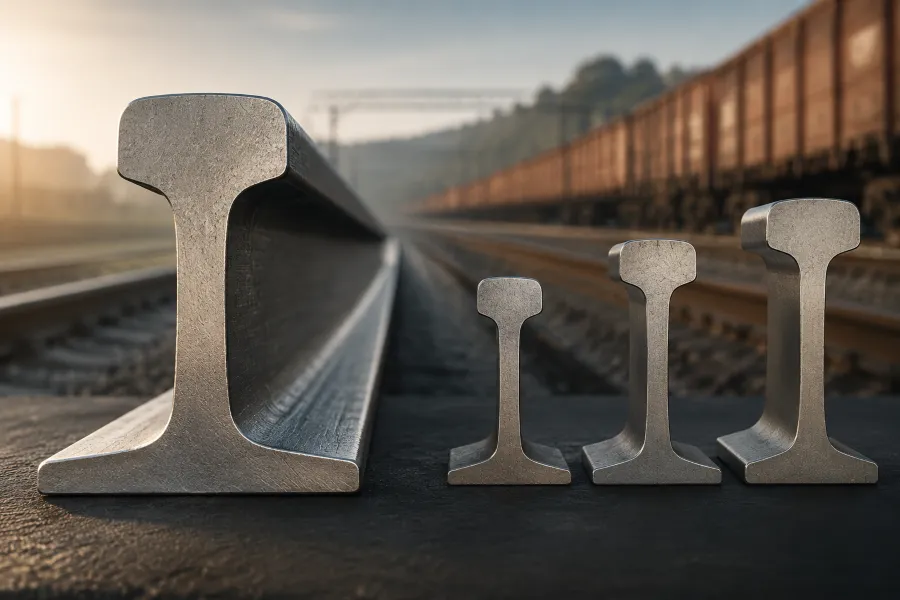
2つ置く 鉄道レール 並んで、そして, ほとんどの人にとって, それらはほぼ同じに見えます. どちらも上部が丸い長い鋼材です。, 狭い真ん中, そしてより広い裾野. 鉄道業界で働いている人以外は, ある鉄道レールは別のレールとほぼ同じであると想定するのは簡単です.
トラックエンジニアはまったく異なるものを見ています.
少し高めの鉄道レール, 幅広の足, または、レールの頭部に数ミリメートル余分にあると、そのレールがどのように機能することが期待されるかについての手がかりがすぐに明らかになります。. それらの次元はランダムではありません, また、単にあるメーカーが別のデザインを好むという理由だけでそれらが選ばれるわけでもありません。. すべての曲線と厚さは長年のテストを反映しています, 運用経験, そして継続的な改良.
それが鉄道工学の面白いところの一つです. シンプルに見えるコンポーネントには、非常に複雑な設計上の決定が含まれることがよくあります. 鉄道のレールはその好例です. 過去1世紀にわたってその断面は徐々に変化してきましたが、, あらゆる変化は同じ目的によって推進されてきた: より重い荷物を運ぶ, メンテナンスの削減, 耐用年数を延ばす, 安全性の向上.
したがって、レールのプロファイルを理解することは、図面からいくつかの寸法を学ぶこと以上のものです。. そもそもなぜそのような次元が存在するのかを理解することが重要です.
この記事では, 仕様表を超えて、エンジニアリングの観点から鉄道レールのプロファイルを調査します. 単純に大きさを比べるのではなく、, さまざまな鉄道セクションがどのように動作するかを調査します, なぜその形状が重要なのか, エンジニアがさまざまな鉄道用途に最適なプロファイルをどのように決定するか.
One question often comes up when people first study railway rail.
If every rail supports trains, why are there so many different profiles?
The answer is surprisingly straightforward.
Different railways ask their rails to do different jobs.
Imagine three railway systems.
The first is a heavy-haul freight line carrying iron ore twenty-four hours a day. The trains are exceptionally heavy, axle loads are high, and maintenance windows are limited because traffic rarely stops.
The second is an urban metro. Trains are much lighter, stations are closely spaced, and passenger comfort is often just as important as structural strength.
The third is a high-speed railway where trains travel at more than 300 km/h. ここ, smooth wheel guidance, stable vehicle dynamics, and precise track geometry become critical.
Although all three systems use steel rails, the demands placed on those rails are completely different.
This is why railway engineers rarely begin by asking, “Which rail profile is the strongest?”
その代わり, they ask a different question.
Only after answering that question does it make sense to select the rail section.
A rail profile is therefore not simply a shape defined by a drawing. It is a design solution developed for a particular combination of axle loads, operating speeds, 交通密度, メンテナンス戦略, と耐用年数.
Open any railway standard and you’ll find a detailed cross-sectional drawing of a rail, complete with dimensions, 公差, and reference points.
メーカー様へ, これらの寸法は、レールをどのように回転させて検査するかを定義します。.
エンジニアへ, 彼らはもっと興味深い話をします.
あらゆる次元がレールを通る力の伝わり方に影響を与える.
全高が高くなるとレールの曲がりに強くなります。.
ヘッドの幅を変更すると、ホイールとレールの接触状態が変化し始めます.
足を修正し、締結システムによる荷重分散も変更します.
1 つの調整がパフォーマンスの 1 つの側面だけに影響することはほとんどありません.
その代わり, あらゆる次元が同時に他の次元に影響を与える.
そのため、レール設計は最適化ではなくバランスの練習であるとよく言われます。.
エンジニアが可能な限り最大または最強のレールを作成しようとすることはほとんどありません。. 彼らは、経済的な製造を維持しながら、数十年の運用にわたって効率的に機能するレールを製造しようとしています。, インストール, 検査する, そして維持する.
こうして鉄道図面を見始めると, 寸法は紙の上の数字ではなくなり、エンジニアリング上の決定になり始めます.
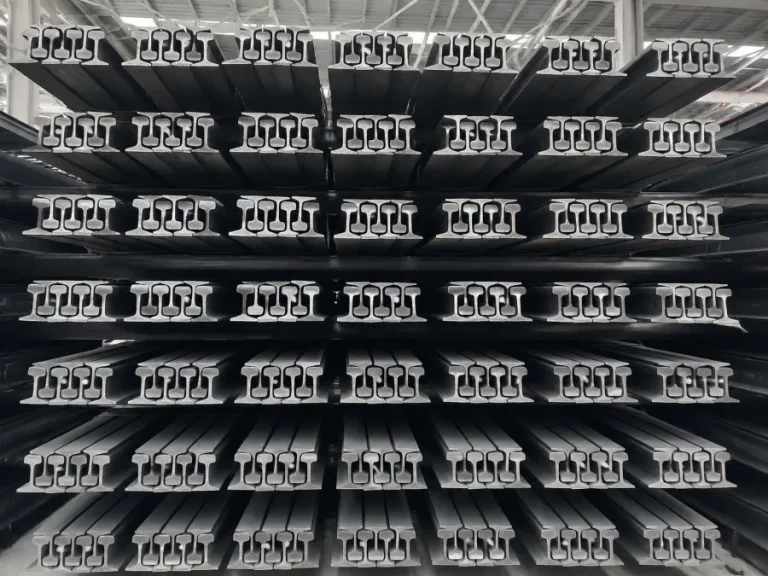
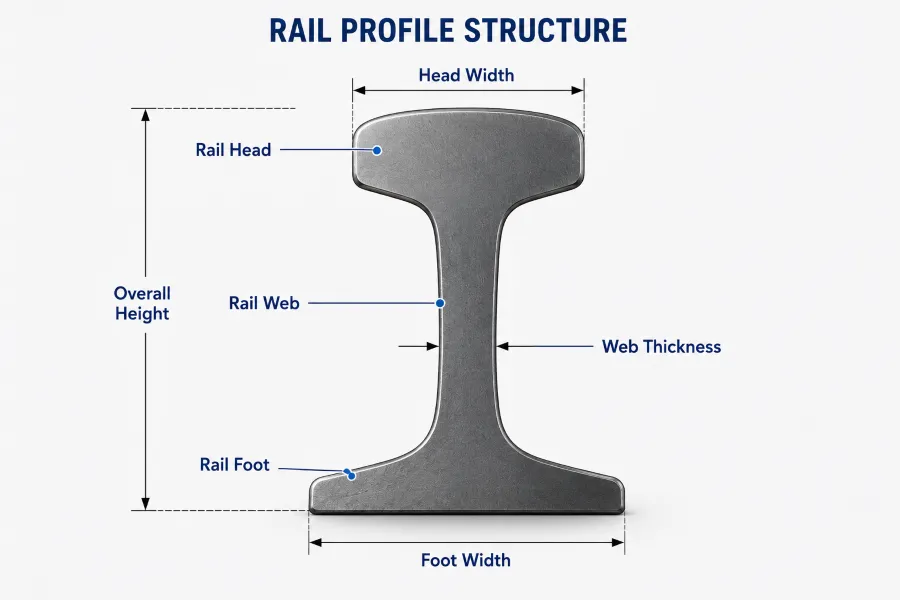
最新の平底レールはすべて 3 つの主要なセクションで構成されています: 頭, ウェブ, そして足.
通常は別々に説明されますが、, 決して独立したコンポーネントとして考えるべきではありません. 一緒に, それらは単一の構造システムを形成します.
一番上から始めましょう.
レール ヘッドは、すべての輪荷重が線路に入る場所です. 驚くべきことに, スチールホイールとスチールレールの間の実際の接触面積は、多くの場合、コイン以下です。. しかし、電車が通過するたびに、その小さな接触面に大きな圧力がかかります。.
このため, レールの頭は単に重量を支える以上の役割を果たさなければなりません. 耐摩耗性が必要です, 予測可能な接触面を維持する, 転がり接触疲労を最小限に抑える, 長年の使用を通じてホイールセットを正確にガイドし続けます。.
レールヘッドの幅を広くすれば自動的にパフォーマンスが向上すると考えたくなります。.
残念ながら, 鉄道工学がこれほど単純なことはめったにありません.
幅広のヘッドにより、より多くの素材を着用できます, ただし、車輪とレールの接触の形状も変わります. それはステアリング動作に影響を与える可能性があります, 接触応力, カーブでも車両の安定性を実現. したがって、エンジニアは可能な限り大きなヘッド形状ではなく、適切なヘッド形状を目指します。.
下に移動, レール網に到達します.
一見して, ウェブはほとんど何もしていないように見える. 頭と足をつなぐ細い部分です.
構造的に, しかし, レールのバックボーンとして機能します.
車輪荷重がレールを通過するとき, ウェブは、レールがまくらぎ間の曲げに抵抗するのに役立ちながら、結果として生じるせん断力の多くを支えます。.
明らかな疑問が 1 つ続きます.
なぜ単純にウェブを厚くしないのか?
その答えはエンジニアリング全体に見られる原則を反映しています。.
スチールが 1 ミリメートル増えるごとに重量が増加します, 製造コスト, 交通費, 複雑さの変化. ある点を超えると, 材料を追加してもパフォーマンスはわずかしか向上しません.
優れたエンジニアリングとは、より多くの鋼材を使用することではありません.
最大のメリットを生む場所に鋼材を配置することです.
ついに, レールの足があります.
ヘッドに荷重がかかると, 足はその荷重を枕木と固定システムに伝達します。.
その目的を理解する簡単な方法は、柔らかい地面の上を歩くことを想像するとよいでしょう。.
ハイヒールは体重を非常に小さな領域に集中させます, 地面が自分の下に沈む原因となる.
ハイキング ブーツは、同じ重量をより広い表面に分散します。.
レールフットもまったく同じように機能します.
その幅により、車輪の荷重を支持トラック構造により均等に分散させることができます。, 局所的な応力を軽減し、安定性を向上させます。.
もう一度, しかし, 大きいほど自動的に優れているわけではありません.
足の幅が広いほど、より多くの材料が必要になります, 締結設計に影響を与える, 製造時の圧延プロセスに影響を与えます.
レールの他の部分と同様に、, エンジニアは極端ではなくバランスを模索している.
一緒に見ると, 関係が明らかになる.
ヘッドがホイールとの接触を管理.
ウェブは力を伝達します.
足はそれらの力をトラックに安全に分散させます.
他を考慮せずに 1 つを変更する, レール全体の動作が変化します.
そのため、経験豊富な鉄道技術者が個々の次元を切り離して議論することはほとんどありません。.
彼らはレールを 1 つの完全な構造システムとして評価します.
人々が 2 つの鉄道のレール プロファイルを比較するとき, 彼らが通常最初に気づくのは高さです.
1 つのレールが他のレールよりわずかに高い場合があります, and it’s natural to assume that the taller rail must also be stronger.
Sometimes that’s true.
頻繁, it isn’t the whole story.
Engineers are usually more interested in where the material is located than in how much material exists.
Moving steel farther from the centre of the section improves bending resistance much more effectively than simply increasing the overall mass.
同じく, changing the shape of the rail head may influence wheel–rail contact far more than increasing the total weight by a few kilograms per metre.
This explains why two railway rail profiles with similar weights can perform quite differently in service.
Their dimensions may look similar on paper, but the way those dimensions work together determines how the rail behaves after millions of wheel passages.
After understanding how a rail works as a structural system, another question naturally follows.
Why do modern railways still use so many different rail profiles?
Wouldn’t it be simpler if every railway adopted exactly the same section?
ものづくりの視点から, perhaps it would.
エンジニアリングの観点から, the answer is much less straightforward.
Every railway operates under its own combination of traffic volume, 軸重, 動作速度, 気候, maintenance philosophy, and construction budget. Those differences may seem small on paper, but over thirty or forty years of operation they have a significant impact on track performance.
A railway carrying a handful of passenger trains each day places very different demands on its rails than a freight corridor moving millions of tonnes of cargo every year. 同じく, a metro network with frequent acceleration and braking experiences loading conditions that are completely different from those of a high-speed railway.
This is why rail profiles have continued to evolve instead of converging into a single universal design.
The goal has never been to produce one railway rail that can do everything. The goal is to match the rail section to the work it will actually perform.
Among European rail profiles, UIC54 is often regarded as one of the best-balanced designs.
It provides sufficient bending strength for many conventional passenger lines and mixed-traffic routes without introducing unnecessary weight or material cost.
That balance is one of its greatest strengths.
エンジニアは、UIC54 が効率的なプロファイルであると説明することがあります。UIC54 は、幅広い動作条件にわたって信頼性の高いパフォーマンスを提供しながら、製造とメンテナンスが経済的であるためです。.
時々、UIC54 が単に UIC60 の古いバージョンであると考える人がいます。.
実際には, さまざまな動作要件に合わせて開発されました.
軸重と交通密度が設計範囲内にある鉄道において, UIC54 は数十年にわたる信頼できるサービスを提供できます. より重いセクションに置き換えても、自動的にパフォーマンスが向上するわけではありません。, しかし、ほぼ確実に建設コストが増加するでしょう.
列車の運行頻度が増加し、軸重が重くなるにつれて, 多くの鉄道管理者は、より長いメンテナンス間隔でより大きな応力に耐えることができるレールを必要としていました。.
UIC60 was developed to meet those demands.
Compared with lighter profiles, it offers greater bending stiffness and provides more material in areas that experience long-term wear. These characteristics make it particularly suitable for heavily trafficked main lines, 高速鉄道, and freight corridors where maintenance opportunities are limited.
Its advantages, しかし, are often misunderstood.
The reason UIC60 performs well is not simply because it weighs more.
Its geometry has been carefully refined so that additional material is placed where it contributes most to structural performance and durability.
That distinction is important.
Adding steel everywhere would only increase weight. Good engineering is about using material efficiently, not generously.
Engineers who work internationally quickly notice that North American rail profiles differ from those commonly used in Europe and many parts of Asia.
This doesn’t mean one standard is technically superior.
It reflects different railway histories.
North American railways developed around long-distance freight transportation, often carrying extremely heavy axle loads across vast networks. European railways evolved under different priorities, balancing passenger services, freight traffic, and increasingly higher operating speeds.
As those networks developed, their engineering solutions naturally evolved in different directions.
Today’s AREMA and UIC rail profiles therefore represent different design philosophies shaped by decades of practical experience rather than fundamentally different engineering principles.
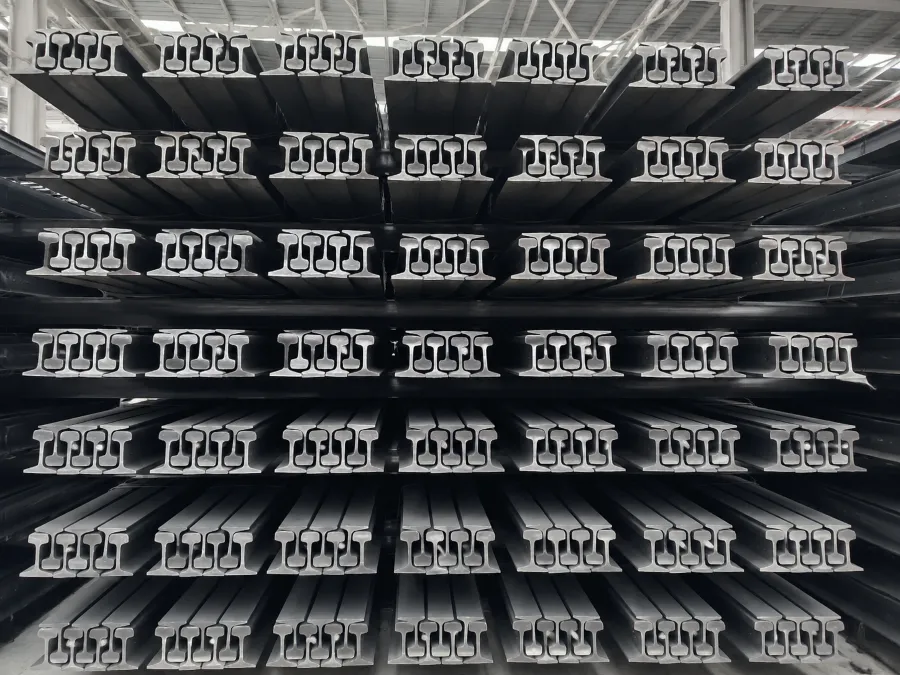
One of the most common questions in railway engineering sounds deceptively simple.
Which rail profile is the best?
Experienced engineers rarely answer that question directly because the question itself is incomplete.
Imagine you’re designing a brand-new railway.
Before discussing rail profiles, you would probably ask several other questions first.
How heavy are the trains?
How many trains will use the line each day?
Will they carry passengers or freight?
How large are the axle loads?
What is the expected service life?
How much maintenance can realistically be carried out each year?
Only after those questions have been answered does rail selection begin.
This approach explains why experienced engineers often spend more time understanding operating conditions than comparing catalogue specifications.
The rail profile is only one component within a much larger system.
スリーパーズ, 締結システム, バラストの品質, wheel profiles, メンテナンスの実践, and even local climate all influence how successfully a rail performs over its lifetime.
A profile that works exceptionally well on one railway may provide little advantage on another.
That is why railway engineering rarely deals in universal answers.
その代わり, it focuses on finding the most suitable solution for a particular set of conditions.
Outside the railway industry, rails are often described by their weight.
Terms such as 50 kgレール, 60 kgレール, または 136 REレール are widely used because they provide a quick way to identify different sections.
Weight is certainly important.
It influences transportation costs, installation methods, そして, to some extent, structural capacity.
But experienced engineers know that weight alone tells only part of the story.
Imagine two beams made from exactly the same amount of steel.
One has been carefully designed to place more material where bending stresses are highest.
The other distributes its material less efficiently.
Although both weigh the same, their structural performance may be very different.
The same principle applies to railway rails.
The location of the material is often just as important as the amount of material itself.
This is why engineers pay close attention to properties such as section modulus and moment of inertia. これらの値は、単にレールに含まれる鋼材の量ではなく、レールが曲げにどれだけ効果的に抵抗するかを表します。.
言い換えると, 重いレールが自動的に優れたレールになるわけではありません.
適切に設計されたプロファイルは通常、重いが効率の悪いプロファイルよりも優れたパフォーマンスを発揮します。.
おそらく、鉄道のレールプロファイルに隠された最大の教訓は、エンジニアリングでは単一の特性を最大化することはめったにないということです。.
レールの高さが高いと曲げ耐性が向上しますが、材料コストが増加します.
幅広のヘッドにより摩耗許容量が増加しますが、ホイールとレールの接触形状が変化します。.
ウェブを厚くすると構造容量が増加しますが、重量も増加します.
足幅が広いと荷重分散が改善されますが、締結設計と製造に影響します。.
あらゆる改善には新たなトレードオフが伴います.
That is why railway engineering has evolved through gradual refinement rather than dramatic redesign.
Modern rail profiles are the result of more than a century of operational experience. Countless engineers have tested, measured, modified, and improved these sections under real railway conditions.
What we see today is not the result of one brilliant design.
It is the result of thousands of practical engineering decisions accumulated over generations.
一見して, a railway rail appears to be little more than a rolled steel section.
Look closer, しかし, and it becomes clear that every part of its geometry has a purpose.
The shape of the head influences wheel contact and wear. The web transfers forces through the rail while resisting bending. The foot distributes loads into the supporting track structure. 一緒に, these elements determine how the rail performs over decades of service.
そのため, engineers do not judge a rail profile by its appearance alone.
They consider how it behaves under load, how it interacts with wheels and fastening systems, how easily it can be maintained, and whether it is appropriate for the railway it is intended to serve.
Understanding railway rail profiles is therefore not about memorizing dimensions or comparing specification tables. It is about recognizing the engineering decisions behind those dimensions and how they contribute to the safety, 信頼性, and long-term performance of modern railway infrastructure.
で 洛陽豊洋重工業株式会社, 株式会社., we apply the same engineering mindset to the products we manufacture. 私たちは以下を専門としています 鉄道部品, 鉄道の車輪, 鉄道鋳物, カスタム設計の鉄道部品 世界中の顧客のために. 標準的な鉄道製品を調達している場合でも、技術図面に基づいてコンポーネントを開発している場合でも, 当社のエンジニアリングおよび製造チームは、信頼性の高い製品を提供することに尽力しています。, 国際業界標準を満たす高品質のソリューション.
To learn more about our railway manufacturing capabilities and product range, 訪問 www.railwaypart.com or contact our team to discuss your project requirements.