WeChat コードをスキャンしてご連絡ください
WeChat コードをスキャンしてご連絡ください
お気軽にメールをお送りください。できるだけ早くご返信させていただきます.
心と魂で未来を創る


If you’ve ever been involved in a railway project, you’ve probably heard someone ask,” How long should these rails last?” It sounds like a simple question, but after years of working with railway components, I’ve found it’s one of the hardest questions to answer with a single number.
I’ve seen standard rails remain in excellent condition after more than two decades on straight passenger lines. I’ve also seen rails on heavy-haul curves require replacement in less than ten years. The difference wasn’t always the quality of the steel. もっと頻繁に, it came down to how the railway was operated and maintained.
それで, if you’re looking for a quick answer, here it is:
Most 鉄道レール remain in service for around 10 に 40 年. Heavy-haul freight railways typically replace rails every 10–20 years, conventional passenger lines often reach 20–35 years, while metro and light rail systems with lighter axle loads may remain in service for 30–40 years or even longer.
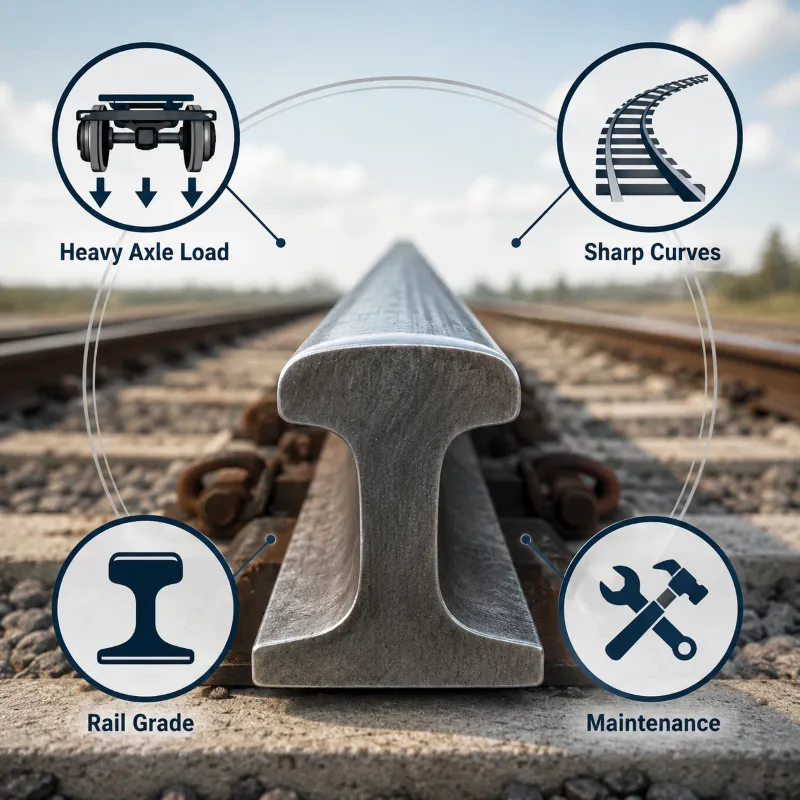
The key point is that rail lifespan is determined by operating conditions rather than calendar age. Traffic volume, 軸重, 曲線半径, rail grade, メンテナンスの実践, and even climate all influence how long a rail will actually last.
Understanding these factors helps engineers make better maintenance decisions and allows buyers to select the right rail specification instead of simply choosing the lowest purchase price.
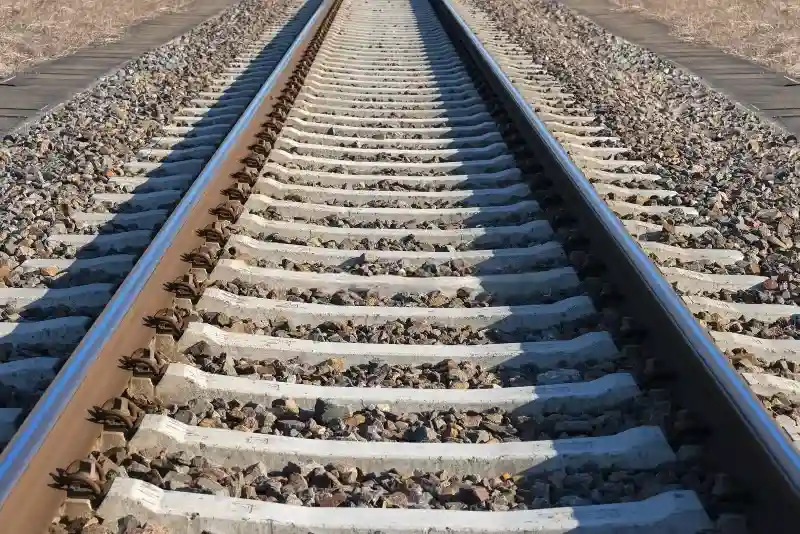
One mistake people often make is assuming that every railway should have the same replacement cycle. 実際には, railways operating under different conditions age at completely different rates.
| 鉄道アプリケーション | Typical Service Life | Main Reason for Replacement |
| 重量物輸送 | 10–20 years | Severe wear and rolling contact fatigue |
| Mixed Freight Lines | 15–25 years | Combined wear and fatigue |
| Passenger Rail | 20–35 years | Fatigue defects and gradual wear |
| 地下鉄 & ライトレール | 30–40+ years | Long-term fatigue with relatively low wear |
| 産業用 & Mining Tracks | 5–15年 | Heavy loads, tight curves and demanding operating conditions |
These figures should be treated as practical reference values rather than guarantees. Two railways carrying the same type of train can experience very different rail life if one line contains frequent sharp curves while the other runs mostly on straight track.
This is why experienced railway engineers rarely judge rail life by years alone.
その代わり, they often talk about Million Gross Tons (MGT)—the total amount of traffic that has passed over the rail. Twenty years on a lightly used branch line may represent far less wear than ten years on a busy heavy-haul corridor transporting millions of tons of freight every year.
Calendar age tells you how old the rail is.
Traffic loading tells you how hard the rail has worked.
Many buyers initially focus on rail material or hardness, believing these are the biggest factors affecting service life.
From what we’ve seen on railway projects, they’re only part of the picture.
A premium rail installed under poor operating conditions can wear out surprisingly quickly, while a standard rail operating on a well-maintained line may continue performing reliably for decades.
実際に, four factors usually have the greatest influence on rail lifespan.
If I had to choose one factor that changes rail life the fastest, it would be axle load.
一見して, increasing axle load from 25 tonnes to 30 tonnes doesn’t seem like a dramatic change. Many people assume rail wear increases by roughly the same percentage.
残念ながら, that’s rarely what happens on real railways.
As axle loads increase, the contact pressure between the wheel and the rail rises significantly. Higher contact stress means faster wear, greater plastic deformation and a much higher risk of rolling contact fatigue. The effect becomes even more noticeable on curves, where wheels are already applying additional lateral forces to the rail.
This is one reason why heavy-haul railways often invest in head-hardened rails. The initial purchase cost is higher, but longer replacement intervals usually reduce the overall lifecycle cost.
By comparison, metro systems and urban transit networks operate with much lighter axle loads. Even though trains may run more frequently, lower wheel loads slow down the wear process considerably. 多くの場合, fatigue defects eventually become a bigger concern than material loss.
One lesson we’ve learned over the years is that rail selection should always begin with axle load, not with price or even rail grade. A rail that performs well on a passenger line may not survive long under heavy-haul freight traffic.
Whenever people visit a railway, they often notice the long straight sections first.
Maintenance engineers usually look somewhere else.
They look at the curves.
Sharp curves consistently produce the highest rail wear because the wheel no longer rolls perfectly along the rail. その代わり, the contact point shifts toward the gauge corner, increasing both contact stress and sliding between the wheel and rail.
The tighter the curve becomes, the harder the rail has to work.
We’ve seen projects where straight sections remained in excellent condition while the first curve outside the yard had already been replaced more than once. The rails were manufactured to exactly the same specification. The difference was simply the operating environment.
That’s also why maintenance strategies focus so heavily on curves.
Regular rail grinding removes small surface cracks before they grow into larger defects. Gauge-face lubrication reduces friction where wear is most severe. Neither practice eliminates wear completely, but together they can significantly extend rail life and reduce replacement frequency.
For many heavy-haul operators, improving maintenance on critical curves often delivers a better return than replacing every rail with a more expensive grade.
One question we’ve been asked many times is:
“If harder steel lasts longer, why not always choose the hardest rail available?”
It sounds reasonable, but rail selection is rarely that simple.
Hardness certainly improves wear resistance, especially on heavy-haul lines and sharp curves where wheel-rail contact is severe. That’s why head-hardened rails are widely used on freight corridors carrying high axle loads. Under the right operating conditions, they can significantly reduce wear and extend replacement intervals.
しかし, harder isn’t automatically better.
Every railway has its own operating environment. Passenger lines running at high speeds often place greater emphasis on fatigue performance and surface quality. Industrial railways may experience frequent impacts, low speeds, and contamination from dust or ore. A rail grade that performs exceptionally well on one line may offer little advantage—or even become a poor choice—on another.
長年にわたって, we’ve found that successful projects rarely begin with the question, “What’s your hardest rail?”
その代わり, experienced engineers ask a different set of questions.
The answers usually determine the rail grade long before anyone starts discussing price.
言い換えると, the best rail isn’t the hardest one—it’s the one that matches the railway’s operating conditions.
People sometimes think of railway rails as passive components. Install them correctly, and they’ll simply do their job for decades.
実際には, rails are constantly changing.
Every passing wheel leaves a tiny mark. Every season brings temperature changes. Every braking zone, curve, and turnout adds another layer of stress. Left alone, those small changes gradually become defects.
That’s why experienced maintenance teams don’t wait for rails to fail.
They look for early warning signs.
Regular rail grinding is one of the best examples. To someone unfamiliar with railway maintenance, grinding may seem like removing perfectly good steel. 実際には, it’s often the opposite. By removing a very thin surface layer, grinding eliminates small fatigue cracks before they grow into serious defects.
The same principle applies to ultrasonic testing, track geometry inspection, 潤滑, and fastening system maintenance. Each activity may appear minor on its own, but together they can significantly slow rail deterioration.
We’ve visited railways where maintenance teams extended rail service life without changing the rail specification at all. The difference came from a well-planned maintenance strategy rather than a more expensive product.
That’s an important lesson for both operators and buyers.
Buying premium rails is only part of the investment. Keeping them in good condition is what delivers the return.
短い答えは次のとおりです yes—but only under the right conditions.
Occasionally you’ll hear about railway lines where rails have remained in service for half a century or even longer. Those stories are real, but they usually come with several important conditions.
The traffic is relatively light.
Curves are gentle.
Maintenance has been carried out consistently.
Wear has remained within acceptable limits.
言い換えると, the rail has enjoyed an easier working life than most freight lines.
Heavy-haul railways operate under very different conditions. 高い軸重, continuous freight traffic, and aggressive wheel-rail contact often make 50 years an unrealistic expectation. Even if the rail still looks acceptable from the outside, internal fatigue damage may already have reached the replacement limit.
エンジニアリングの観点から, chasing the longest possible service life isn’t always the right goal.
A rail that remains in service beyond its optimal replacement point may increase maintenance costs, reduce ride quality, or create unnecessary safety risks.
That’s why experienced asset managers don’t ask,
“Can this rail last another ten years?”
彼らは尋ねます,
“Is replacing it now the most economical decision over its entire lifecycle?”
Those are two very different questions.
Price is usually the first figure buyers receive from suppliers.
It shouldn’t be the first factor they compare.
長年にわたって, we’ve worked with customers who initially focused on cost per ton, only to discover later that rail performance, inspection quality, and manufacturing consistency had a much greater impact on lifecycle cost.
A reliable rail supplier should be able to explain more than just dimensions and steel grades.
They should be able to discuss how the rails are manufactured, how heat treatment is controlled, how dimensional accuracy is verified, and how defects are detected before shipment. Complete inspection records, material traceability, and compliance with standards such as EN, UIC, アレマ, or other customer specifications are often just as important as the rail itself.
で フォニョ, that’s exactly how we approach rail supply. Instead of recommending the same specification for every project, we begin by understanding the operating conditions—axle load, annual traffic, curve distribution, 気候, and maintenance capability. Only then do we recommend the most suitable rail solution.
Because in railway engineering, the lowest purchase price doesn’t always lead to the lowest lifecycle cost.
For buyers, choosing railway rails shouldn’t be about finding the cheapest supplier or the hardest steel. The real goal is selecting a rail that delivers the lowest lifecycle cost while meeting the operational demands of the railway.
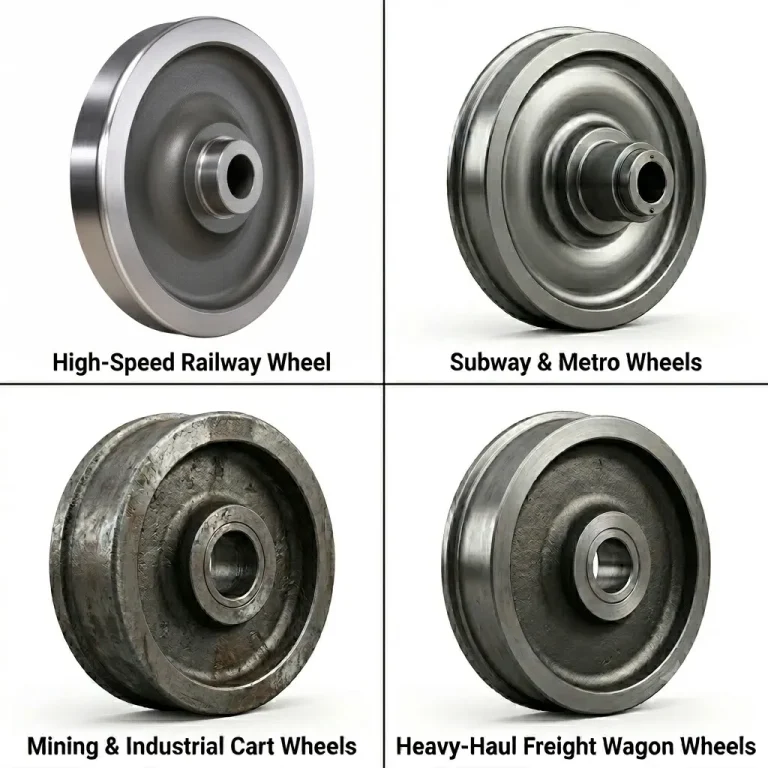
で 洛陽豊洋重工業株式会社, 株式会社., we work with customers worldwide to supply 鉄道レール, 鉄道の車輪, cast steel bogie components, その他 鉄道部品 for freight, 乗客, 地下鉄, 工業用, and mining applications. さらに重要なことは, we help customers choose specifications that fit their projects—not simply the highest grade or the lowest price.
Because in railway engineering, the right rail is the one that performs reliably for the railway it’s built to serve.
There isn’t a single inspection schedule for every railway. Busy freight corridors and heavy-haul lines usually require more frequent inspections than light-duty or industrial tracks. Most operators combine regular visual inspections with ultrasonic testing, track geometry measurements, and wear monitoring to detect defects before they become safety risks.
Minor surface wear can often be managed through rail grinding, which restores the rail profile and removes early fatigue cracks. しかし, rails with excessive wear, deep fatigue defects, or internal cracks should be replaced. Depending on local regulations and inspection results, some removed rails may be reused on lower-speed industrial or secondary lines.
Rail replacement is based on condition rather than age. Engineers evaluate rail wear, ultrasonic inspection results, 転がり接触疲労, crack growth, ジオメトリを追跡します. Once the rail exceeds allowable wear limits or develops defects that cannot be economically repaired, replacement becomes the safest and most cost-effective option.
The answer depends on the railway.
On heavy-haul freight lines, excessive wear and rolling contact fatigue are usually the main reasons for rail replacement. On high-speed passenger railways, fatigue-related defects such as head checks and squats often become the limiting factors. 多くの場合, poor maintenance accelerates both types of deterioration.
はい. Preventive rail grinding removes small surface defects before they develop into larger fatigue cracks. It also restores the correct wheel-rail contact profile, reducing impact forces and uneven wear. When carried out as part of a planned maintenance program, rail grinding can significantly increase rail service life.
普遍的なものはない “最高” rail grade. The right choice depends on axle load, annual traffic, 曲線半径, and maintenance capability. For many heavy-haul railways, head-hardened rails are preferred because they offer better wear resistance on high-traffic routes. しかし, the final selection should always match the actual operating conditions.
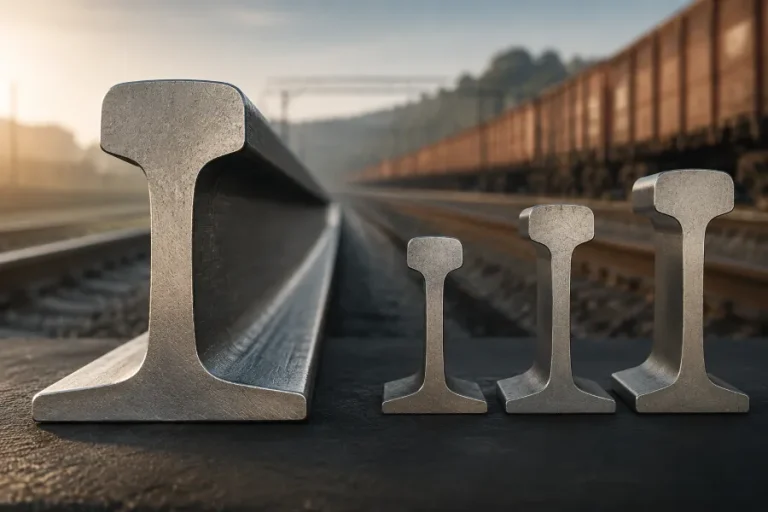
Railway rails are commonly manufactured to standards such as で 13674, アレマ, UIC, ギガバイト/トン, and other national specifications. These standards define requirements for rail dimensions, steel chemistry, 機械的特性, 熱処理, 寸法公差, and inspection methods to ensure reliable performance in service.