WeChat コードをスキャンしてご連絡ください
WeChat コードをスキャンしてご連絡ください
お気軽にメールをお送りください。できるだけ早くご返信させていただきます.
心と魂で未来を創る


世界の重量物鉄道開発の新たな傾向. キャスティングパフォーマンスの課題と対策. 世界のばら積み貨物輸送の大動脈として, the technological evolution of 重量物鉄道 has always been closely linked to breakthroughs in casting performance. 現在, international 重量物鉄道 are accelerating their transformation towards “greater axle loads, longer lifespans, and lower lifecycle costs.” This trend poses unprecedented challenges to the material properties, 製造工程, and design concepts of castings. Achieving high strength, 高い靭性, and high fatigue performance in 鋳物 through technological innovation has become a key issue supporting heavy-haul railway upgrades.
Global heavy-haul railway axle loads have increased from 25 トンから 30 tons and even 35 トン. Case studies such as the Australian Mine Railway and the Jinzhongnan Heavy-Haul Corridor in China demonstrate that for every ton increase in axle load, the contact stress between wheelset and track increases by approximately 12%, forcing castings to withstand more complex alternating loads. This can shorten the fatigue life of traditional steel castings by over 30%.
Heavy-haul railways are generally designed to last over 30 年, but castings are susceptible to pitting corrosion and crack propagation in complex environments such as humidity, 熱, 塩水噴霧, と振動. Statistics show that maintenance costs due to casting failures account for 45% of total lifecycle costs, necessitating breakthroughs in material performance.
Although high-strength alloys are expensive, reducing downtime for maintenance (例えば, from two to one per year) can reduce maintenance costs per kilometer of track by 28%. This requires a shift in casting design from a simple focus on strength to a comprehensive optimization of performance and cost.
Nano-Particle Strengthening: Adding 0.5%-1.2% nano-TiC particles to cast steel inhibits dynamic recrystallization through grain boundary pinning, increasing tensile strength from 800 MPa to 1100 MPa while maintaining an elongation of over 15%. Low-alloy design: Developing a microalloying system containing niobium (注意) and vanadium (V), utilizing precipitation strengthening mechanisms, while maintaining weldability, increases the low-temperature impact energy at -40°C from 47J to 89J, adapting to the needs of extremely cold regions.
Two-stage Quenching Technology: 初め, fully austenize at 920°C, then water cool to 300°C, and then austemper in a 250°C nitrate bath. This creates a composite structure of lower bainite + マルテンサイト, achieving a fracture toughness of 65 MPa·√m, ある 40% improvement over conventional processes.
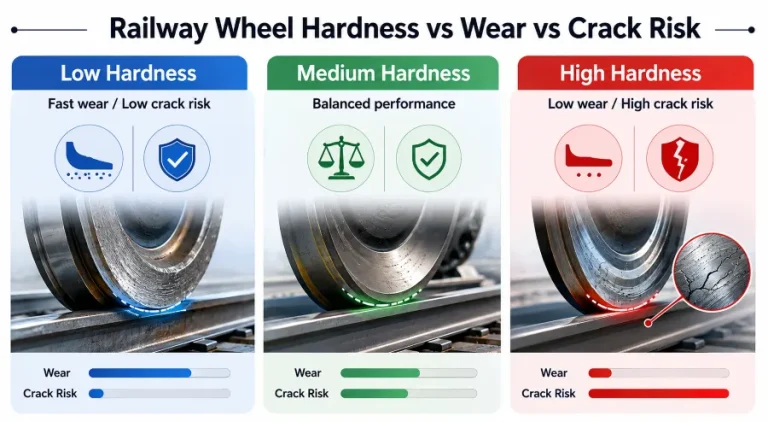
Laser Local Hardening: 2kW fiber laser scanning is performed on key areas of the wheel hub, increasing the hardness from HRC28 to HRC45. Simulation optimization is also used to prevent deformation and cracking.
In the development of a 120 km/h freight train with a 30-ton axle load, my country adopted a collaborative innovation model based on “材料, プロセス, and simulation”:
This case study demonstrates that comprehensive performance improvements can reduce the weight of a single carriage by 12% and reduce lifecycle costs by 23%.
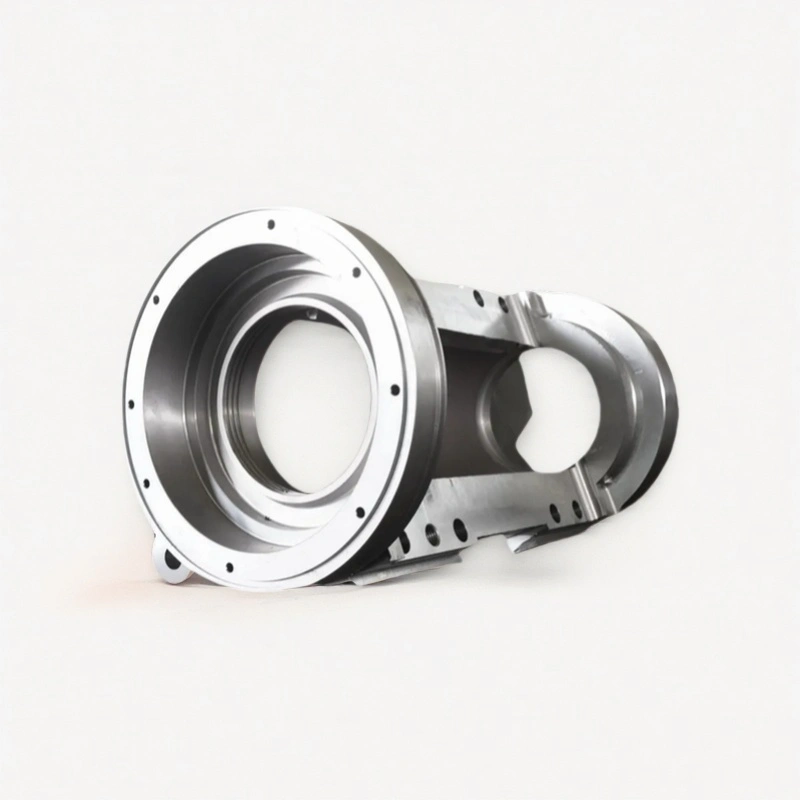
The evolution of heavy-haul railways is reshaping the boundaries of casting technology. Through the deep integration of material genetic engineering, インテリジェント製造, and digital twins, castings are shifting from “passive load bearing” に “active life prediction.” When axle loads exceed 35 tons and design lifespans extend to 50 年, casting technology innovation will become more than just an engineering challenge; it will become a strategic pillar supporting the green transformation of the global logistics system. Future heavy-haul railway castings will inevitably forge a path of sustainable innovation, striking a balance between strength, 靭性, そして費用対効果.
洛陽豊洋重工業株式会社, 株式会社, 1998年に設立された鉄道鋳造部品のメーカーです. 当社の工場面積は72,600㎡です。, 以上の 300 従業員, 32 技術者, 含む 5 シニアエンジニア, 11 アシスタントエンジニア, そして 16 技術者. 弊社の生産能力は 30,000 年間トン. 現在, 私たちは主に鋳物を生産しています, 機械加工, 機関車の組立て, 鉄道車両, 高速鉄道, 鉱山機械, 風力, 等. 当社の製品はロシアに輸出されています, 米国, ドイツ, アルゼンチン, 日本, フランス, 南アフリカ, イタリアとその他の国.
接触: ステラ・リュー
電子メール: [email protected]
ワッツアップ: +86-155-1535-1287